Understand patterns Addition Worksheets for Ages 6-8
6 filtered results
-
From - To
Discover our "Understand Patterns Addition Worksheets" designed specifically for children aged 6 to 8. These engaging worksheets help young learners grasp the concept of addition through patterns, fostering critical thinking and reinforcing math skills in a fun, interactive way. By identifying and completing patterns, children gain confidence in their arithmetic abilities while developing problem-solving skills essential for their academic journey. Each worksheet is crafted to suit various learning styles, ensuring all students can benefit and thrive. Explore our collection today to nurture your child's mathematical understanding and empower their educational growth with our thoughtfully designed resources!
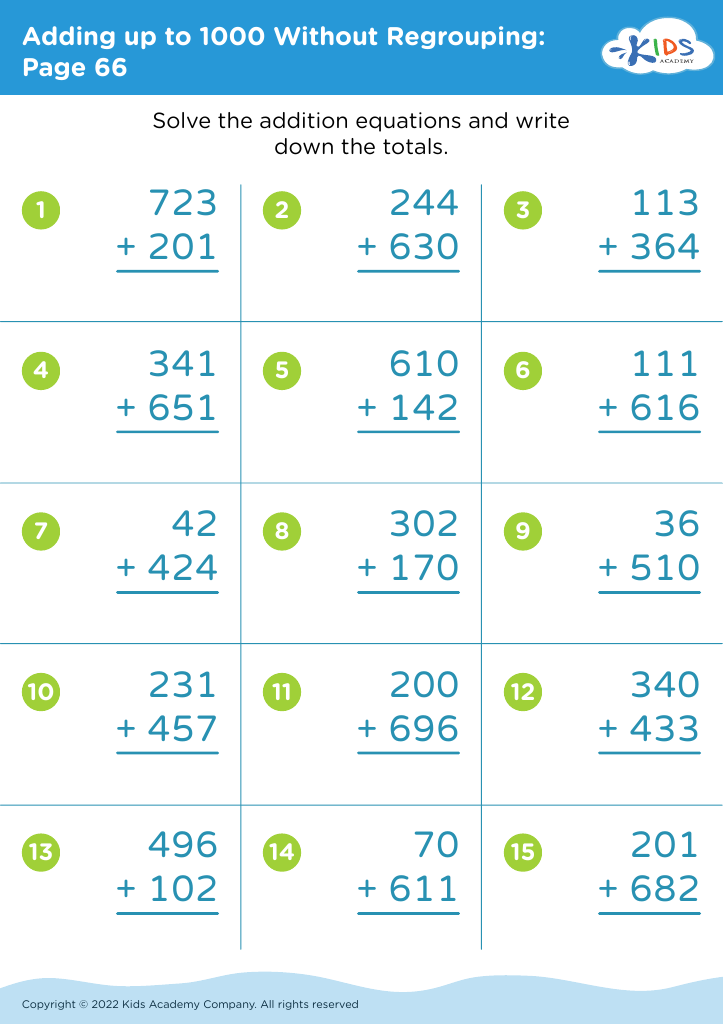
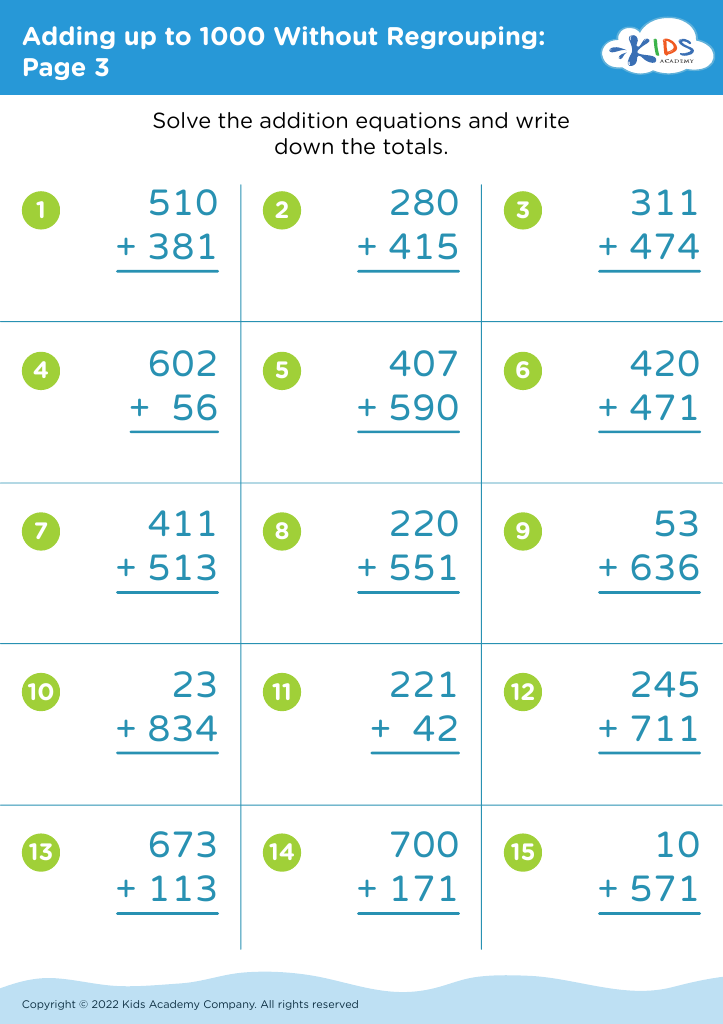
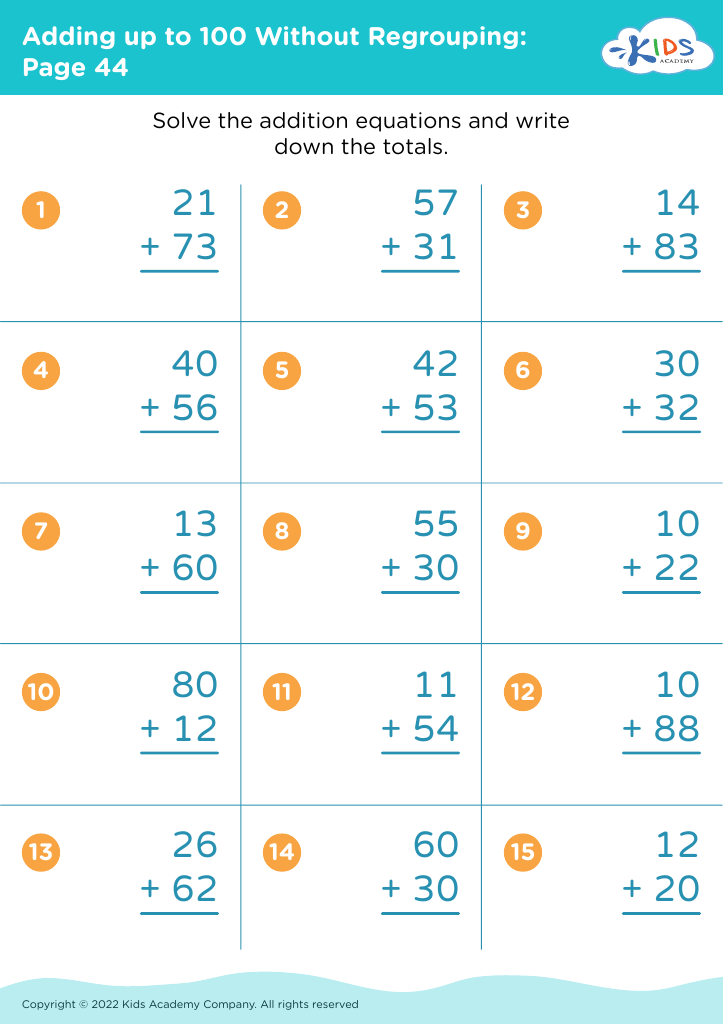
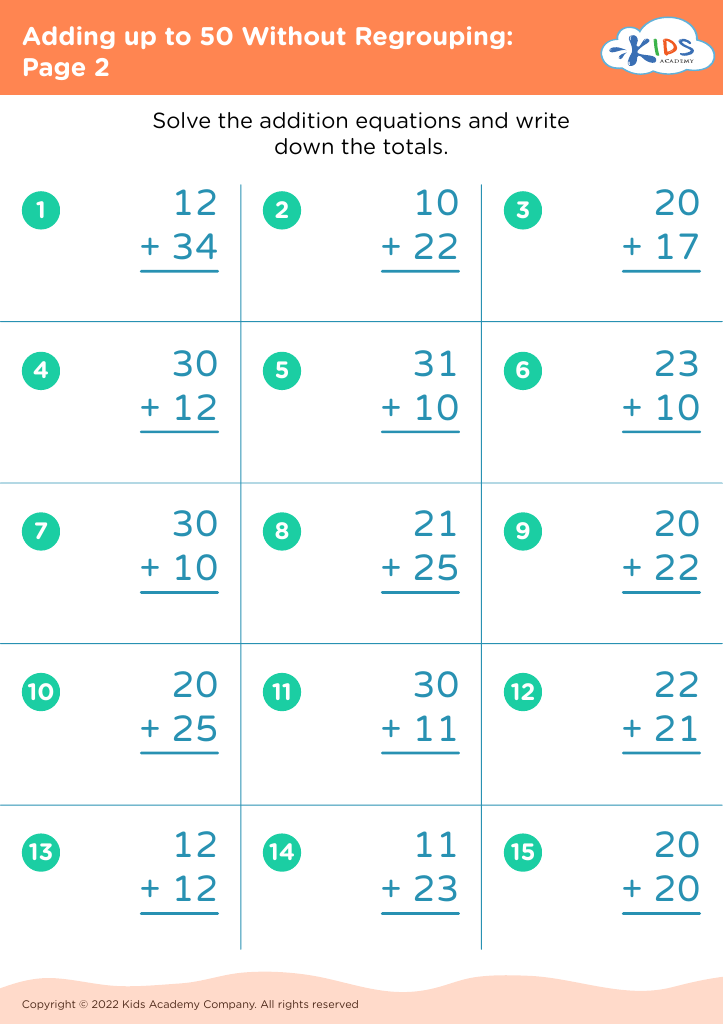
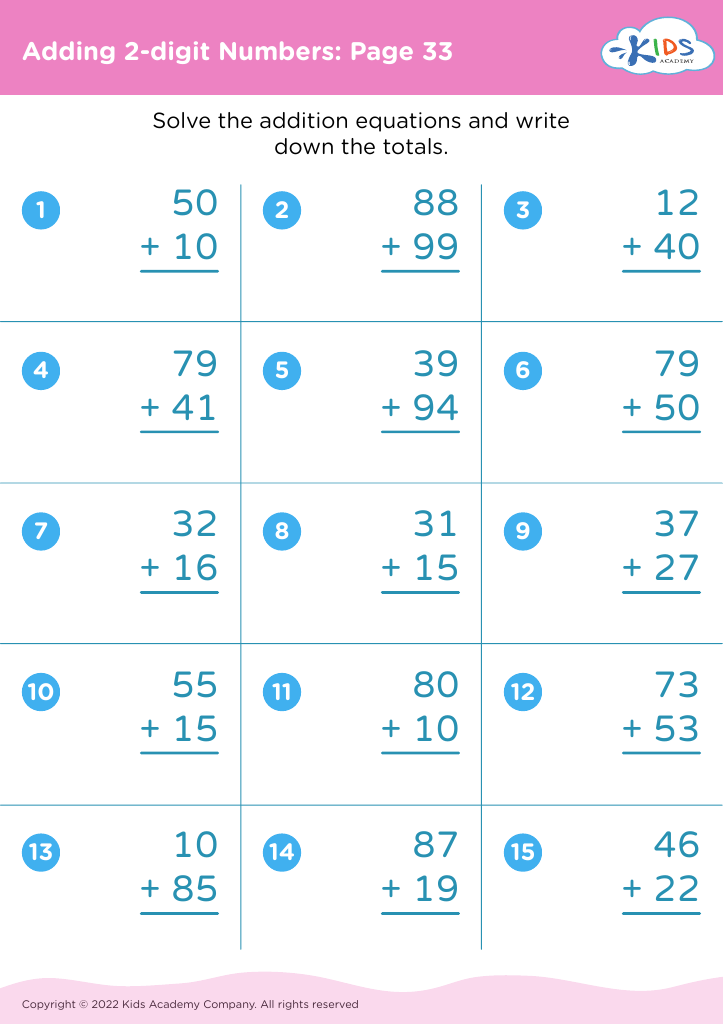
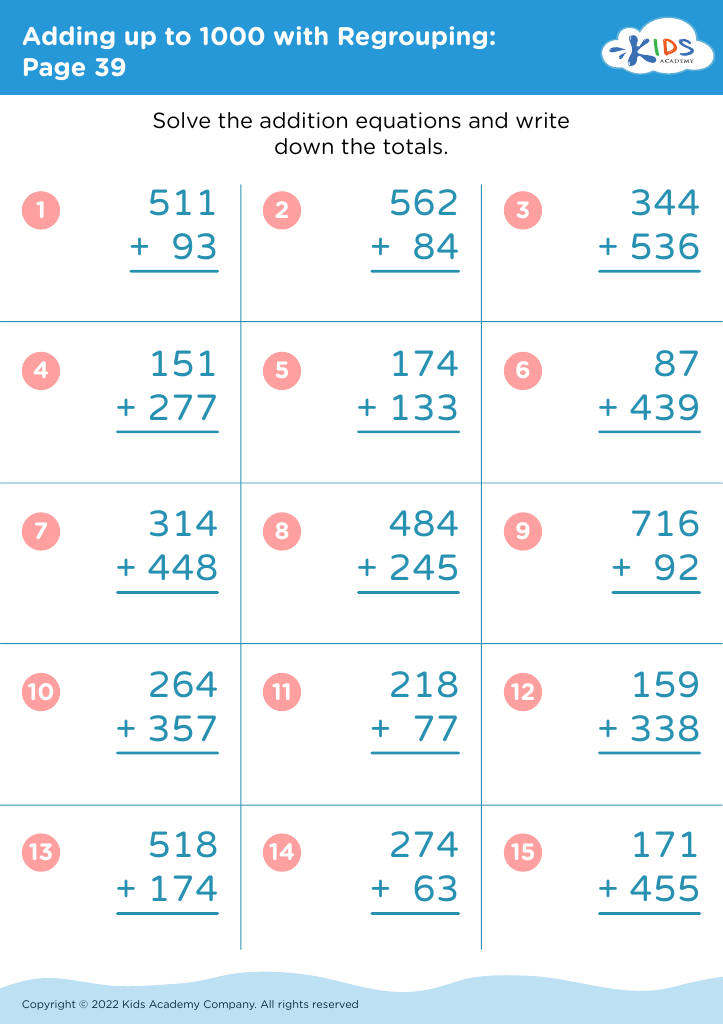








Understanding patterns in addition is crucial for children aged 6-8, laying a robust mathematical foundation that will serve them throughout their education. At this age, children are developing their number sense and problem-solving skills, essential components of mathematical understanding. Recognizing patterns helps students see the connections between numbers, which enhances their ability to add and perform calculations more efficiently.
When children grasp addition patterns, such as the commutative property (changing the order of numbers doesn’t change the sum), they become more adept at mental math. This not only boosts their confidence but also prepares them for more complex concepts like place value, subtraction, and even multiplication in later grades.
Furthermore, recognizing patterns contributes to their overall cognitive development. It encourages critical thinking and the ability to analyze relationships between numbers. For teachers and parents, promoting this understanding means fostering a love for math and learning. Engaging with addition patterns through games, visual aids, and hands-on activities helps create a dynamic learning environment, making math enjoyable and relatable. Ultimately, supporting children in mastering these foundational skills paves the way for future academic success, making it essential for educators and parents to prioritize this learning area.








