Understand sequences Addition Worksheets for Ages 6-8
5 filtered results
-
From - To
Looking for engaging worksheets to help kids aged 6-8 understand addition sequences? Discover our Understand Sequences Addition Worksheets! These educational printables offer a fun, interactive way for young learners to grasp the fundamentals of sequence patterns in addition. Our carefully designed worksheets incorporate colorful visuals and clear instructions that guide children through the steps of recognizing and continuing number patterns. By mastering these worksheets, your child will boost their addition skills and logical thinking, providing a solid foundation for future math success. Visit Kids Academy to download your free resources today and start learning in a fun, effective way!
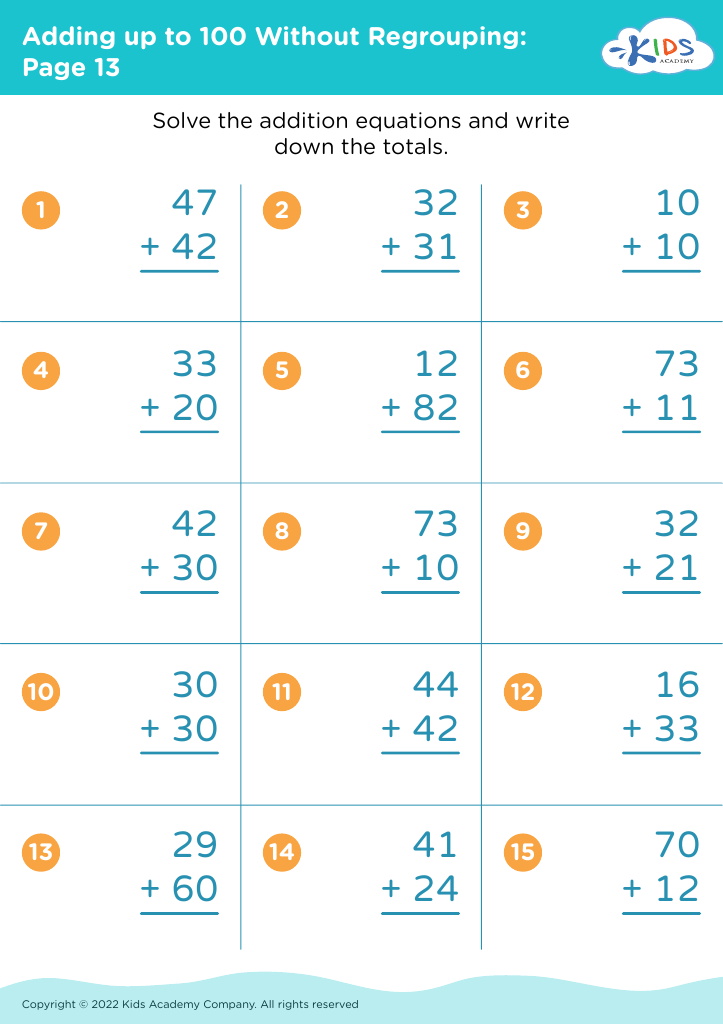
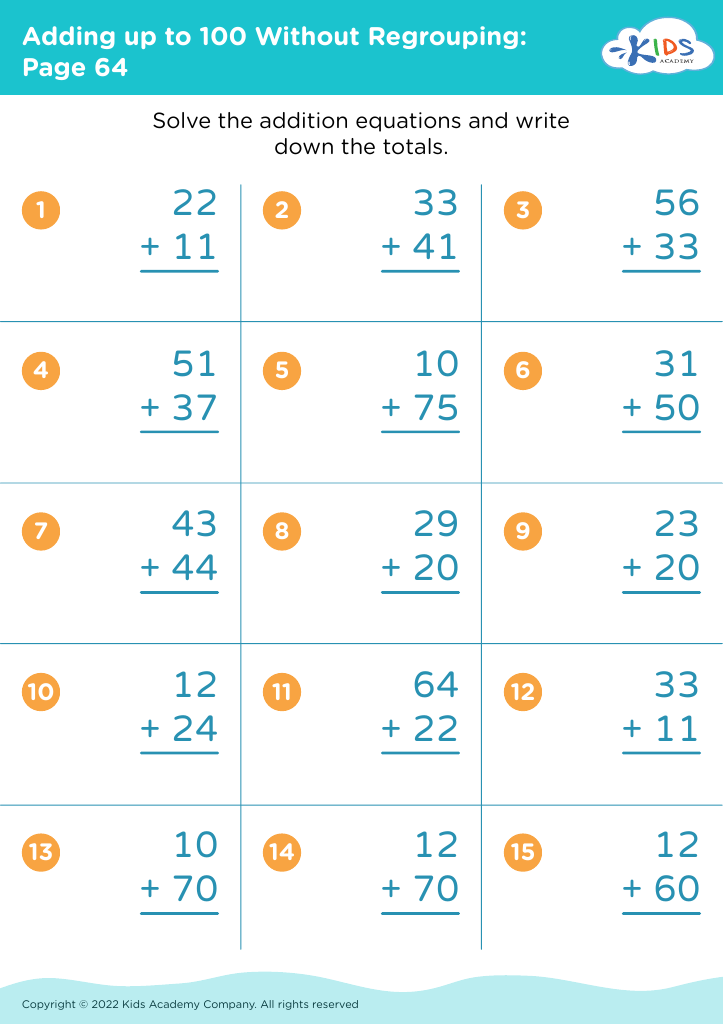
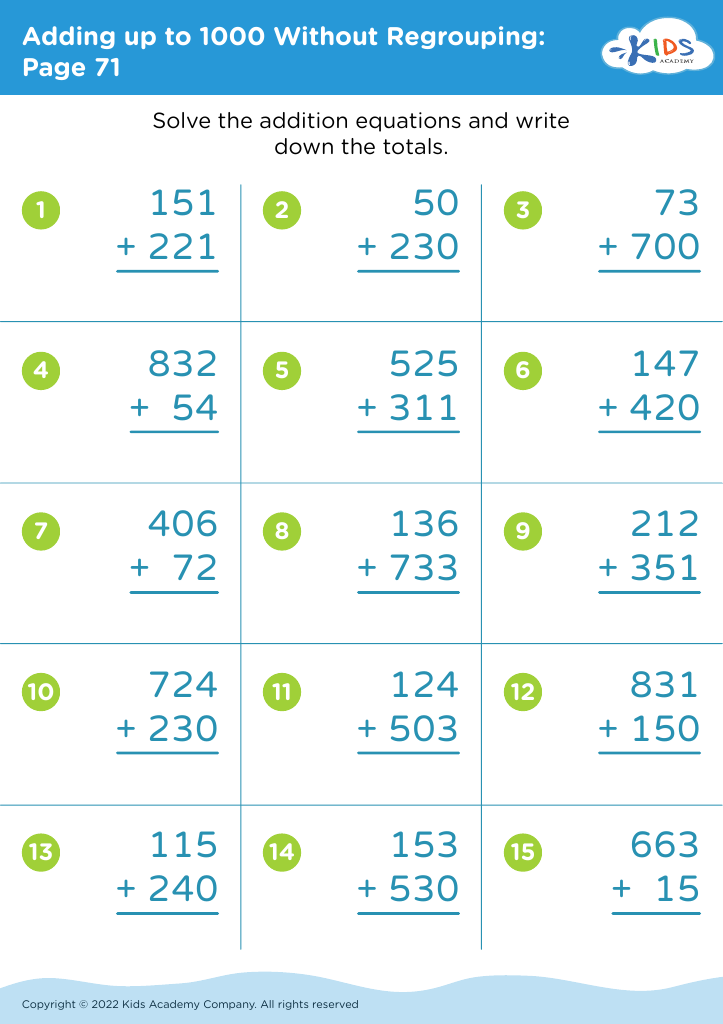
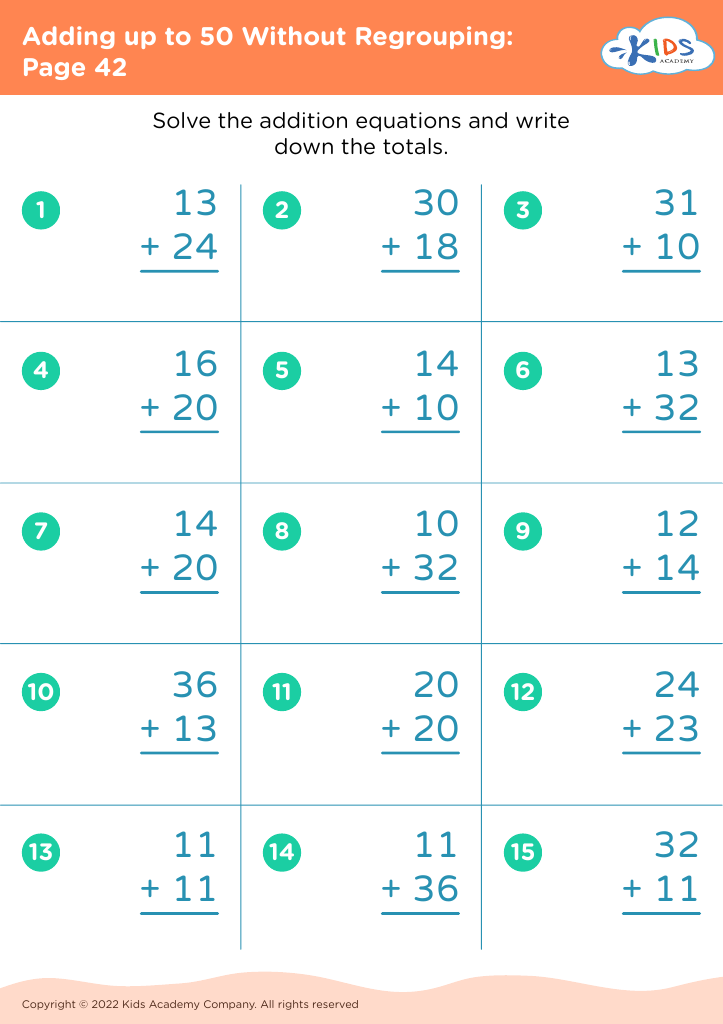
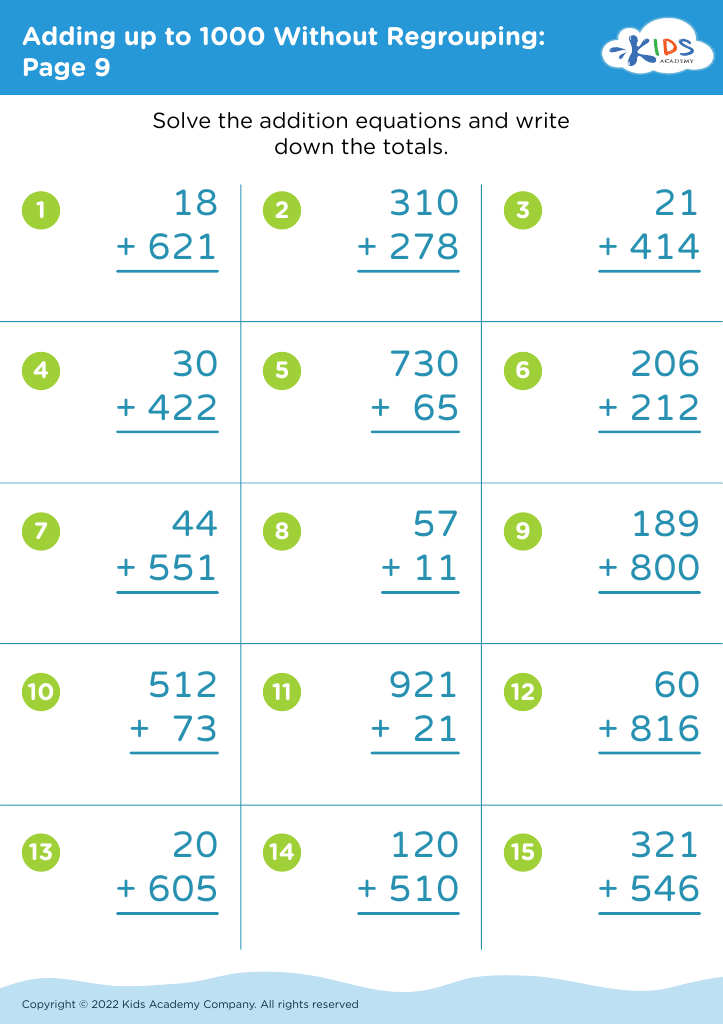








Understanding sequences and addition is fundamental for children aged 6-8 because it establishes the groundwork for higher-level mathematical thinking and daily life skills. At this developmental stage, children are expanding their cognitive abilities, and mastering these concepts boosts their problem-solving skills and logical reasoning. Sequences help kids recognize patterns and predict future events, both crucial for mathematical comprehension and real-world usage, such as understanding timelines and schedules.
In addition, developing a strong grasp of addition is essential because it is the basis for all other arithmetic operations. When children understand and practice adding numbers, they improve their ability to manage quantities, share resources evenly, and measure accurately. These abilities are not only critical for succeeding in more advanced math topics, such as multiplication and fractions, but also in everyday situations like sharing snacks or calculating time intervals.
Teachers and parents who focus on these skills help children build confidence and enjoy learning. Children who feel competent in math are more likely to participate actively in class, tackle more challenging tasks, and retain a love for learning. By investing time and resources into teaching sequences and addition effectively, we provide children with the tools they need for academic and personal success.








