Understanding Perimeter Area and Perimeter Worksheets for Ages 6-8
3 filtered results
-
From - To
Enhance your child's math skills with our "Understanding Perimeter Area and Perimeter Worksheets" designed for ages 6-8. These engaging, printable worksheets help young learners grasp the concepts of area and perimeter through interactive activities. Each worksheet simplifies complex ideas using age-appropriate math problems, visual aids, and step-by-step guides. Ideal for both classroom and at-home learning, these resources build foundational math skills necessary for future success. Boost your youngster's confidence and proficiency in math with our skillfully crafted worksheets, making it easier for them to understand and calculate perimeter and area in an enjoyable and educational way.
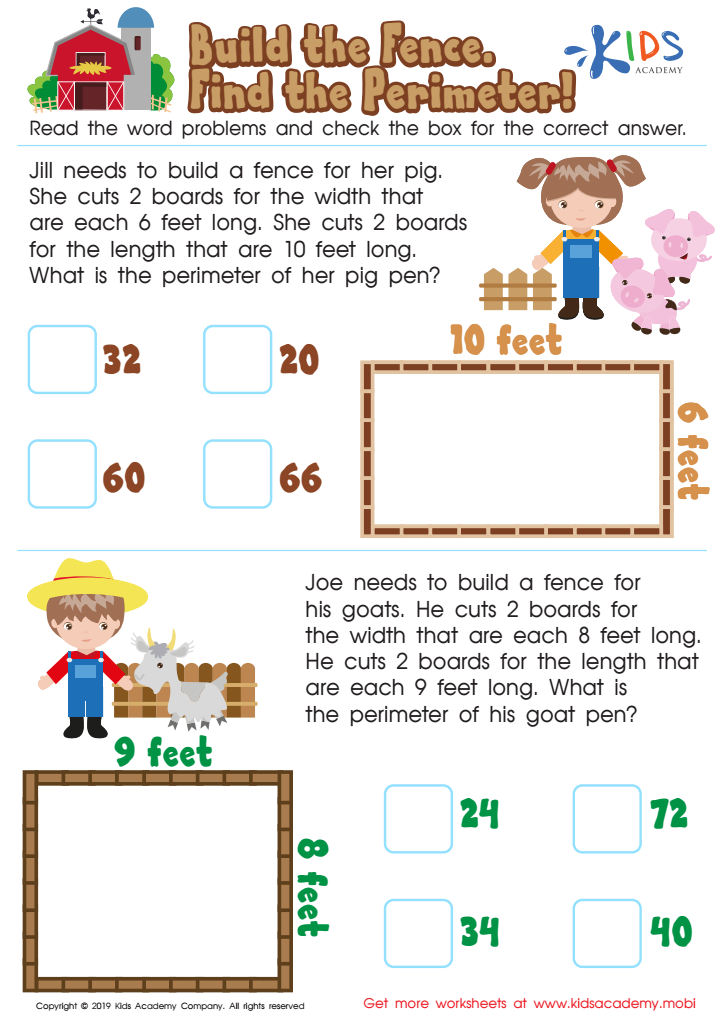
Build the Fence, Find the Perimeter Worksheet
 Assign to My Students
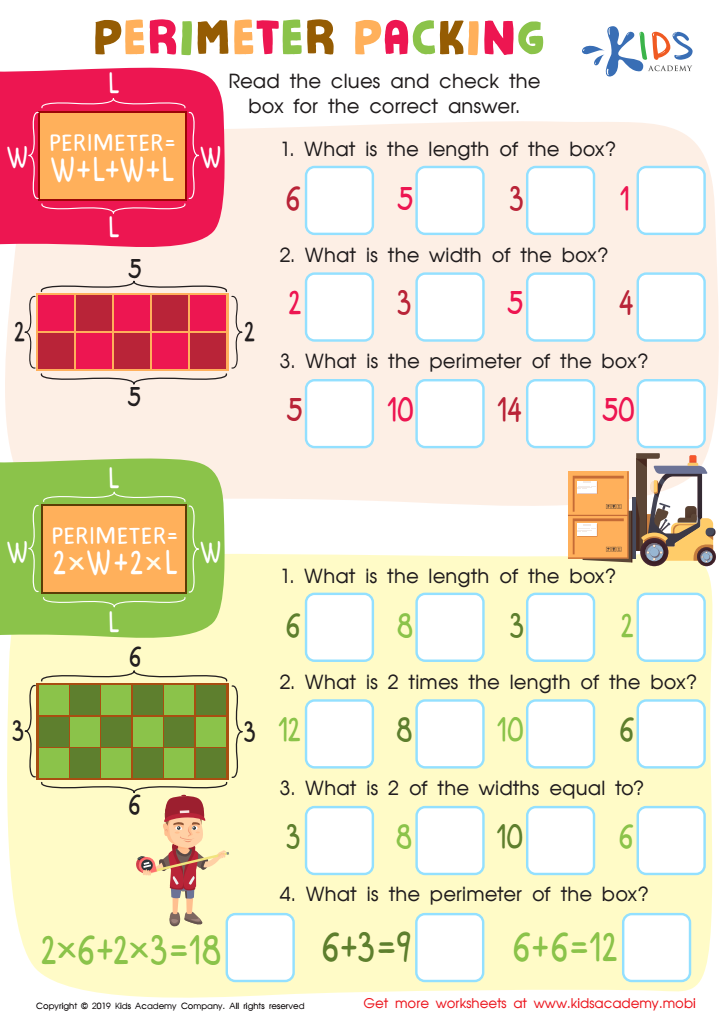
Perimeter Parking Worksheet
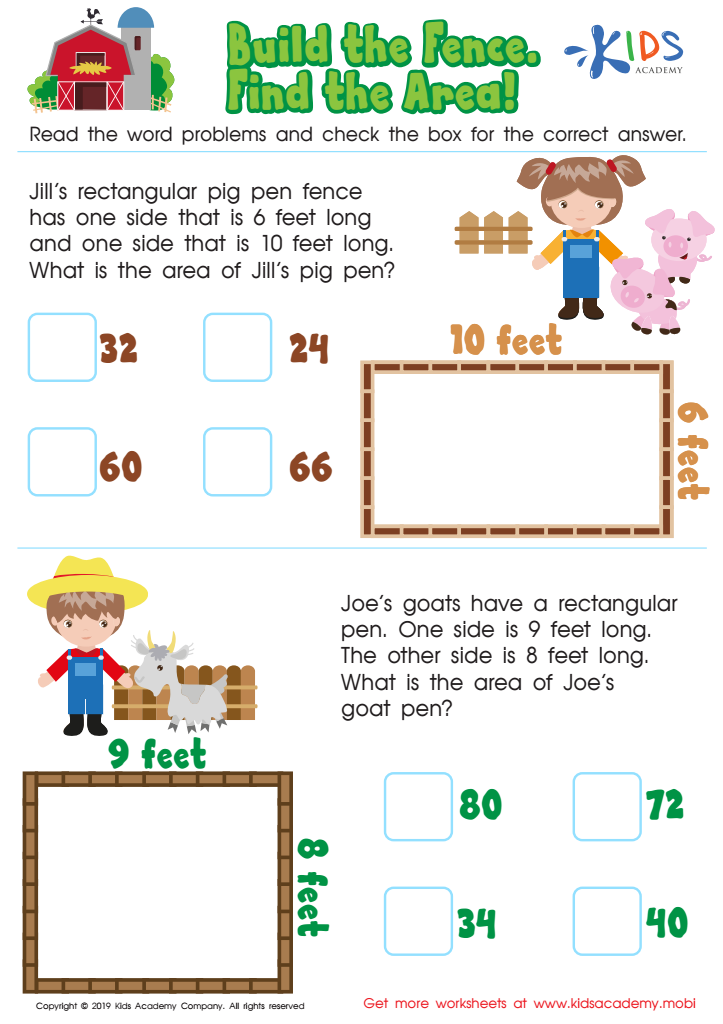
Build the Fence, Find the Area Worksheet








Understanding perimeter and area is foundational for young children's mathematical development, especially for those aged 6-8. During these formative years, children are establishing the basic concepts that they'll build on in later grades. Learning about perimeter and area helps them develop spatial awareness and problem-solving skills.
Knowing the perimeter teaches them to navigate and measure space in their everyday lives. For instance, understanding perimeter can help children recognize the concept of boundaries and limits, both physical and abstract, which is crucial for safety and orderliness.
Learning about area, on the other hand, gives them the tools to compare spaces by their size, helping with organization skills and resource management—skills they might use when determining how many tiles are needed to cover a floor, how to evenly distribute objects within a space, or how to allocate areas for different activities.
Moreover, integrating these concepts boosts their numeracy skills like addition, multiplication, and spatial estimation. When parents and teachers emphasize understanding these foundational concepts, they provide children with a skill set that is essential to success in more advanced topics in geometry, science, engineering, and even everyday scenarios. Investing time in these areas fosters a robust mathematical foundation and promotes critical thinking, setting children on a path to academic self-assurance and competence.