Money recognition Money Worksheets for Ages 6-8
5 filtered results
-
From - To
Our "Money Recognition Worksheets for Ages 6-8" provide an engaging way for young learners to master identifying and counting money. Designed for early grade students, these interactive worksheets introduce essential money concepts through fun activities that include matching coins, identifying bills, and solving practical math problems. With a variety of exercises tailored to different skill levels, children will develop confidence in recognizing and working with different denominations of currency. These worksheets also enhance critical thinking and fine motor skills as students connect with real-world applications of money. Explore our resource to help your child become financially literate from an early age!
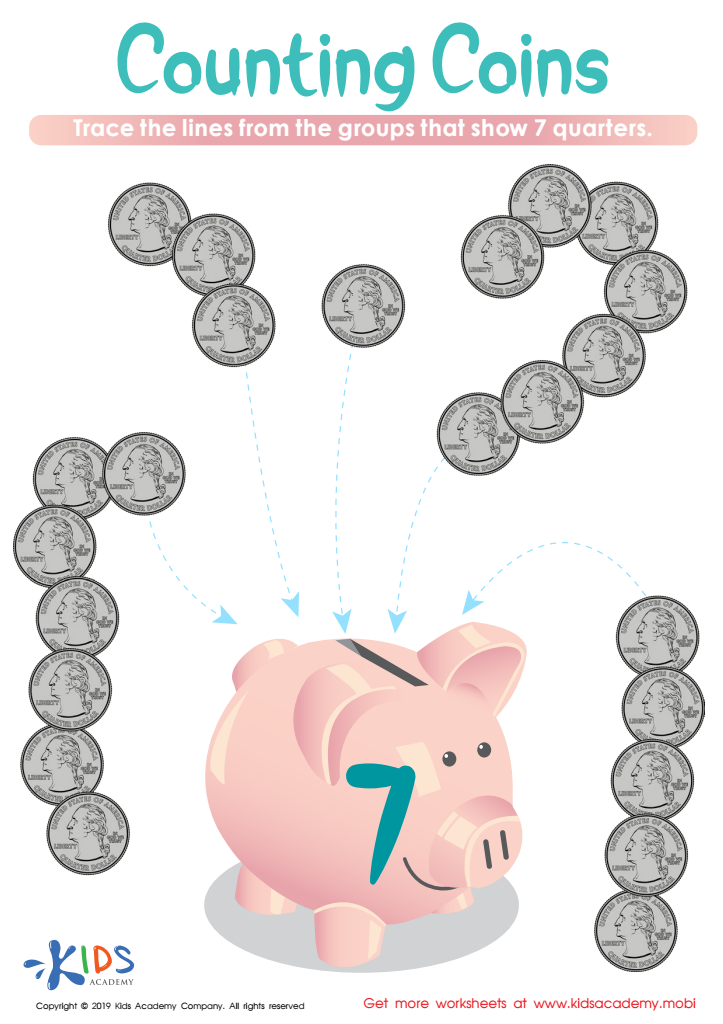
Counting Coins Worksheet
 Assign to My Students
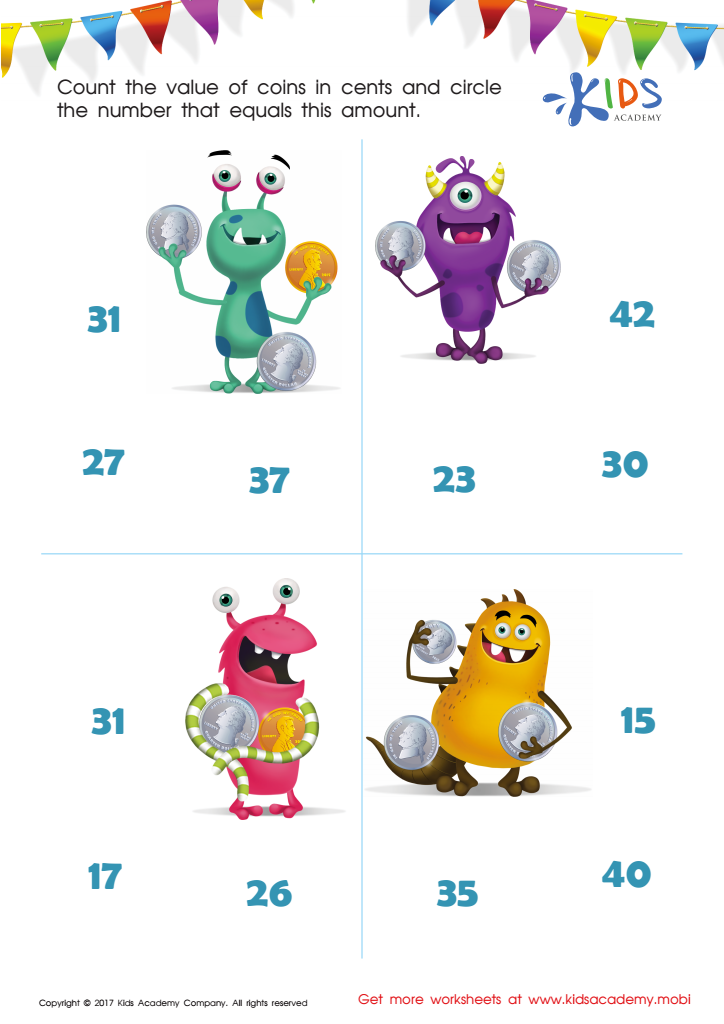
How Many Coins Money Worksheet
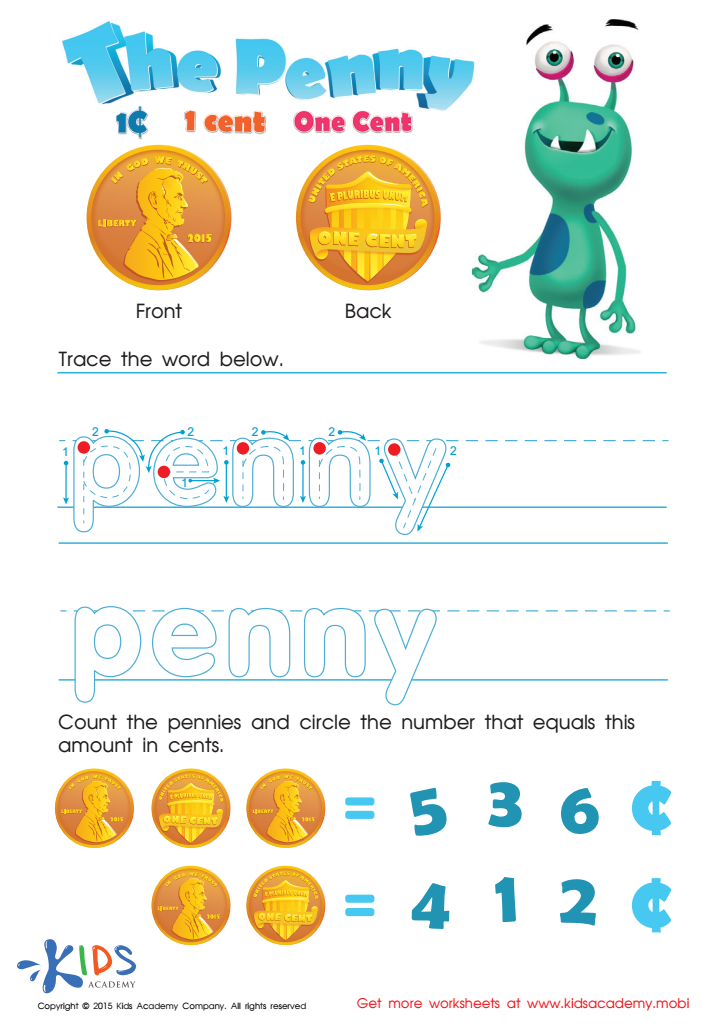
One Cent or the Penny Money Worksheet
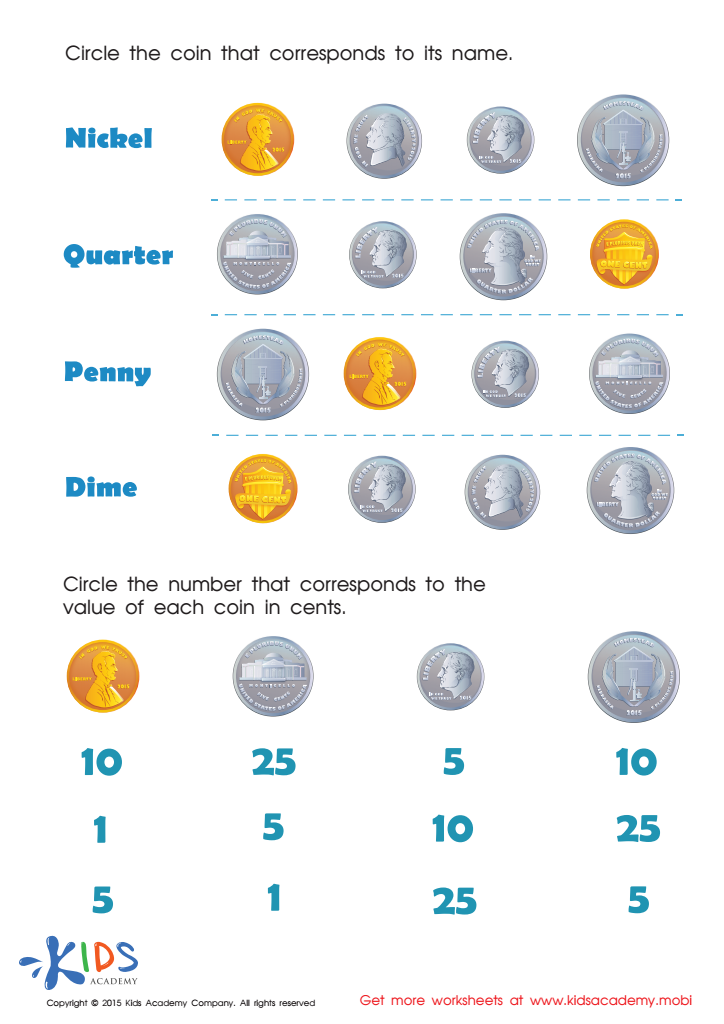
Coin Names and Values Money Worksheet
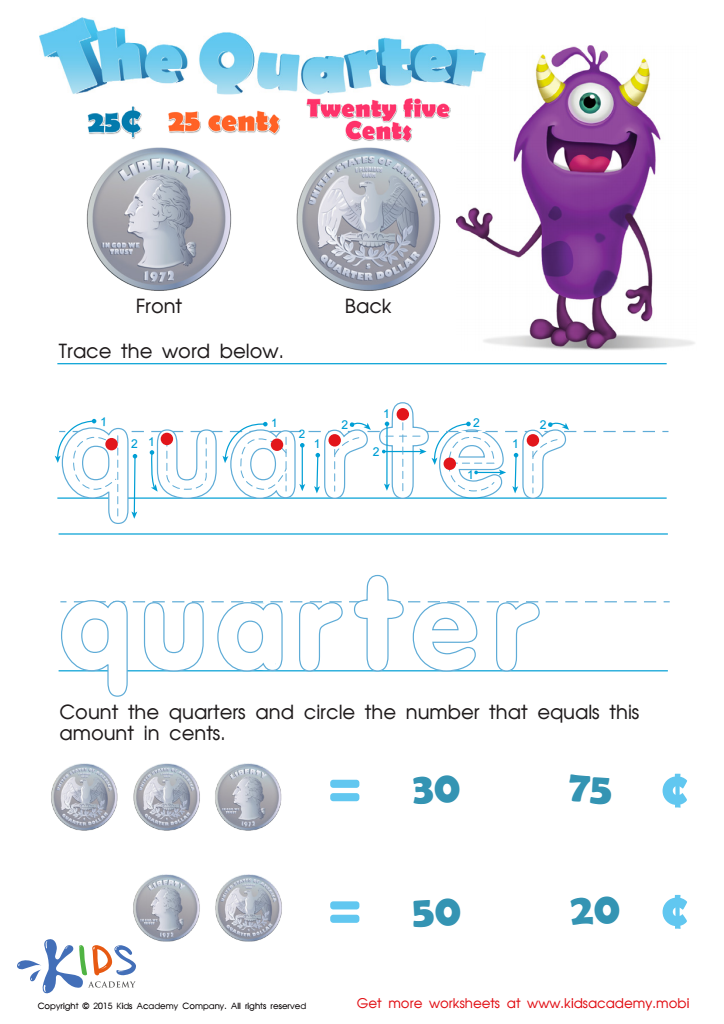
Twenty Five Cents or the Quarter Money Worksheet







Money recognition is a crucial skill for children aged 6-8, as it lays the foundation for financial literacy and responsible money management. At this stage, children are beginning to understand the concept of value, making it an opportune time for them to learn about different denominations and the appropriate uses of money. Teaching children to recognize coins and bills fosters critical thinking and decision-making skills, essential for everyday economic activities.
Parents and teachers should prioritize money recognition because it empowers children with the knowledge needed to navigate real-world transactions, such as shopping or saving. When kids understand how to identify and differentiate between various forms of currency, they are more equipped to make informed choices about spending and saving.
Additionally, early money recognition helps form positive habits, promoting financial responsibility and independence as they grow older. Children can also integrate math skills, such as addition and subtraction, into practical scenarios, making learning interactive and engaging.
By encouraging money recognition in this developmental stage, parents and teachers can help children build confidence in managing money, ultimately preparing them for future financial challenges and fostering a sense of accountability and smart decision-making as they mature.








