Fine Motor Skills Counting Worksheets for Ages 6-8
6 filtered results
-
From - To
Our Fine Motor Skills Counting Worksheets for ages 6-8 are expertly designed to enhance your child's hand-eye coordination while reinforcing essential math skills. These engaging activities combine counting exercises with fun tasks that promote dexterity, precision, and control. Ideal for young learners, each worksheet offers a delightful challenge that makes learning both enjoyable and effective. Whether used at home or in a classroom setting, these printables ensure that your child develops strong counting ability and fine motor skills. Boost your child's confidence and academic foundation with our carefully crafted worksheets, making math mastery a joyful experience!
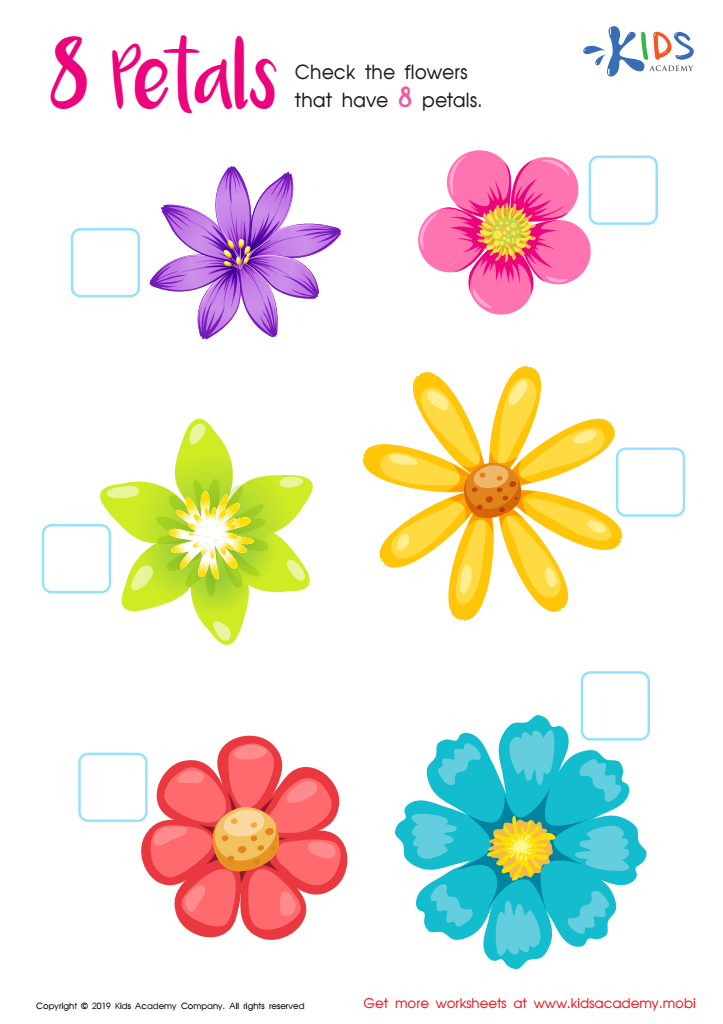
8 Petals Worksheet
 Assign to My Students


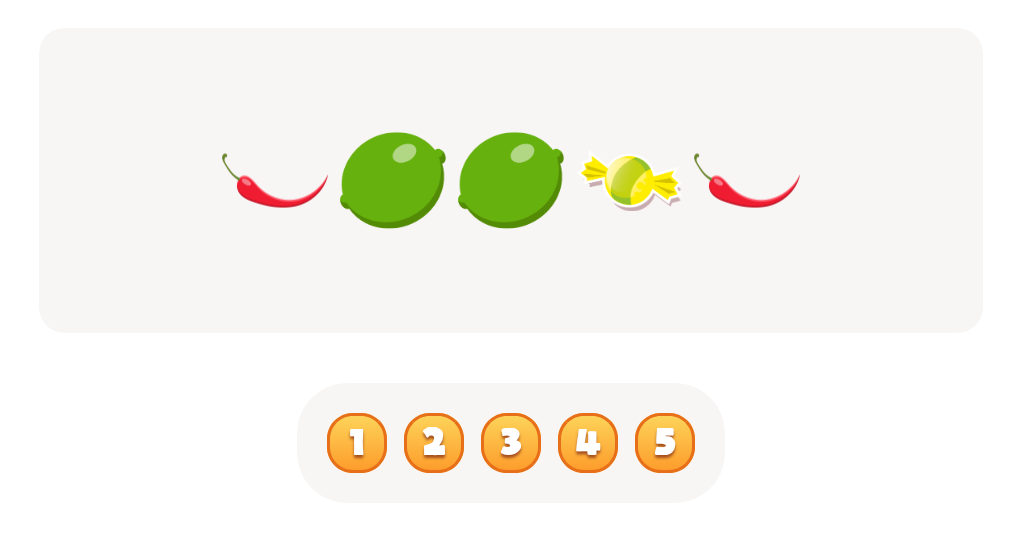

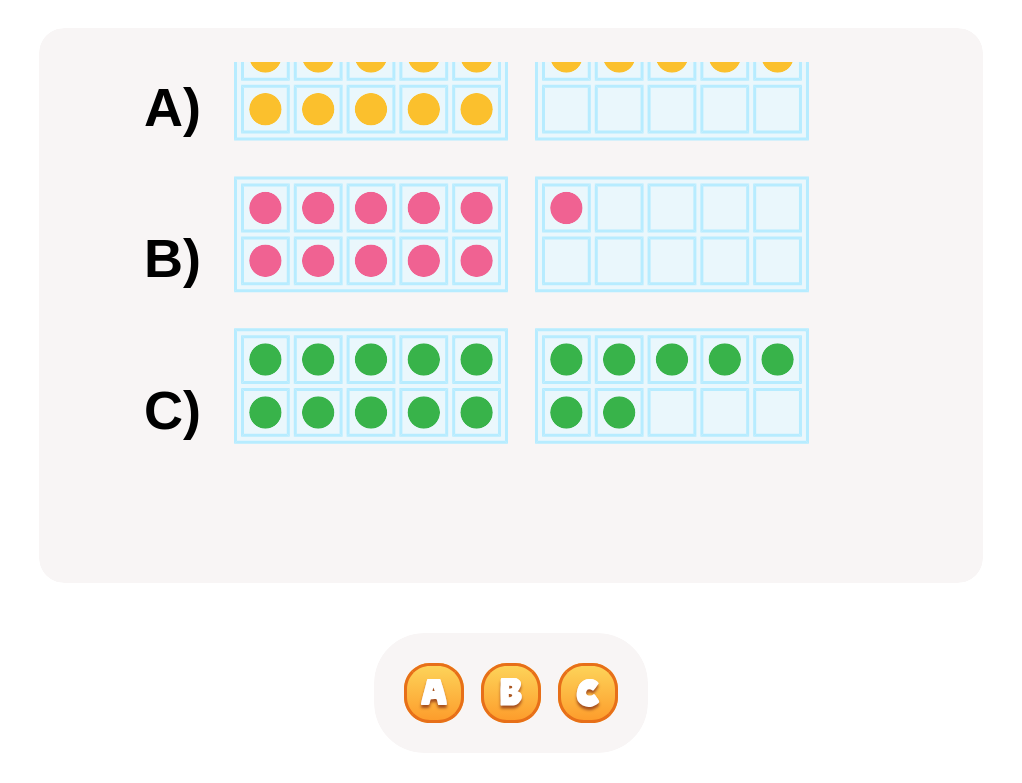
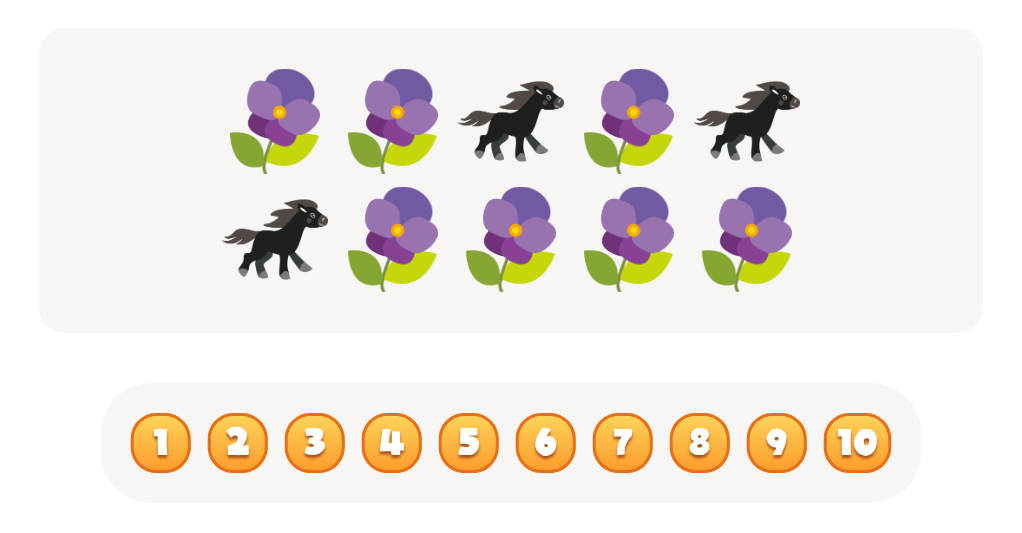

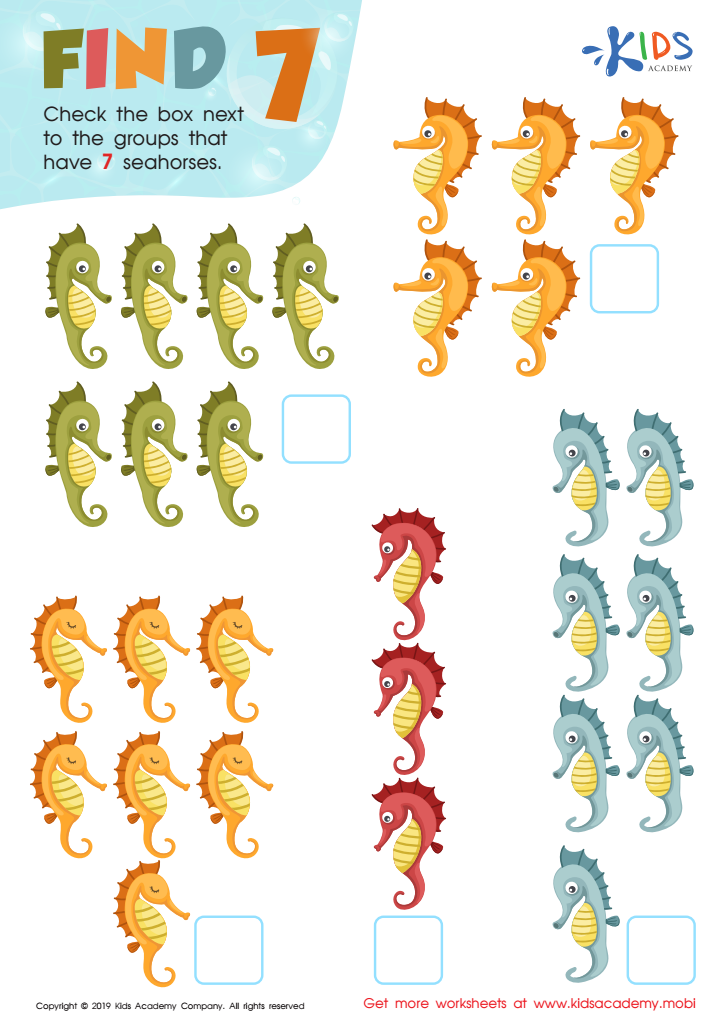
Find 7 Worksheet
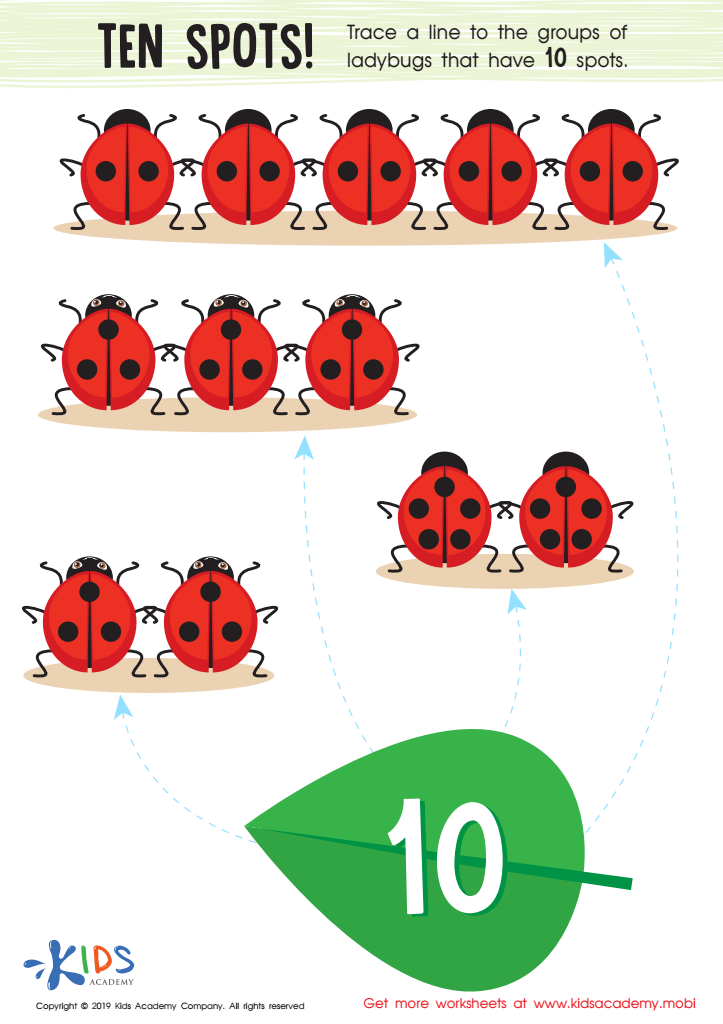
Ten Spots Worksheet
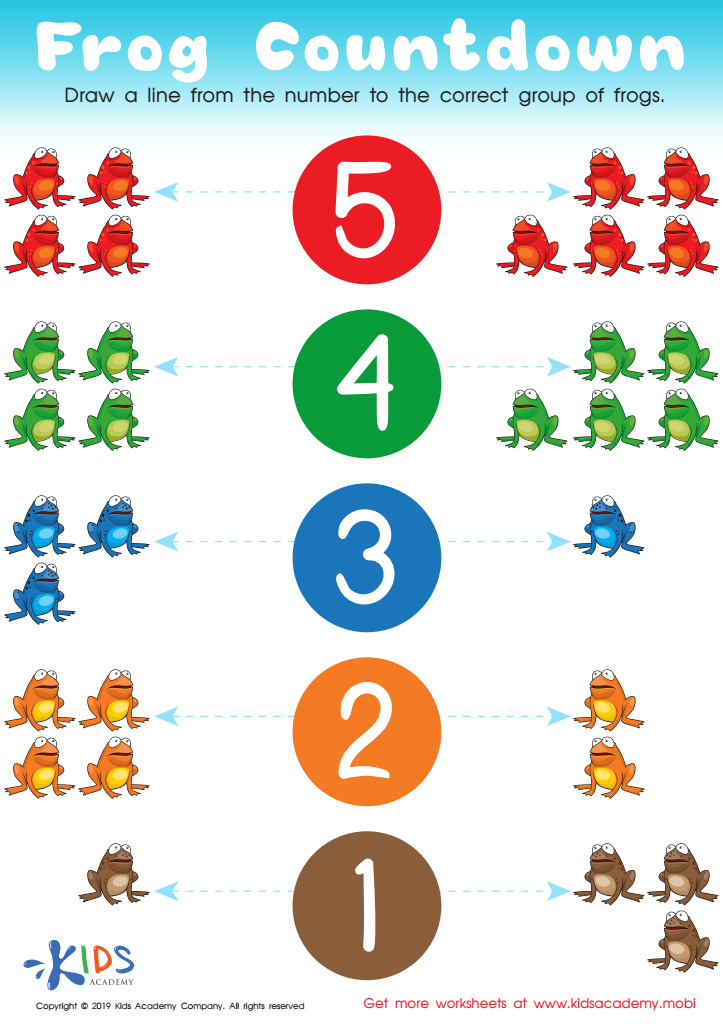
Frog Countdown Worksheet
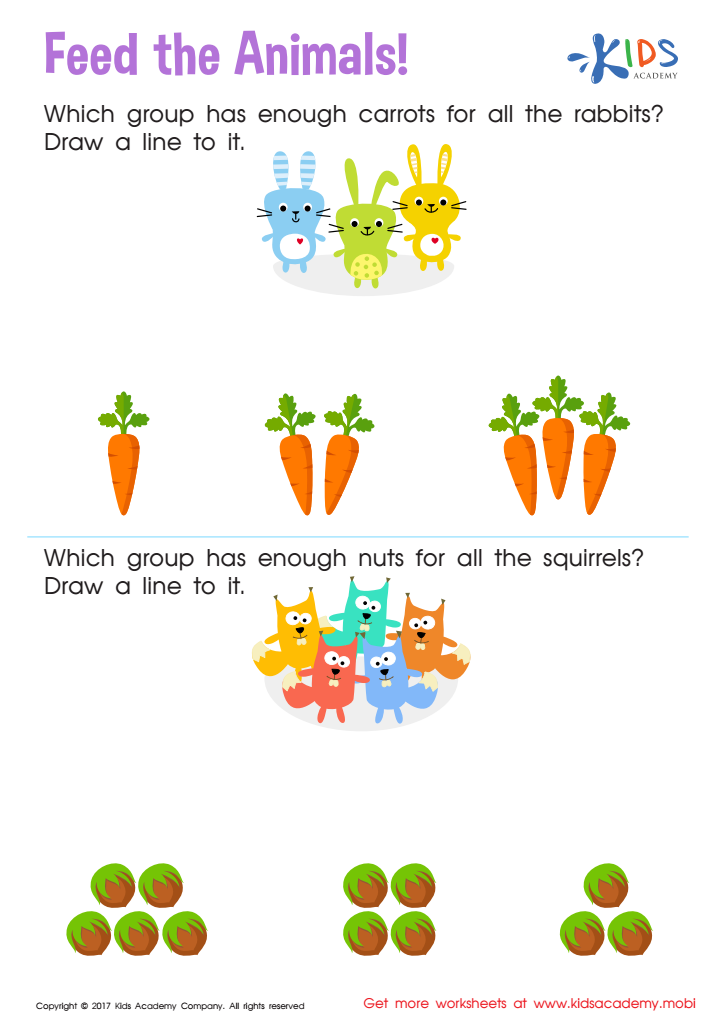
Count and Match: Feed the Animals Worksheet
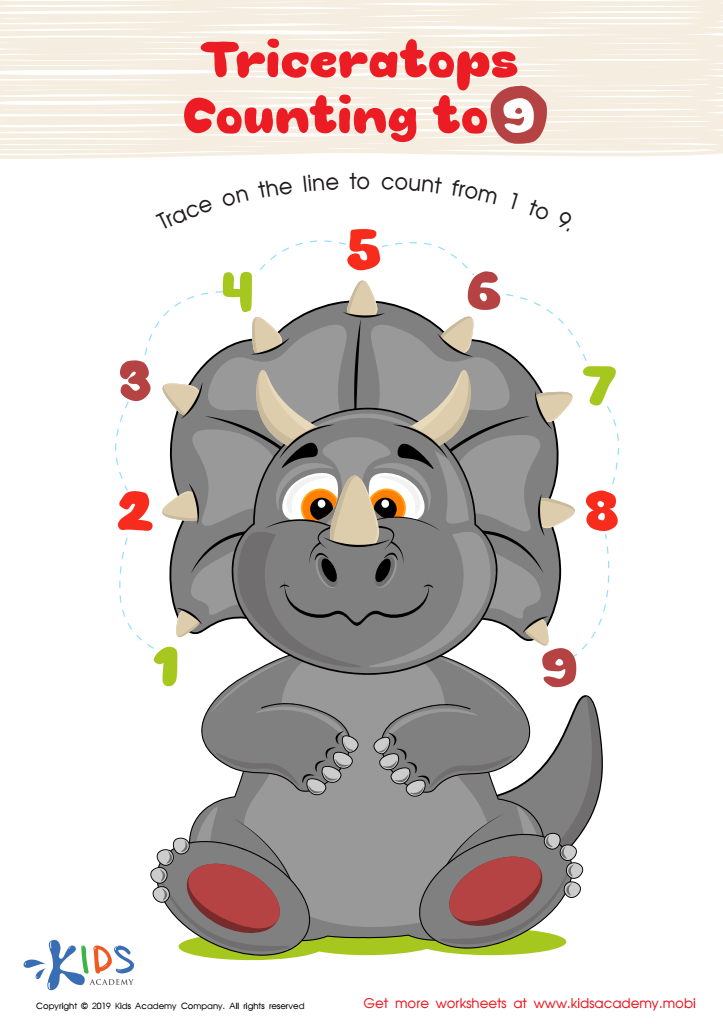
Triceratops Counting to 9 Worksheet







Fine motor skills counting is crucial for children aged 6–8 because it lays the foundational building blocks for cognitive development and everyday life tasks. These skills involve the coordination of small muscles in hands and fingers, essential for writing, buttoning clothes, and manipulating small objects. At this age, children are honing their handwriting abilities, and fine motor skills are directly correlated with legible writing, which affects academic performance and self-esteem.
When parents and teachers emphasize fine motor skills counting, they are effectively supporting numeracy and math skills. Counting involves precise finger movements that mirror those needed for grasping and controlling writing tools. This helps to create a more cohesive learning experience, enabling children to internalize numerical concepts more effectively. For instance, using counting beads or abacuses requires dexterity, tying together tangible touch with abstract numbers.
Beyond academics, fine motor activities enhance critical thinking and problem-solving abilities. Tasks that blend counting with manipulation, like sorting coins or snapping Lego pieces, encourage pattern recognition and sequencing. As children gain better control over their fine motor skills, they also build patience and persistence.
Hence, supporting fine motor skills counting not only improves children's academic success but also equips them with practical life skills, fostering well-rounded development.








