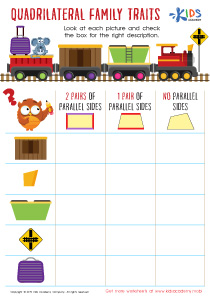
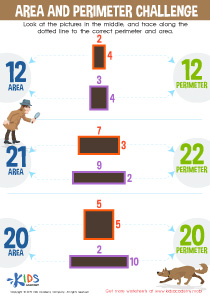
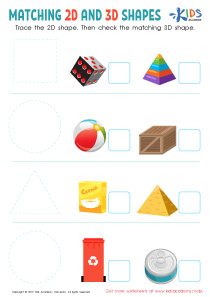
Comparing Fractions Fractions of Shapes Worksheets for Ages 6-8
3 filtered results
-
From - To
Discover a fun and engaging way for young learners aged 6-8 to master comparing fractions with our "Comparing Fractions of Shapes" worksheets! Designed to strengthen key math skills, these worksheets provide colorful visuals and hands-on activities that make learning about fractions enjoyable. Students will explore various shapes, identify fractions, and compare them using visual aids and real-life examples. Perfect for classrooms or at-home practice, these resources foster critical thinking and problem-solving skills in early learners. Equip your child with the tools they need to understand fractions and build a strong mathematical foundation. Start comparing fractions today!
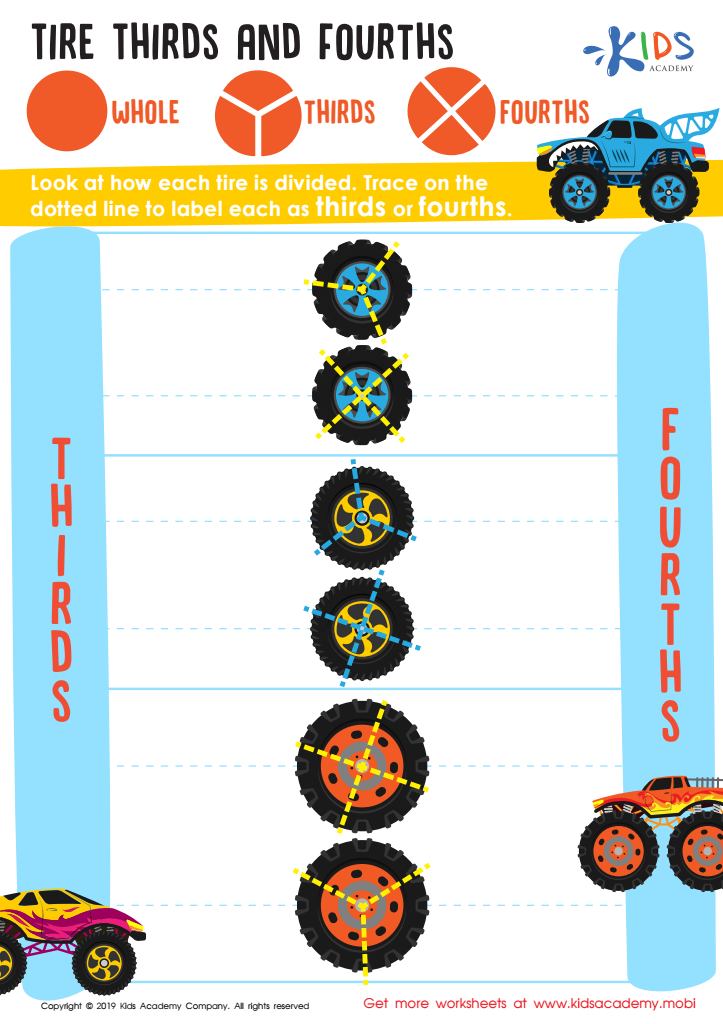
Tire Thirds and Fourths Worksheet
 Assign to My Students
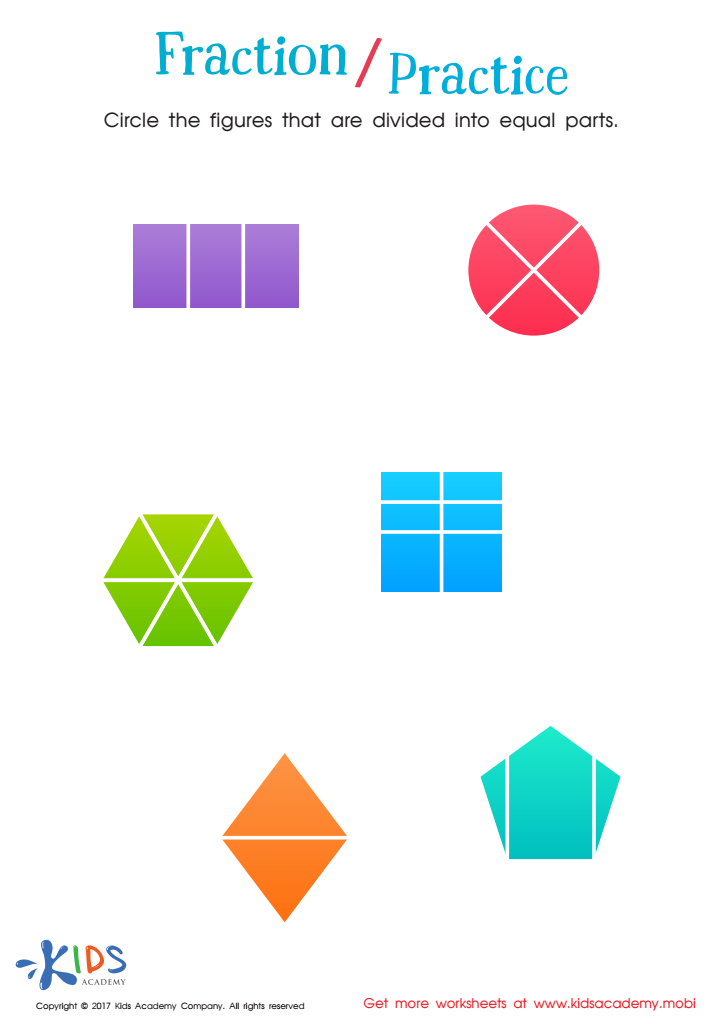
Fractions: Shapes Worksheet
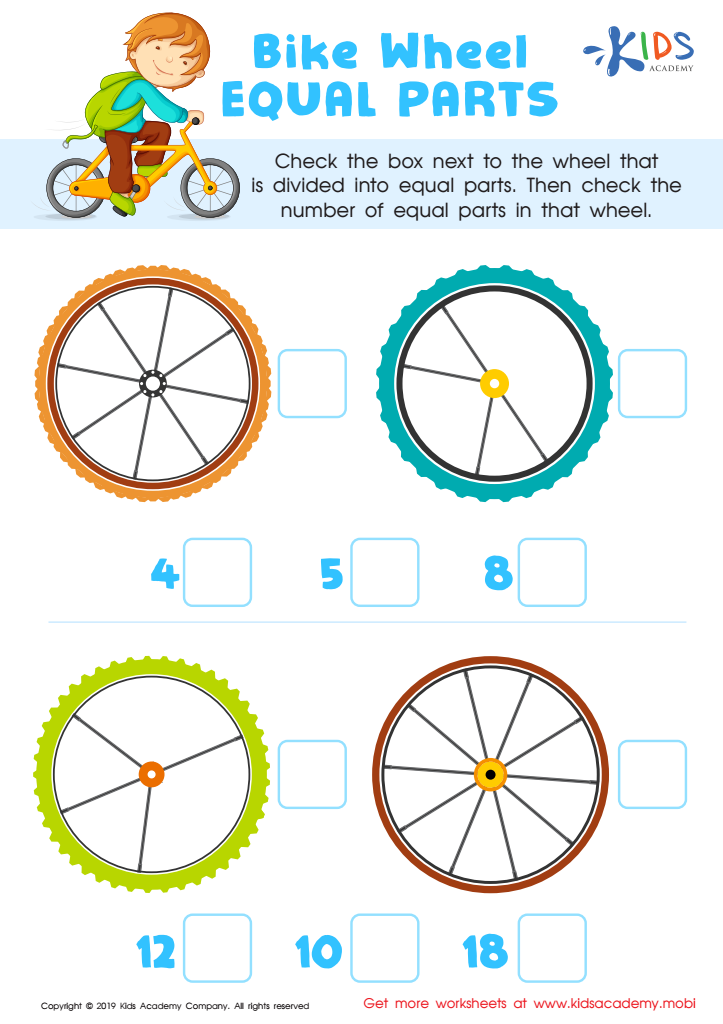
Bike Wheel Equal Parts Worksheet








Understanding and comparing fractions is crucial for children aged 6-8 as it lays a strong foundation for their mathematical skills. At this age, children begin to grasp important concepts related to fractions, such as parts of a whole, which are often illustrated using shapes. When they learn to compare fractions of shapes—like recognizing that 1/2 of a circle is larger than 1/4—they develop visual-spatial reasoning and enhance their problem-solving abilities.
Parents and teachers should prioritize this understanding because it fosters mathematical confidence and literacy. Fraction concepts are not just theoretical; they apply to everyday situations, from sharing food to dividing toys. By engaging with fractions of shapes, children can connect math to real-life contexts, making learning more relevant and enjoyable.
Moreover, this skill set prepares them for more complex mathematical concepts in higher grades. Early mastery of comparing fractions can improve a child's ability to tackle word problems and engage with ratios and proportions later on.
Finally, practicing fractions contributes to cognitive development, as students synthesize information and think critically. Overall, comparing fractions helps cultivate a positive attitude towards math, ensuring children are better equipped for future challenges.