Categorization skills Geometry Worksheets for Ages 6-8
5 filtered results
-
From - To
Enhance your child's geometry skills with our Categorization Skills Geometry Worksheets, tailored for ages 6-8. Designed to engage young learners, these worksheets provide fun and interactive activities that help kids identify, classify, and categorize various geometric shapes. By exploring triangles, circles, squares, and more, children will develop critical thinking and analytical skills while reinforcing their understanding of fundamental geometry concepts. Our worksheets are easy to use, downloadable, and perfect for home or classroom use. Foster your child’s love for math and geometry with these dynamic resources, setting them on a path for future academic success in a playful way!
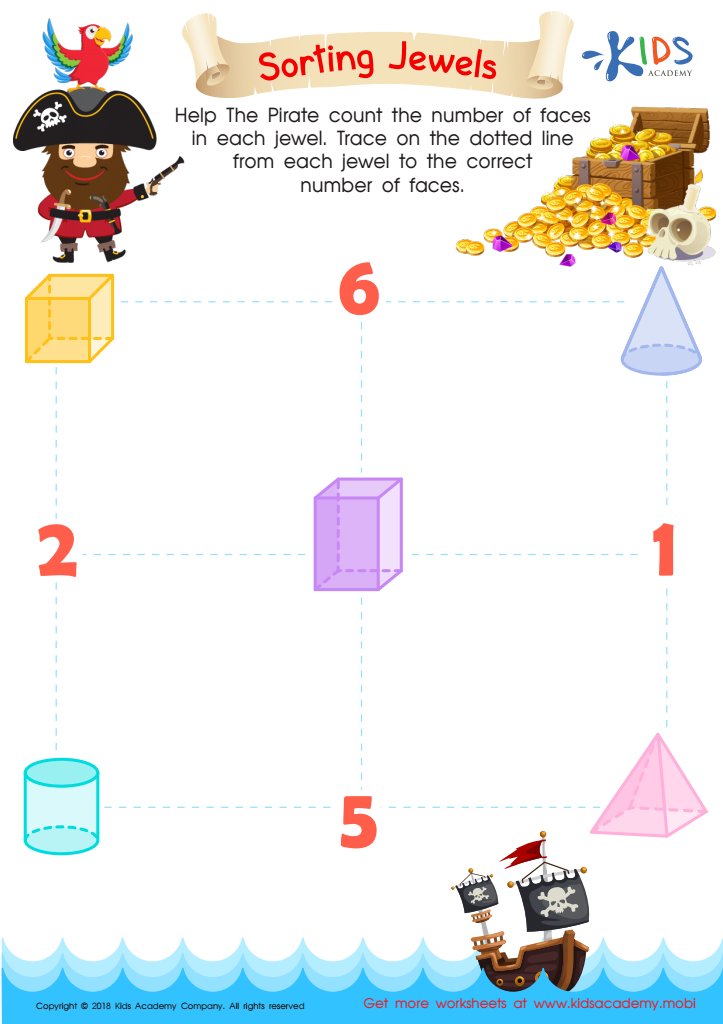
Sorting Jewels Worksheet
 Assign to My Students











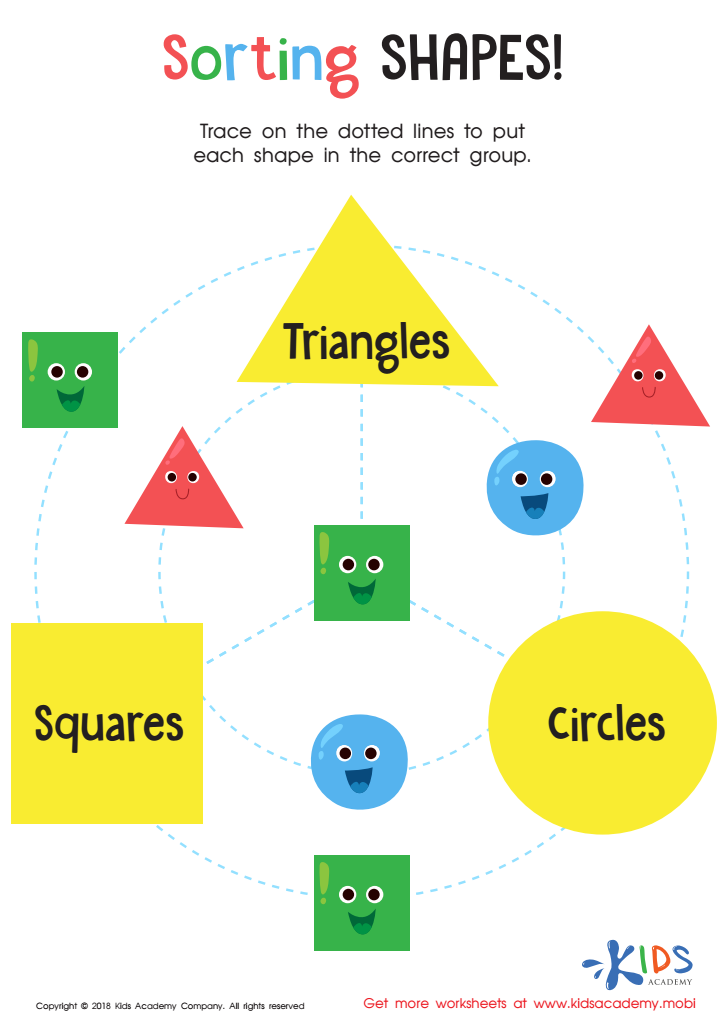
Sorting Shapes - Part 3 Worksheet
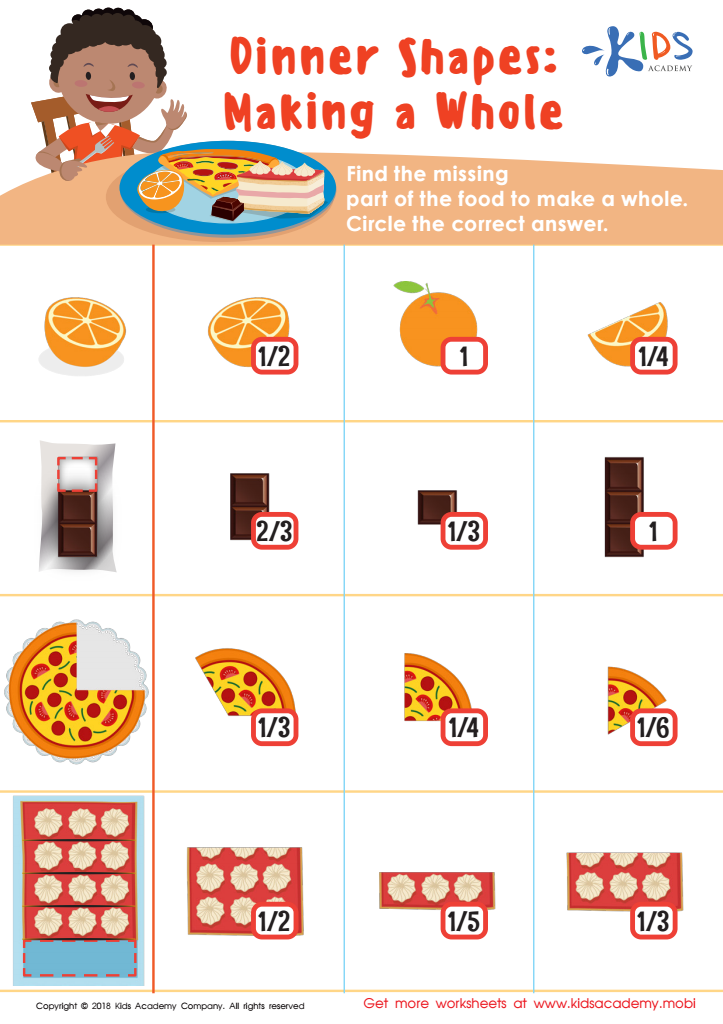
Dinner Shapes: Making a Whole Worksheet
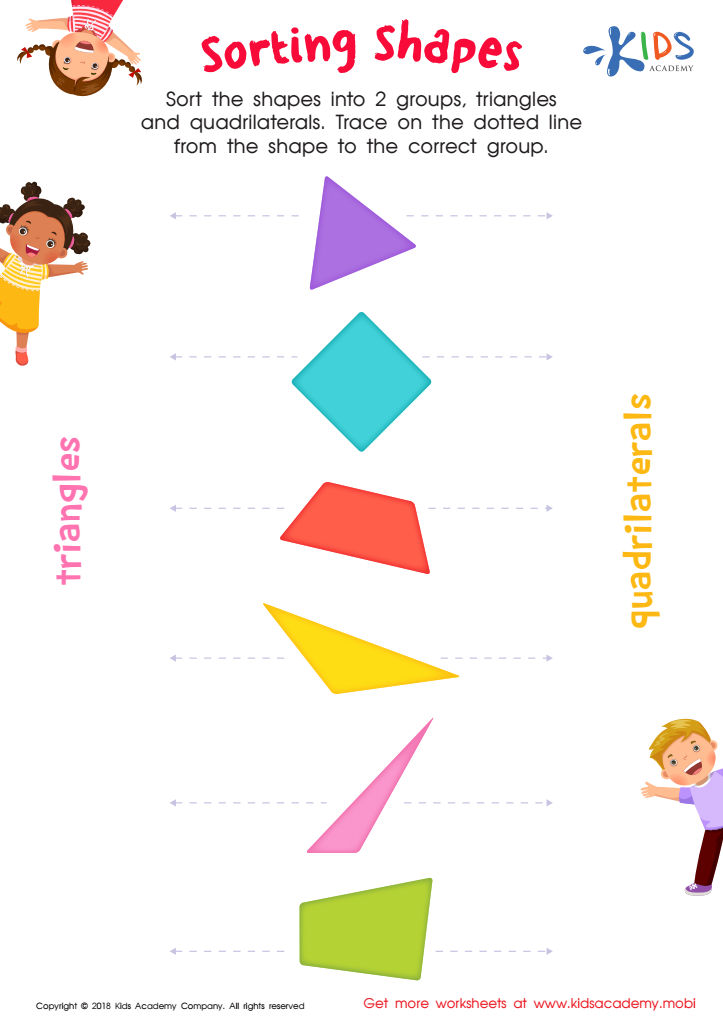
Sorting Shapes Worksheet
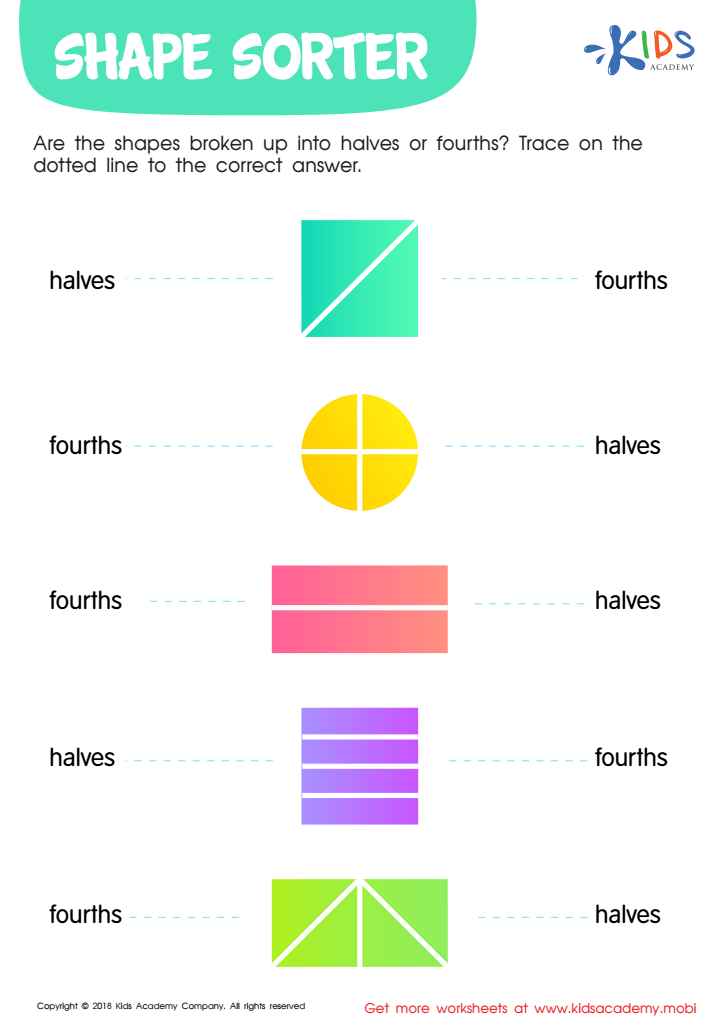
Shape Sorter Worksheet








Categorization skills in geometry are crucial for children aged 6 to 8 as they serve as the foundation for more complex mathematical concepts and critical thinking abilities. By learning to categorize shapes based on attributes such as size, color, and angles, children develop essential skills in observation and classification. This early exposure not only reinforces their understanding of geometry but also enhances their overall cognitive development.
Parents and teachers should prioritize these skills because they foster a child's ability to make connections between different geometric concepts. For instance, understanding the differences and similarities between shapes can lead to improved problem-solving abilities. The ability to categorize helps in organizing information and enhances memory retention at an early age.
Moreover, categorization promotes structured thinking, allowing children to make informed decisions related to mathematical challenges in practical scenarios. It lays the groundwork for future subjects like arithmetic, spatial reasoning, and even science, as children learn to recognize patterns and relationships.
Lastly, supporting the development of categorization skills fosters a child's confidence and resilience in learning, encouraging them to explore math-related concepts with enthusiasm. Overall, investing in these foundational skills benefits not just mathematical ability, but overall cognitive and developmental growth.








