Comparing Fractions Geometry Worksheets for Ages 6-8
5 filtered results
-
From - To
Discover engaging and educational Comparing Fractions Geometry Worksheets designed for children aged 6 to 8. These interactive resources help young learners develop critical math skills by comparing and understanding fractions in a geometric context. Featuring colorful illustrations and age-appropriate problems, the worksheets encourage creativity while promoting essential concepts such as equivalence, orders of fractions, and visual representations. As children work through these printable activities, they gain confidence in their math abilities and enhance their understanding of shapes and measurements. Perfect for classroom use or at-home learning, these worksheets make mastering mathematics fun and enjoyable for early learners!
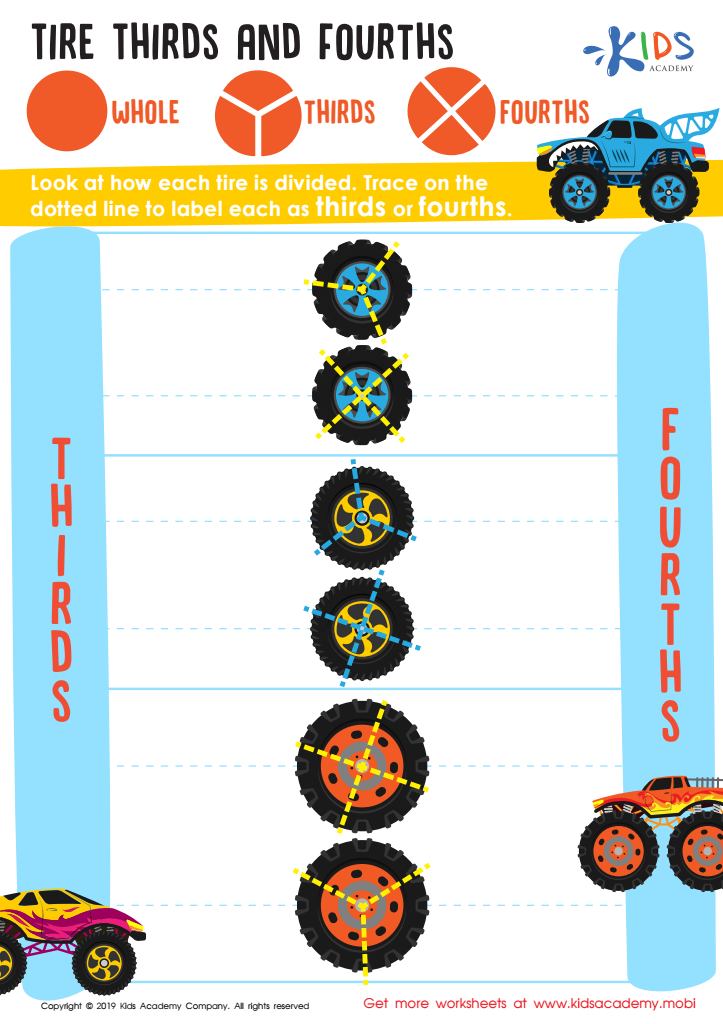
Tire Thirds and Fourths Worksheet
 Assign to My Students











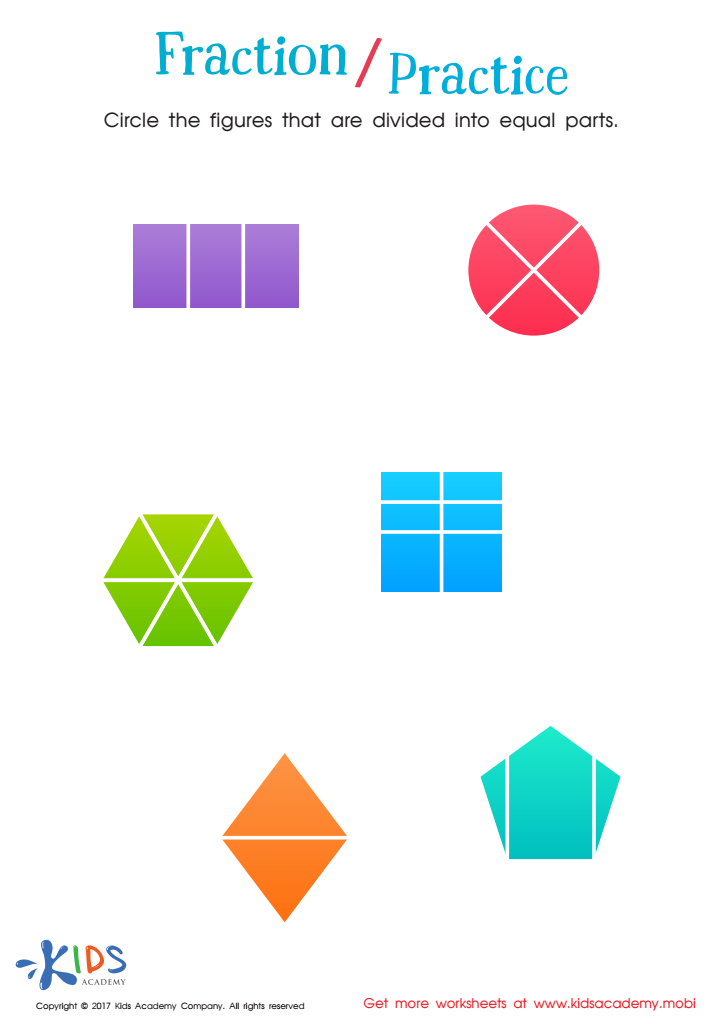
Fractions: Shapes Worksheet
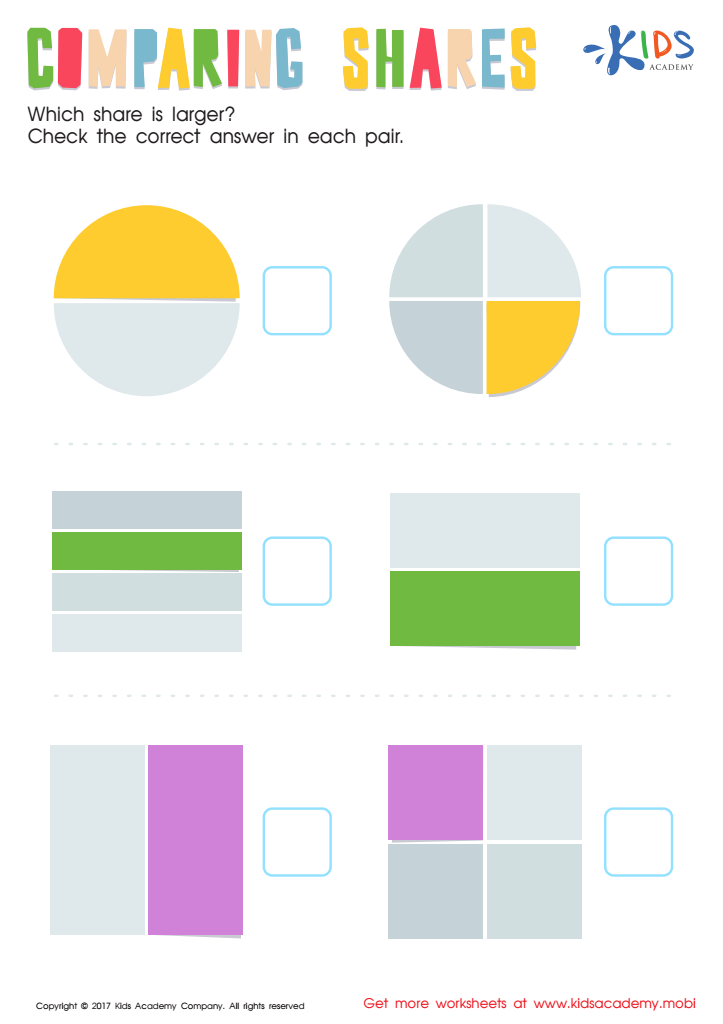
Comparing Shares Worksheet
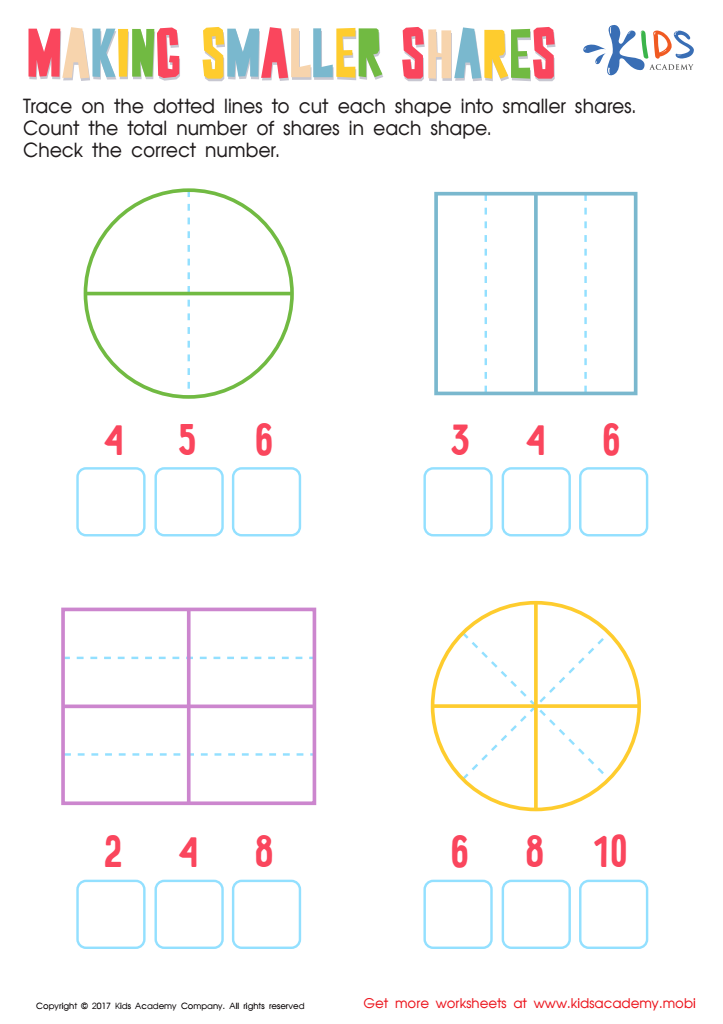
Making Smaller Shares Worksheet
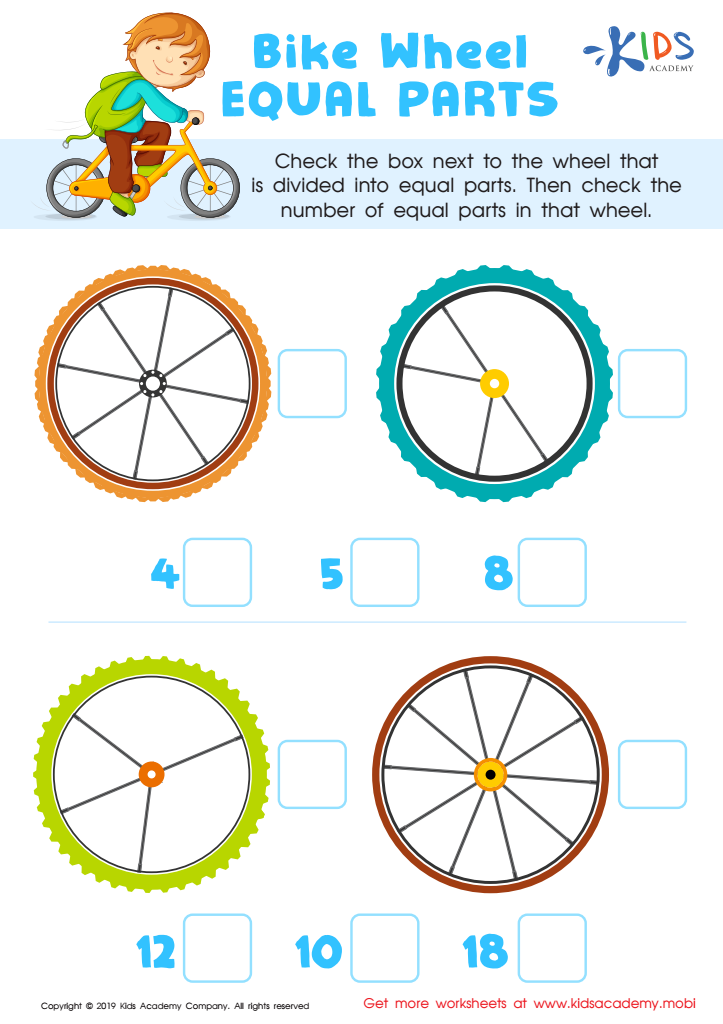
Bike Wheel Equal Parts Worksheet








Comparing fractions is a fundamental skill that lays the groundwork for more advanced mathematical concepts. For children ages 6-8, understanding fractions helps them grasp the notion of parts versus wholes, which is crucial not just in math, but also in real-life situations like cooking, sharing, or measuring. Parents and teachers should care about teaching this concept because it enhances critical thinking skills and promotes problem-solving abilities.
When kids compare fractions, they learn to analyze and evaluate different parts, measuring them against each other. This reinforces their understanding of relationships between quantities, which is applicable in other subjects, including geometry. In early geometry lessons, knowledge of fractions aids in comprehending shapes, area, and proportions. Moreover, mastering comparison helps build confidence in their mathematical abilities, making them more eager to tackle complex problems in the future.
Additionally, working on comparing fractions fosters communication skills, as children often discuss their reasoning with peers or adults, honing their ability to articulate thoughts and ideas. In essence, engaging in fraction comparison sets a strong mathematical foundation, promotes overall cognitive development, and prepares them for future academic challenges, making it imperative for parents and teachers to prioritize this learning in early education.








