
Mathematical reasoning Geometry Worksheets for Ages 6-8
3 filtered results
Difficulty Level
Grade
Age
-
From - To
Subject
Activity
Standards
Explore our engaging Mathematical Reasoning Geometry Worksheets designed specifically for children aged 6-8! These fun and interactive worksheets help young learners develop critical thinking skills while understanding basic geometric concepts. Through a variety of exercises—including shape identification, measurement, and basic area calculations—students will enhance their spatial awareness and problem-solving abilities. Perfect for classroom activities or at-home learning, our worksheets support foundational geometry skills in alignment with educational standards. Foster your child’s confidence in math with these expertly crafted resources. Visit our site to download worksheets that will inspire creativity and a love for learning geometry today!
Favorites
With answer key
Interactive
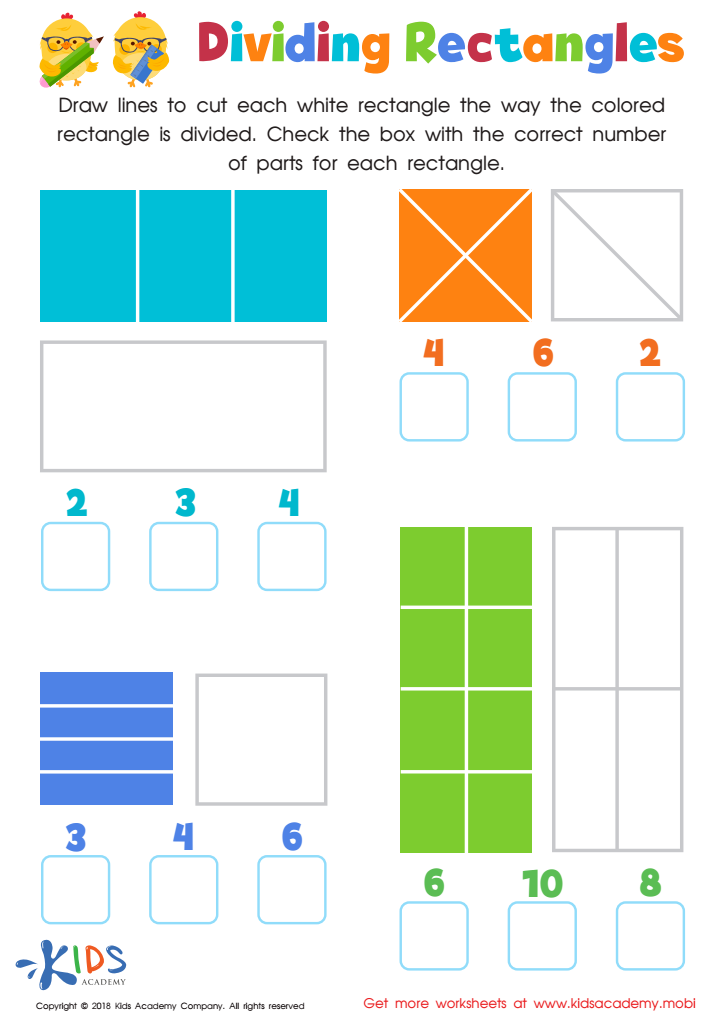
Dividing Rectangles Worksheet
Ask your child to draw lines to divide the white rectangles like the colored ones. Then, have them count the parts in each and choose the correct number. This worksheet will help them practice counting and dividing.
 Assign to My Students
Dividing Rectangles Worksheet
Worksheet











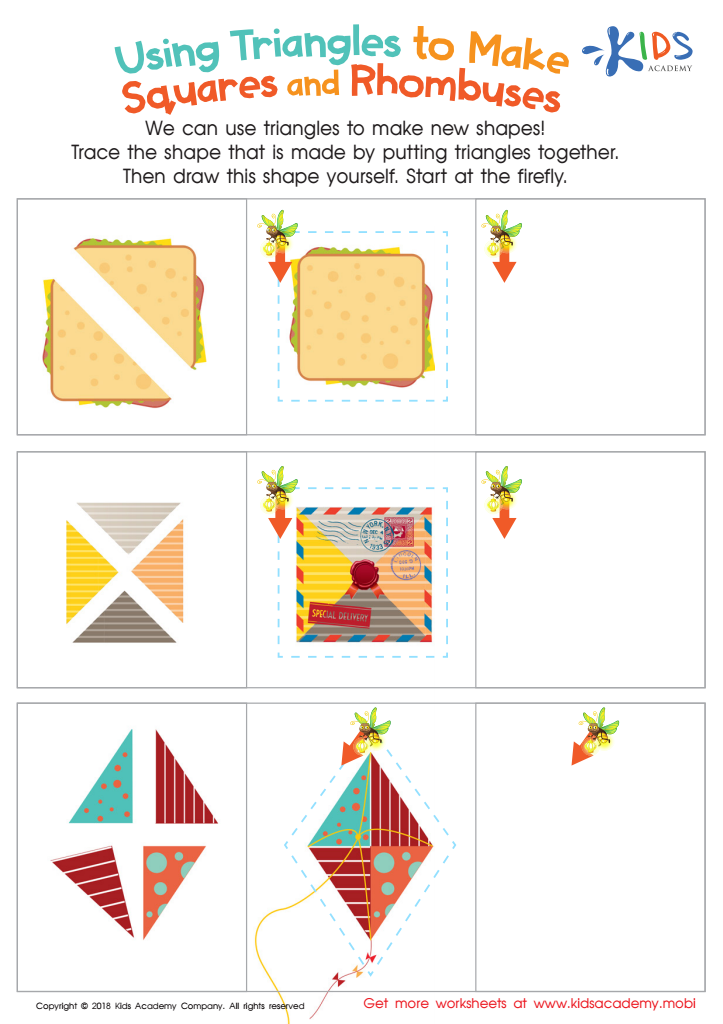
Using Triangles to Make Squares and Rhombuses Worksheet
Learning shapes is a fun way to boost spatial skills and critical thinking. This worksheet shows children how to use triangles to construct squares and rhombuses. Clear illustrations and a printout help children draw the new shape. A great activity for the math classroom! 80 words.
Using Triangles to Make Squares and Rhombuses Worksheet
Worksheet
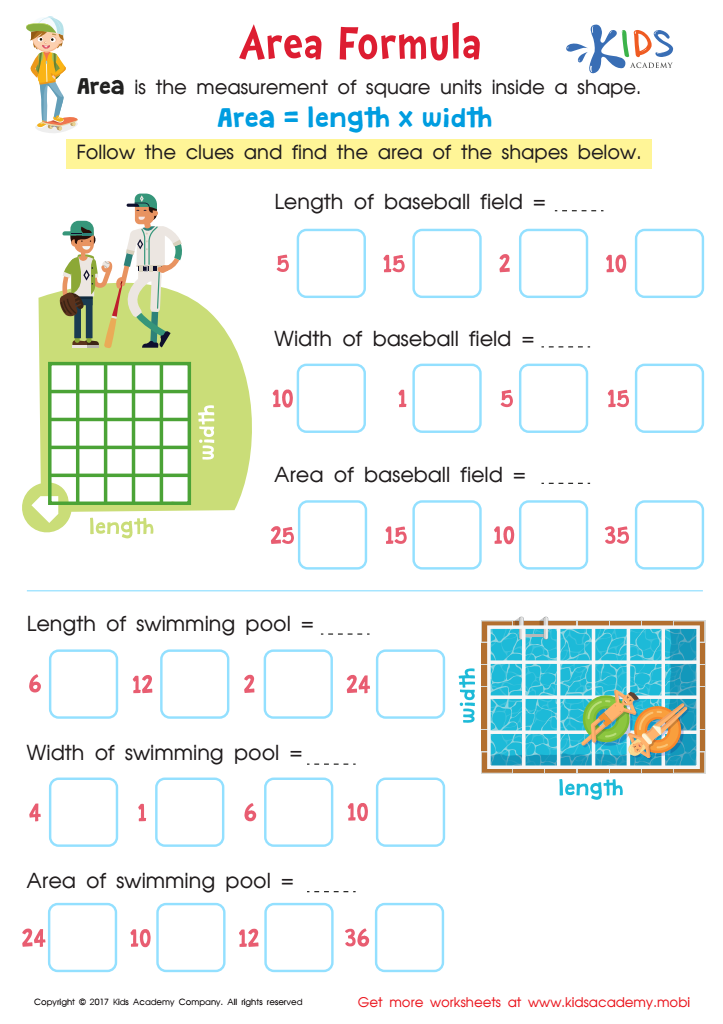
Area Formula Worksheet
This fun-filled area formula worksheet PDF helps kids learn the geometric concept of area. It breaks down the formula with easy-to-follow steps, starting with counting squares to determine the length and width, then multiplying them to get the area.
Area Formula Worksheet
Worksheet
Join Kids Academy for Free
Who is primarily going to use this learning content?








Mathematical reasoning in geometry is a crucial skill for children aged 6-8, significantly shaping their cognitive development and problem-solving abilities. At this early stage in their education, children begin to engage with shapes, sizes, and spatial relationships, laying a strong foundation for more complex mathematical concepts later on. Parents and teachers should care about developing geometric reasoning as it enhances critical thinking skills, allowing children to analyze and interpret the world around them.
Moreover, geometric reasoning promotes curiosity and encourages exploration. Engaging children in geometric activities—such as spotting shapes in everyday objects or constructing simple structures—can foster their creativity and spatial awareness. These skills are not only vital for future math proficiency but also translate into real-life applications, from understanding maps to navigating physical spaces.
Furthermore, early exposure to geometry enhances language development; children learn to articulate their observations and justify their reasoning. This communication aspect helps in building confidence and social skills. By prioritizing geometric reasoning, parents and teachers equip children with the essential tools they need for successful future learning, reinforcing the idea that mathematics isn't just about numbers, but consists of a deep understanding of the world itself.








