Shape comparison Geometry Worksheets for Ages 6-8
3 filtered results
-
From - To
Explore our engaging Shape Comparison Geometry Worksheets designed specifically for children aged 6-8! These interactive resources help young learners develop essential geometric concepts while fostering critical thinking and observation skills. Through fun activities, your child will compare various shapes, identify similarities and differences, and enhance their understanding of geometry. Suitable for both classroom and at-home learning, our worksheets cater to various learning levels, ensuring that every child can enjoy and grasp these important concepts. Unlock your child's potential in math with our carefully crafted shape comparison activities, providing a fun, educational experience that supports foundational skills essential for future success!
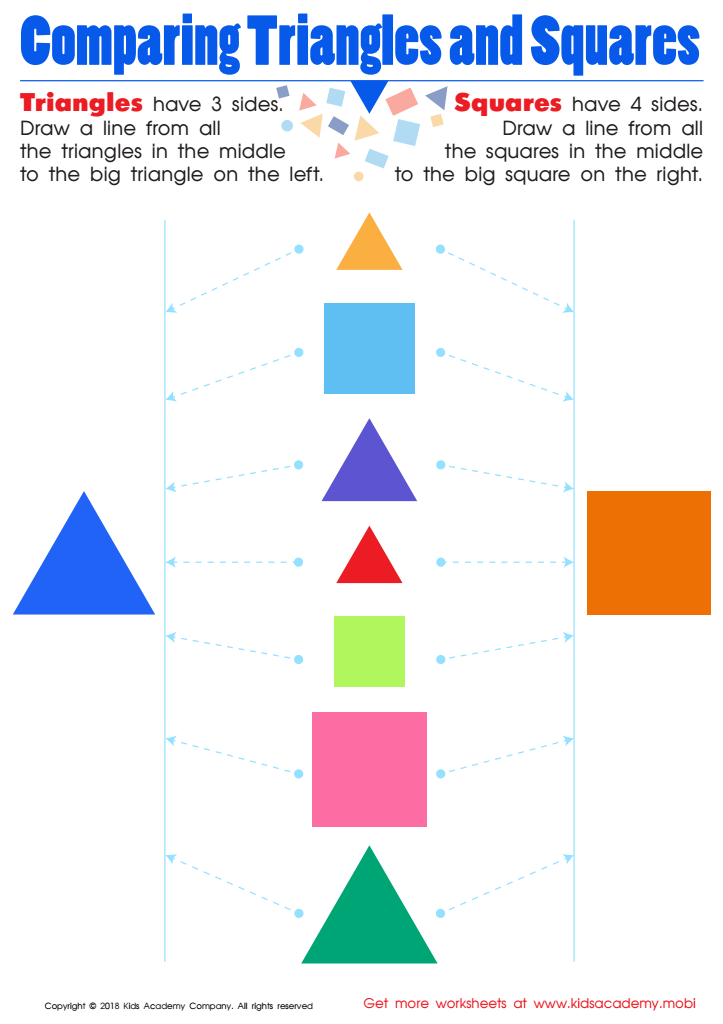
Comparing Triangles Squares Worksheet
 Assign to My Students











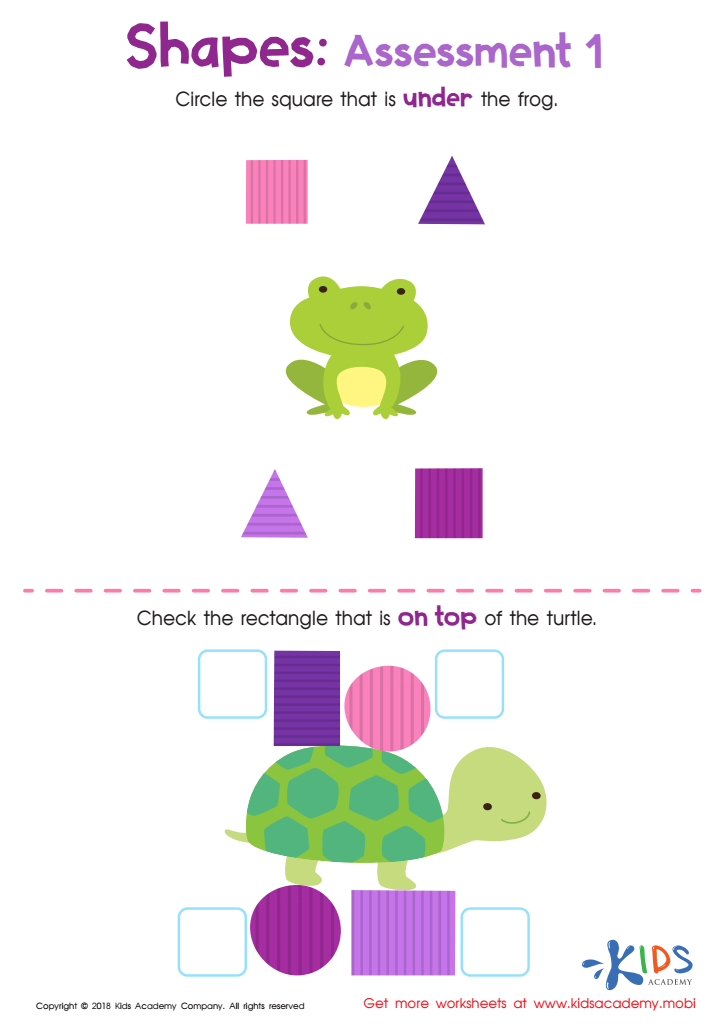
Geometry – Assessment 1 Worksheet
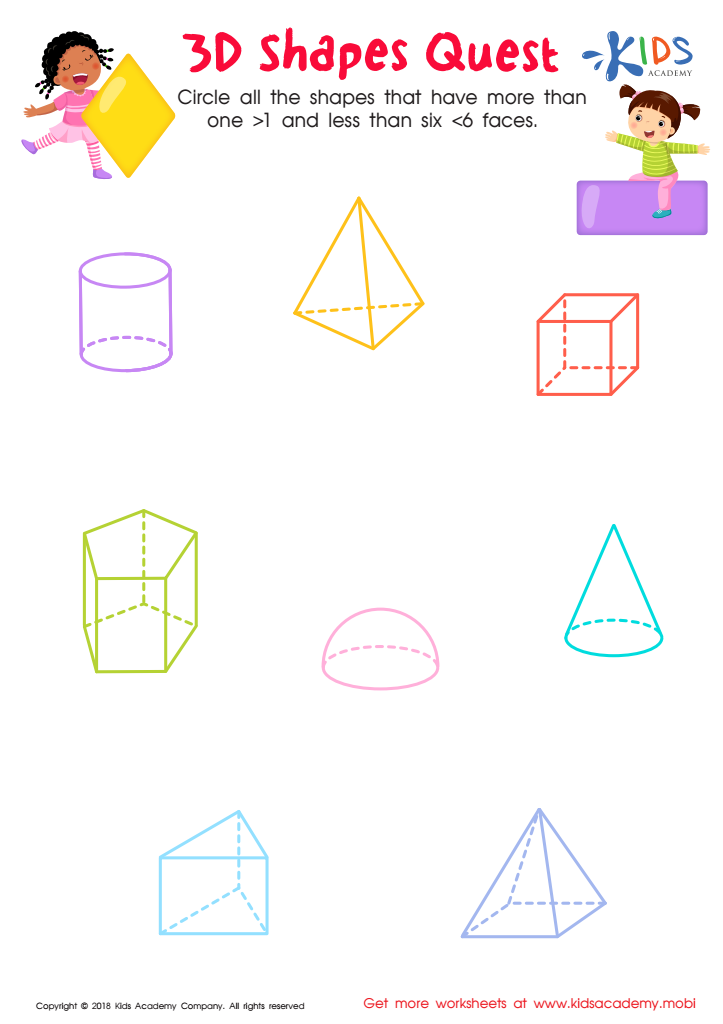
3D Shapes Quest Worksheet








Shape comparison geometry plays a vital role in the cognitive and spatial development of children aged 6-8. During these formative years, kids build foundational skills in mathematics, critical thinking, and problem-solving, all of which are essential for their academic journey.
Understanding and comparing shapes helps children recognize patterns, which is critical for later skills in mathematics. Actively engaging with shapes aids in spatial reasoning—equipping students with the ability to visualize and manipulate objects in their minds. This skill not only supports tasks in geometry but also enhances performance in subjects like science, art, and technology.
Furthermore, shape comparison fosters language development as children learn to describe, categorize, and discuss attributes such as size, color, and symmetry. This verbal expression nurtures communication skills and vocabulary.
Additionally, incorporating shape comparison activities can promote social skills through collaborative learning, encouraging teamwork and shared problem-solving. By facilitating hands-on exploration, teachers can make learning active and enjoyable, instilling a sense of curiosity and excitement about mathematics.
In summary, focusing on shape comparison geometry during this age range not only strengthens mathematical abilities but also supports comprehensive cognitive, linguistic, and social development, setting the stage for lifelong learning.








