
Understanding bar graphs Graphs Worksheets for Ages 6-8
3 filtered results
Difficulty Level
Grade
Age
-
From - To
Subject
Activity
Standards
Unlock the foundation of data literacy with our "Understanding Bar Graphs" worksheets, tailored specifically for ages 6-8. These engaging and interactive resources help young learners grasp the essential concepts of bar graphs, making math fun and accessible! Through colorful illustrations and real-life scenarios, children will practice reading, interpreting, and creating their own bar graphs. Each worksheet is designed to reinforce critical thinking skills and foster a love for mathematics. Perfect for classroom activities or at-home learning, our worksheets will empower kids to visualize and organize data with confidence. Start their mathematical journey today and watch them excel in math skills!
Favorites
With answer key
Interactive
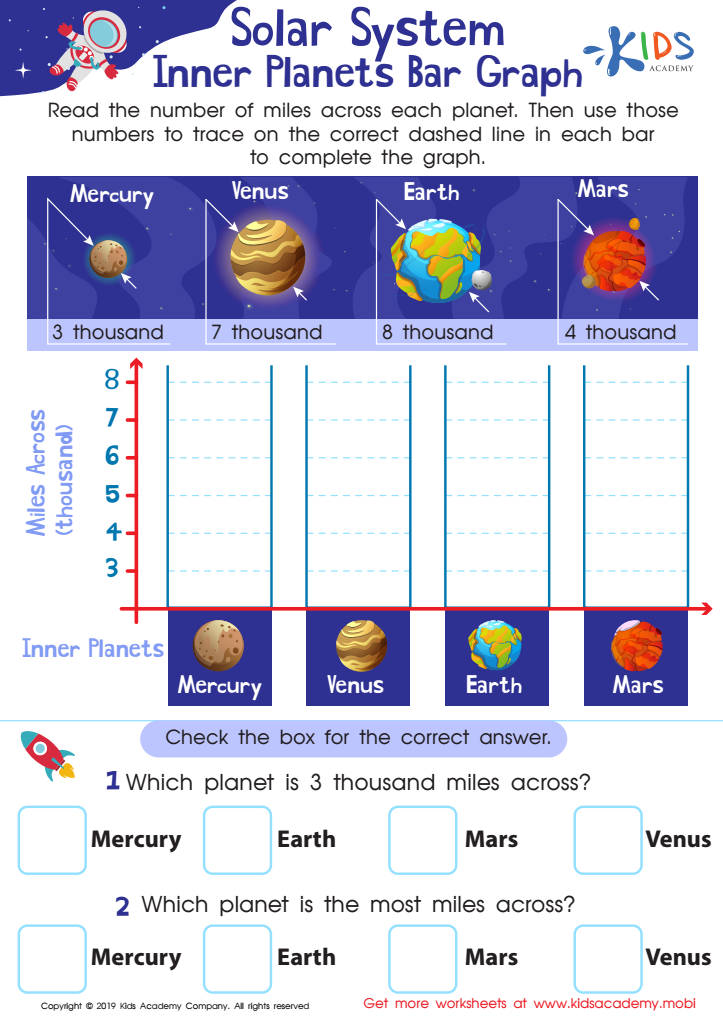
Planets Bar Graph Worksheet
With this fun, educational worksheet, kids can learn about bar graphs and the solar system simultaneously. Introduce them to the concept by reading out the number of miles for each planet, then help them trace the dashed lines in each bar to complete the graph.
 Assign to My Students
Planets Bar Graph Worksheet
Worksheet
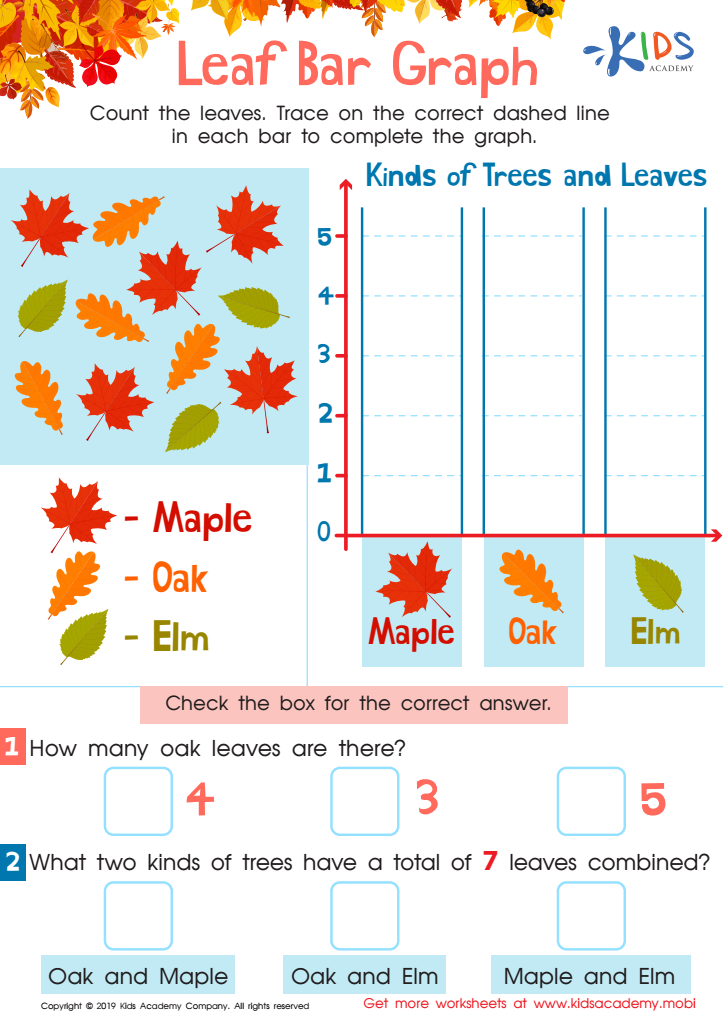
Leaf Bar Graph Worksheet
You can help your kids make learning easier and more enjoyable. While their teachers provide lessons and homework, you can take their education further. This worksheet can assist them in mastering bar charts. Count the leaves, then trace the correct line for each bar to complete the graph.
Leaf Bar Graph Worksheet
Worksheet
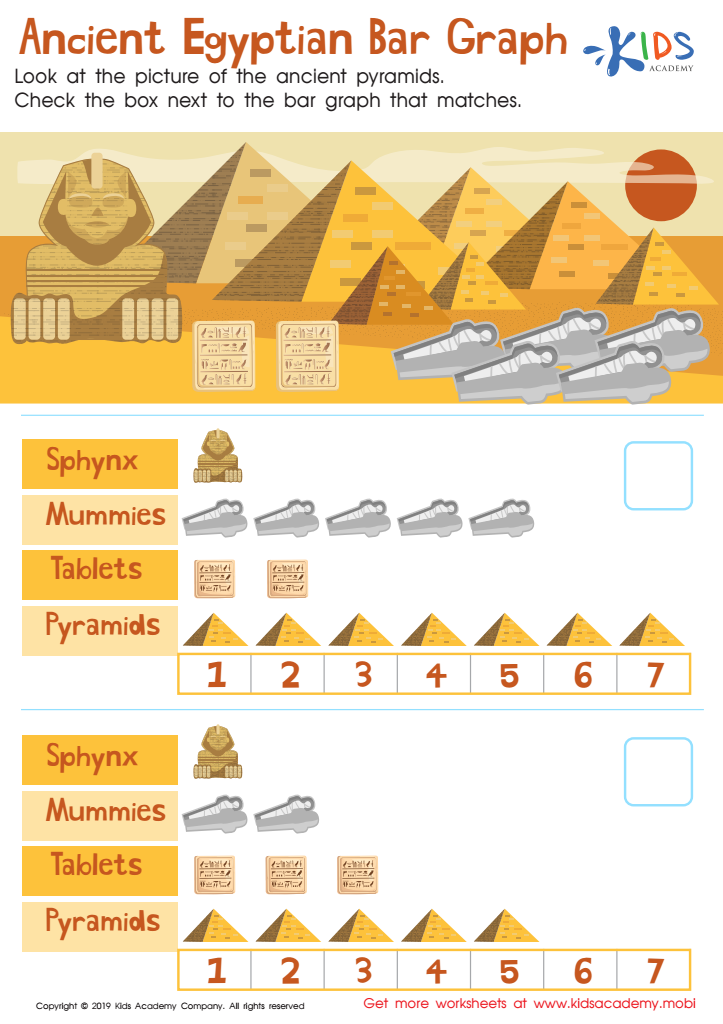
Egyptian Bar Graph Worksheet
Help your kids get a hang of bar graphs with this fun worksheet. Examine the picture of the ancient pyramids and help them match the bar graph to it. Check the box next to the correct bar graph and watch your little ones learn quickly!
Egyptian Bar Graph Worksheet
Worksheet
Join Kids Academy for Free
Who is primarily going to use this learning content?








Understanding bar graphs is essential for children aged 6-8, as it builds foundational skills in data analysis and critical thinking. Parents and teachers should prioritize this learning because bar graphs help kids visualize information, making it easier for them to comprehend and communicate complex concepts. This age group is at a developmental stage where they begin to grasp basic mathematical concepts, and interpreting bar graphs reinforces their understanding of numbers and relationships.
Bar graphs are also prevalent in everyday life, from interpreting school survey results to analyzing sports statistics. By learning to read and create bar graphs, children develop the ability to summarize data and draw conclusions, skills that are crucial not just academically, but also in real-world situations. Furthermore, familiarizing young learners with visual data representation encourages engagement and fosters a love for mathematics and science.
Finally, understanding bar graphs supports literacy and language skills; children must be able to read labels, comprehend titles, and explain their findings verbally. This multi-disciplinary approach not only strengthens numerical capabilities but also enhances overall cognitive development, preparing children for future academic success. In fostering these skills, parents and teachers equip children with tools they will use throughout their lives.








