Counting skills Numbers Worksheets for Ages 6-8 - Page 8
171 filtered results
-
From - To
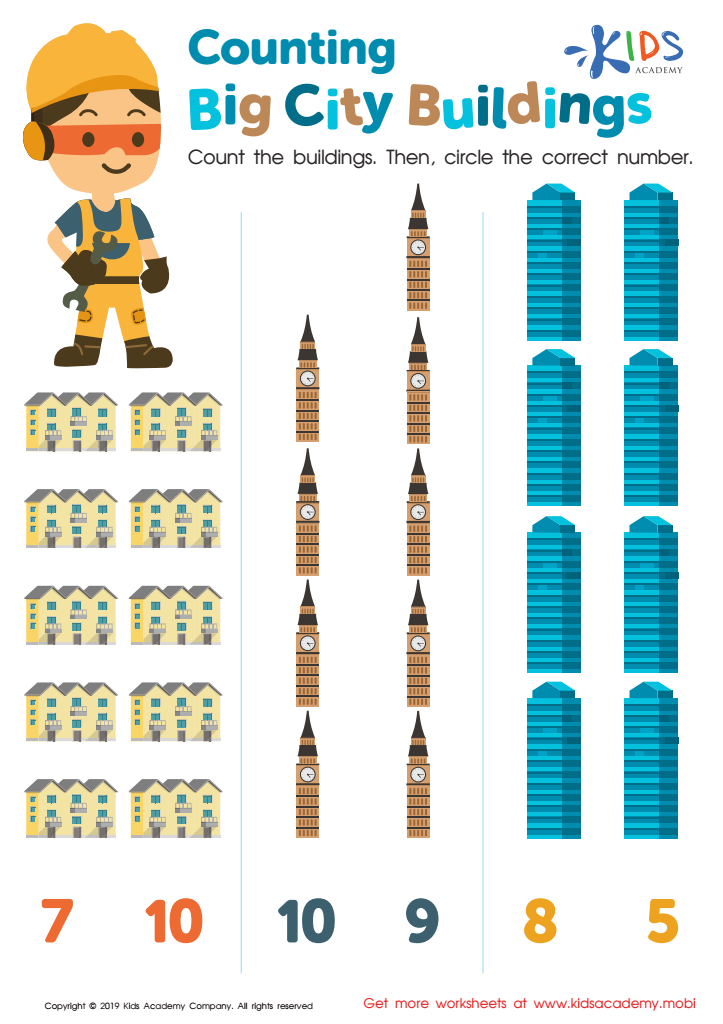
Counting Big City Buildings Worksheet
 Assign to My Students
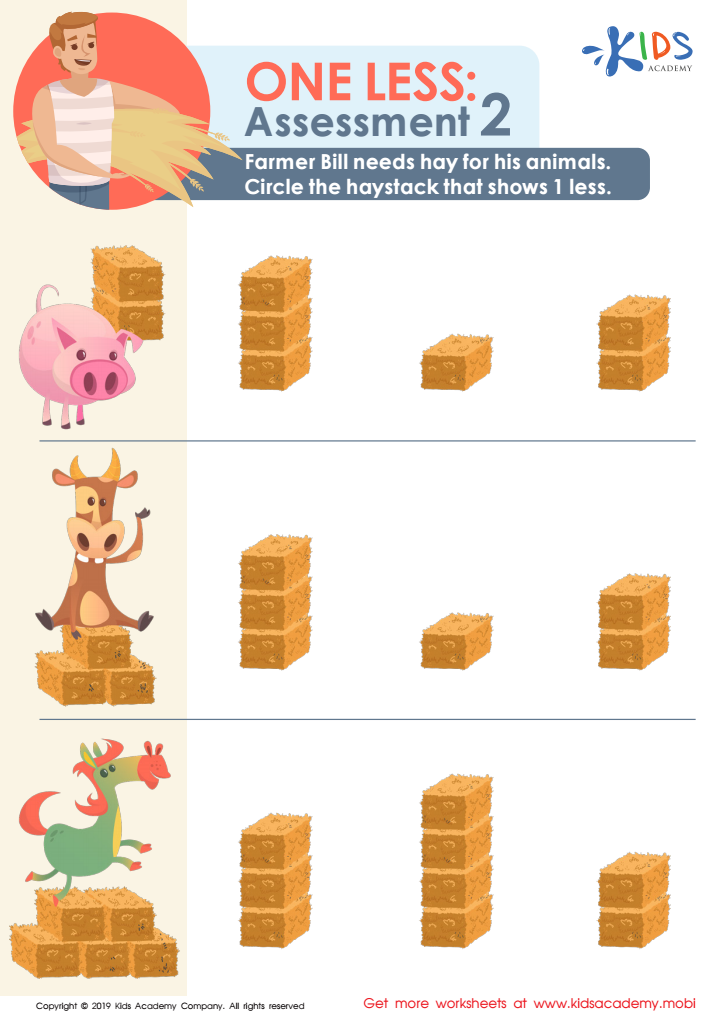
One Less: Assessment 2 Worksheet

Night Sky Numbers Worksheet







Counting skills are foundational for children's math development and everyday practical activities, making it essential for parents and teachers to prioritize these skills for children aged 6-8. At this crucial stage of learning, children transition from simple counting to more complex arithmetic, and mastering counting lays the groundwork for their understanding of addition, subtraction, and number sense.
Developing counting skills enhances a child's ability to recognize patterns, sequence numbers, and understand the concept of quantity, contributing to their confidence in math. These skills also support critical thinking and problem-solving abilities, as children learn to manipulate numbers in various contexts. Additionally, strong counting skills can improve children's performance in standardized tests and future academic pursuits, giving them a solid foundation for learning in science, technology, engineering, and mathematics (STEM) fields.
Moreover, counting is not just an academic skill; it translates into everyday activities. Parents and teachers can help children apply counting in real life—whether it’s during grocery shopping, cooking, or playing games—which makes learning engaging and relevant. Overall, fostering counting skills equips children with essential tools for both their immediate education and lifelong problem-solving capabilities.








