
Observational skills Numbers Worksheets for Ages 6-8
5 filtered results
Difficulty Level
Grade
Age
-
From - To
Subject
Activity
Standards
Enhance your child's learning journey with our Observational Skills Numbers Worksheets designed for ages 6-8. These engaging worksheets focus on developing crucial observational abilities while reinforcing number recognition and counting skills. Each activity encourages kids to closely analyze visual patterns, identify differences, and make comparisons, fostering critical thinking and attention to detail. With vibrant illustrations and fun exercises, children will enjoy learning as they strengthen their mathematical foundation. Perfect for at-home practice or classroom use, our worksheets offer an interactive way to build confidence and nurture a love for math in young learners. Explore our resources now and watch their skills flourish!
Favorites
With answer key
Interactive
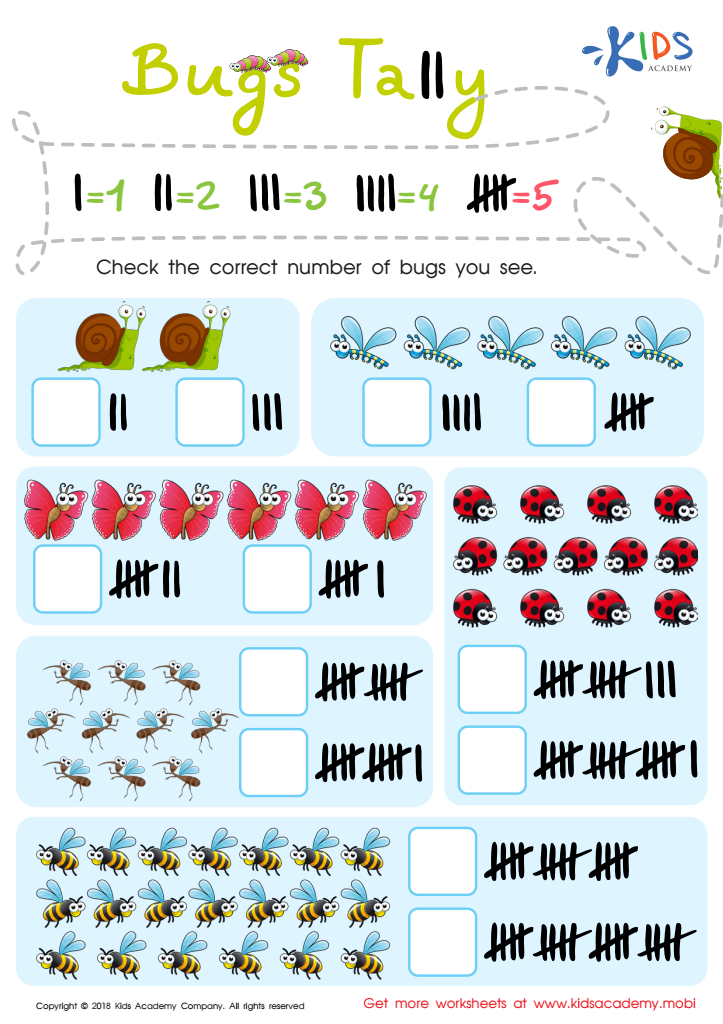
Bugs Tally Worksheet
This fun worksheet uses friendly bugs to help young mathematicians learn numbers and tally marks. They'll gain real-world skills to help with adding, subtracting and counting. Representations will solidify number reasoning, aiding with game playing and more.
 Assign to My Students
Bugs Tally Worksheet
Worksheet
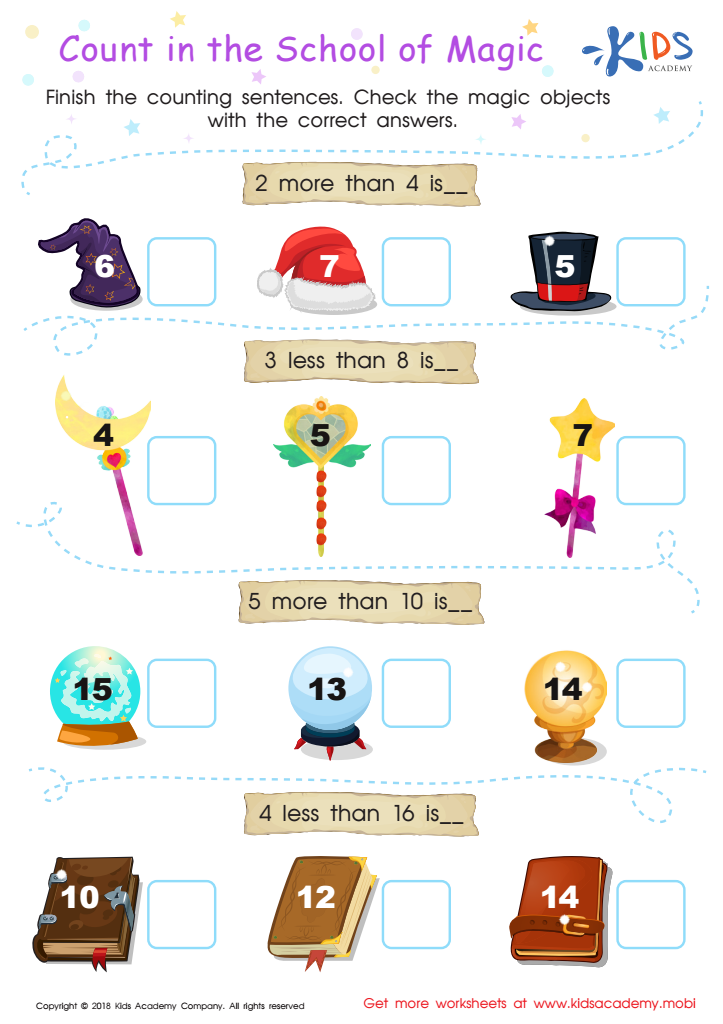
Count in the School of Magic Worksheet
Your math learners can explore the School of Magic with this worksheet. They'll read equations with addition and subtraction numbers under 20, count back and forth to find the answer, then complete the counting sentences. Fun pictures and easy accuracy make it an enjoyable and successful learning experience.
Count in the School of Magic Worksheet
Worksheet
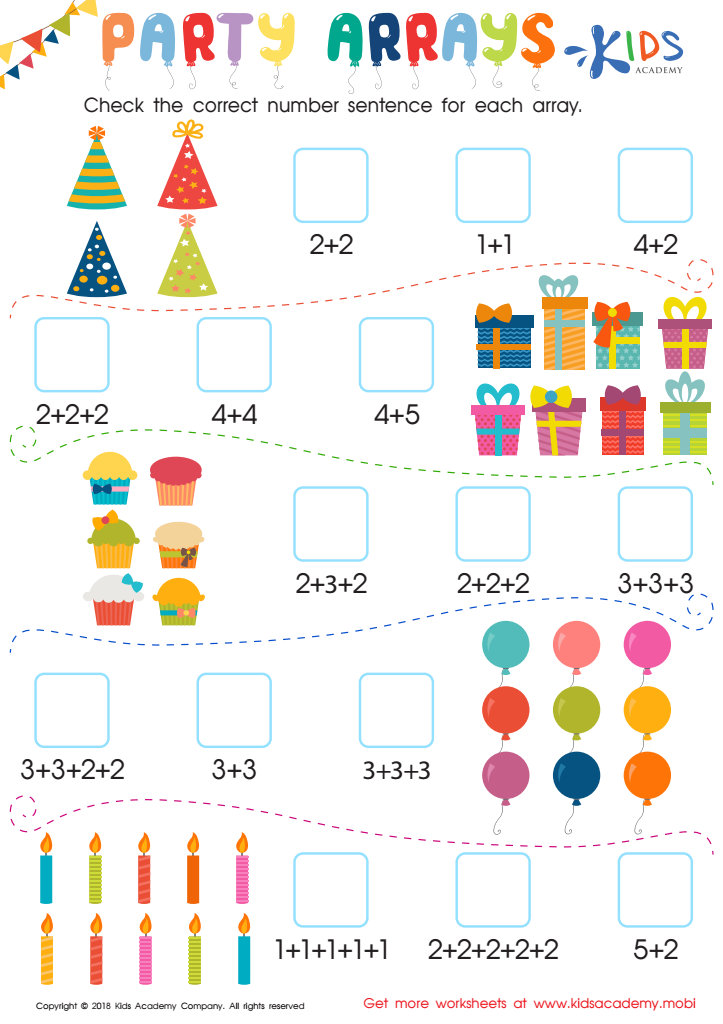
Party Arrays Worksheet
Help your child count the objects in each of the five arrays, then check the correct number sentence for each. This exercise will test their math skills and understanding of number sentences. Guide them to select the appropriate boxes.
Party Arrays Worksheet
Worksheet
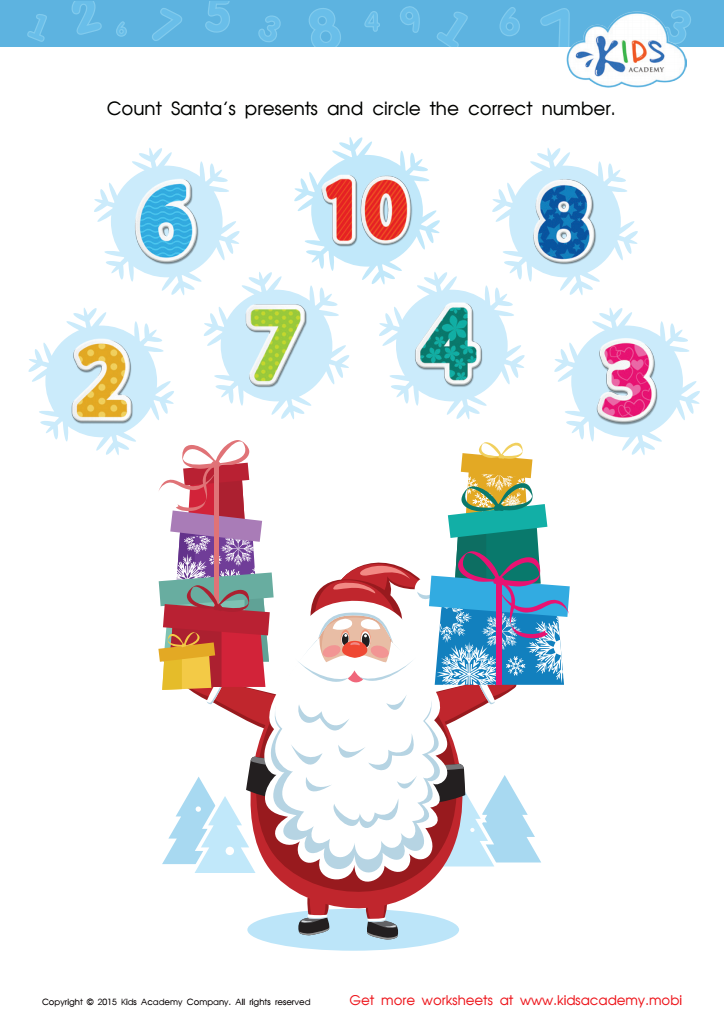
Count Santa's Presents Worksheet
With Kids Academy's free Christmas math worksheet, your kindergartener can help Santa count presents. The worksheet encourages recognizing and counting numbers, fostering the Christmas spirit. Print it out, have fun, and get ready to circle the right number! Get more math printables to learn numbers in a fun way.
Count Santa's Presents Worksheet
Worksheet
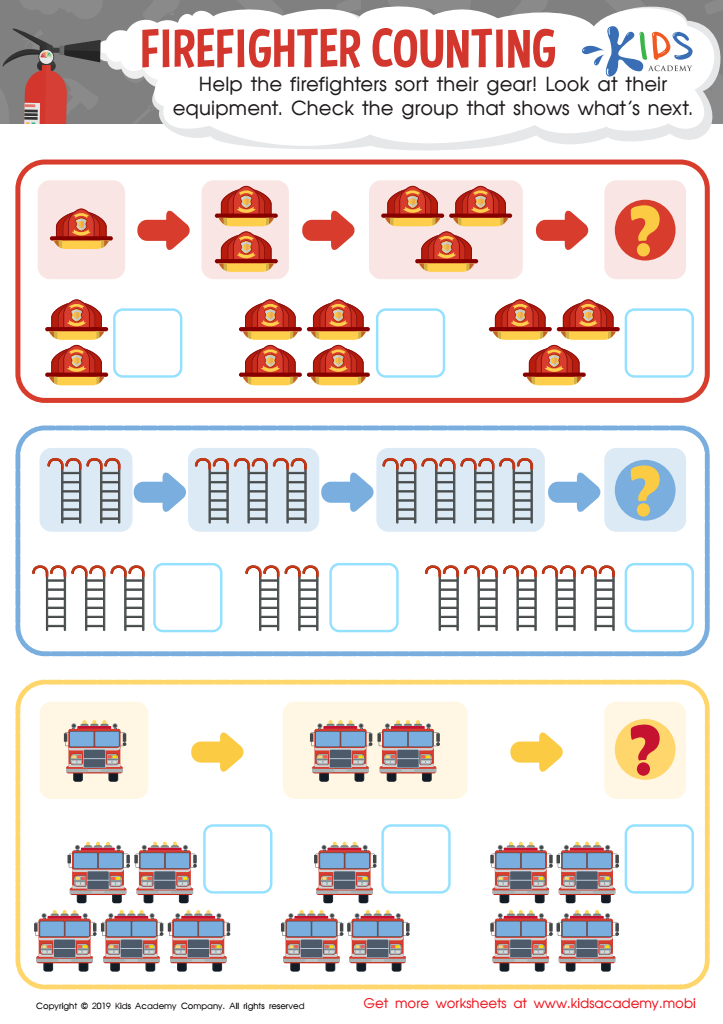
Firefighter Counting Worksheet
Firefighters are a vital part of any community. When a fire breaks out, they respond promptly to protect citizens and extinguish the blaze. Wearing specialized gear, they not only make the job easier, but safer too. Get your kids involved and help the firefighters sort their gear. Count the equipment, and check the group for the next steps.
Firefighter Counting Worksheet
Worksheet
Join Kids Academy for Free
Who is primarily going to use this learning content?




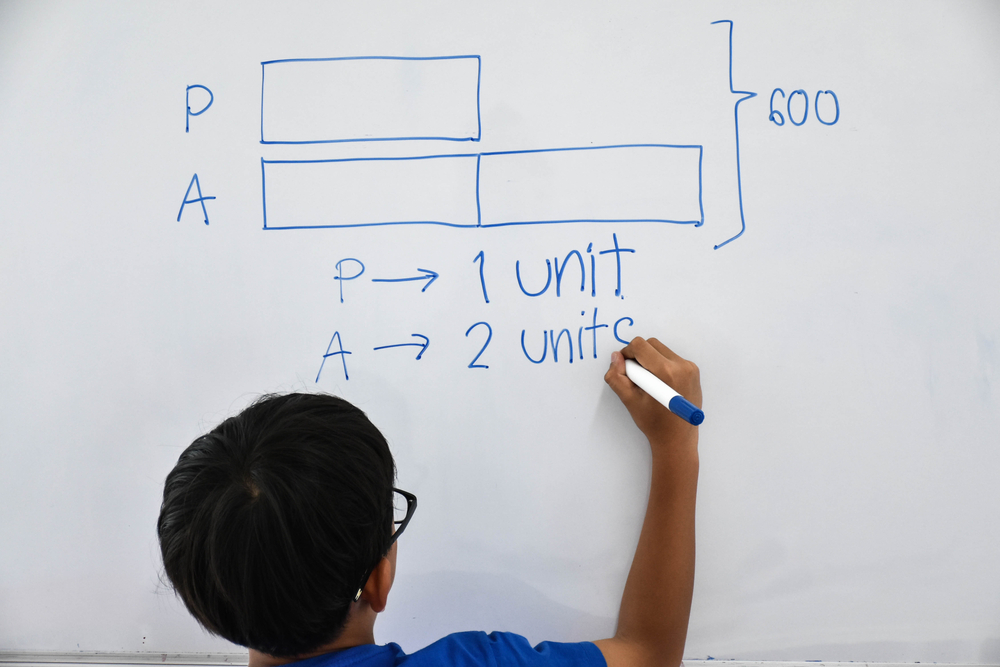



Observational skills in children, particularly in the context of numbers, are crucial for their cognitive development and mathematical understanding, especially for ages 6-8. During this formative period, children are transitioning from concrete to more abstract thinking, and strong observational skills can significantly enhance this process.
First, observational skills enable children to notice patterns, sequences, and relationships in numbers, fostering a deeper understanding of mathematical concepts. For instance, when they can observe the number of items in a group or detect patterns in number sequences, they learn to make connections that underpin foundational math skills.
Moreover, fostering observational skills encourages critical thinking. When children learn to carefully observe and articulate what they see in numbers, they become more engaged learners. This engagement is essential as it motivates them to explore mathematical problems and solutions more creatively.
Additionally, these skills play a pivotal role in real-world applications of math. Children who can effectively observe and analyze numerical information are better prepared for everyday situations, such as budgeting, measuring, or even cooking.
In summary, enhancing observational skills in numbers lays a solid foundation for robust mathematical development, critical thinking, and practical problem-solving, making it essential for parents and teachers to prioritize these skills in their teaching strategies.








