Problem-solving practice Numbers Worksheets for Ages 6-8
3 filtered results
-
From - To
Enhance your child's numerical and analytical skills with our Problem-Solving Practice Numbers Worksheets tailored for ages 6-8. These engaging activities are thoughtfully designed to boost problem-solving abilities through fun and interactive exercises. Offering a variety of challenging math problems, these worksheets help young learners intuitively grasp fundamental concepts such as addition, subtraction, and basic arithmetic. Perfect for classroom use or home learning, our worksheets not only foster a love for math but also build confidence in solving problems independently. Watch your child's skills grow with practical exercises that make numbers exciting and easy to understand.
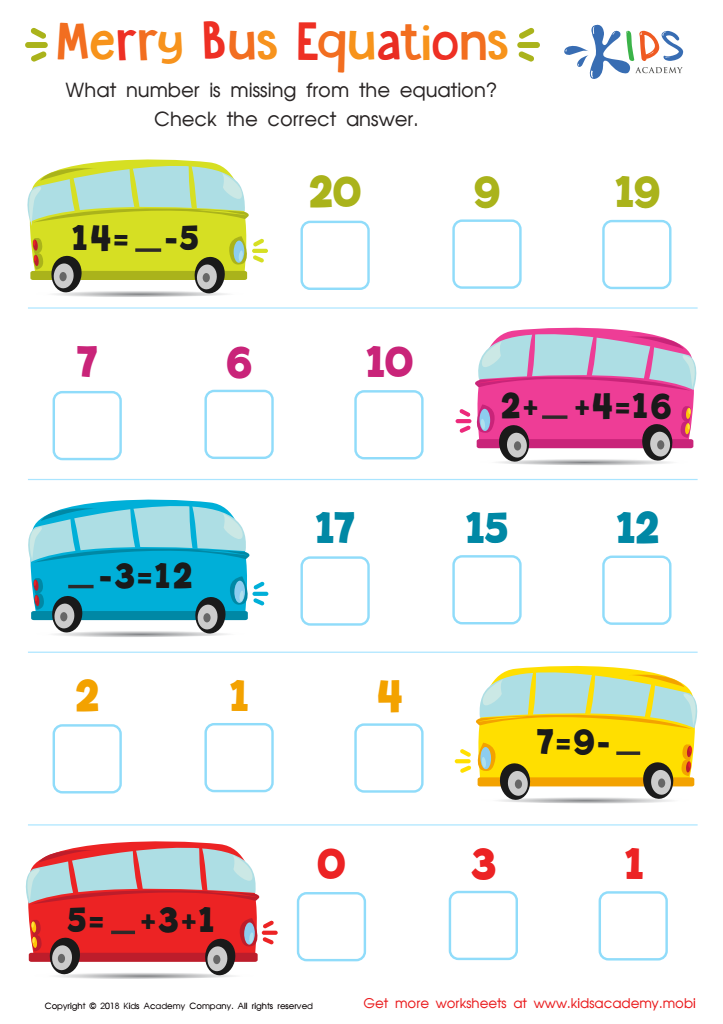
Merry Bus Equations Worksheet
 Assign to My Students
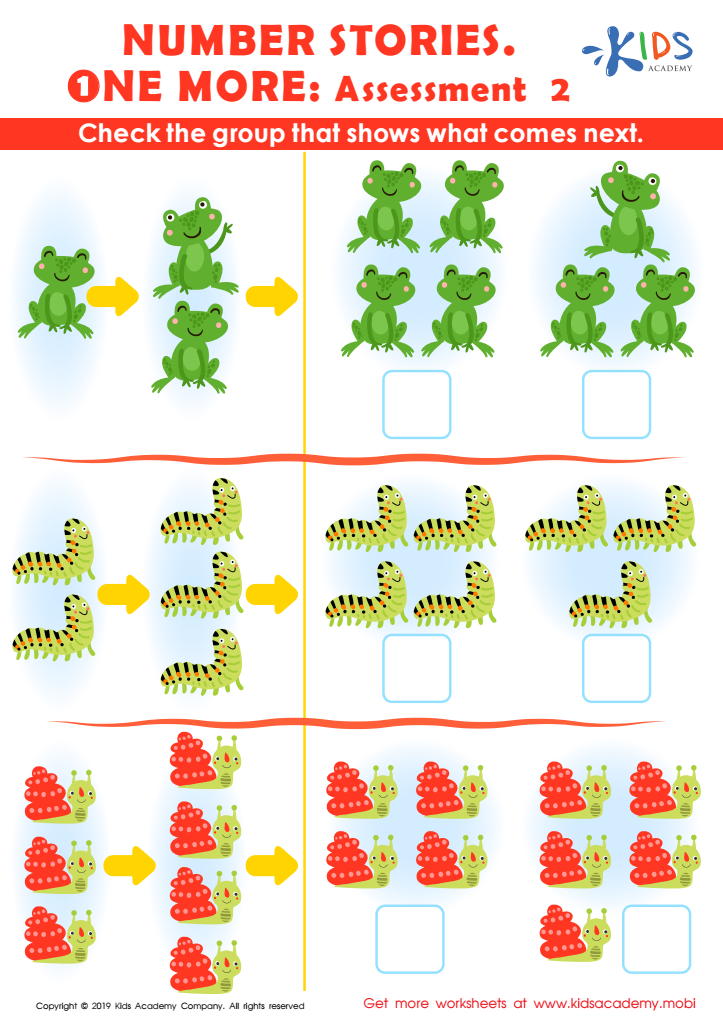
Number Stories One More – Assessment 2 Worksheet
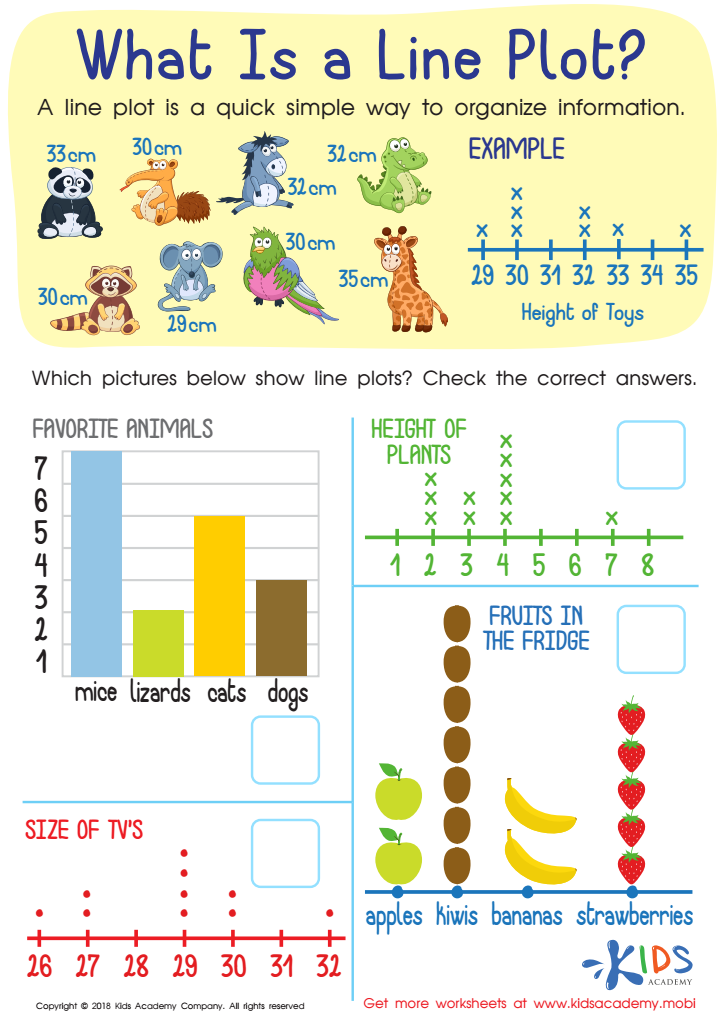
What Is a Line Plot? Worksheet








Problem-solving practice with numbers is crucial for children aged 6-8 as it lays the foundation for essential lifelong skills. At this developmental stage, children's brains are particularly receptive to learning numerical concepts and logic. Engaging them in problem-solving activities helps to reinforce their mathematical thinking, enabling them to grasp basic arithmetic operations such as addition, subtraction, multiplication, and division in a fun and interactive way.
This practice creates a solid mathematical foundation, fostering confidence and competence in their abilities to tackle more complex problems in the future. It also enhances critical thinking and reasoning skills, as children learn to analyze, strategize, and arrive at solutions independently or collaboratively. These skills extend beyond mathematics, proving beneficial in everyday decision-making and problem-solving scenarios.
Moreover, introducing number problems in early education promotes a positive attitude towards mathematics, reducing anxiety and building resilience. Children are more likely to find joy in learning and feel a sense of achievement as they overcome challenges.
Parents and teachers should prioritize problem-solving practice to support cognitive development, facilitate a deeper understanding of math, and nurture skills crucial for academic success and everyday life. Through consistent practice, guidance, and encouragement, children can develop a lifelong love for learning and strong analytical capabilities.








