Recognizing number patterns Numbers Worksheets for Ages 6-8
4 filtered results
-
From - To
Discover our engaging "Recognizing Number Patterns" worksheets designed specifically for children aged 6-8! These printable resources help young learners identify and understand number patterns through fun activities and colorful visuals. By working with these worksheets, students will enhance their mathematical skills, improve problem-solving abilities, and develop critical thinking. Designed to align with educational standards, our materials cater to various learning styles, ensuring that every child can grasp essential math concepts. Encourage your child's love for learning and build their confidence in math with our carefully crafted worksheets. Start exploring the world of number patterns today!
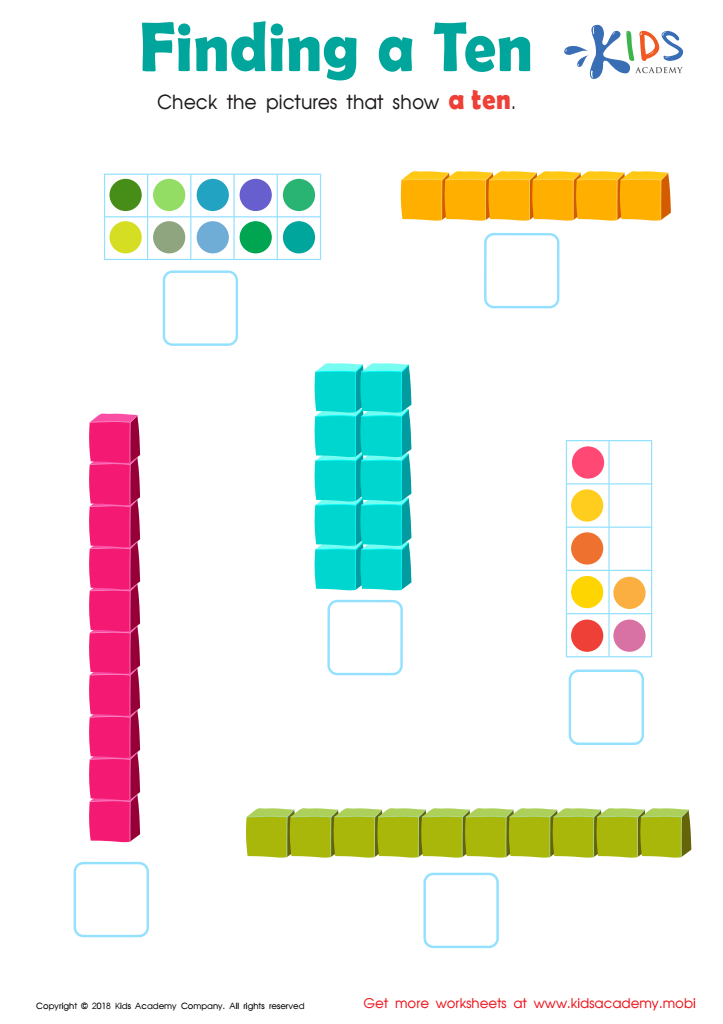
Finding a Ten Worksheet
 Assign to My Students
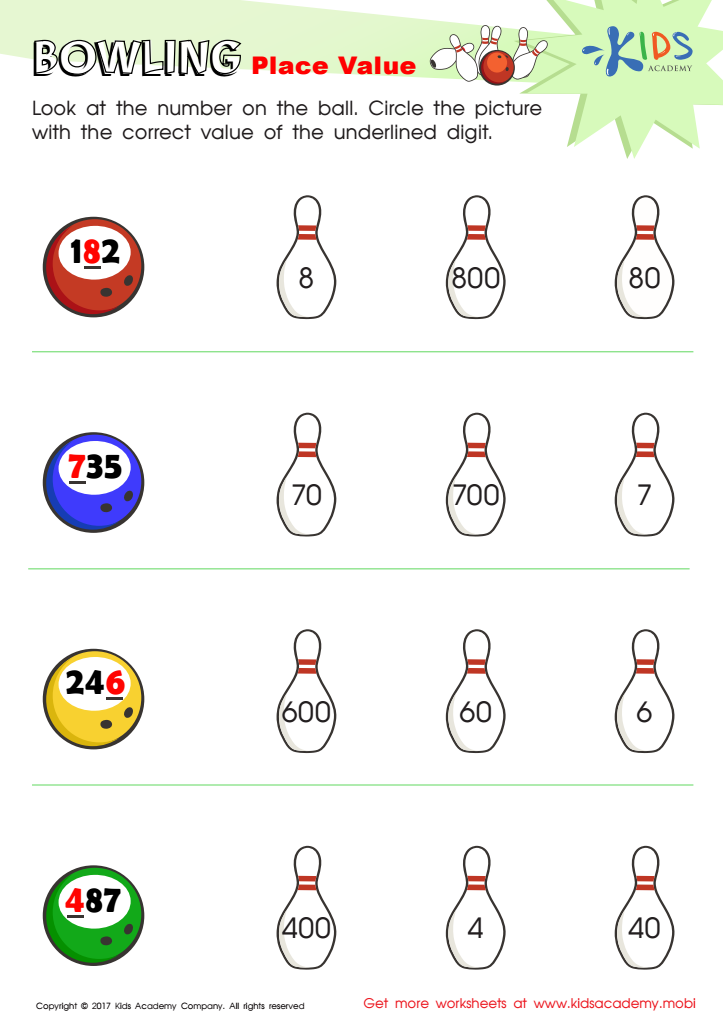
Place Value Worksheet
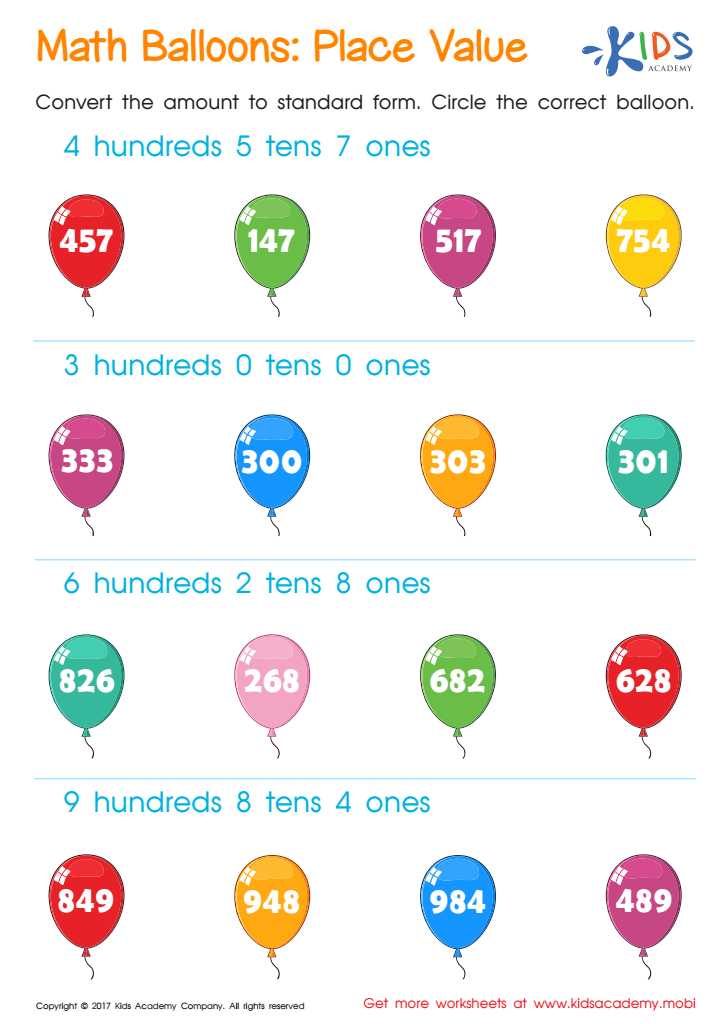
Place Value Printable Worksheet
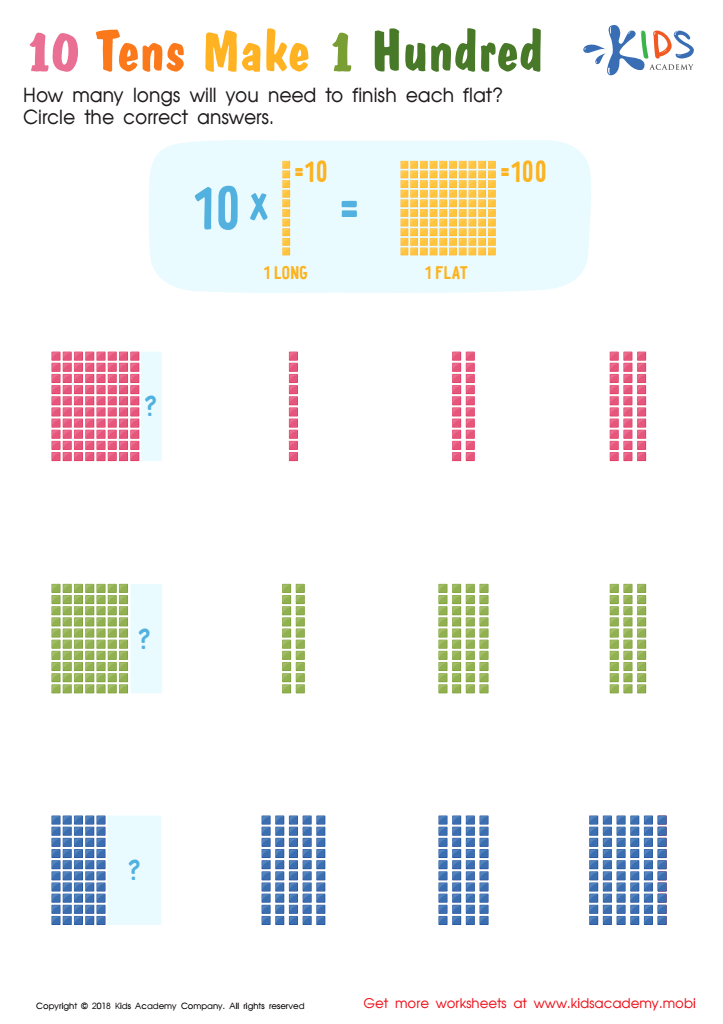
10 Tens Make 1 Hundred Worksheet








Recognizing number patterns is a foundational skill for children aged 6-8 that significantly contributes to their mathematical understanding and cognitive development. For parents and teachers, fostering this skill is critical because it enhances a child's ability to think critically and solve problems. When children identify patterns, they develop number sense, which aids in grasping more complex mathematical concepts.
By recognizing patterns, children learn to predict outcomes, which nurtures their analytical thinking. This skill has real-world applications, helping them with tasks such as telling time, counting money, and understanding schedules. Pattern recognition also improves memory retention, allowing students to recall mathematical facts more efficiently.
Additionally, teaching number patterns promotes engagement and enjoyment in learning. It encourages children to explore numbers in a playful manner, fostering a positive attitude towards mathematics. Parents and teachers can build this skill through fun activities like games and puzzles, making learning interactive and enjoyable.
In summary, recognizing number patterns is essential for young learners as it lays the groundwork for their future mathematical success, fosters critical thinking, and creates a love for learning. Both parents and teachers play a crucial role in cultivating this important skill.








