Understanding comparisons Numbers Worksheets for Ages 6-8
3 filtered results
-
From - To
Introducing our "Understanding Comparisons Numbers Worksheets for Ages 6-8," designed to bolster your child's numerical skills through engaging activities. These worksheets provide a solid foundation for comparing numbers within various contexts, essential for early math success. Each printable resource utilizes captivating graphics and relatable scenarios to make learning intuitive and fun. Perfect for both classroom usage and at-home practice, these exercises encourage critical thinking and application of mathematical concepts. Help your child master the basics of comparison while fostering a lasting love for learning math with Kids Academy’s thoughtfully crafted materials. Download and start your learning adventure today!
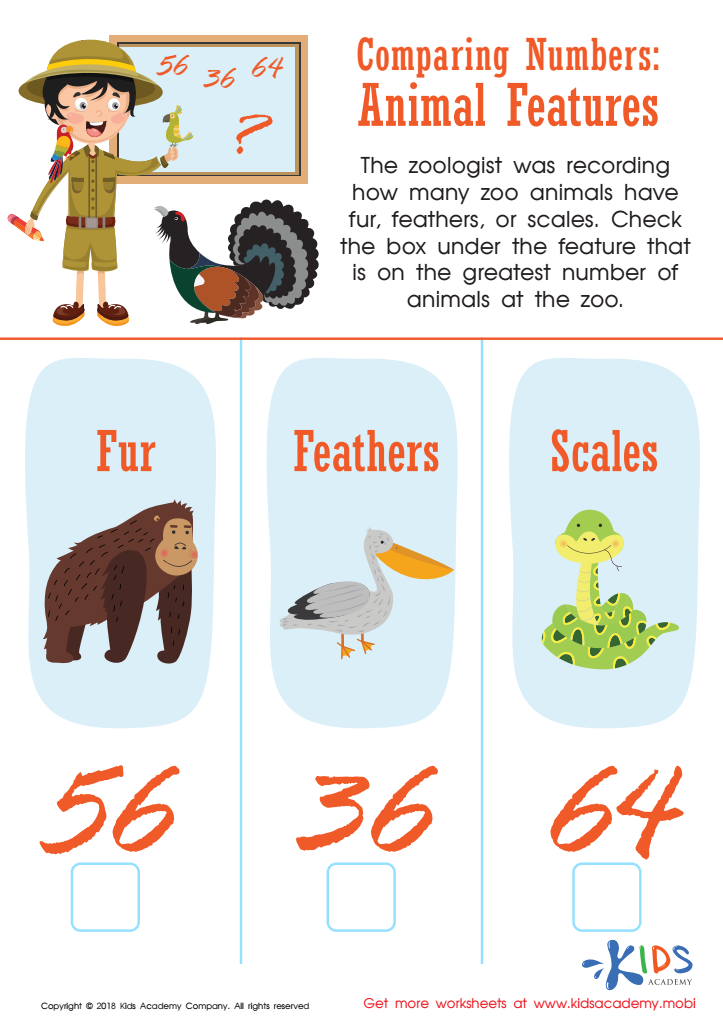
Animal Features Worksheet
 Assign to My Students
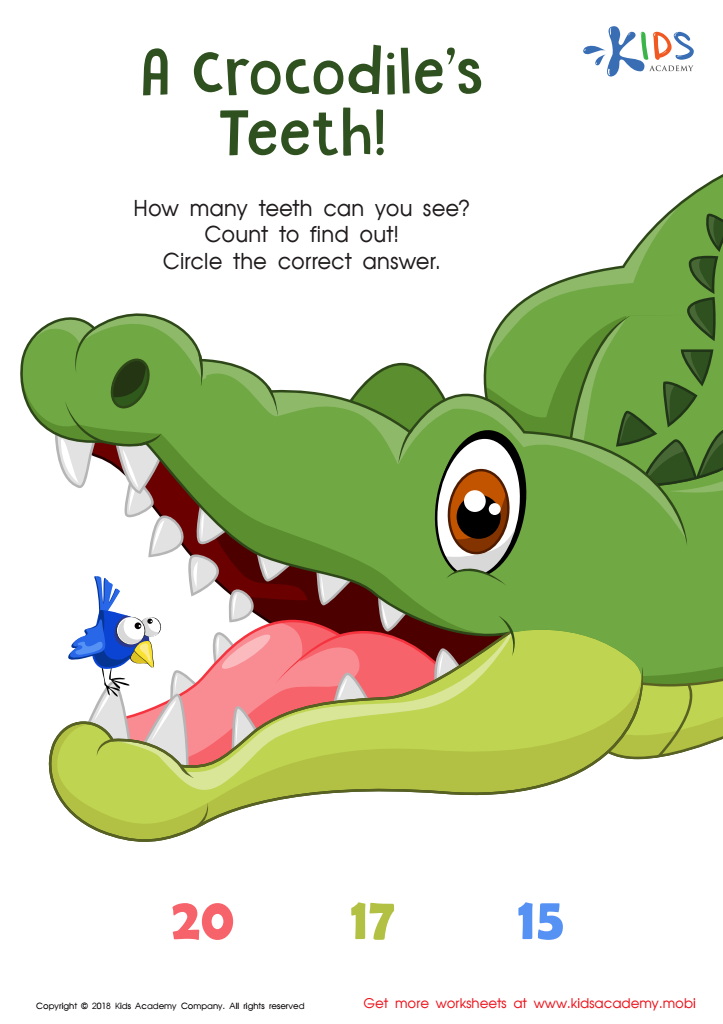
A Crocodile's Teeth Worksheet
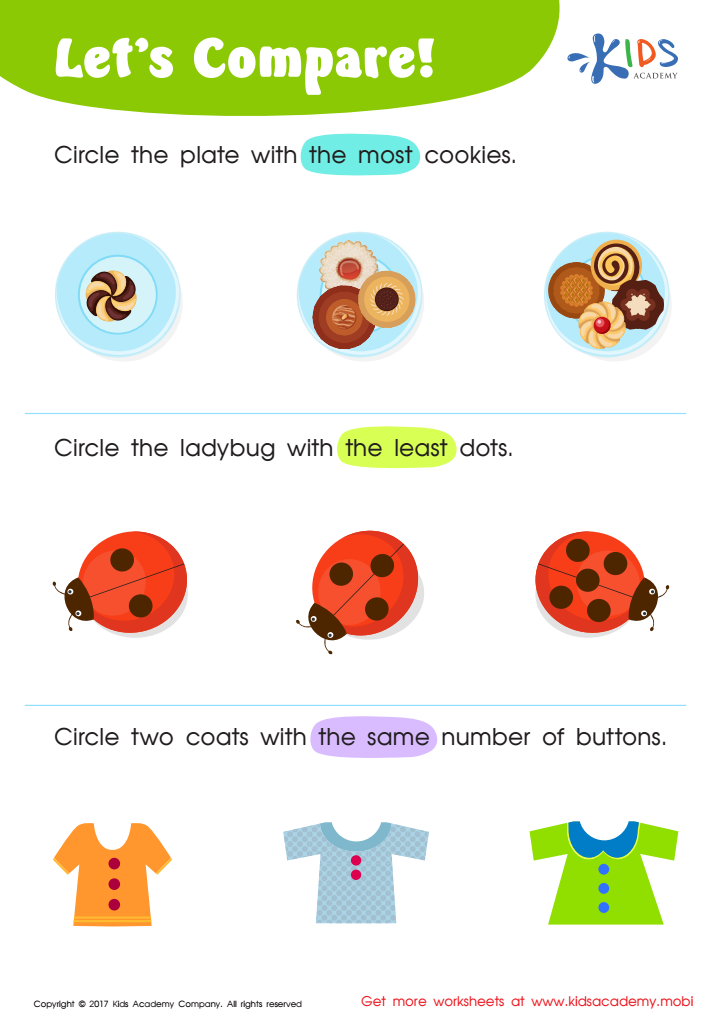
Matching: Classifying Toys by Size Worksheet








Understanding comparisons in numbers is fundamental for children ages 6-8 because it forms the basis for more complex mathematical concepts they will encounter later. This skill helps children develop numeracy, which is crucial not only in academics but also in daily life situations.
When children learn to compare numbers, they grasp the concepts of "greater than," "less than," and "equal to." This foundational understanding facilitates their ability to perform addition and subtraction by recognizing which numbers are larger or smaller. It also gives them the analytical skills to solve problems, understand the relationships between numbers, and make informed decisions.
For parents and teachers, fostering this skill enhances children's confidence in math. It sets them on a path to academic success, as they are better equipped to understand measurements, time, and money. Furthermore, early number comparison activities, such as using visual aids like number lines, help develop critical thinking and reasoning skills. These abilities are important not only in academics but in real-world scenarios where decision-making based on quantitative information is required.
Understanding and practicing number comparisons also stimulate cognitive development and create a strong mathematical foundation that supports future learning in subjects including science and technology. Therefore, it is essential that parents and teachers invest time in nurturing this skill during these formative years.








