Understanding number relationships Numbers Worksheets for Ages 6-8
3 filtered results
-
From - To
Explore our "Understanding Number Relationships" worksheets designed specifically for children ages 6-8! These engaging educational resources focus on teaching students the foundational concepts of number relationships, including addition, subtraction, comparisons, and patterns. Each worksheet is crafted to support young learners in developing critical mathematical skills through interactive activities and colorful illustrations. By helping kids visualize and manipulate numbers, we promote a deeper understanding and retention of mathematical concepts. Ideal for classroom instruction or at-home learning, our worksheets make math fun and accessible. Start building your child’s confidence in numbers today with our comprehensive collection of worksheets!
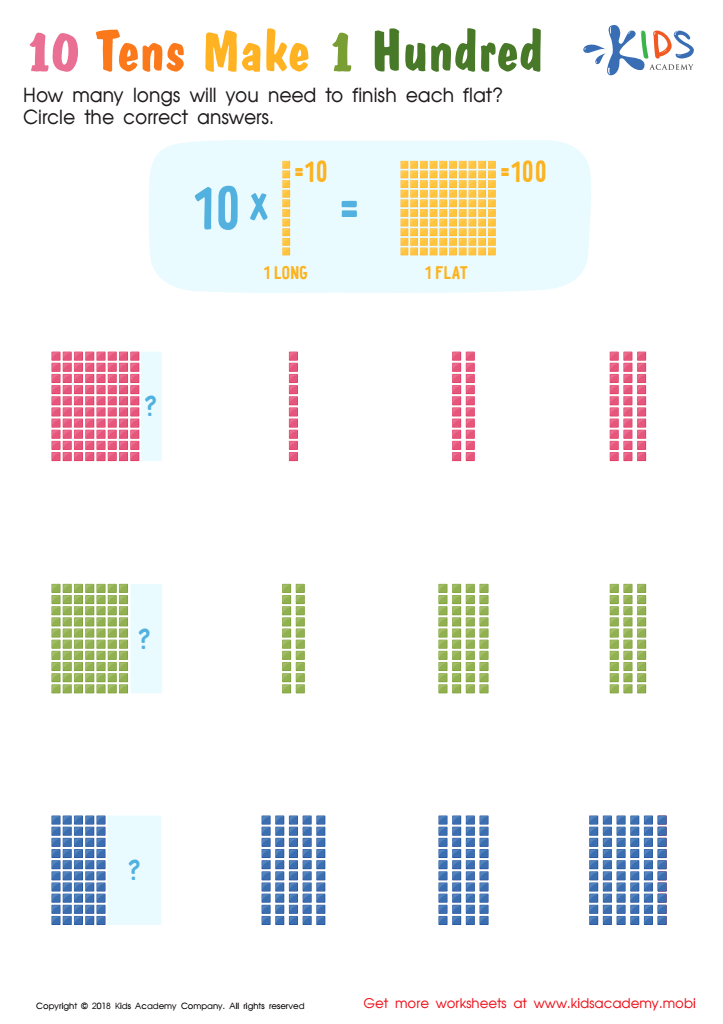
10 Tens Make 1 Hundred Worksheet
 Assign to My Students
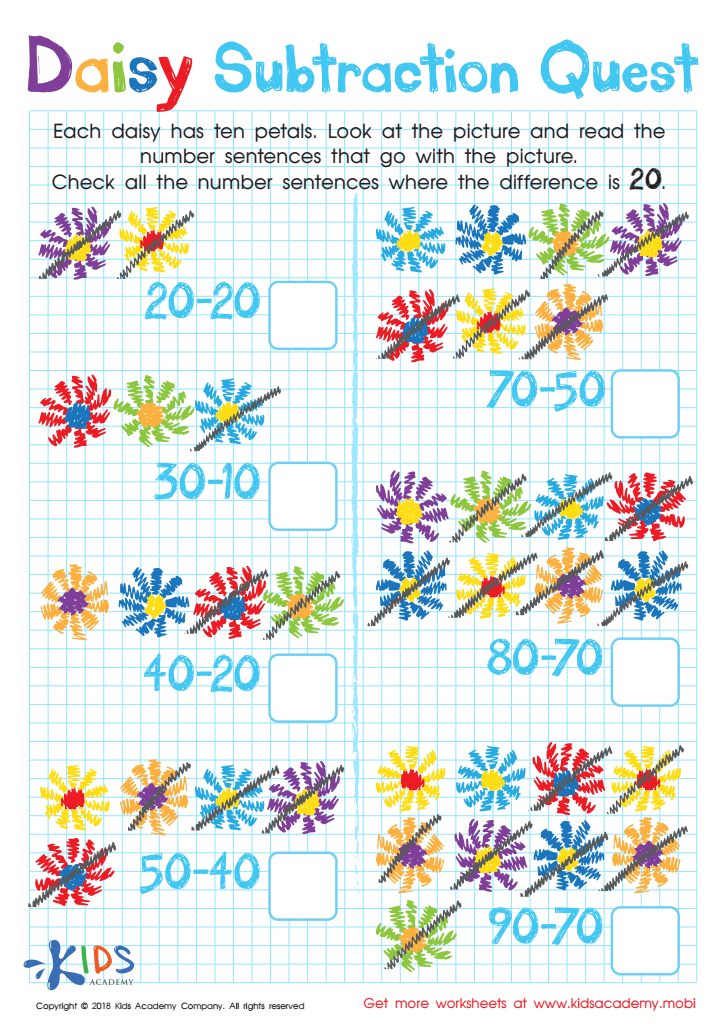
Daisy Subtraction Quest Worksheet
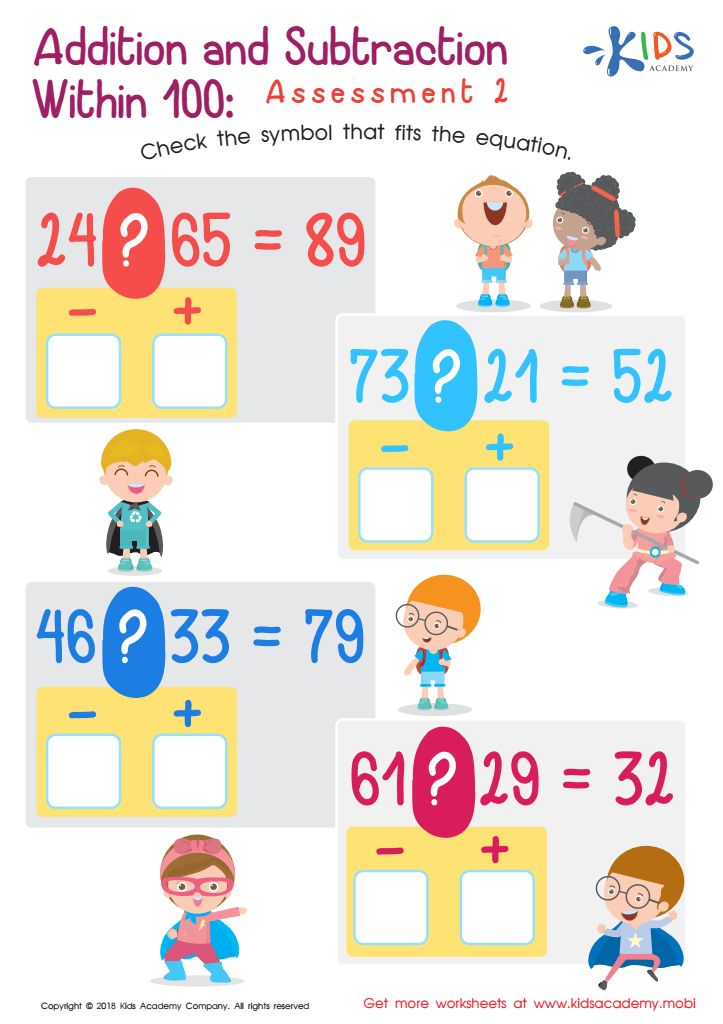
Addition and Subtraction Within 1: Assessment 2 Worksheet








Understanding number relationships is crucial for children ages 6-8 as it lays the foundation for their mathematical skills and overall cognitive development. At this stage, children are beginning to grasp the concepts of addition, subtraction, and the number system, making it an ideal time to foster a deep comprehension of how numbers interact.
When children understand number relationships, they can identify patterns, make connections between different numbers, and effectively tackle various mathematical concepts, such as grouping and place value. This deep understanding not only boosts their problem-solving skills but also prepares them for more complex operations in later grades.
Moreover, a strong foundation in number relationships enhances children's confidence in math, reducing the likelihood of math anxiety. Parents and teachers who prioritize these skills can create engaging activities that instill a love for math and encourage critical thinking.
Ultimately, fostering a clear understanding of number relationships equips children with essential life skills, like budgeting, measuring, and logical reasoning. It is essential for parents and teachers to work collaboratively to support children’s mathematical journeys, ensuring they are well-equipped for future academic challenges and everyday tasks.








