Understanding patterns Numbers Worksheets for Ages 6-8
7 filtered results
-
From - To
Discover "Understanding Patterns Numbers Worksheets for Ages 6-8" at Kids Academy, the perfect resource for young learners to master the basics of patterns and sequences. These engaging, professionally crafted worksheets boost critical thinking, recognition, and prediction skills through fun exercises like completing numerical patterns and spotting inaccuracies. Tailored for kids aged 6-8, our worksheets align with educational standards, ensuring an excellent foundation in math that paves the way for future success. Ideal for use at home or in the classroom, familiarize your child with patterns today – visit Kids Academy for these essential learning tools!
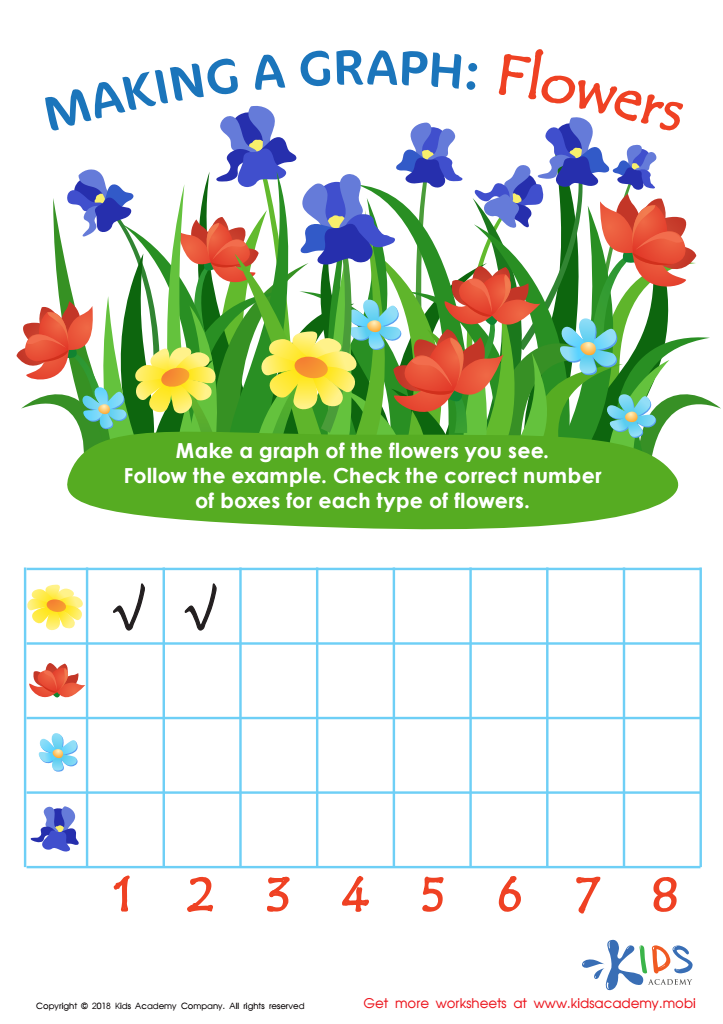
Making a Graph: Flowers Worksheet
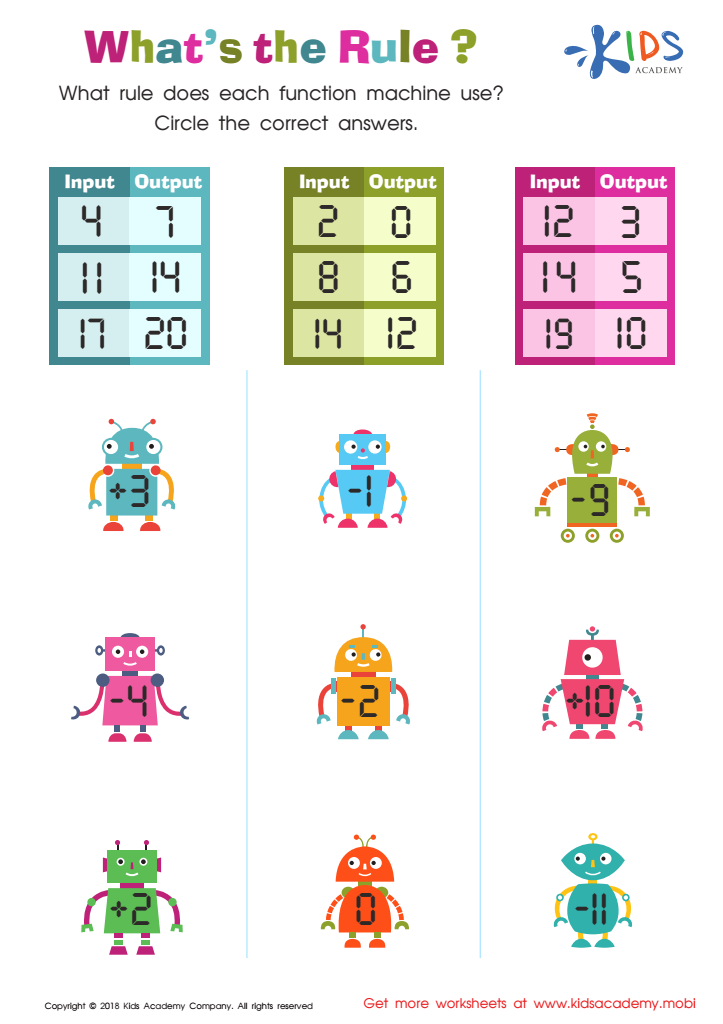
What's the Rule Worksheet
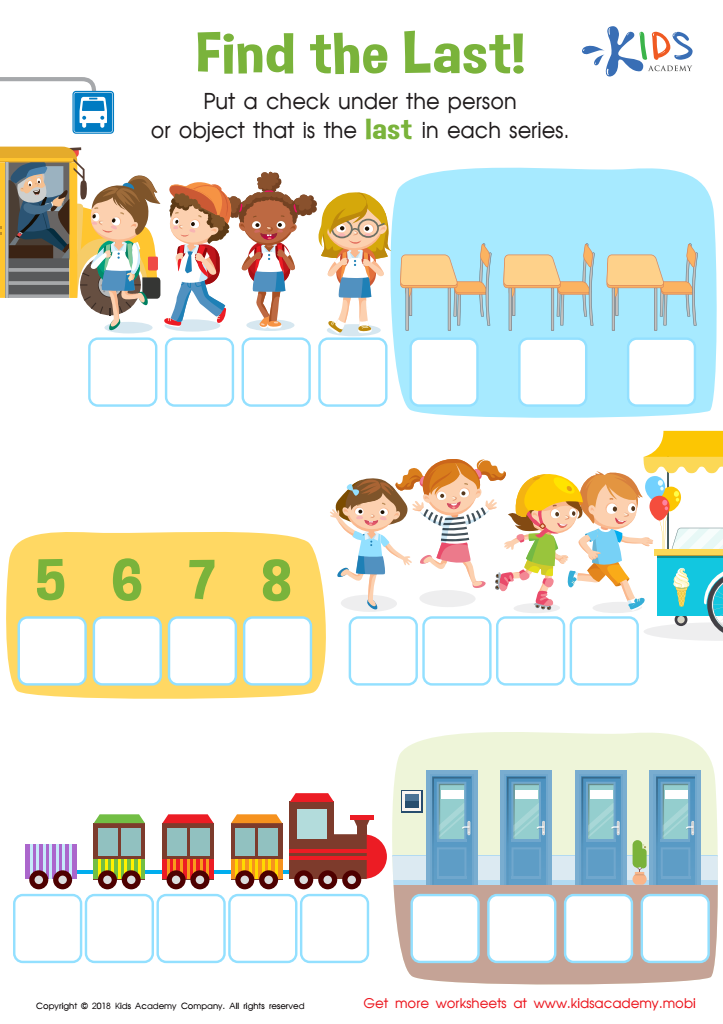
Find the Last! Worksheet
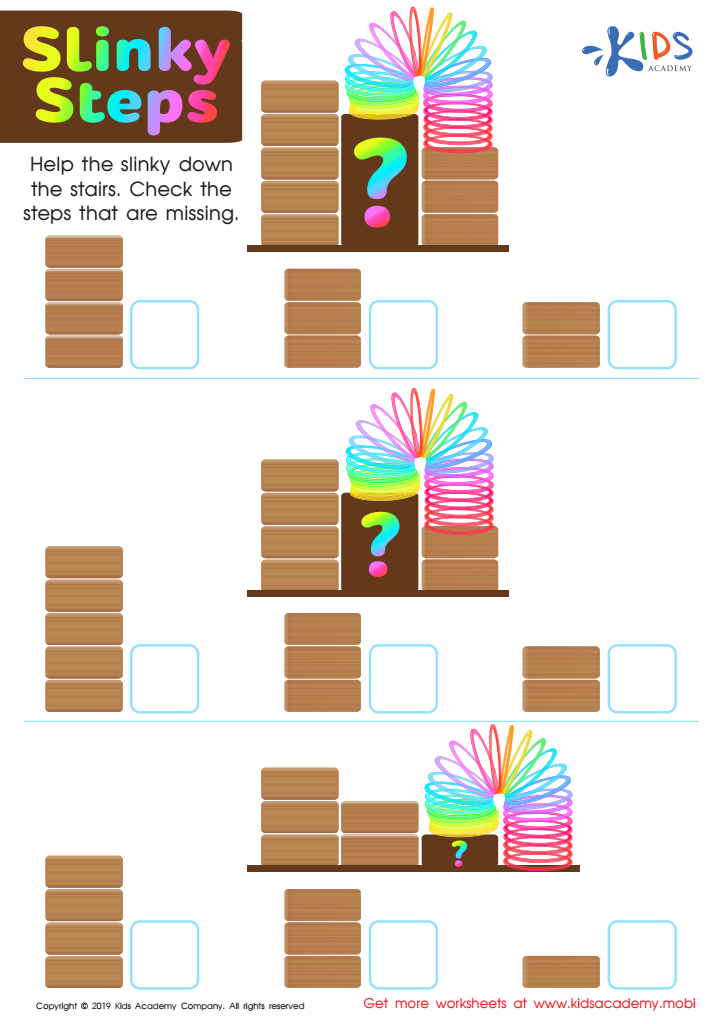
Slinky Steps Worksheet
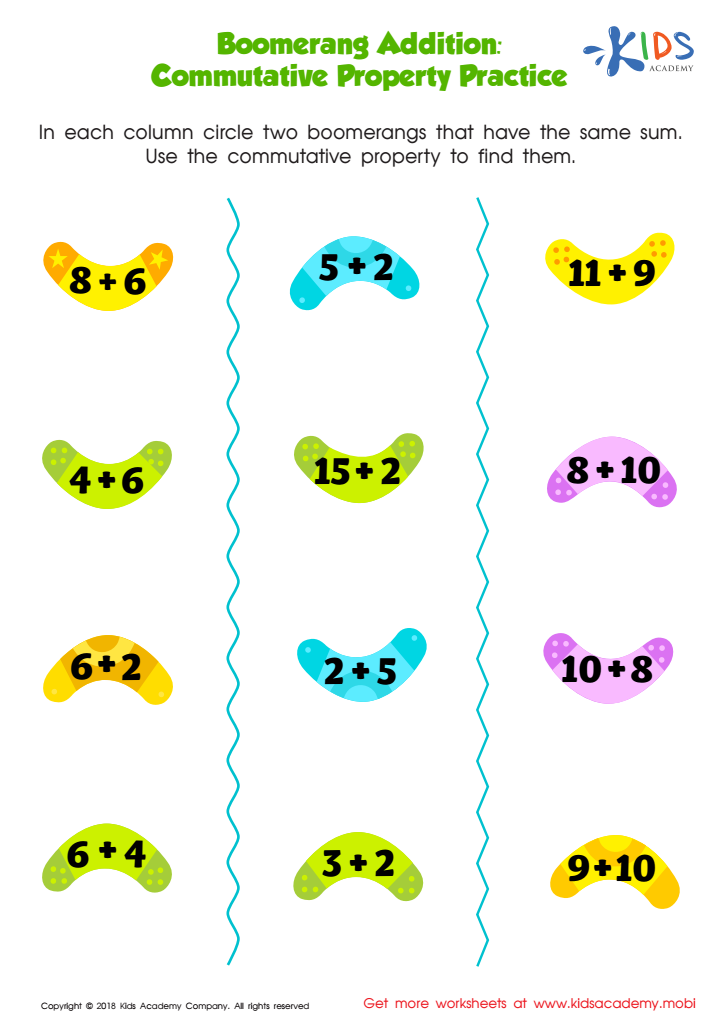
Boomerang Addition Worksheet
Magic Numbers Worksheet
 Assign to My Students
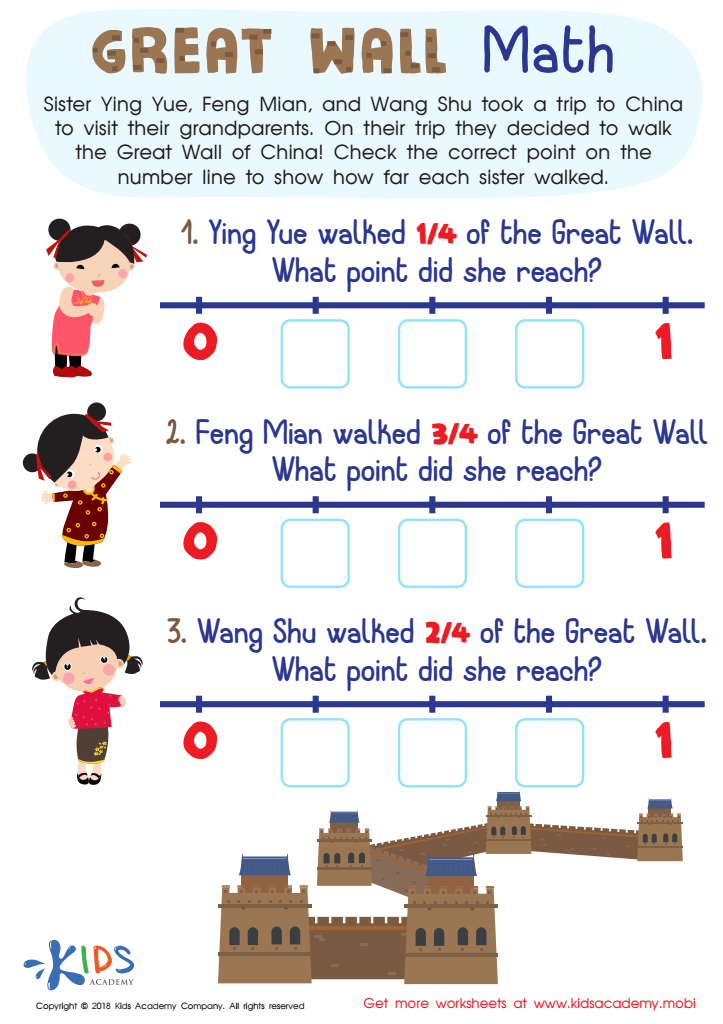
Great Wall Math Worksheet








Understanding number patterns is fundamental for children aged 6-8, as it lays the groundwork for essential mathematical skills and logical thinking. Recognizing and predicting patterns strengthen a child's ability to see relationships and make connections, critical steps in solving more complex math problems.
Firstly, patterns are the basis for arithmetic operations. When kids understand how sequences work, they grasp addition, subtraction, multiplication, and division more naturally. For example, understanding counting by twos, fives, or tens helps them with both basic and advanced calculations later on.
Secondly, pattern recognition enhances problem-solving and critical-thinking skills. By identifying patterns, children learn to make predictions, form generalizations, and solve problems efficiently. This analytical mindset extends beyond math, aiding in science, reading, and even daily life situations.
Additionally, understanding patterns is linked to improved memory and cognitive development. When children practice recognizing and creating patterns, they exercise their brain's ability to store and recall information.
Lastly, recognizing patterns supports early algebraic thinking, preparing young learners for more advanced mathematical concepts. Knowing how numbers relate within a pattern trains children to look for structures and similarities, fundamental skills in algebra.
Therefore, parents and teachers should prioritize fostering pattern recognition to ensure a solid math foundation and broader cognitive development in young children.








