
Basic Counting Math Worksheets for Ages 6-8
3 filtered results
Difficulty Level
Grade
Age
-
From - To
Subject
Activity
Standards
Spark your child's curiosity and build a strong math foundation with our Basic Counting Math Worksheets for Ages 6-8. Perfect for young learners, these well-crafted worksheets help kids master counting through engaging activities and fun illustrations. They cover fundamental skills such as number recognition, sequencing, and simple arithmetic, making learning both interactive and enjoyable. Our resources are designed by educational experts to ensure each worksheet aligns with core math standards, aiding both classroom and at-home learning. Start nurturing a positive math experience today with our comprehensive and motivating counting worksheets!
Favorites
With answer key
Interactive
 Assign to My Students
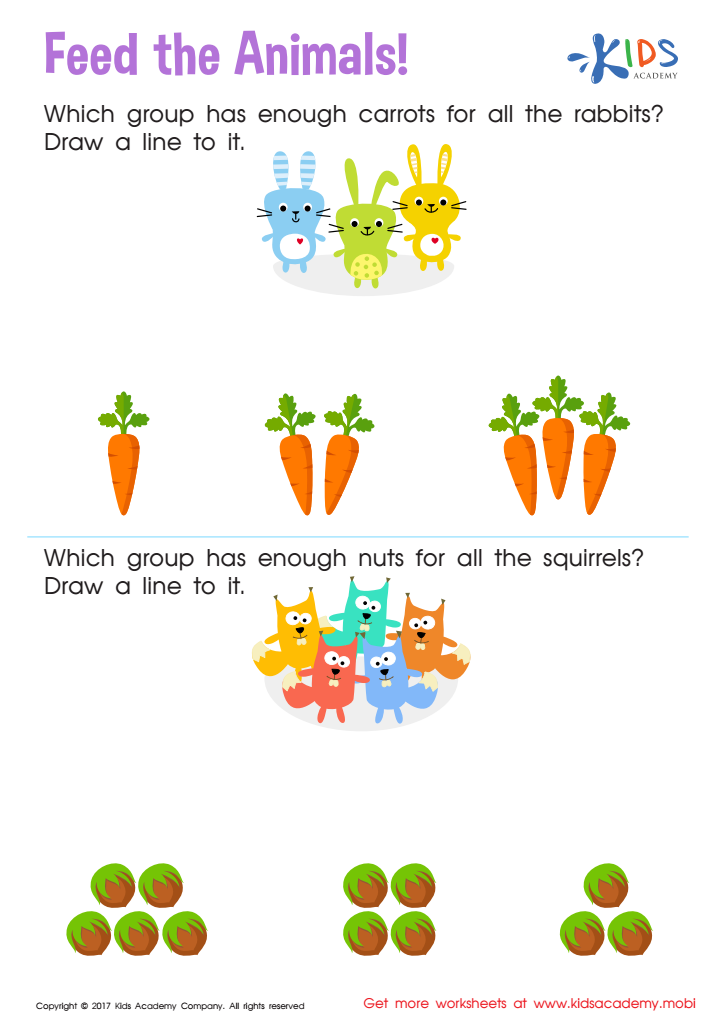
Count and Match: Feed the Animals Worksheet
Learning and growing involves more than just numbers, phonics and comparison. This Feed the Animals worksheet helps kids to exercise their reasoning skills. They must work out how many rabbits and carrots there are, and then repeat the process for the squirrels. This encourages problem solving and counting skills.
Count and Match: Feed the Animals Worksheet
Worksheet
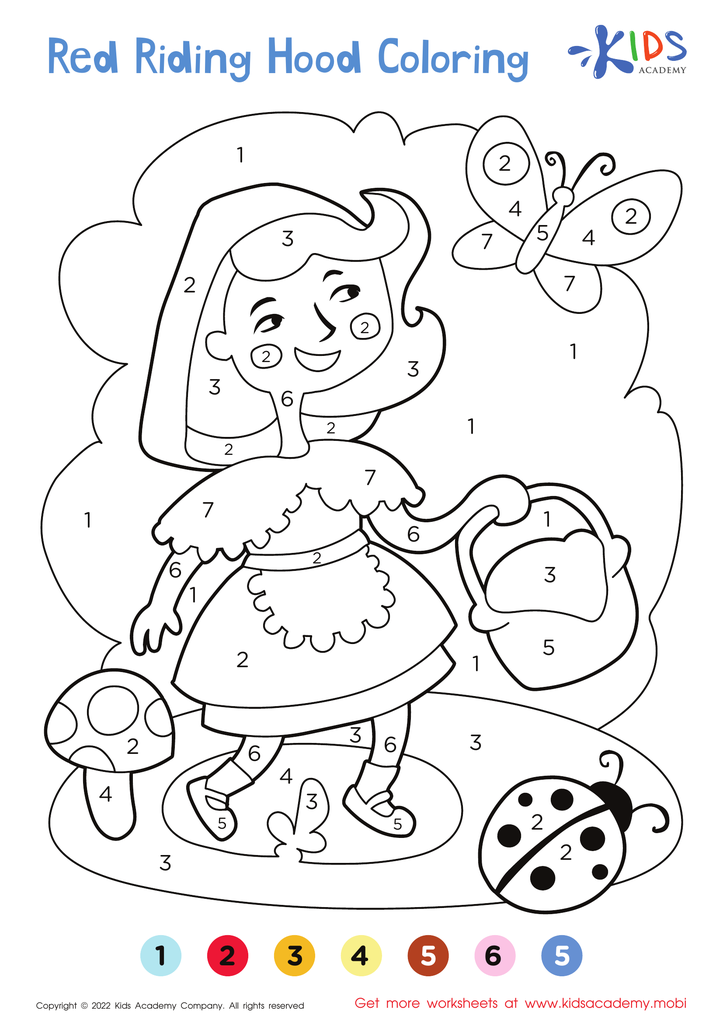
Little Red Riding Hood – Coloring by Numbers
Download this free PDF page and enjoy coloring Little Red Riding Hood. It's an easy and fun activity that everyone can do - just follow the numbers! Get your colored pencils ready and have a blast. 80 words.
Little Red Riding Hood – Coloring by Numbers
Worksheet
Join Kids Academy for Free
Who is primarily going to use this learning content?







Basic counting math is foundational for children aged 6-8 because it serves as an essential building block for all future mathematical concepts. At this critical developmental stage, mastering basic counting helps children understand number sequences, identify numerical values, and develop the ability to manipulate numbers, which are key skills for more complicated mathematical operations they'll encounter later, such as addition, subtraction, multiplication, and division.
Moreover, early math skills have been shown to correlate with overall academic success. Proficiency in counting boosts logical thinking and enhances problem-solving abilities, which are crucial not only for math but also for subjects like science, reading, and even social studies. Furthermore, early confidence in math fosters a positive attitude toward learning, reducing math anxiety in later years.
For parents and teachers, emphasizing basic counting engages children with interactive and playful activities that can foster a love for learning. This includes counting objects, playing counting games, using number songs, or incorporating everyday activities to practice counting. By investing time and effort in teaching these fundamental skills, parents and teachers set children on a path to becoming competent, confident learners who are better prepared for academic challenges and practical life situations requiring numerical literacy.








