Developing observational skills Math Worksheets for Ages 6-8
3 filtered results
-
From - To
Enhance your child's learning journey with our "Developing Observational Skills Math Worksheets," tailored for ages 6-8. These engaging and fun worksheets encourage young learners to sharpen their observation skills while solving math problems. Through various activities, children will identify patterns, make comparisons, and recognize shapes—fundamental skills that boost math comprehension and critical thinking. Perfect for home or classroom use, these worksheets foster an interactive learning environment, promoting focus and attention to detail. Help your child build a solid foundation in math with our carefully designed resources that blend learning with play, ensuring a delightful educational experience.
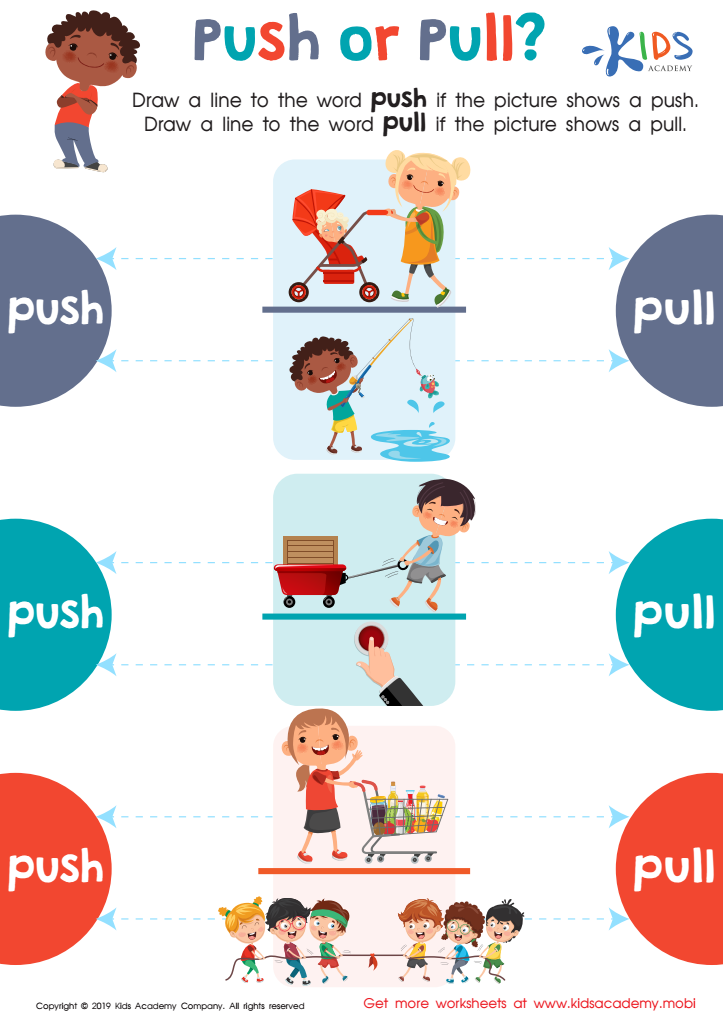
Push or Pull? Worksheet
 Assign to My Students
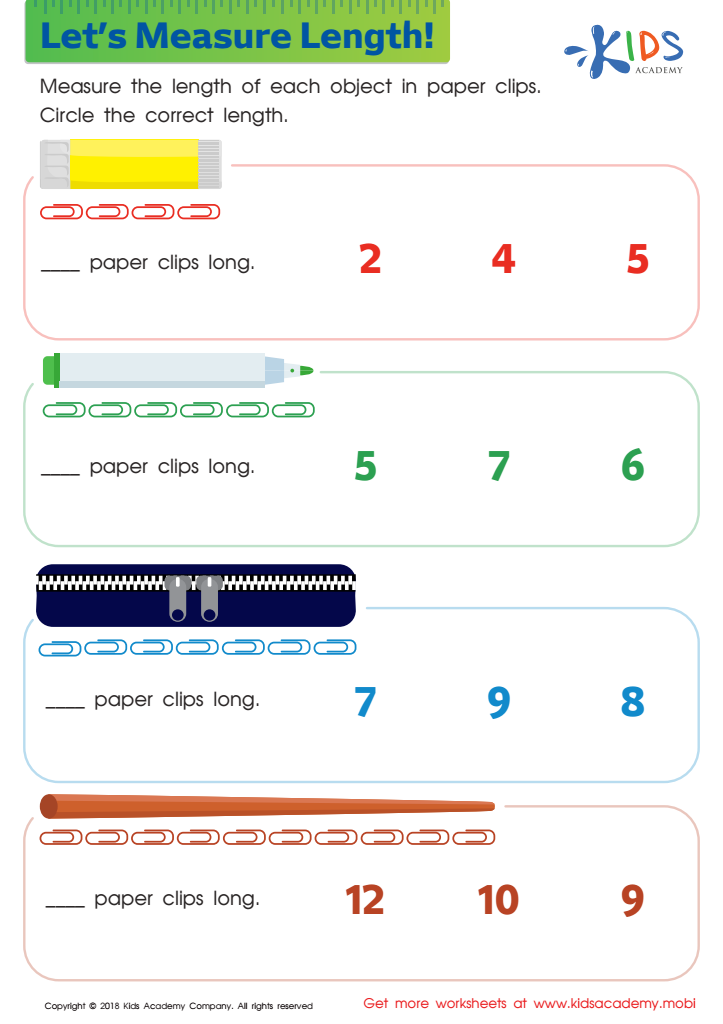
Lets Measure Length Worksheet
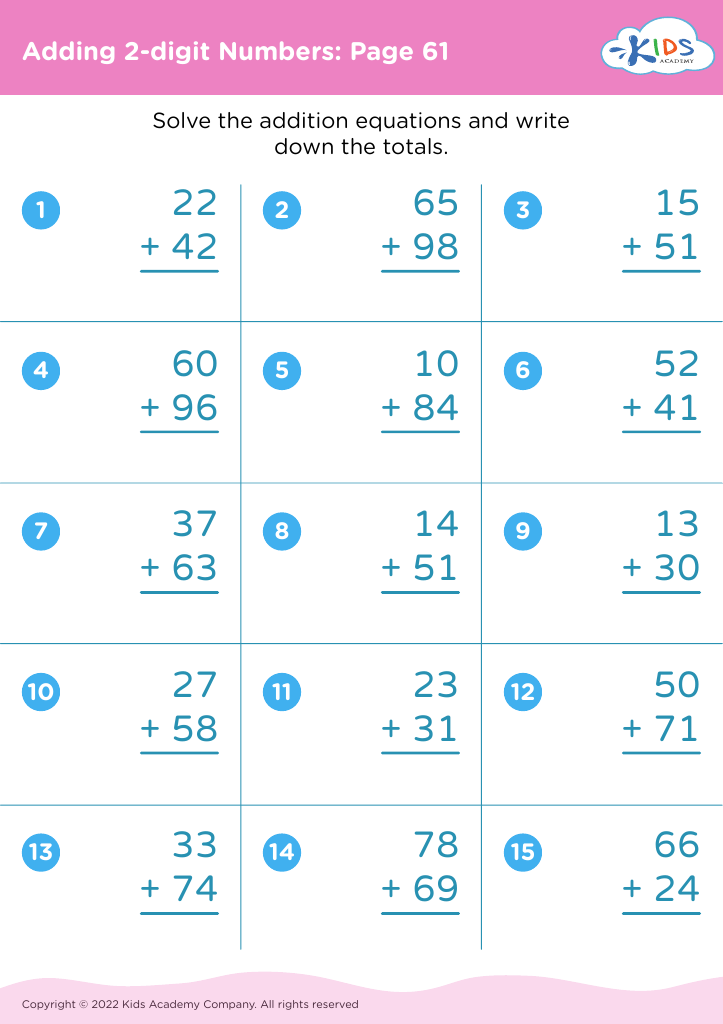







Developing observational skills in math for children aged 6-8 is crucial for several reasons. At this age, children are naturally curious and eager to explore the world around them. By nurturing their observational skills, parents and teachers can enhance a child's ability to notice patterns, relationships, and changes in their environment, which are foundational for mathematical thinking.
Creating strong observational skills helps children connect mathematical concepts to real-life situations. When children learn to observe details, they become adept at recognizing shapes, sizes, and quantities, which aids in geometry and measurement. This not only broadens their understanding of numbers but also fosters critical thinking and problem-solving abilities.
Additionally, strong observational skills provide a framework for children to develop cognitive skills such as classification, comparison, and inference, all essential for advanced mathematical understanding. Encouraging these skills supports not only mathematics but also scientific inquiry and literacy development, forming a holistic approach to learning.
Moreover, engaging children in discussions about their observations promotes language skills and boosts confidence. When teachers and parents prioritize observational skills in math, they empower children to become active learners, fostering a lifelong love for exploration and understanding of the world.








