
Environmental awareness Math Worksheets for Ages 6-8
7 filtered results
Difficulty Level
Grade
Age
-
From - To
Subject
Activity
Standards
Discover our engaging Environmental Awareness Math Worksheets designed specifically for children aged 6-8! These worksheets seamlessly combine fundamental math skills with important lessons on environmental conservation. Perfect for young learners, each activity helps students explore concepts like counting, addition, and problem-solving while encouraging them to think critically about our planet. Topics include recycling, ecosystems, and sustainability, making math both fun and meaningful. Download our printable worksheets to inspire your child’s love for learning while fostering a sense of responsibility towards the environment. Equip your little ones with the skills they need to excel in math and become environmentally conscious citizens!
Favorites
With answer key
Interactive
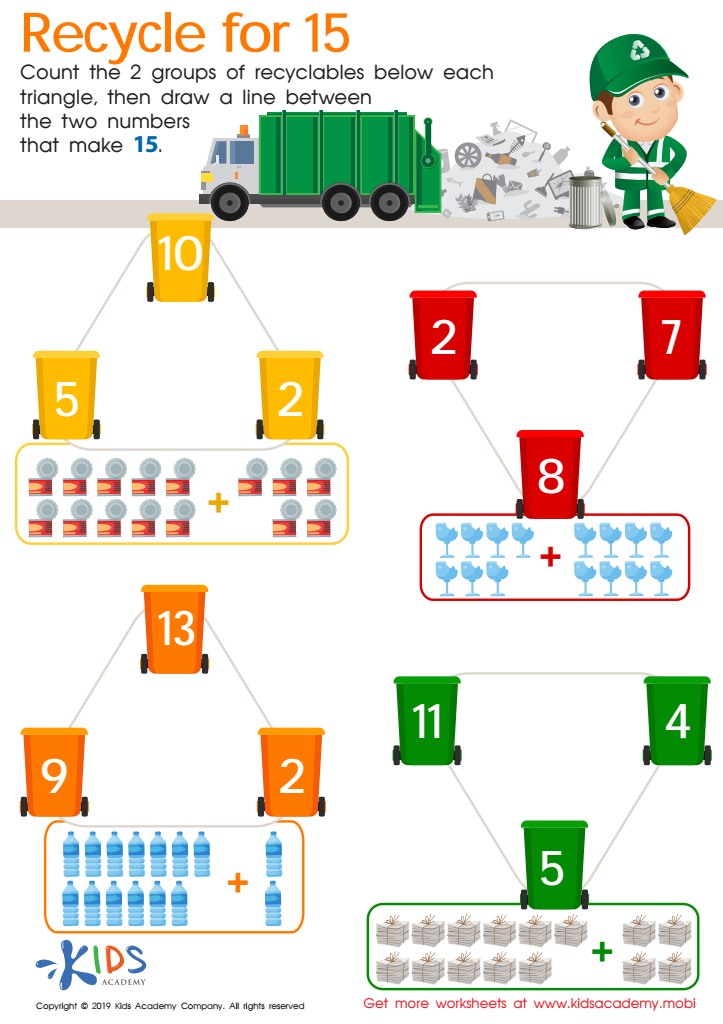
Recycle for 15 Worksheet
Recycle to help the planet! Have students count the recyclables and draw a line between the two numbers that make 15. This will help them understand the importance of recycling.
 Assign to My Students
Recycle for 15 Worksheet
Worksheet
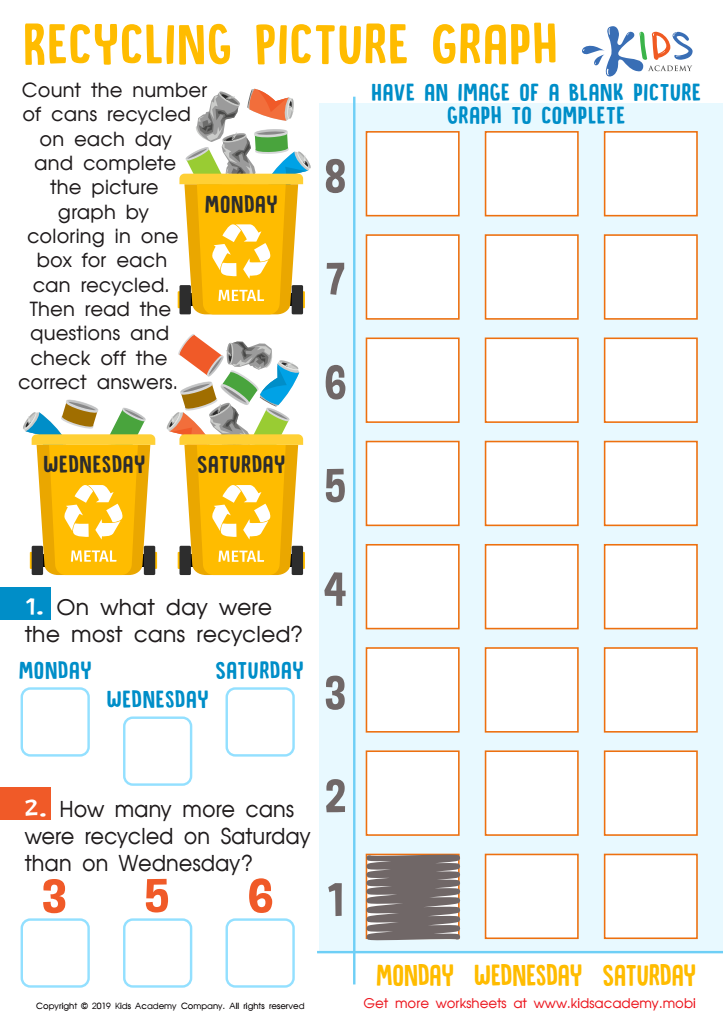
Recycling Picture Graph Worksheet
This worksheet can help kindergartners learn numbers and why recycling is important. After using items and materials, they can turn them into new materials instead of throwing them away. Guide your students to follow the instructions and answer the questions at the end. Help them understand how recycling benefits our environment.
Recycling Picture Graph Worksheet
Worksheet
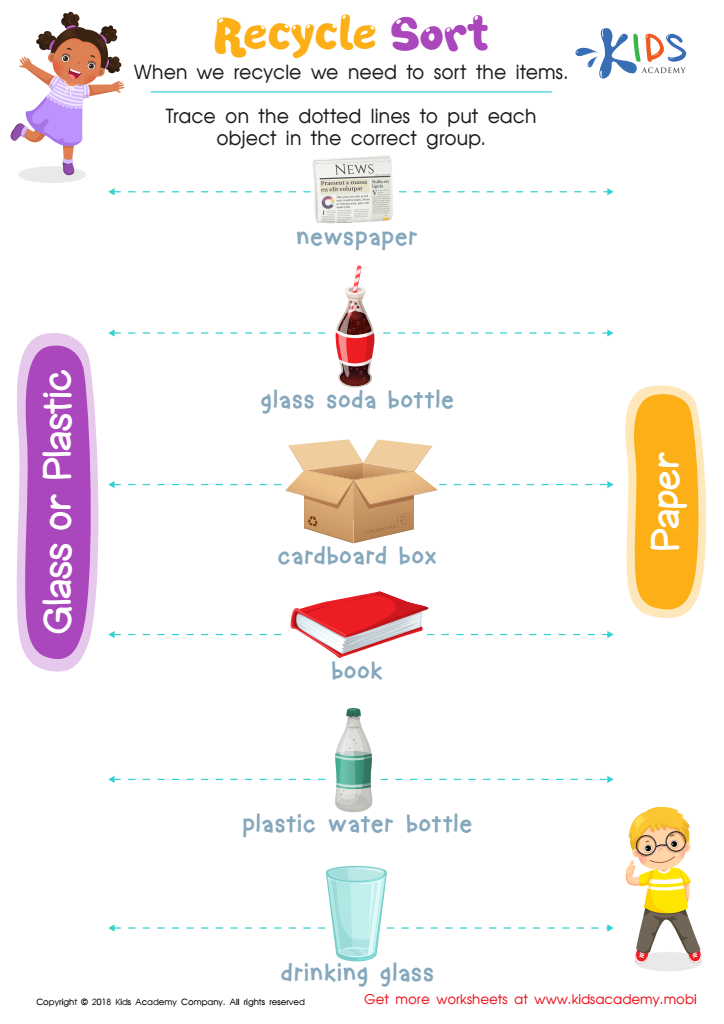
Recycle Sort Worksheet
Help your children become eco-warriors while they develop critical thinking and fine motor skills with this free downloadable worksheet! Engaging pictures and matching words, plus fun and bright colors, will have kids analyzing and sorting recyclables into paper or glass/plastic groups using traceable lines.
Recycle Sort Worksheet
Worksheet
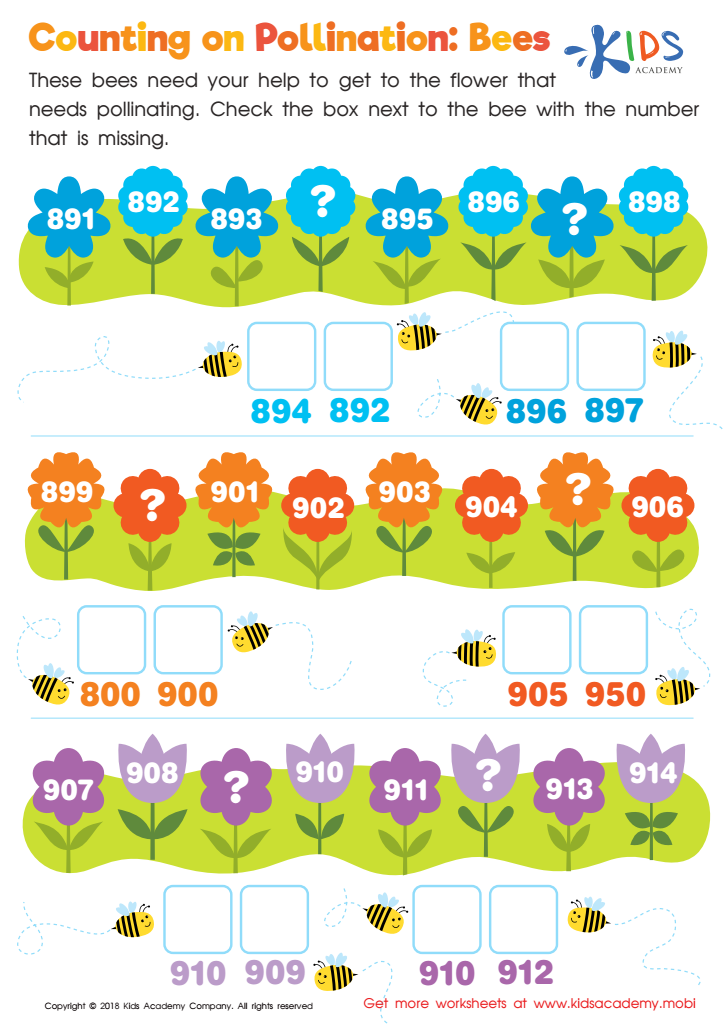
Counting on Pollination: Bees Worksheet
This downloadable worksheet helps kids improve their math skills while having fun - they'll help the bees pollinate the flowers by finding the missing number. It's an entertaining way to practice number patterns, sequences and number line skills, aiding in fast and efficient math computations.
Counting on Pollination: Bees Worksheet
Worksheet
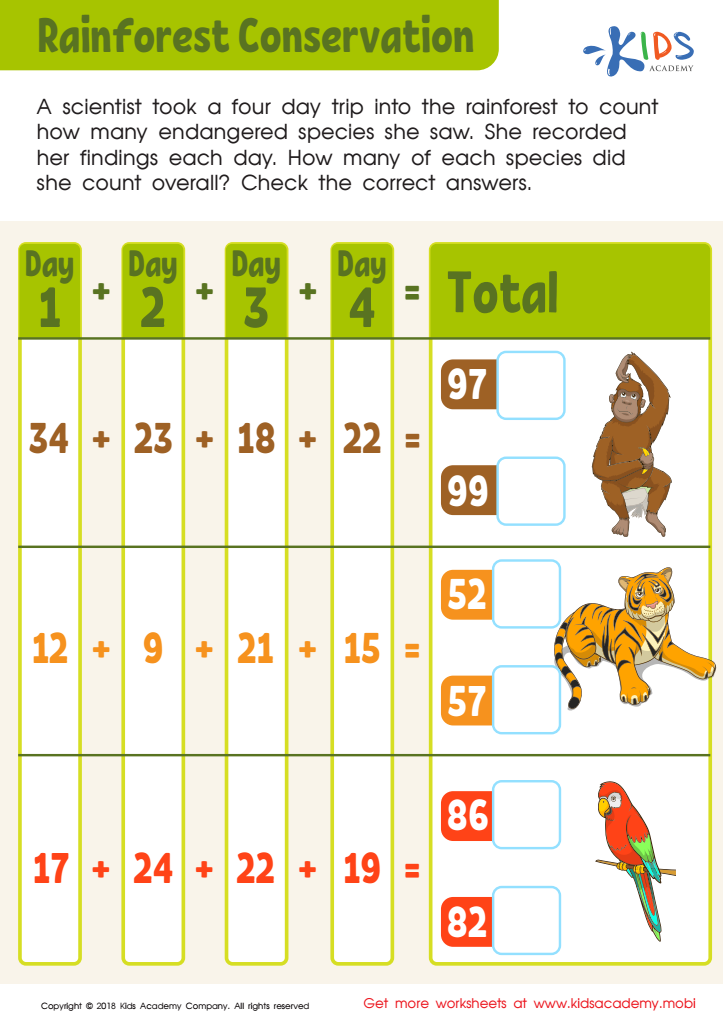
Rainforest Conservation Worksheet
Explain to your child what a rainforest is and why it's important. A scientist took a four-day trip to count endangered species. Let your child count how many of each species were seen in total. Check the answers and help them understand.
Rainforest Conservation Worksheet
Worksheet
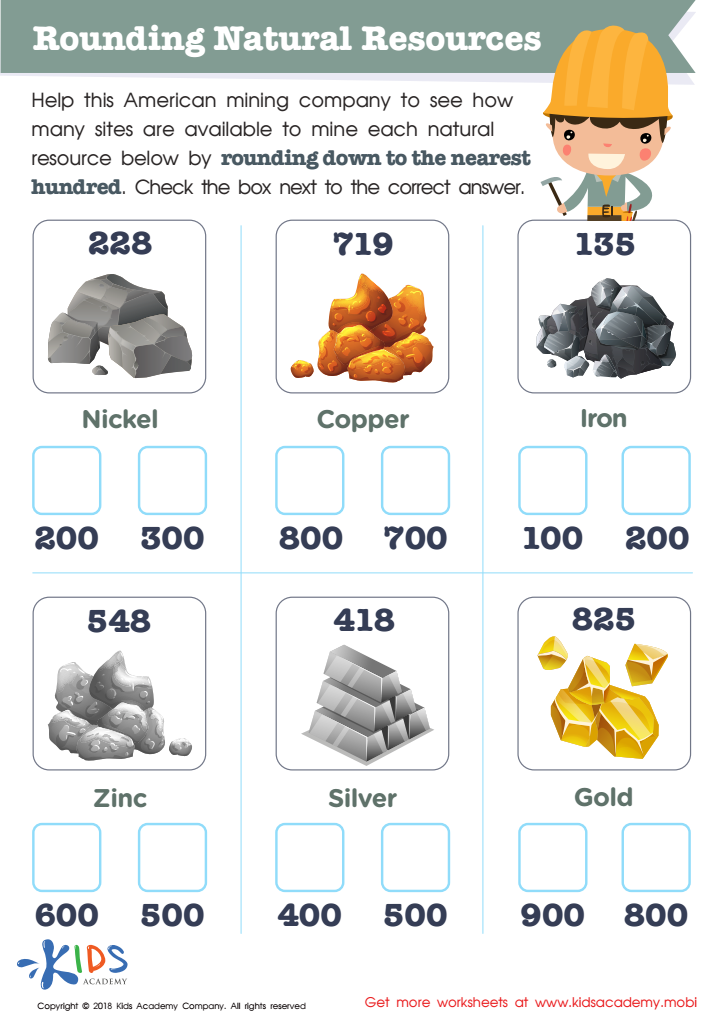
Rounding Natural Resources Worksheet
This worksheet from Kids Academy helps review rounding skills while reviewing natural resources. Learners view pictures of natural resources and round down to the nearest hundred. Use it to jumpstart a science discussion about the various resources found on the planet. A great way to make math relevant to real life!
Rounding Natural Resources Worksheet
Worksheet
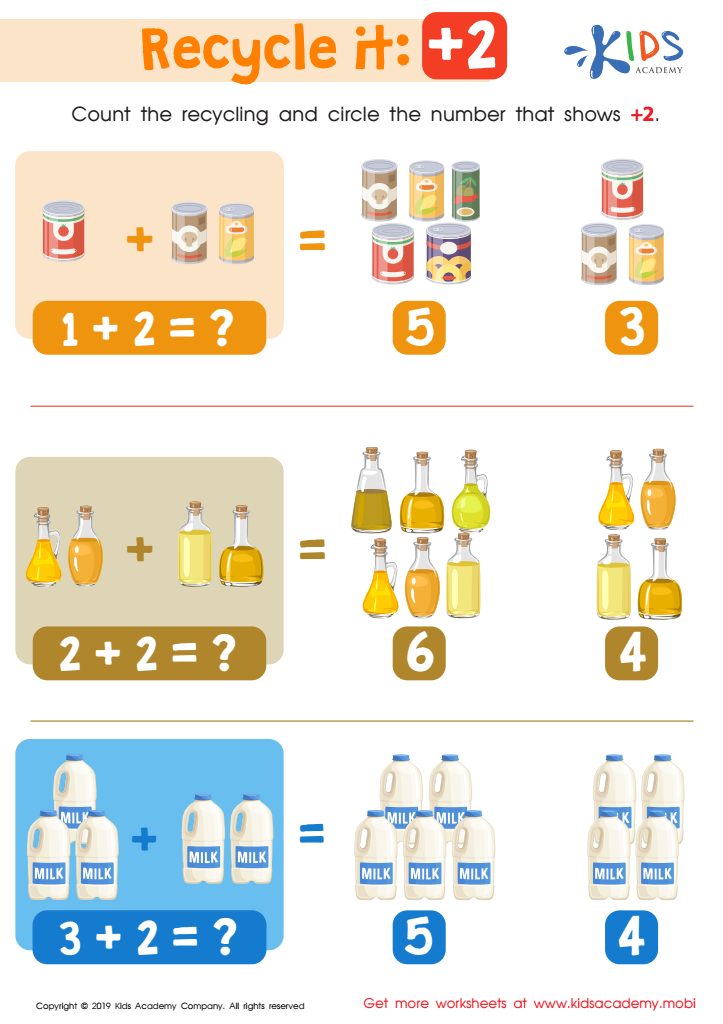
Recycle It: +2 Worksheet
Your kindergartners likely count everything they see, which is great for practice. Give them simple exercises such as in this worksheet to stimulate their minds. Ask them to count the recycling cans and then circle the number that shows +2.
Recycle It: +2 Worksheet
Worksheet
Join Kids Academy for Free
Who is primarily going to use this learning content?








Parents and teachers should prioritize Environmental Awareness Math for children aged 6-8 because it intertwines essential mathematical skills with crucial environmental concepts, fostering holistic development. At this age, children are naturally curious about the world around them. By integrating environmental themes with math, educators can engage young learners in lessons about nature, sustainability, and conservation in a fun and relatable way.
For example, activities like measuring the growth of plants, counting recycled items, or calculating the distance traveled by wildlife not only build foundational math skills but also instill a sense of responsibility towards the environment. This subject matter encourages children to understand their impact on the planet and promotes empathy and critical thinking.
Additionally, incorporating environmental awareness into math helps nurture problem-solving skills. Young learners begin to recognize the interconnectedness of math and real-world issues, therefore developing a sense of stewardship early on. Parents and teachers can inspire future generations to make informed decisions about sustainability and conservation through math, fostering environmental advocates from a young age. In today’s fast-changing world, embedding these concepts into education paves the way for both academic growth and responsible citizenship, making it vital for a brighter and more sustainable future.








