Fraction comparison Math Worksheets for Ages 6-8 - Page 2





.jpg)

Understanding fraction comparison is essential for children aged 6-8 because it lays the foundation for more advanced mathematical concepts. At this age, students are beginning to explore various ways of representing numbers, and grasping fractions is critical as they encounter division and ratios in later grades.
Parents and teachers should care about this foundational skill because it develops critical thinking and problem-solving abilities. Comparisons help students understand relationships between numbers, making them more adept at recognizing patterns in math. For example, knowing that 1/2 is greater than 1/4 not only aids them in fraction comparison but also enhances their understanding of quantities in real-life contexts, such as sharing food or measuring ingredients.
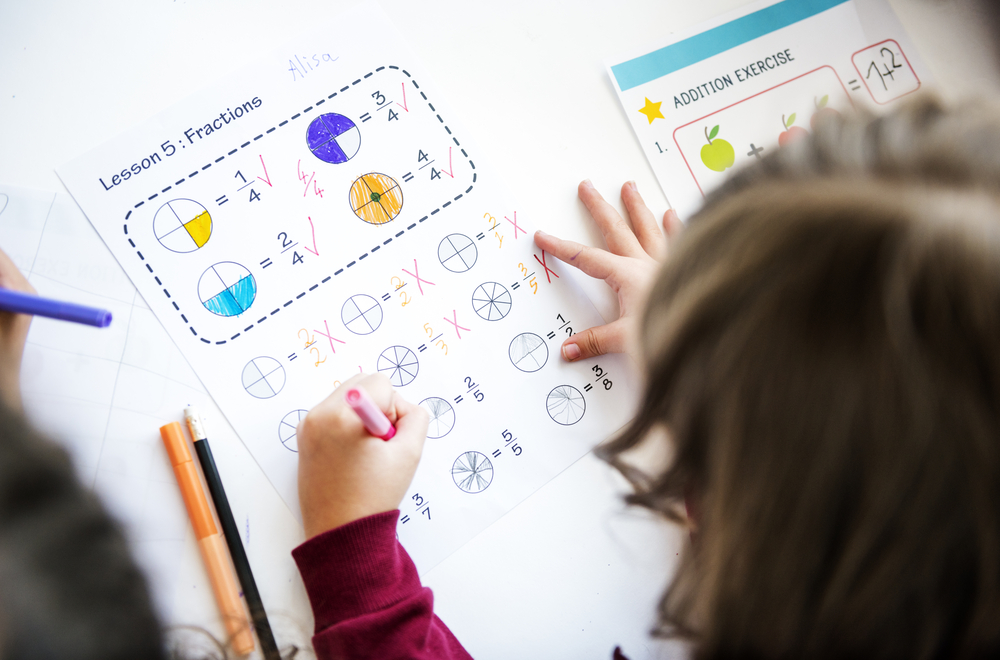
Moreover, encouraging children to visualize fractions through manipulatives, drawings, or number lines promotes engagement and reinforces concepts. This hands-on learning often boosts confidence, making math less intimidating as they progress in their education.
By prioritizing the mastery of fraction comparison, parents and teachers can ensure that children are well-equipped for future mathematical challenges, ultimately fostering a positive attitude toward learning and contributing to their overall academic success.








