Check out this FREE Trial Lesson on Math for age 6-8!

D

Favorites
With answer key
Interactive
  • 6-8
  • Fraction simplification
  • Math
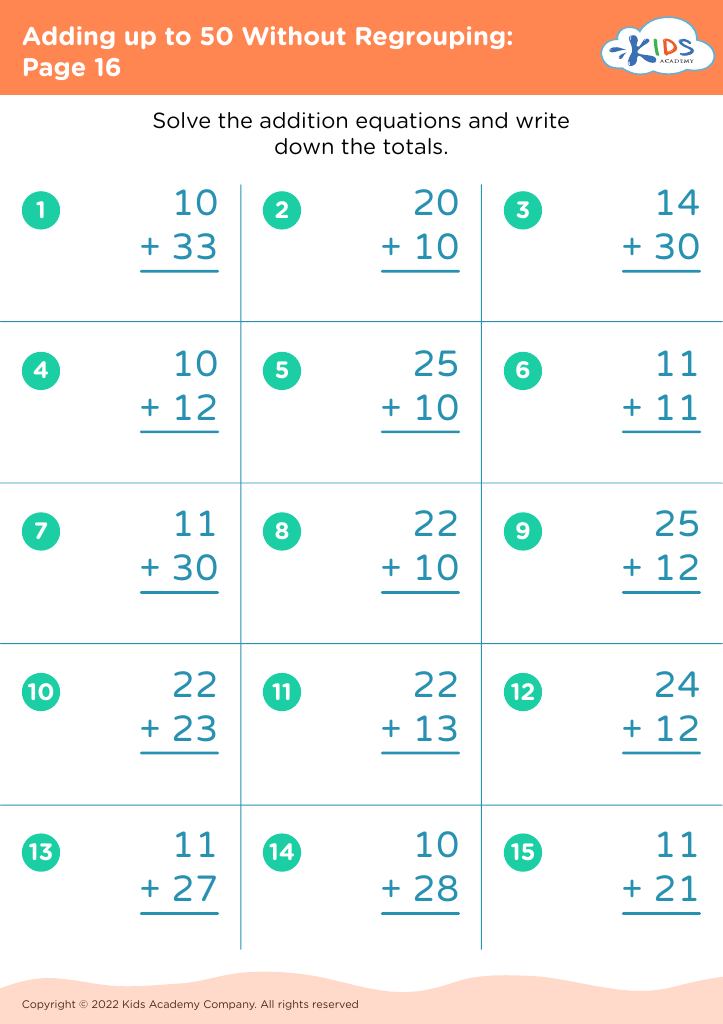
Adding up to 50 Without Regrouping: Page 16
Worksheet
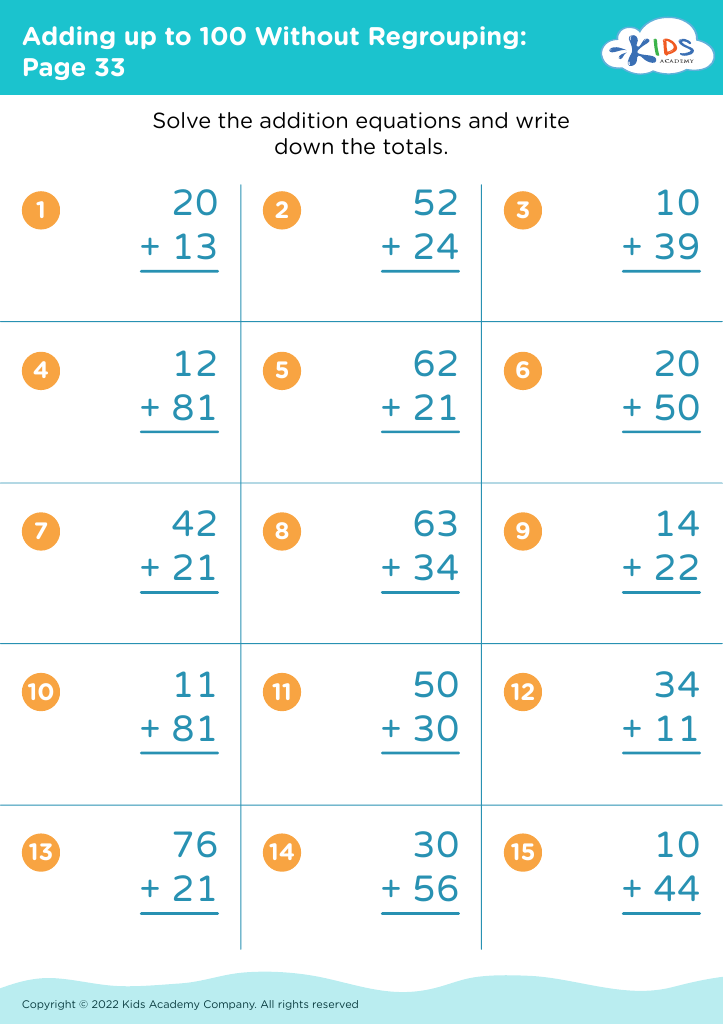
Adding up to 100 Without Regrouping: Page 33
Worksheet
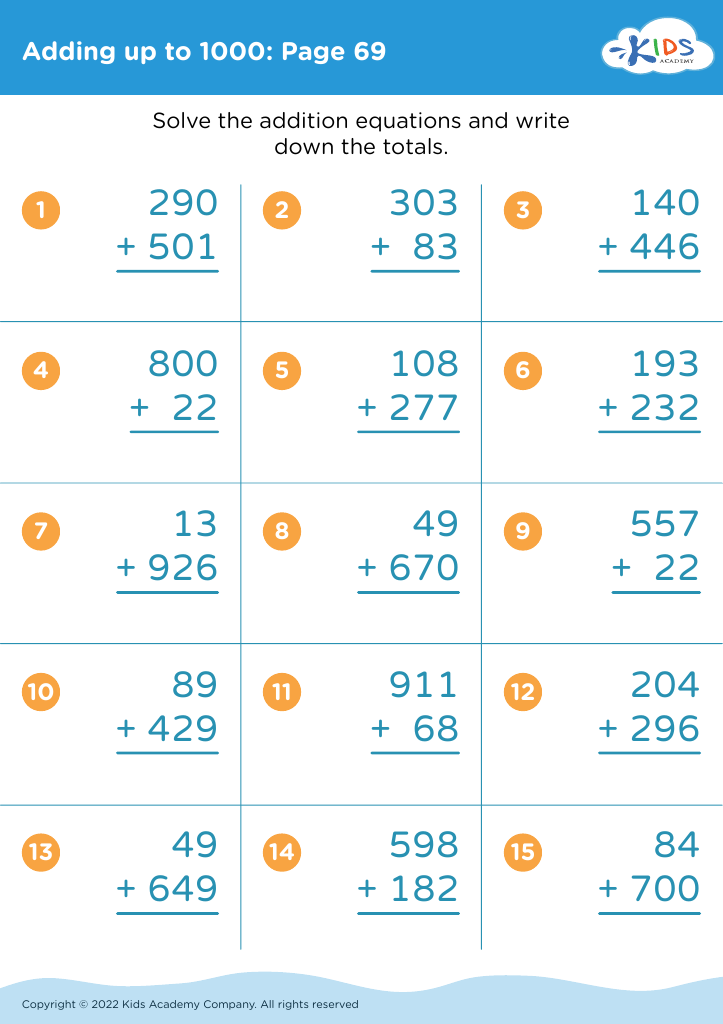
Adding up to 1000: Page 69

Adding up to 1000: Page 69

Adding up to 1000: Page 69
Worksheet
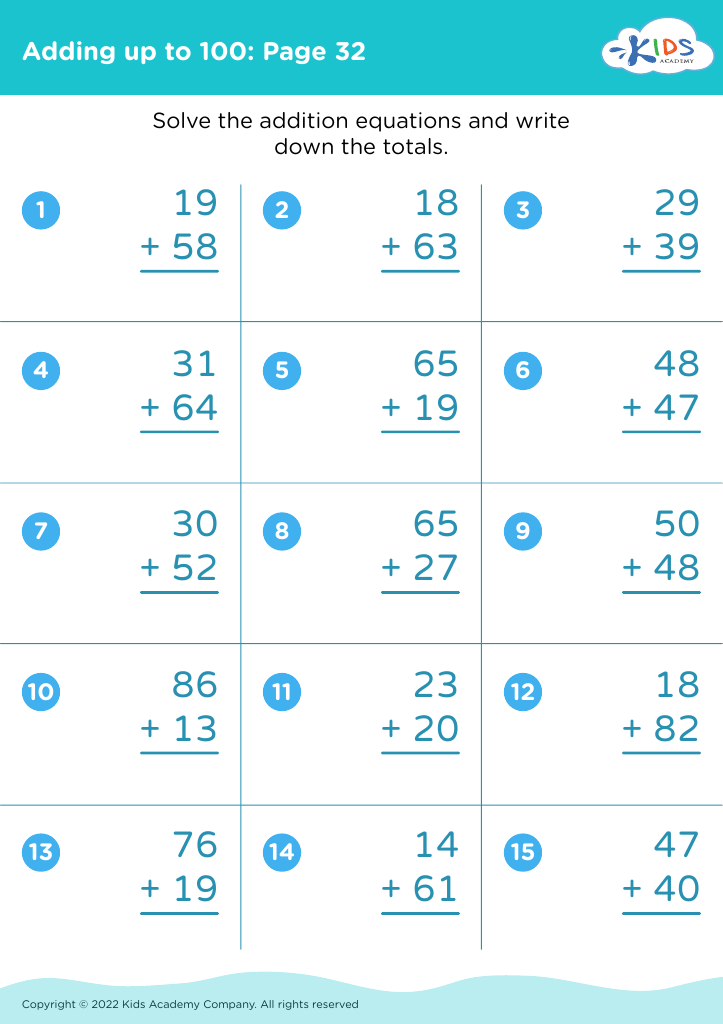
Adding up to 100: Page 32

Adding up to 100: Page 32

Adding up to 100: Page 32
Worksheet
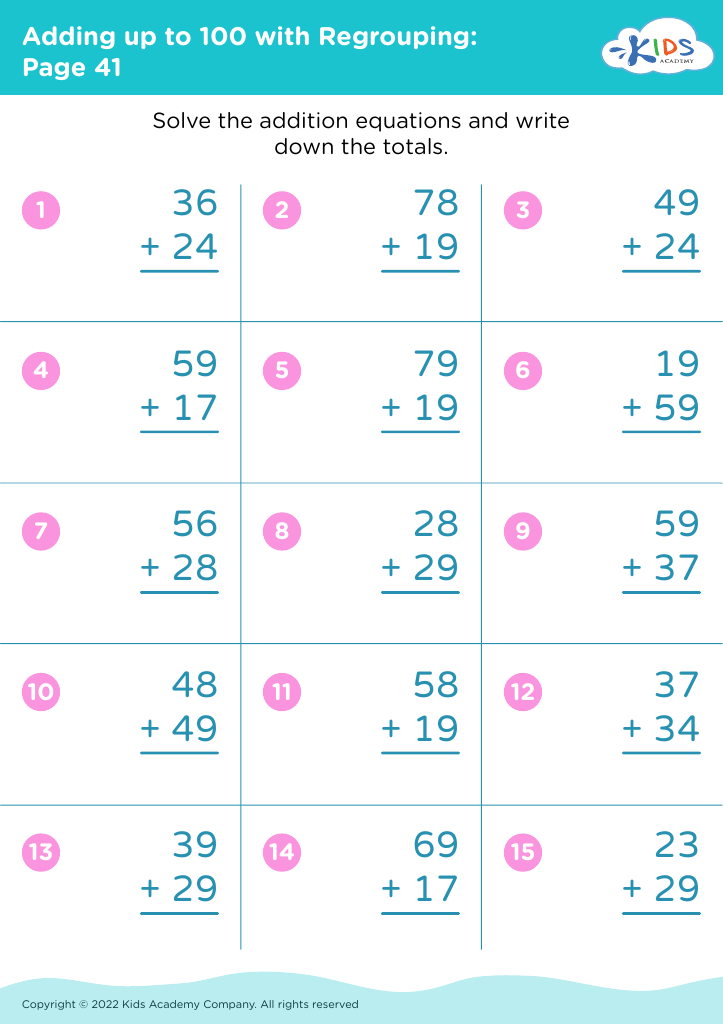
Adding up to 100 with Regrouping: Page 41
Worksheet
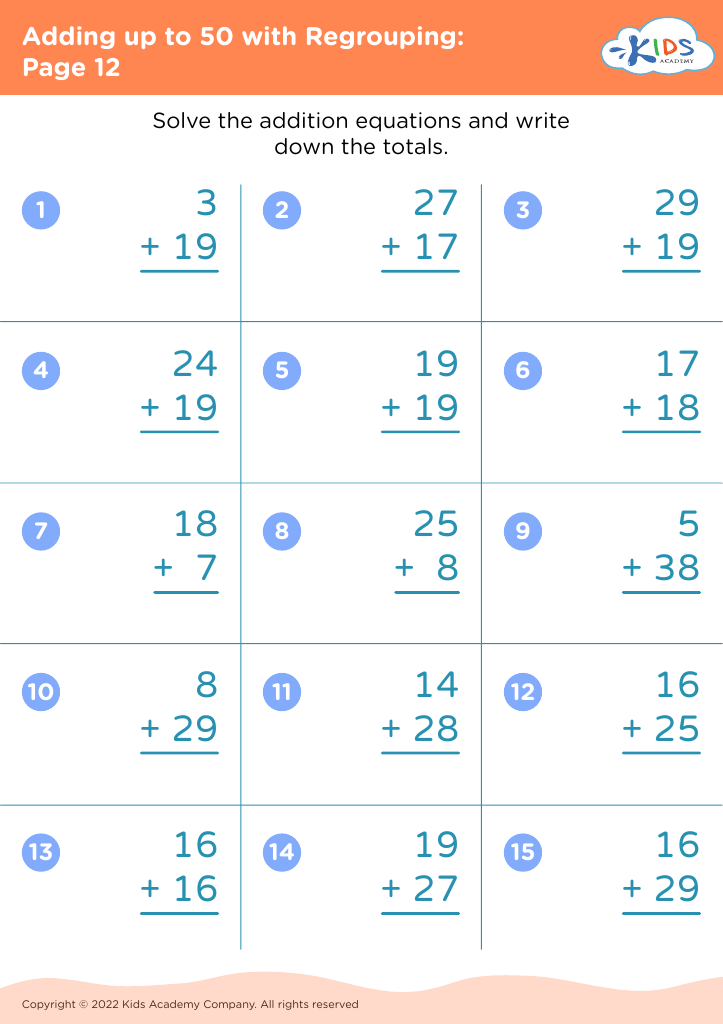
Adding up to 50 with Regrouping: Page 12
Worksheet
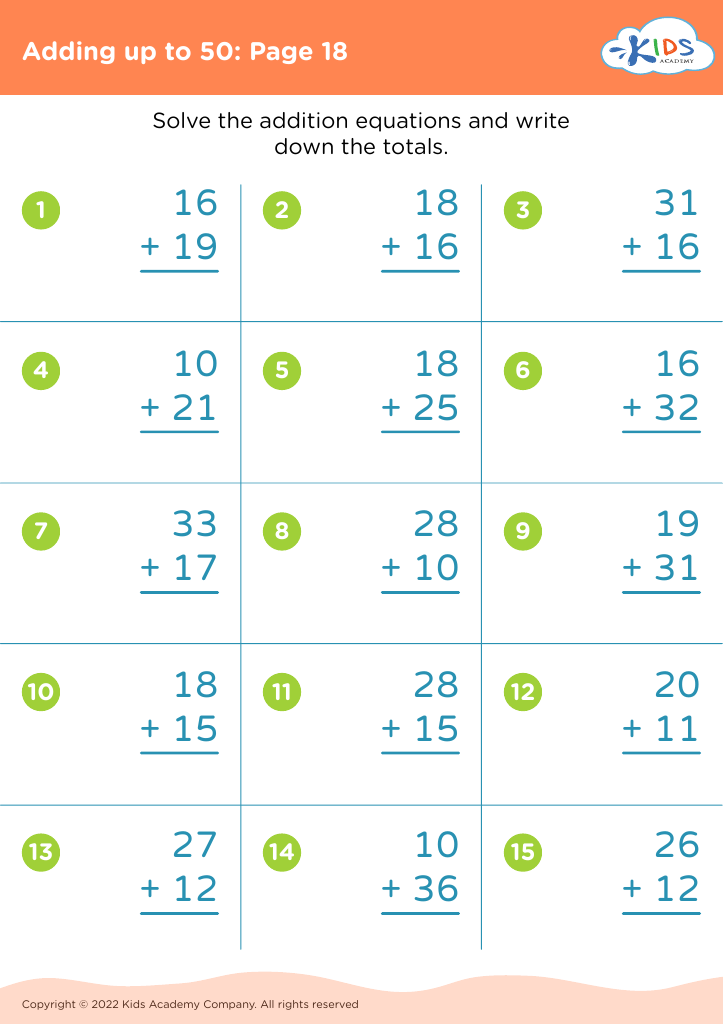
Adding up to 50: Page 18

Adding up to 50: Page 18

Adding up to 50: Page 18
Worksheet
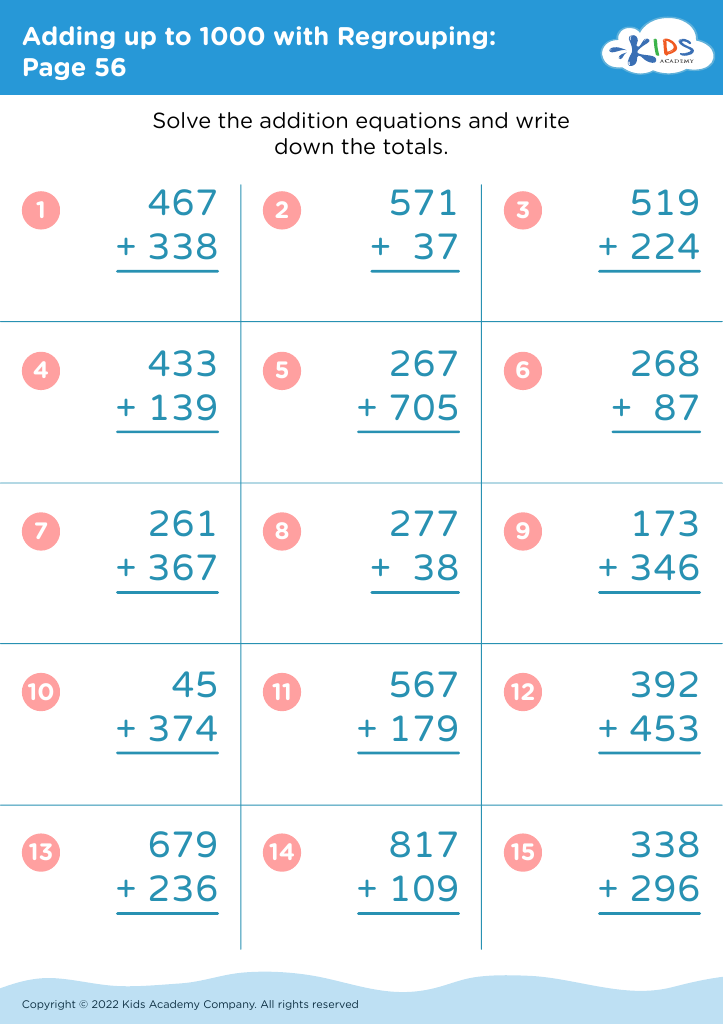
Adding up to 1000 with Regrouping: Page 56
Worksheet
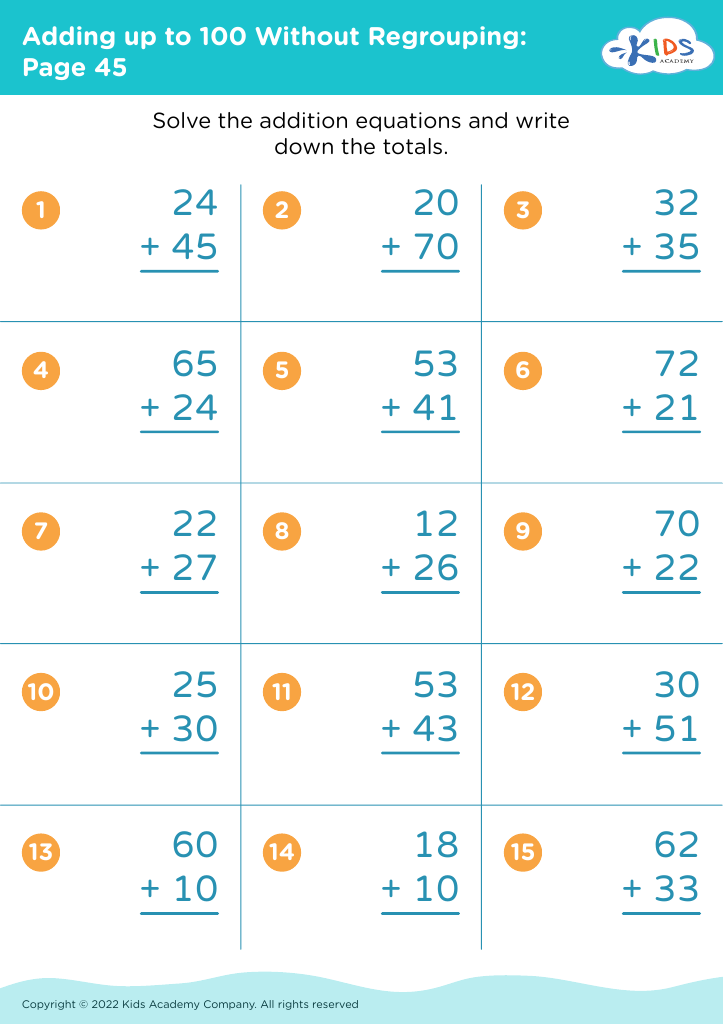
Adding up to 100 Without Regrouping: Page 45
Worksheet
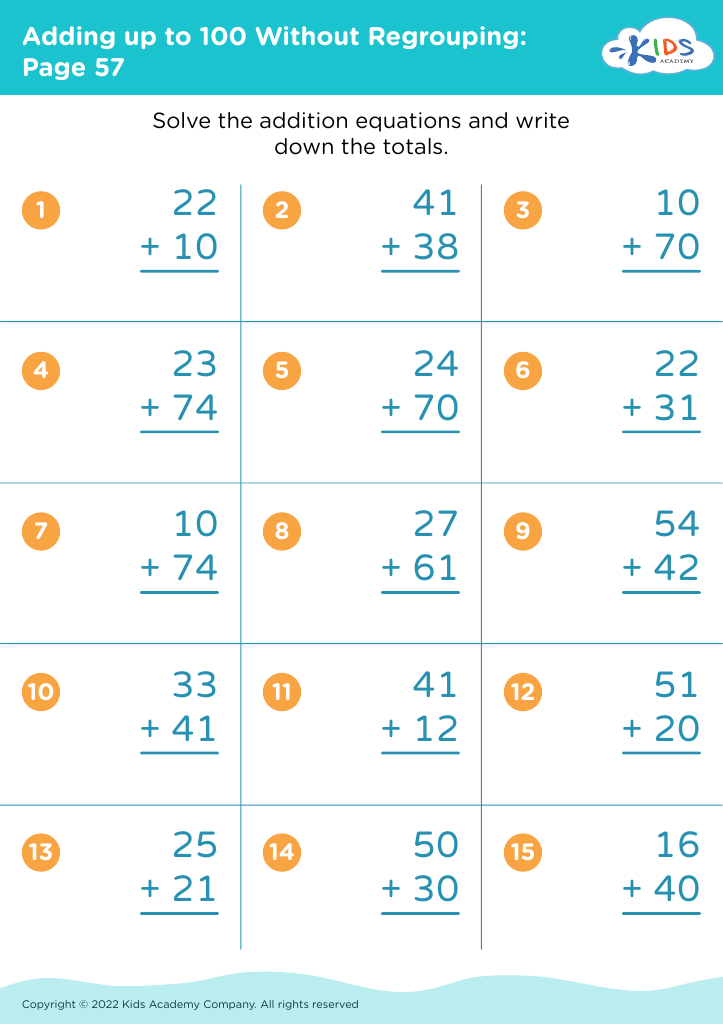
Adding up to 100 Without Regrouping: Page 57
Worksheet
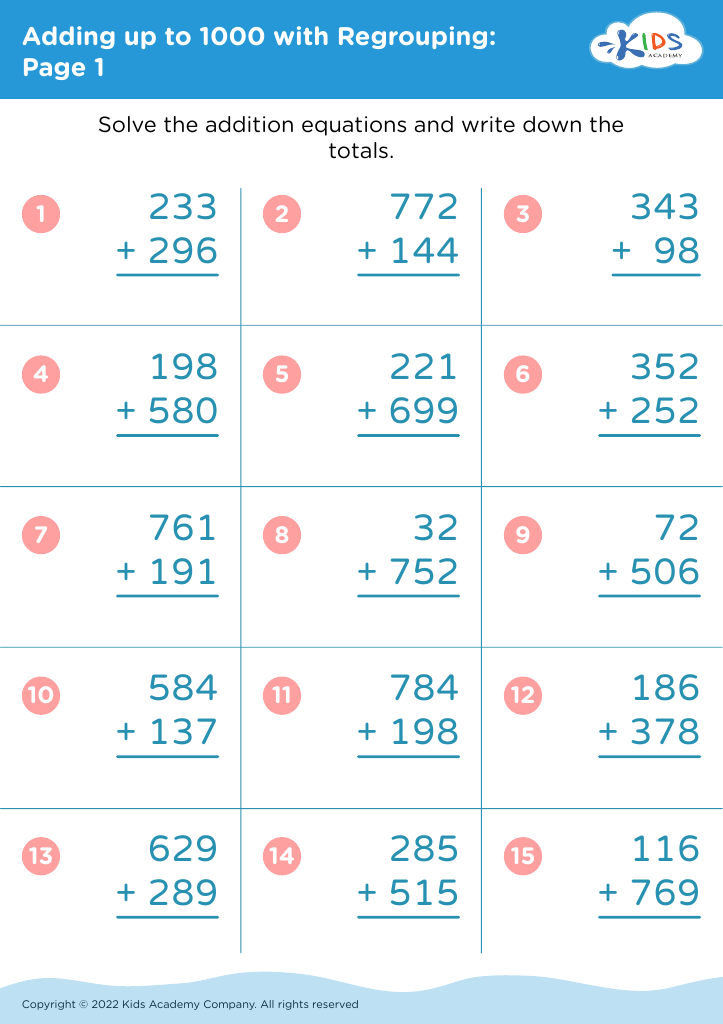
Adding up to 1000 with Regrouping: Page 1
Worksheet
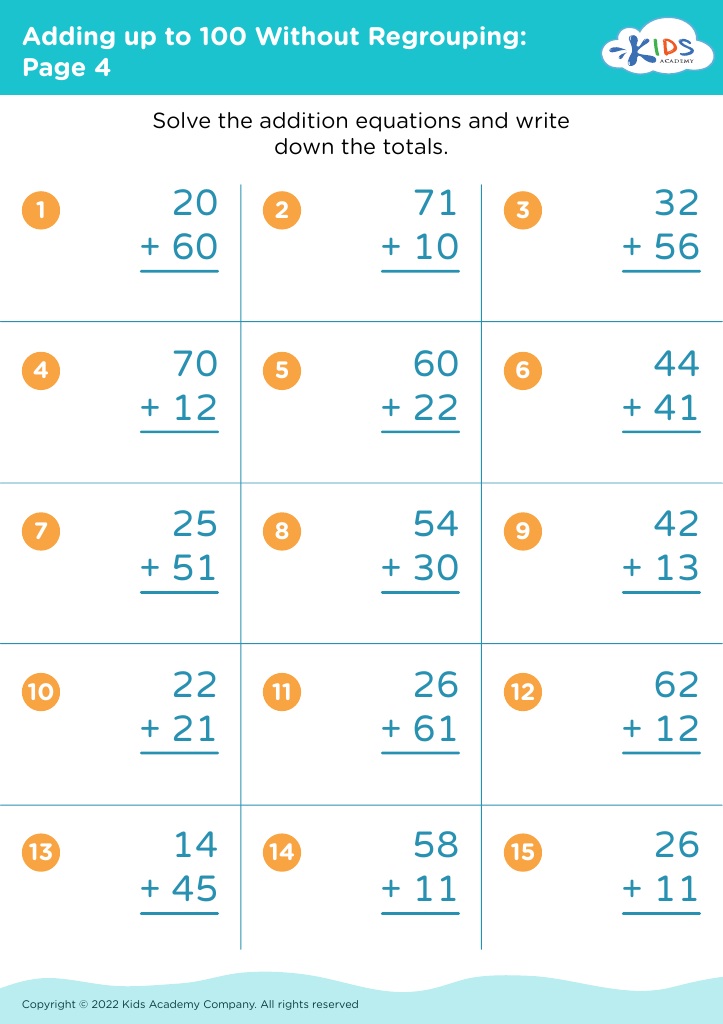
Adding up to 100 Without Regrouping: Page 4
Worksheet
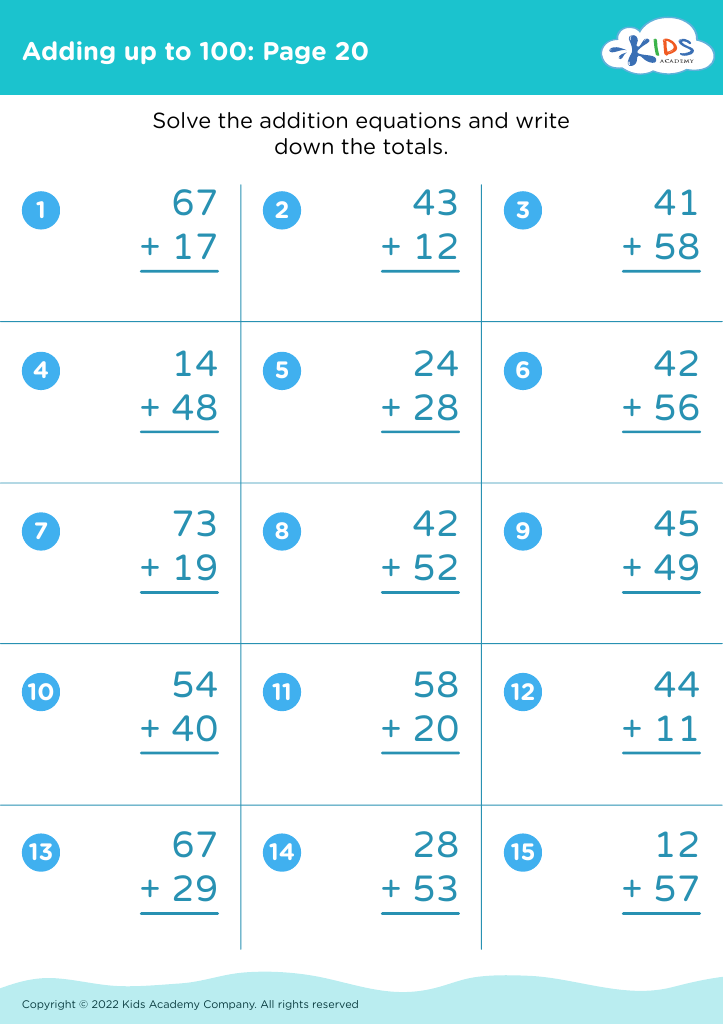
Adding up to 100: Page 20

Adding up to 100: Page 20

Adding up to 100: Page 20
Worksheet
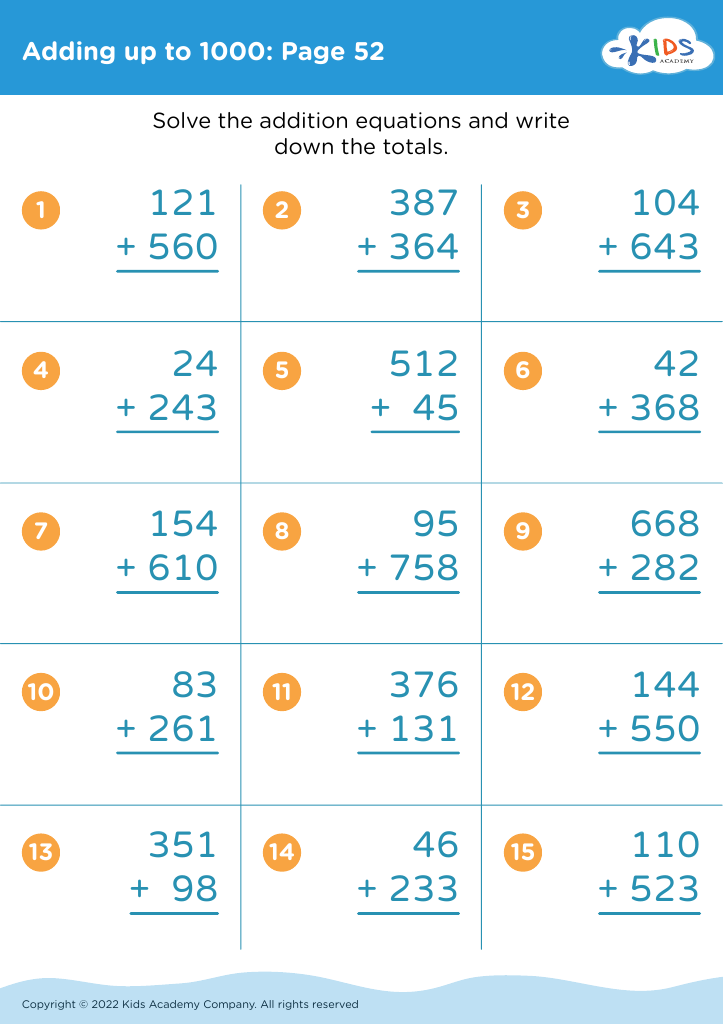
Adding up to 1000: Page 52

Adding up to 1000: Page 52

Adding up to 1000: Page 52
Worksheet
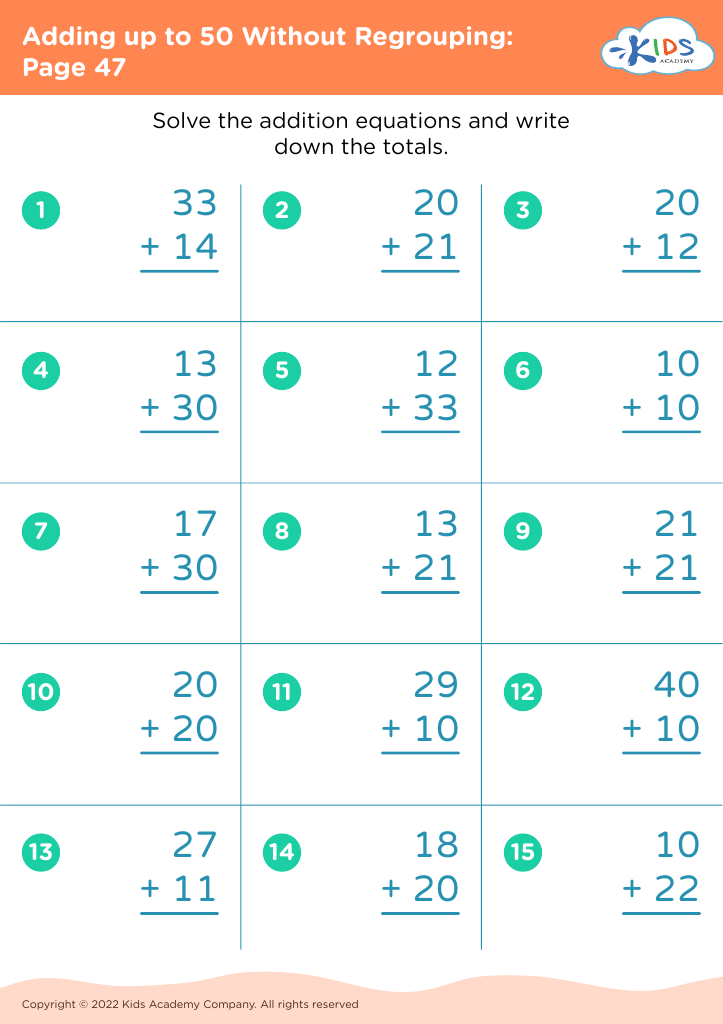
Adding up to 50 Without Regrouping: Page 47
Worksheet
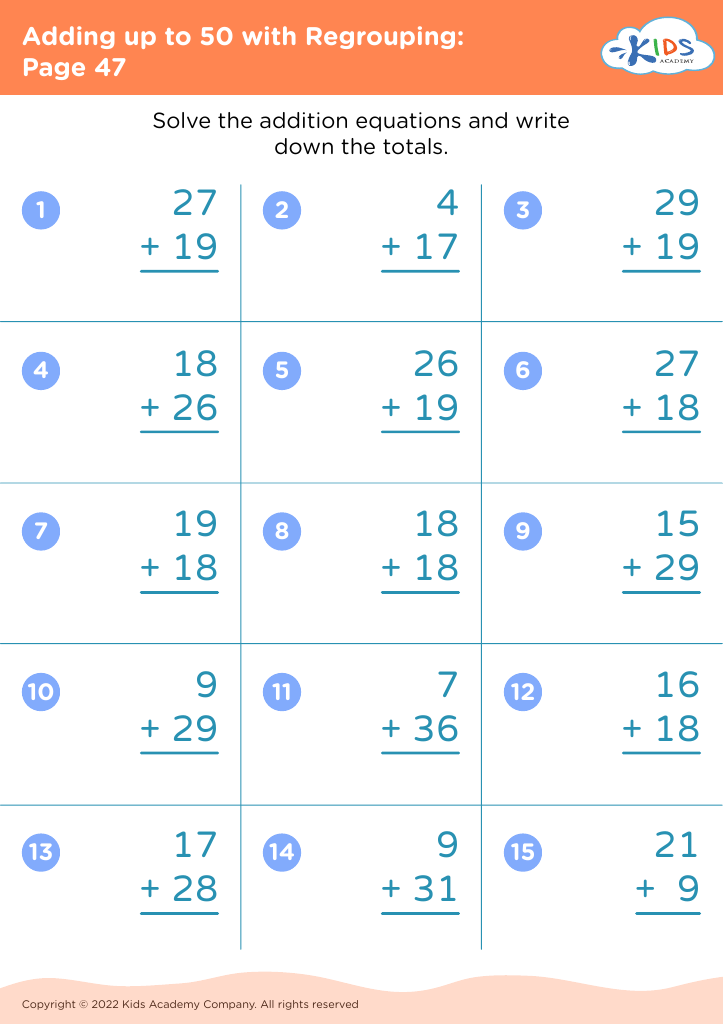
Adding up to 50 with Regrouping: Page 47
Worksheet
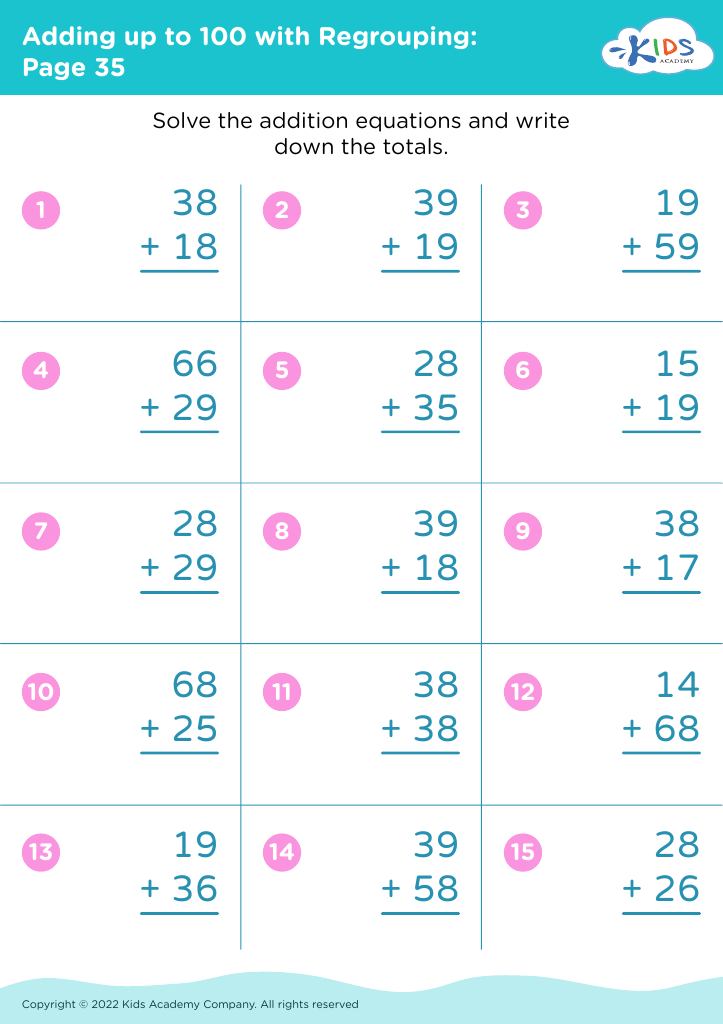
Adding up to 100 with Regrouping: Page 35
Worksheet
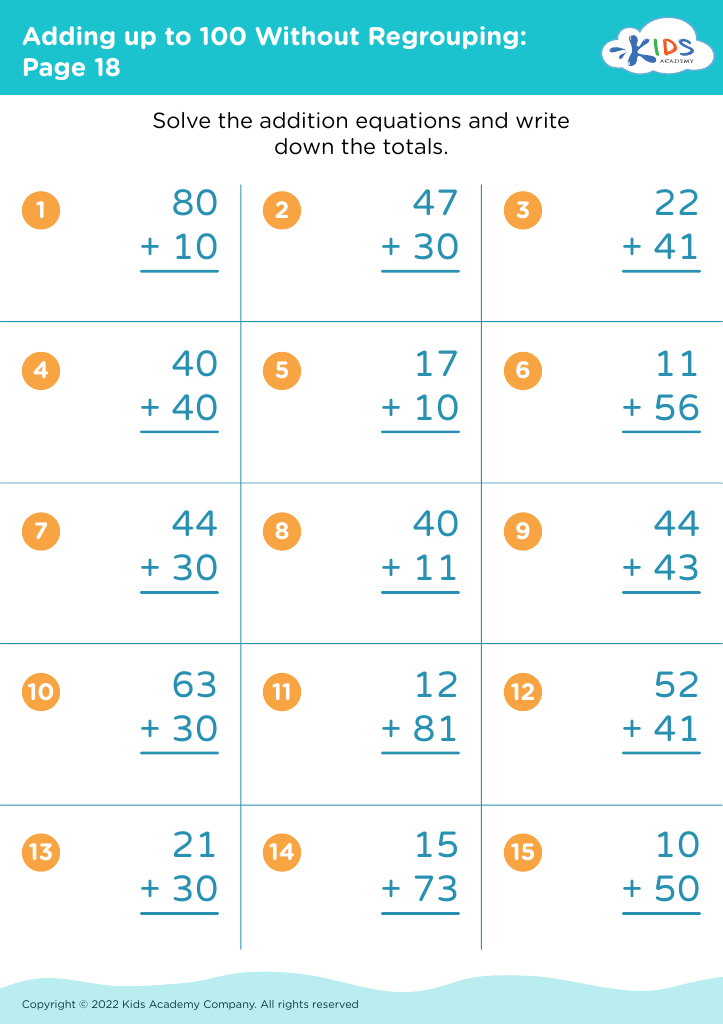
Adding up to 100 Without Regrouping: Page 18
Worksheet
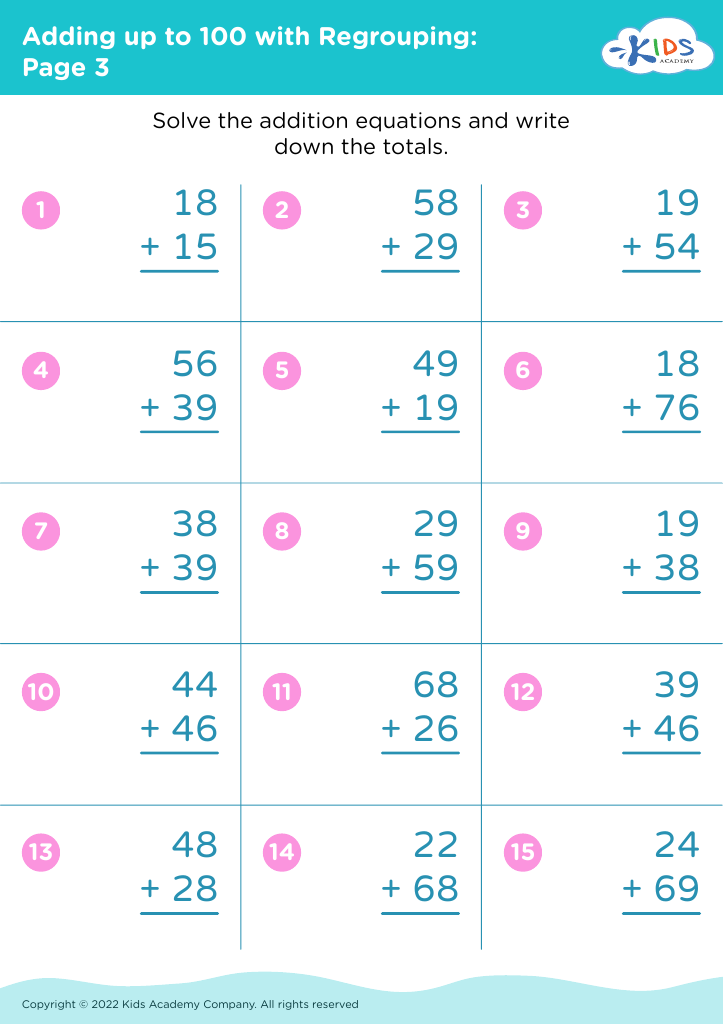
Adding up to 100 with Regrouping: Page 3
Worksheet
Adding up to 100: Page 17

Adding up to 100: Page 17

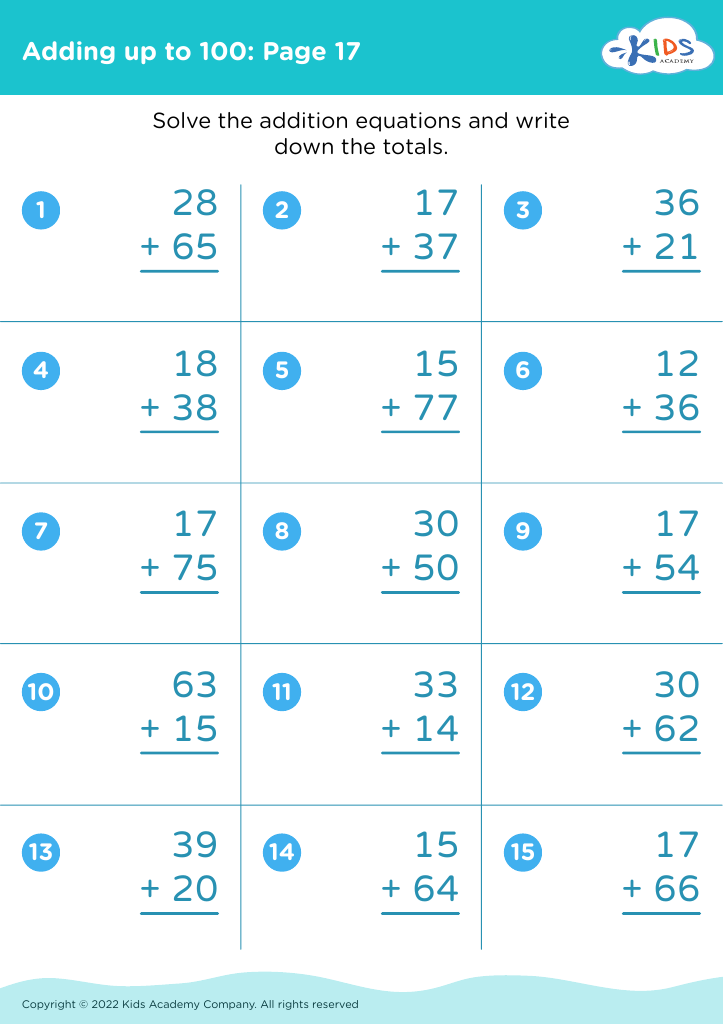
Adding up to 100: Page 17
Worksheet
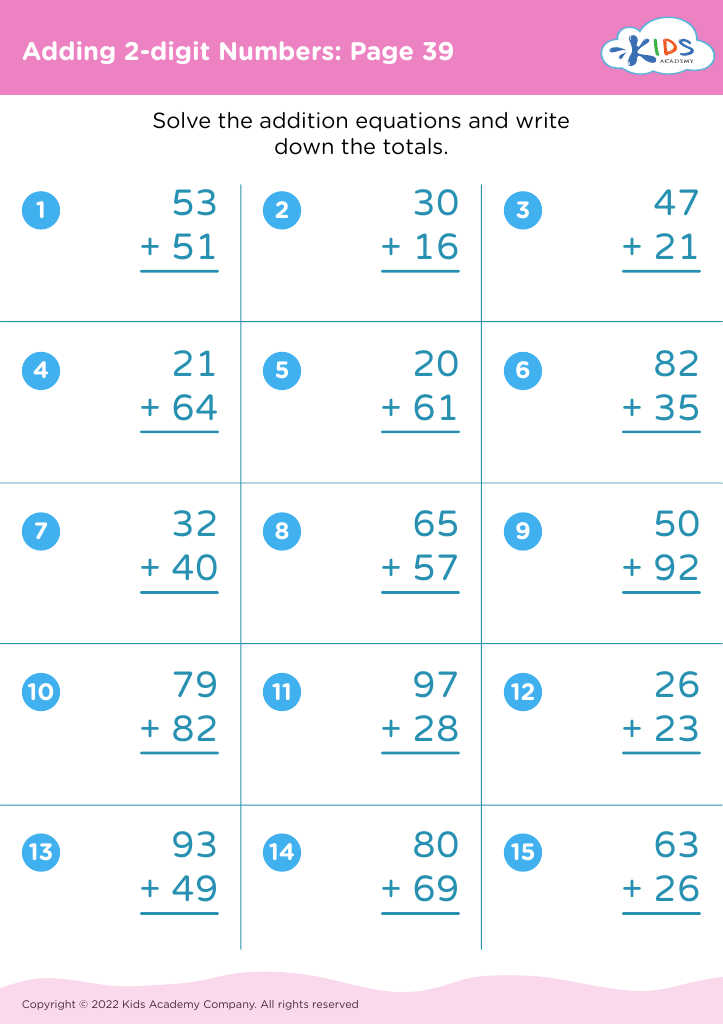
Adding 2-digit Numbers: Page 39

Adding 2-digit Numbers: Page 39

Adding 2-digit Numbers: Page 39
Worksheet
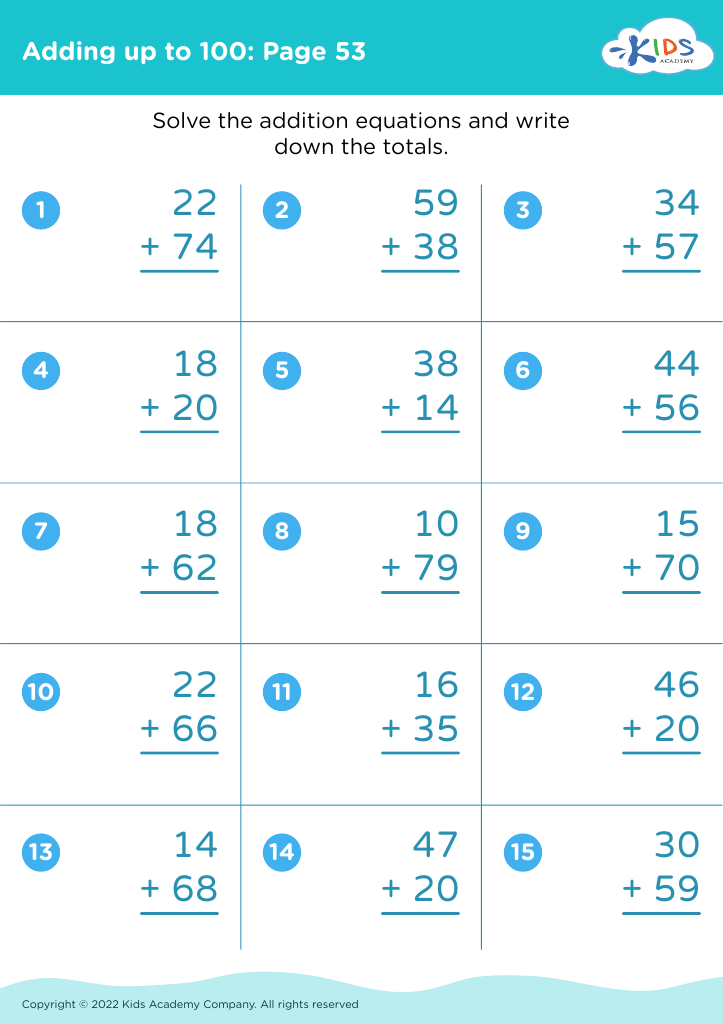
Adding up to 100: Page 53

Adding up to 100: Page 53

Adding up to 100: Page 53
Worksheet
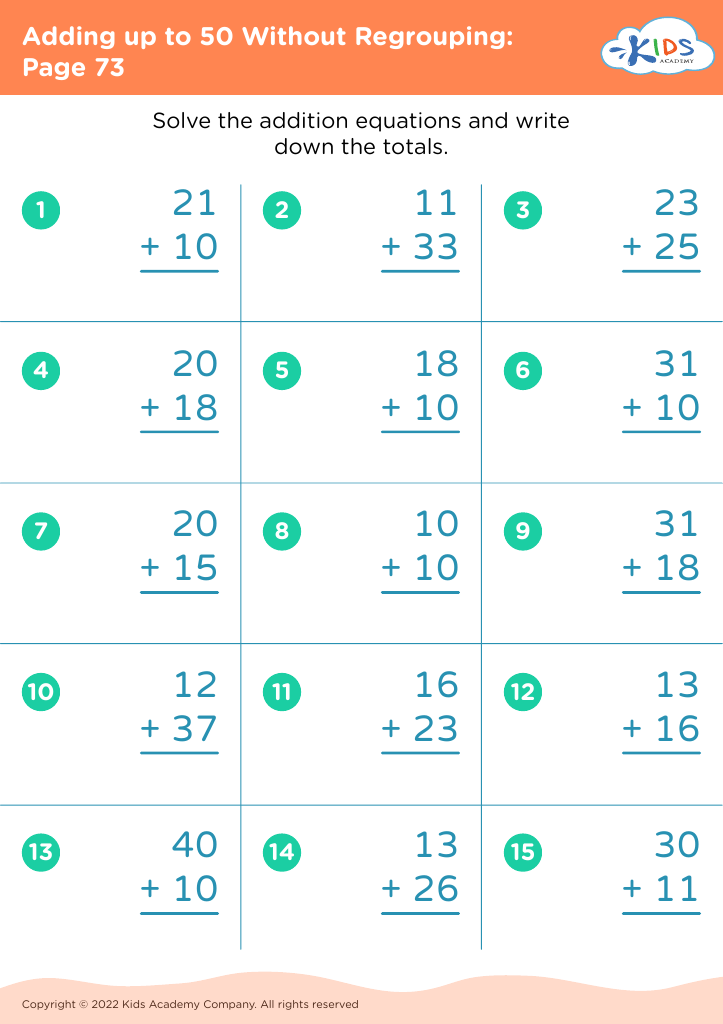
Adding up to 50 Without Regrouping: Page 73
Worksheet
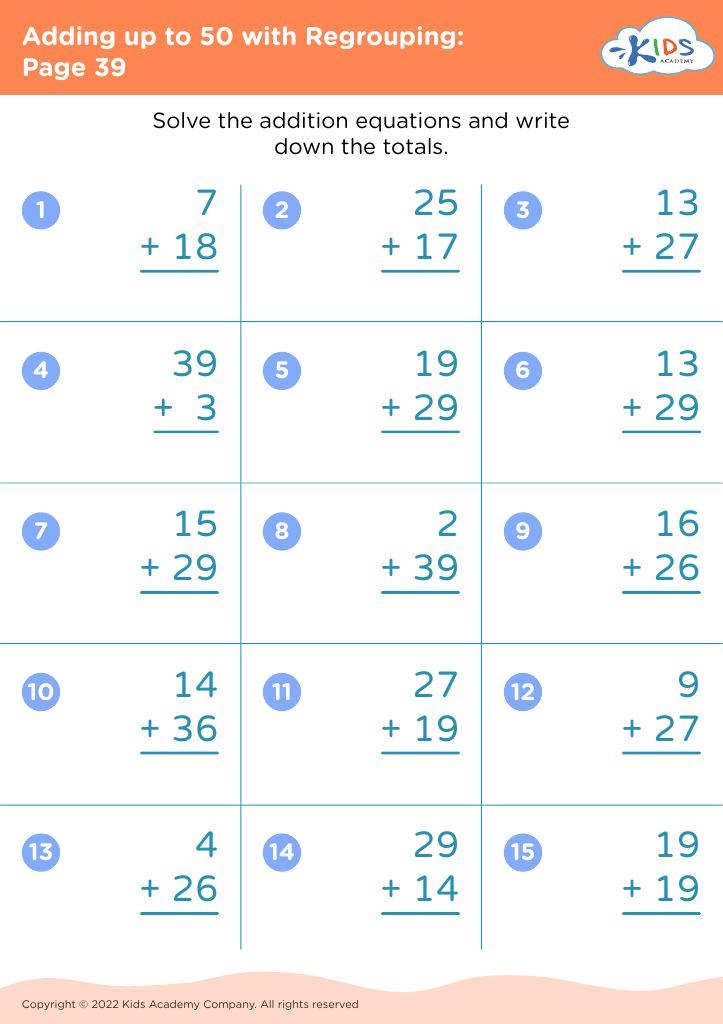
Adding up to 50 with Regrouping: Page 39
Worksheet


Fraction simplification is an essential mathematical skill for children ages 6-8, and parents and teachers should prioritize it for several reasons. Firstly, understanding fractions forms the foundation for more complex mathematical concepts such as addition, subtraction, multiplication, and division of fractions encountered in later grades. Simplifying fractions allows children to grasp the idea of equivalent values, fostering their overall numerical fluency.

Moreover, fraction simplification teaches students to identify patterns and relationships between numbers, enhancing their problem-solving skills. The ability to simplify fractions helps students gain confidence in math, equipping them with the tools to tackle more challenging math tasks independently.

Additionally, fractions are prevalent in everyday life, from cooking to splitting bills, helping children develop practical skills. By mastering fraction simplification, kids will find math concepts more manageable and relevant.

Lastly, engaging with fraction simplification promotes critical thinking and encourages a growth mindset. When children learn to persist and discover various methods to simplify fractions, they enhance their analytical skills and learn the importance of effort and perseverance in learning.

In conclusion, focusing on fraction simplification in early education nurtures a strong mathematical foundation, practical application skills, and fosters an enthusiasm for learning.