Improve reading skills Math Worksheets for Ages 6-8 - Page 2
31 filtered results
-
From - To
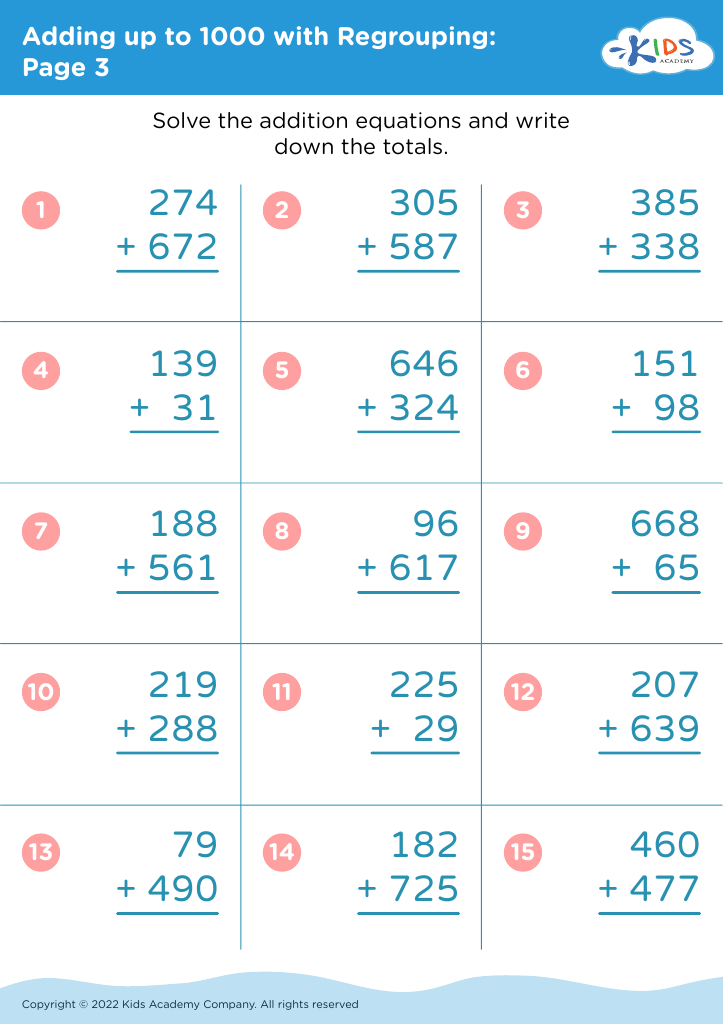
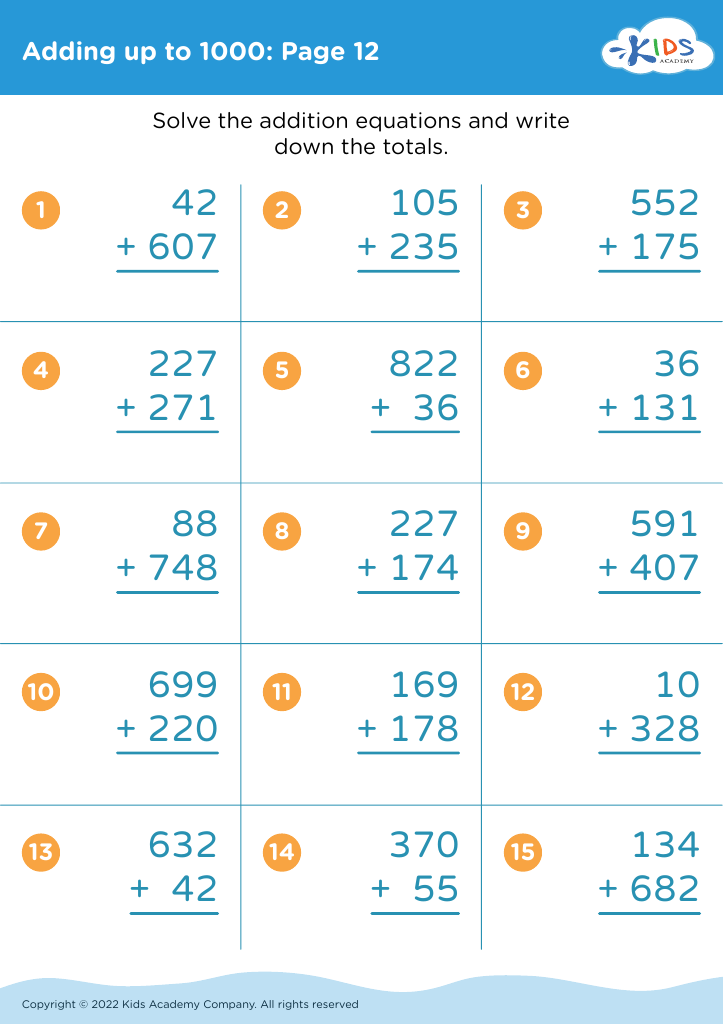
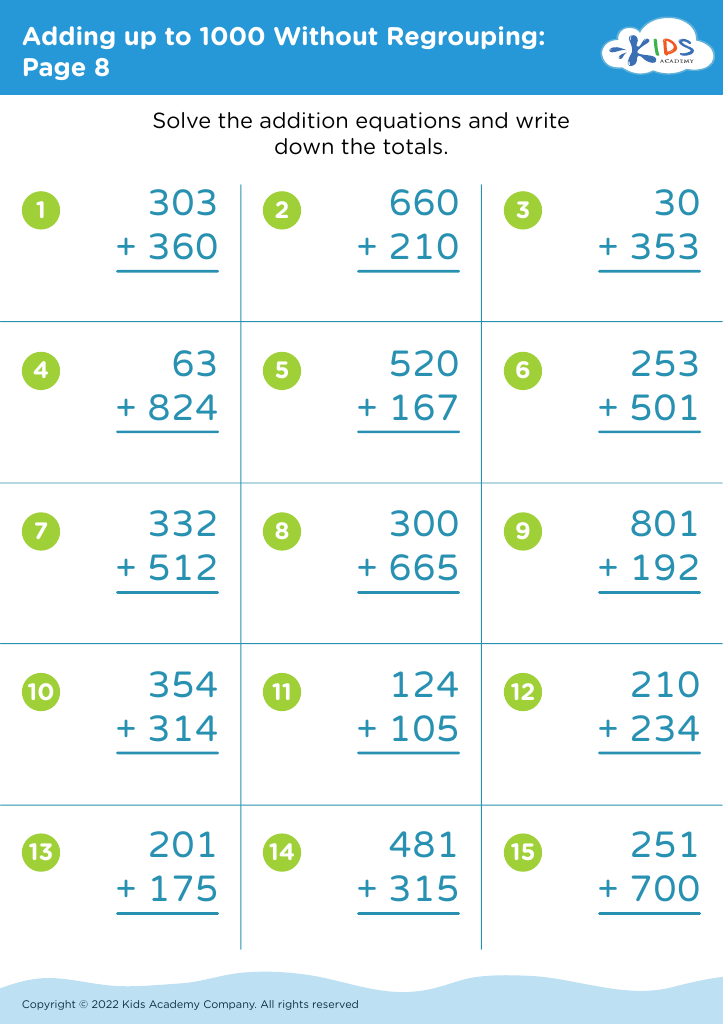
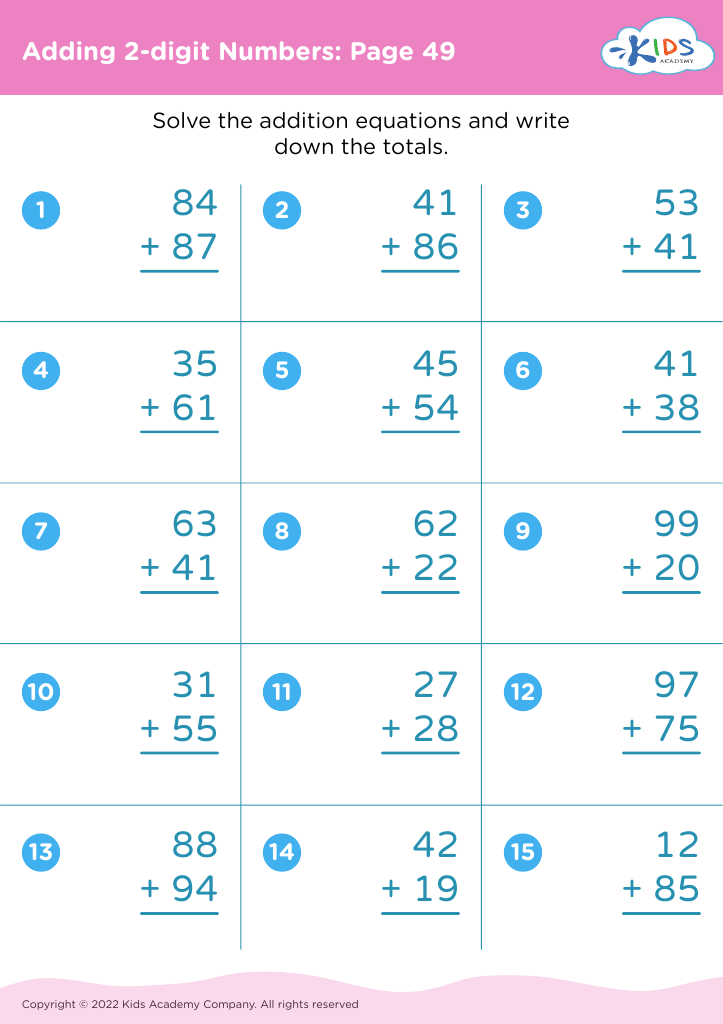







Improving reading skills and math proficiency for children aged 6-8 is essential as this period forms the foundation of their future academic success and critical thinking. At this age, cognitive development is rapid, making it an ideal time to instill the basics of reading and arithmetic.
Reading skills are crucial because they enhance language development, expanding vocabulary and comprehension. Proficiency in reading fosters a love for learning, boosts creativity, and improves communication skills. When children can read well, they can follow instructions better, understand new concepts quickly, and gain confidence from their abilities. This sets a solid foundation for more complex learning as they advance in their education.
Math skills, on the other hand, are vital for developing problem-solving abilities and logical thinking. Understanding basic arithmetic, shapes, and patterns aids children in grasping more complex mathematical and scientific concepts later on. Early math skills are linked to better performance in later grade math and even in other subjects such as science and technology.
Both skills are intertwined; for instance, word problems in math require reading comprehension. Early proficiency in these areas leads to sustained academic enthusiasm and competence, fostering lifelong learning and enabling success across various life situations. Thus, investing time and resources in enhancing reading and math skills during these formative years is invaluable.








