
Improves counting skills Math Worksheets for Ages 6-8
8 filtered results
Difficulty Level
Grade
Age
-
From - To
Subject
Activity
Standards
Enhance your child's counting skills with our engaging math worksheets designed specifically for ages 6-8. These interactive worksheets focus on developing essential counting abilities through fun and creative activities that capture young learners' attention. Your child will enjoy a range of exercises that promote number recognition, one-to-one correspondence, and basic arithmetic while building confidence in their mathematical skills. Perfect for homeschooling, classroom use, or supplemental practice, these worksheets offer clear instructions, vibrant visuals, and varying difficulty levels to cater to all learners. Foster a love for math and lay a strong foundation for future learning with our counting skills worksheets today!
Favorites
With answer key
Interactive
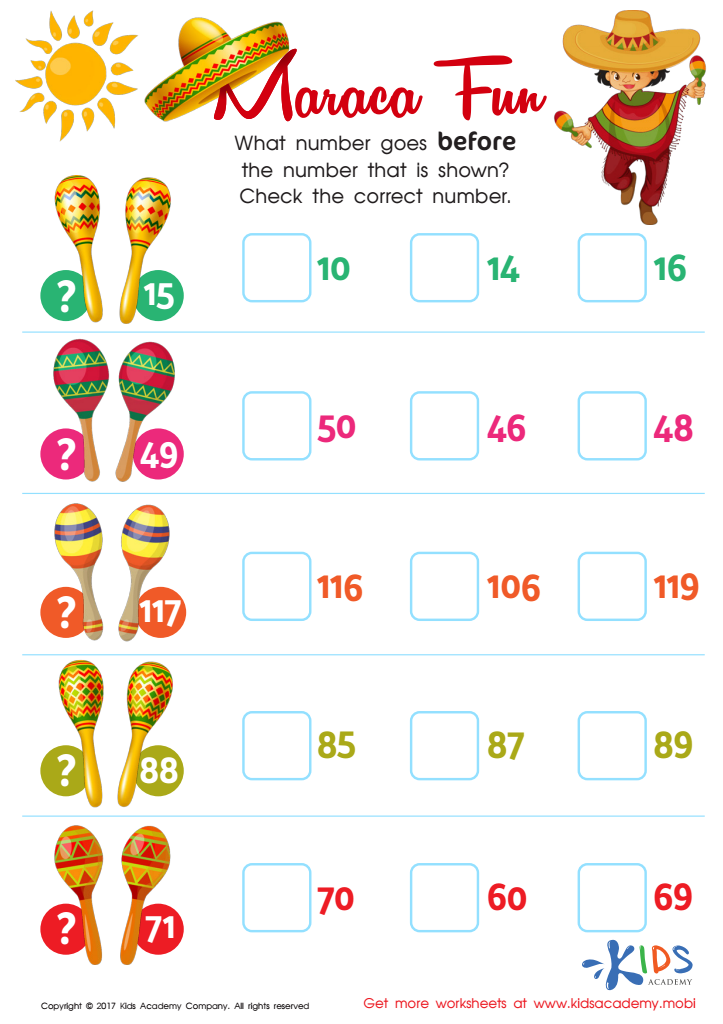
Counting: Maraca Fun Worksheet
Let your child add some Maraca fun to their math lessons by using this printable worksheet! They must figure out the numbers that come before the ones shown. Answers are provided on the other side; all your child needs to do is check the boxes with the correct numbers. Help them improve their counting and have fun along the way!
 Assign to My Students
Counting: Maraca Fun Worksheet
Worksheet
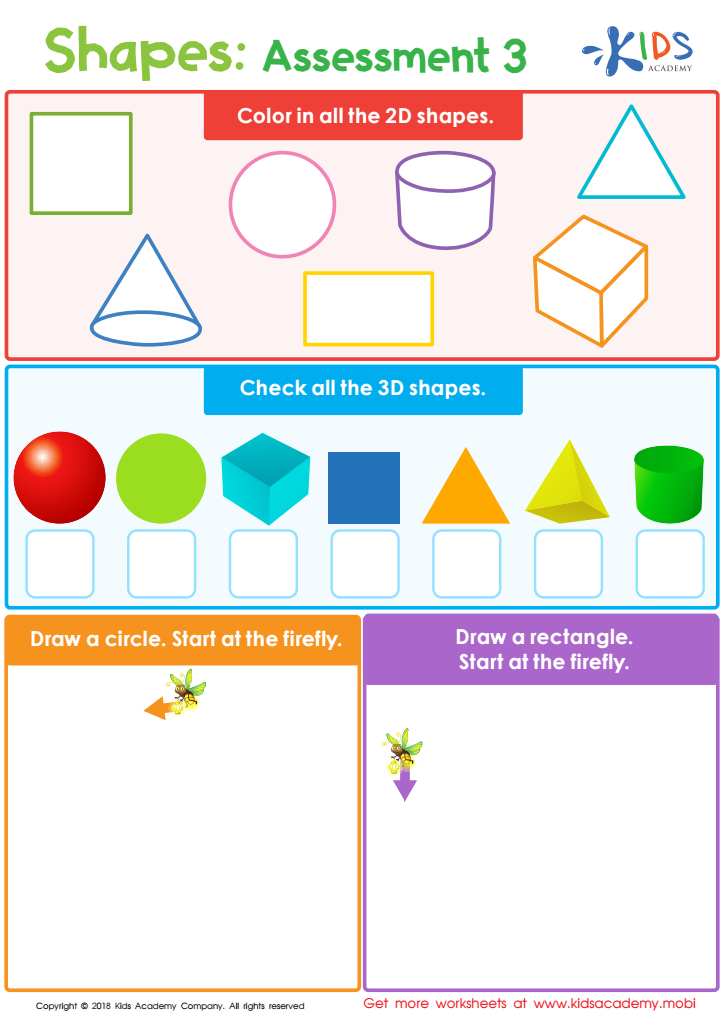
Shapes: Assessment 3 Worksheet
Shapes are everywhere! Help your students differentiate between 2D and 3D shapes. Ask them the difference between a triangle and pyramid, or a circle and a sphere. This worksheet tests their understanding of both types and is a useful assessment tool.
Shapes: Assessment 3 Worksheet
Worksheet
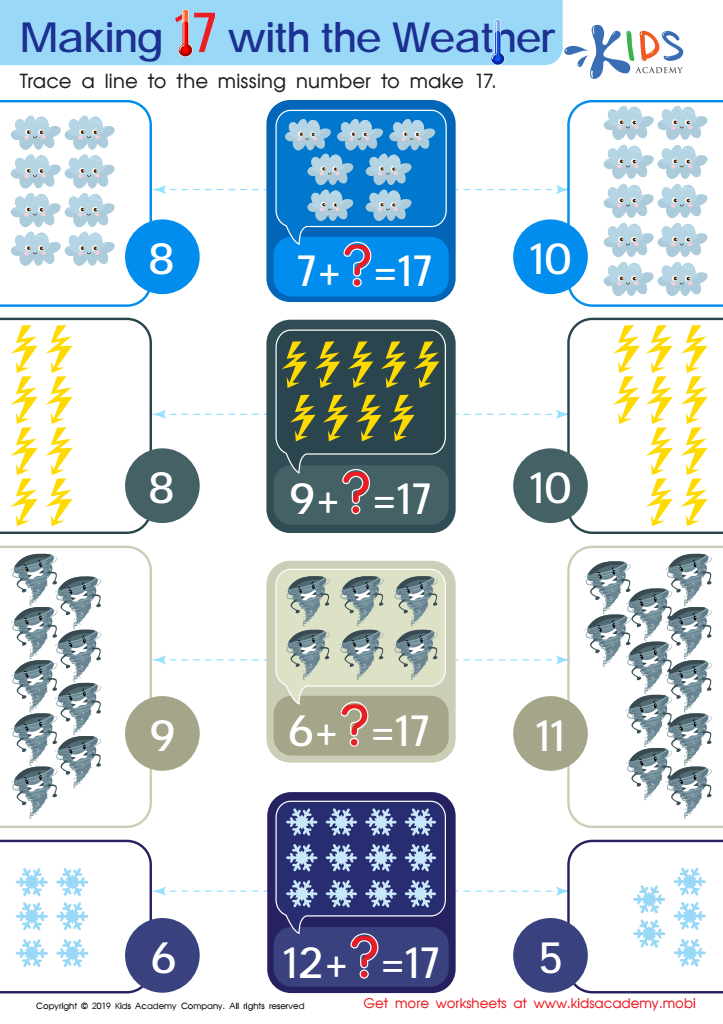
Making 17 with the Weather Worksheet
Show your kids the pictures in the worksheet and identify the weather. This exercise is to help them add simple numbers. There are 4 equations in the printout. Help them figure out the numbers to make 17, then trace a line to the missing number to complete the equation.
Making 17 with the Weather Worksheet
Worksheet
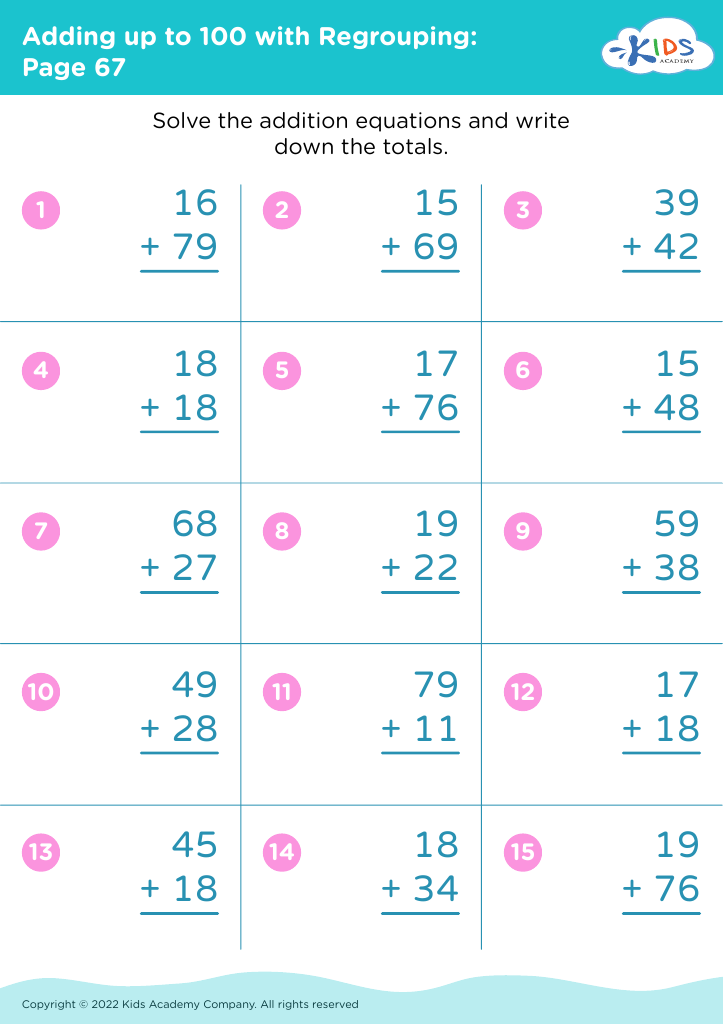
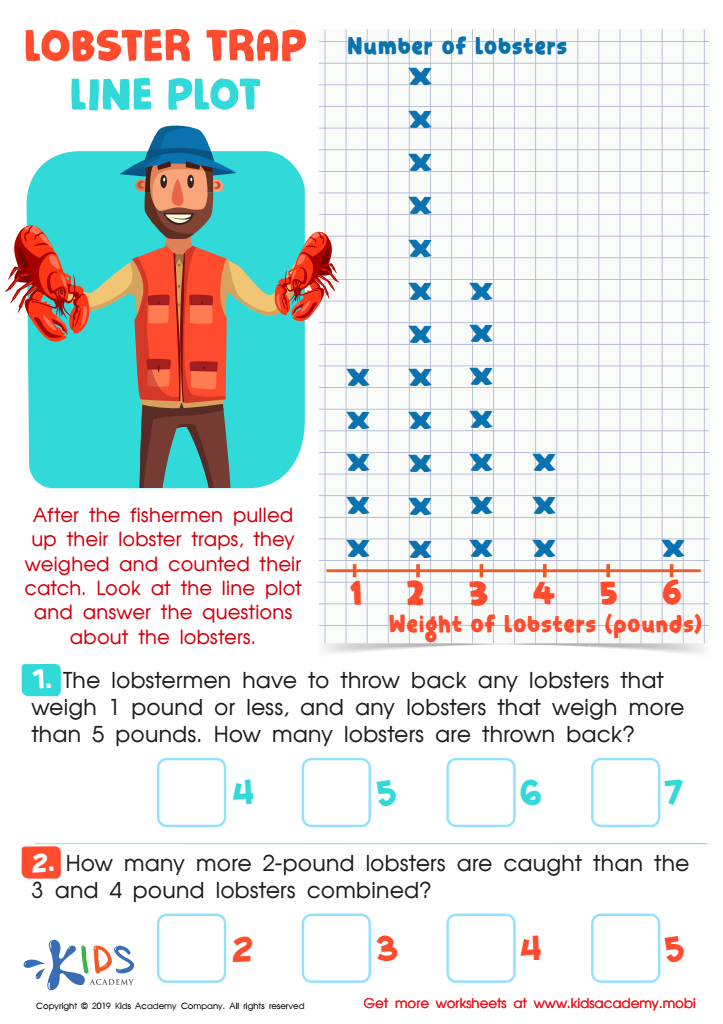
Lobster Trap Line Plot Worksheet
If your kids are working on line plots, this worksheet is perfect for them! Show them the picture and read the instructions. Help them look at the line plot and answer the questions at the bottom. Learning math can be fun, so make it enjoyable together!
Lobster Trap Line Plot Worksheet
Worksheet
Join Kids Academy for Free
Who is primarily going to use this learning content?


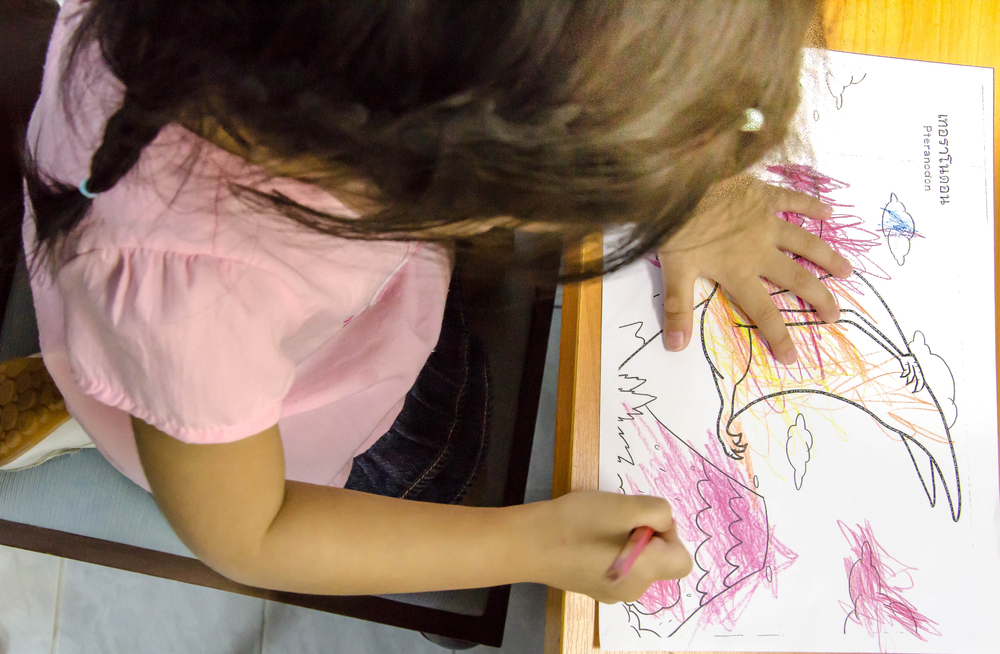





Parents and teachers should prioritize improving counting skills in children aged 6 to 8 because foundational math abilities are crucial for overall academic success. Mastering counting not only enhances basic arithmetic skills but also instills confidence in young learners while laying the groundwork for more complex mathematical concepts, such as addition, subtraction, and even early problem-solving.
Counting skills encourage critical thinking and cognitive development, as they require children to recognize patterns and sequences. This helps in many areas of learning, establishing a rich understanding of numbers and their relationships.
Moreover, strong counting abilities contribute to a child’s everyday life. Whether measuring ingredients for a recipe, sorting toys, or even understanding time, counting is an integral part of various activities. By reinforcing these skills, parents and teachers can nurture a positive attitude toward math, deepening a child’s fascination with numbers and improving their future math performance.
Finally, as children move towards standardized testing and assessments, strong counting skills provide a clear advantage, enabling them to tackle tasks with ease and independence. Fostering these skills early sets the stage for lifelong mathematical proficiency and success in academic pursuits.








