Number sequence learning Math Worksheets for Ages 6-8
3 filtered results
-
From - To
Unlock the joy of math for your child with our Number Sequence Learning Math Worksheets, designed specifically for ages 6-8. These engaging printables, available at Kids Academy, help young learners grasp number sequences effectively, enhancing their counting skills and mathematical understanding. Each worksheet is filled with fun, interactive activities that challenge and excite, from filling in missing numbers to following complex sequences. Our expertly crafted resources support classroom learning and can be used for extra practice at home. Set your child on the path to math mastery with our Number Sequence Learning Math Worksheets and watch their confidence soar!
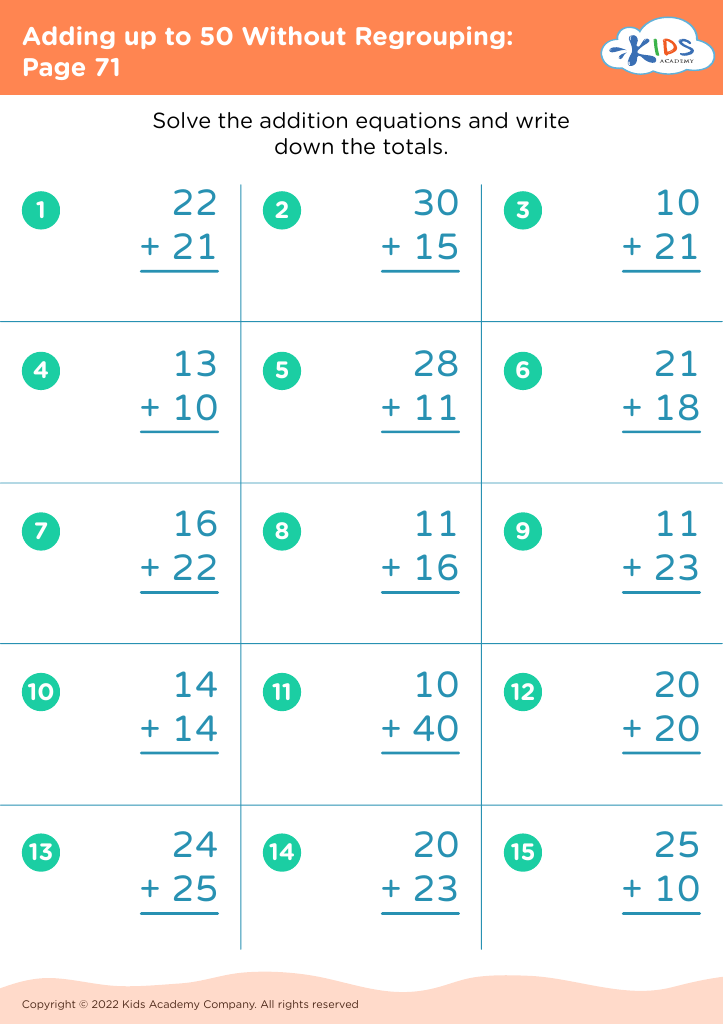
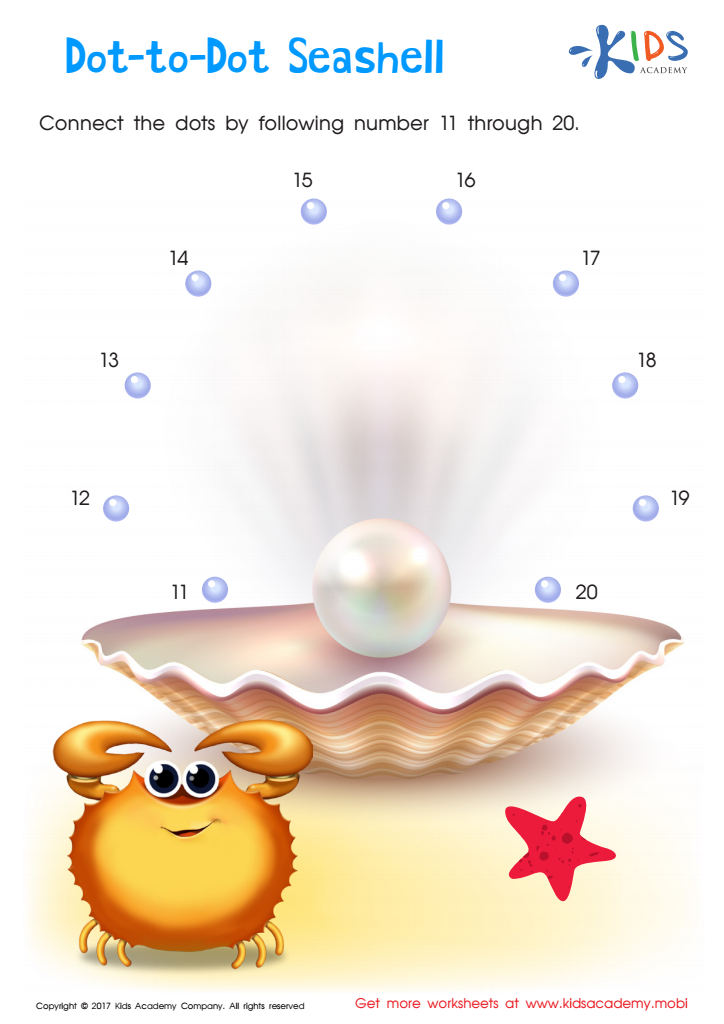
Ordering 11–20: Dot–to–dot Seashell Printable
 Assign to My Students
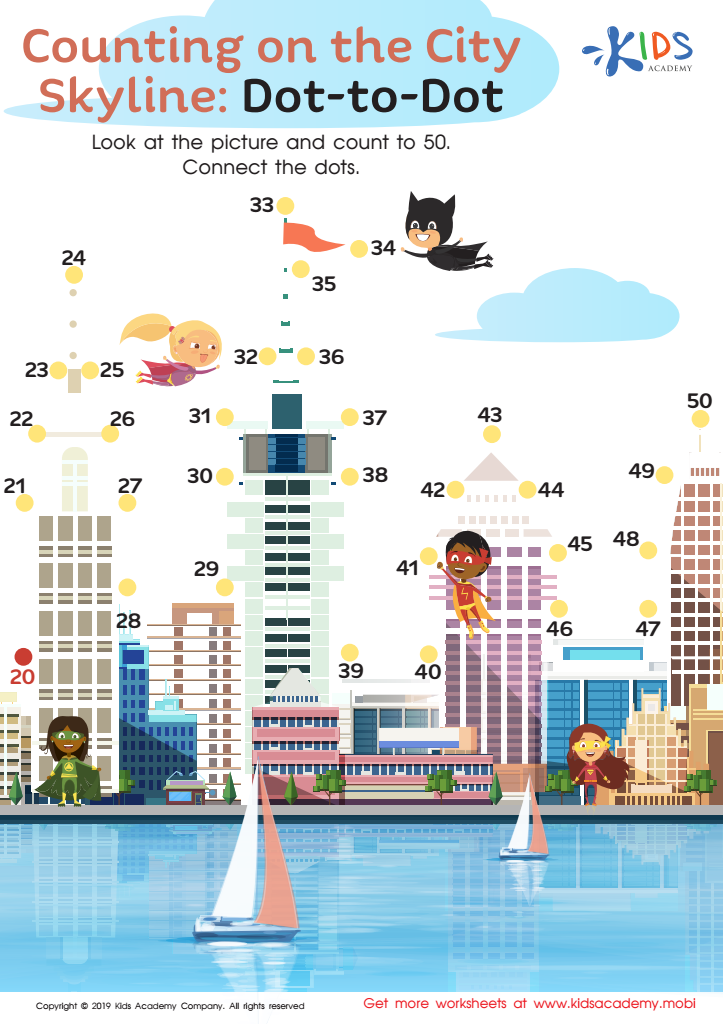
Counting on the City Skyline: Dot-to-Dot Worksheet







Parents and teachers should prioritize number sequence learning for children ages 6-8 because it lays a foundational basis for essential mathematical concepts and problem-solving skills. Number sequences help young learners grasp the order and relationship between numbers, forming the building blocks for arithmetic operations such as addition, subtraction, multiplication, and division. Understanding sequences enhances a child's cognitive abilities by improving their pattern recognition, critical thinking, and logical reasoning skills.
At these early ages, children are highly receptive to learning through patterns and repetition, making number sequences an ideal tool for fostering interest and engagement in math. Sequential thinking also assists in daily activities and routines, providing consistency and predictability that can boost a child's confidence and independence.
Moreover, a strong grasp of number sequences supports future learning in more complex mathematical topics such as fractions, algebra, and geometry. When children understand how numbers connect and progress, they are better equipped to solve problems and understand higher-order math laid out in their future academic pursuits.
In essence, by focusing on number sequence learning at a young age, parents and teachers help children build a robust mathematical foundation, stimulate intellectual development, and create a lifelong appreciation and understanding of math.








