Numerical problem solving Math Worksheets for Ages 6-8
3 filtered results
-
From - To
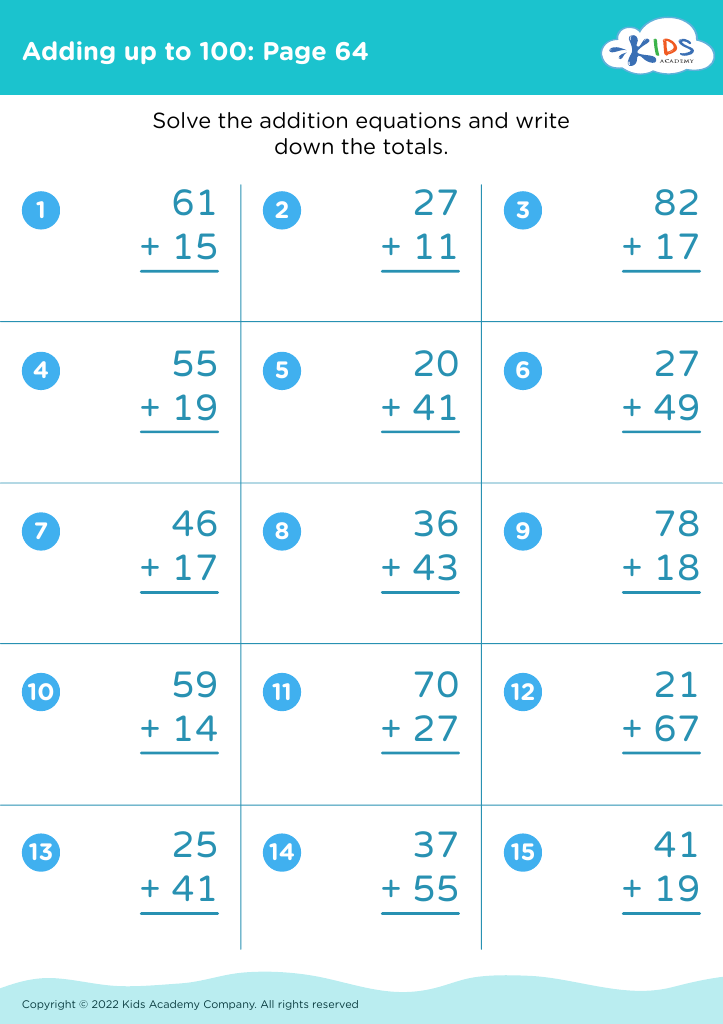
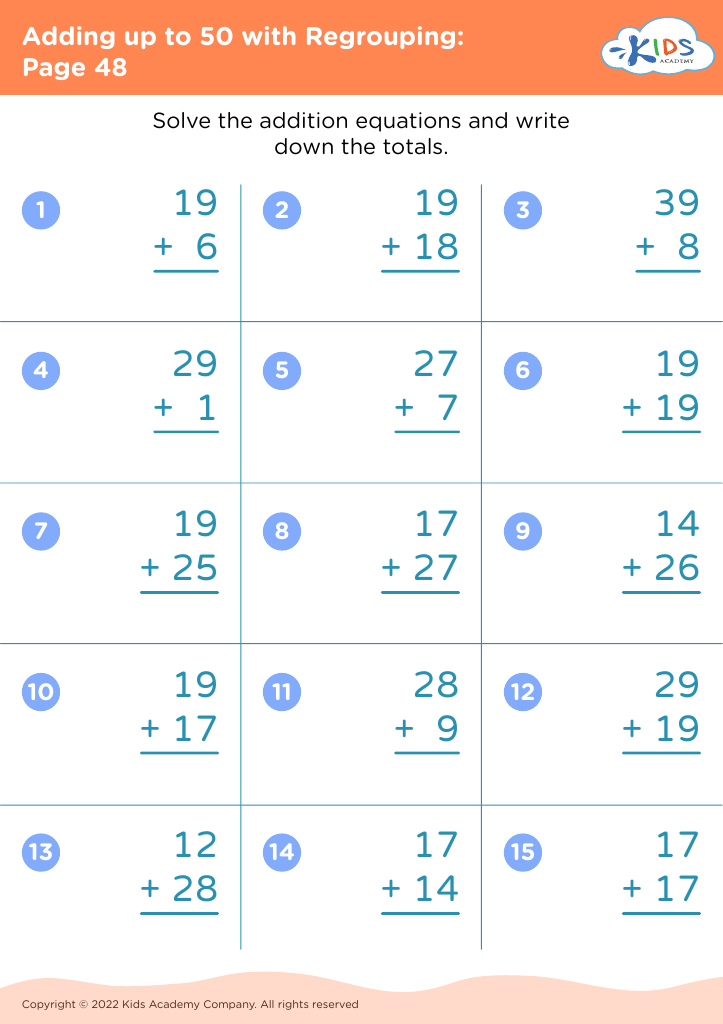
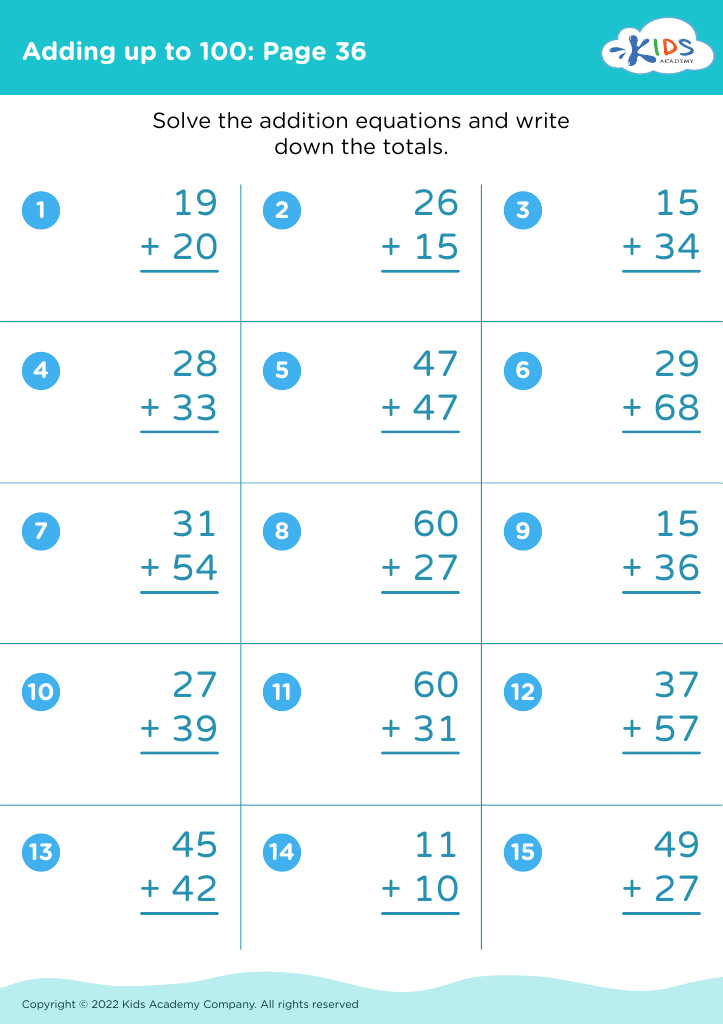
Introduce your child to the fascinating world of numbers with our expertly designed Numerical Problem Solving Math Worksheets for Ages 6-8. These engaging, age-appropriate worksheets from Kids Academy are created to enhance your child's problem-solving skills, critical thinking, and confidence in math. Packed with fun activities and colorful illustrations, each worksheet assists young learners in mastering addition, subtraction, multiplication, and division tasks. Perfect for at-home practice or classroom reinforcement, these resources make learning math enjoyable and effective. Get ready to watch your child succeed and develop a love for math with our fantastic collection of worksheets!





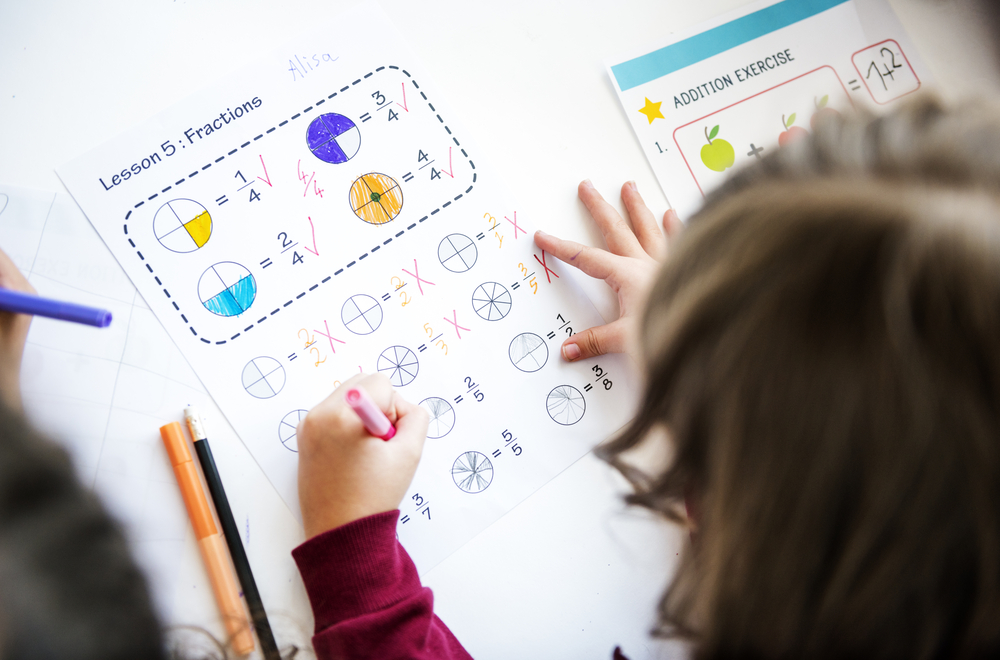


Numerical problem-solving in math is a crucial skill for children ages 6-8 because it lays the foundation for their future academic success and everyday life applications. At this vital stage, children are not just learning to add, subtract, multiply, and divide; they are also developing critical thinking and analytical skills. By working through numerical problems, young learners enhance their ability to reason logically and make decisions based on quantitative information.
Moreover, early proficiency in math boosts confidence and fosters a positive attitude toward learning. Children who regularly practice and succeed in numerical problem-solving are more likely to develop a growth mindset, the belief that ability and intelligence can be developed with effort. This mindset is pivotal for their academic journey and beyond.
In terms of practical life skills, numerical problem-solving equips children with the tools to handle everyday situations such as managing time, money, and measuring items accurately. Whether they're playing games, shopping with their parents, or baking a cake, numeracy is integral to their daily activities.
By investing time and resources into teaching numerical problem-solving, parents and teachers are setting children on a path to lifelong learning, improved cognitive abilities, and a genuine appreciation for the practical value of mathematics in the real world.








