
Sentence construction Math Worksheets for Ages 6-8
7 filtered results
Difficulty Level
Grade
Age
-
From - To
Subject
Activity
Standards
Welcome to our engaging collection of Sentence Construction Math Worksheets designed for children aged 6-8! These worksheets combine essential math skills with fun sentence-building activities, helping young learners strengthen their understanding of both language and mathematics. Your child will practice constructing sentences while also working on number concepts, problem-solving, and logical thinking. Each worksheet is visually appealing and interactive, making learning enjoyable and effective. Encourage your little one to express their mathematical ideas through words, enhancing their critical thinking and communication skills. Explore our easy-to-use printable resources now and watch your child excel in math and language!
Favorites
With answer key
Interactive
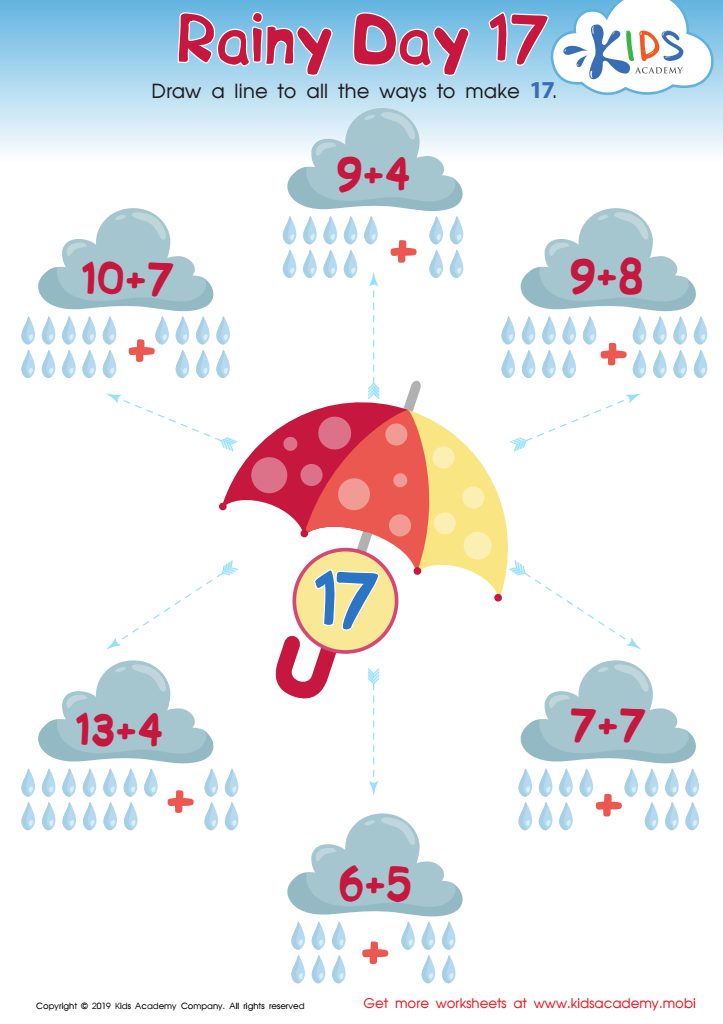
Rainy Day 17 Worksheet
Assist your kids with the 6 equations given. Each cloud displays the sum of two numbers, some of which make 17. Guide them to figure out the total of both numbers when added and draw a line to the umbrella in the center to illustrate the different ways to make 17. This activity will sharpen their addition skills.
 Assign to My Students
Rainy Day 17 Worksheet
Worksheet
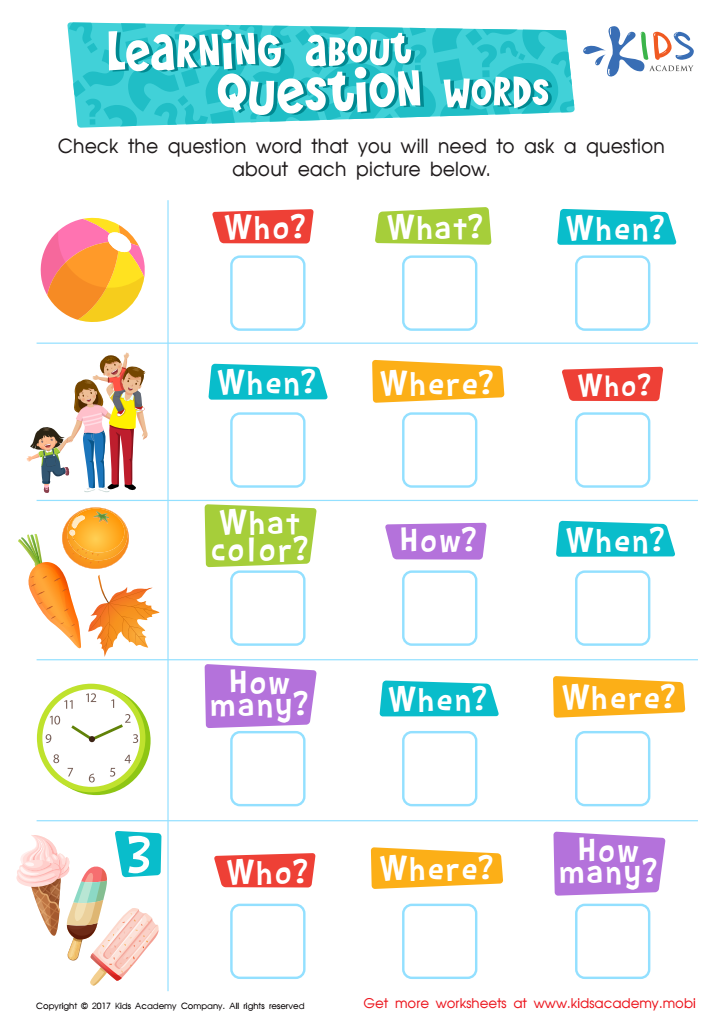
Learning about Question Words Worksheet
Learning language can be difficult, but this free printable worksheet will help! Have your child look at the picture and name it. Then help them choose the right question word to ask something about it. For example, when looking at a beach ball, you can't ask "Who?" Instead, look through the list to select the right word. It's a great way to learn language basics!
Learning about Question Words Worksheet
Worksheet
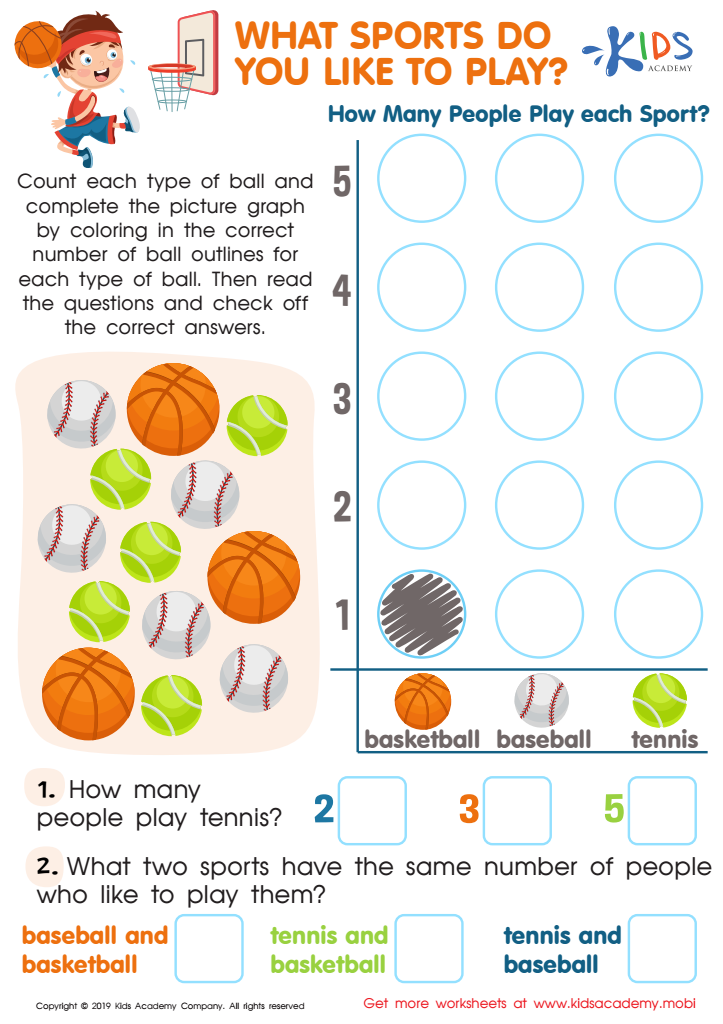
What Sports Do You Like to Play Worksheet
Encourage your kids to complete this fun sports-themed math worksheet! Count each type of ball then help them complete the picture graph. It's a great way to make math a fun, tear-free activity. Download our printable PDF to get started!
What Sports Do You Like to Play Worksheet
Worksheet
Join Kids Academy for Free
Who is primarily going to use this learning content?








Sentence construction in mathematics, often seen in combination with problem-solving tasks, plays a critical role in the educational development of children aged 6-8. This period is pivotal for young learners as they begin to connect language and mathematical concepts. When children learn to construct sentences around math problems, they not only improve their language skills but also deepen their understanding of mathematical concepts.
Caring about sentence construction in math helps children articulate their thought processes clearly and effectively. This ability enhances their comprehension, encouraging them to break down complex problems into manageable parts. Furthermore, learning to express mathematical ideas in written form fosters critical thinking and reflection about their calculations and reasoning.
Incorporating sentence construction in math lessons also supports students with communication skills that are essential in everyday life. It enables them to discuss their strategies and solutions flourished with vocabulary that accurately represents their thoughts. Parents and teachers should emphasize this skill to nurture confident learners who can engage in discussions about mathematics. Overall, blending language and math instruction aligns with a holistic approach to education, preparing children not just for tests, but for real-life applications of their learning.








