Shape comparison Math Worksheets for Ages 6-8
3 filtered results
-
From - To
Discover our engaging Shape Comparison Math Worksheets, tailored for kids ages 6-8! Designed to develop critical thinking and analytical skills, these worksheets help young learners compare, contrast, and identify various 2D and 3D shapes. Perfect for home or classroom use, each activity emphasizes visual understanding and boosts geometric vocabulary. From basic shape identification to complex comparisons, children will enjoy fun, interactive challenges that foster a love for math. With colorful illustrations and clear instructions, these worksheets ensure a comprehensive learning experience. Help your child build a strong mathematical foundation today with our expertly crafted resources!
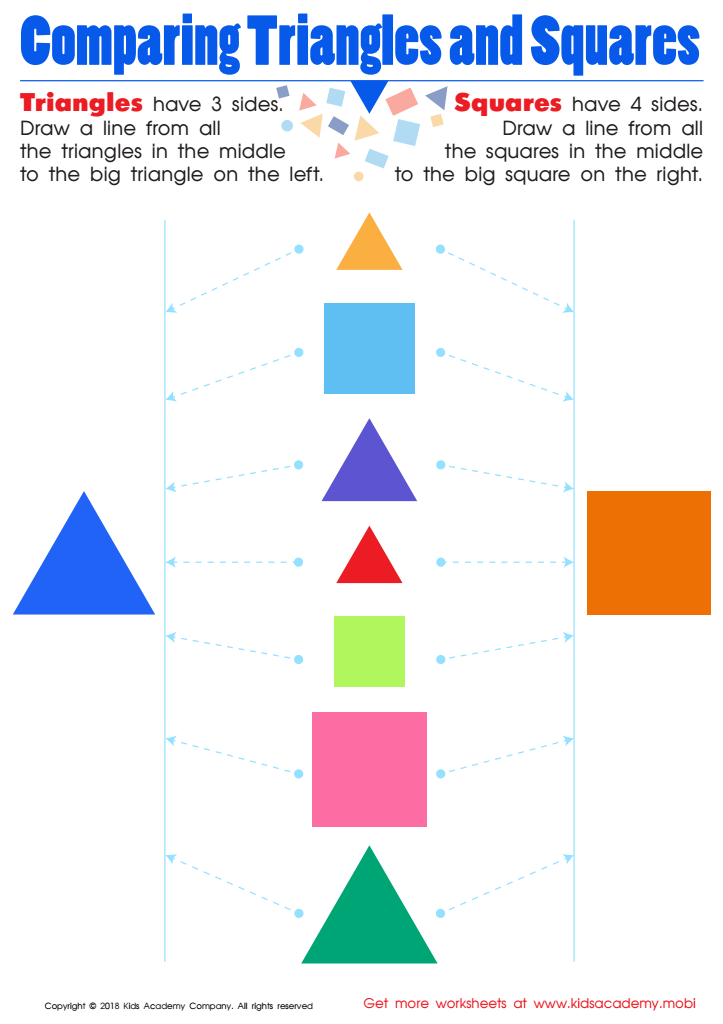
Comparing Triangles Squares Worksheet
 Assign to My Students
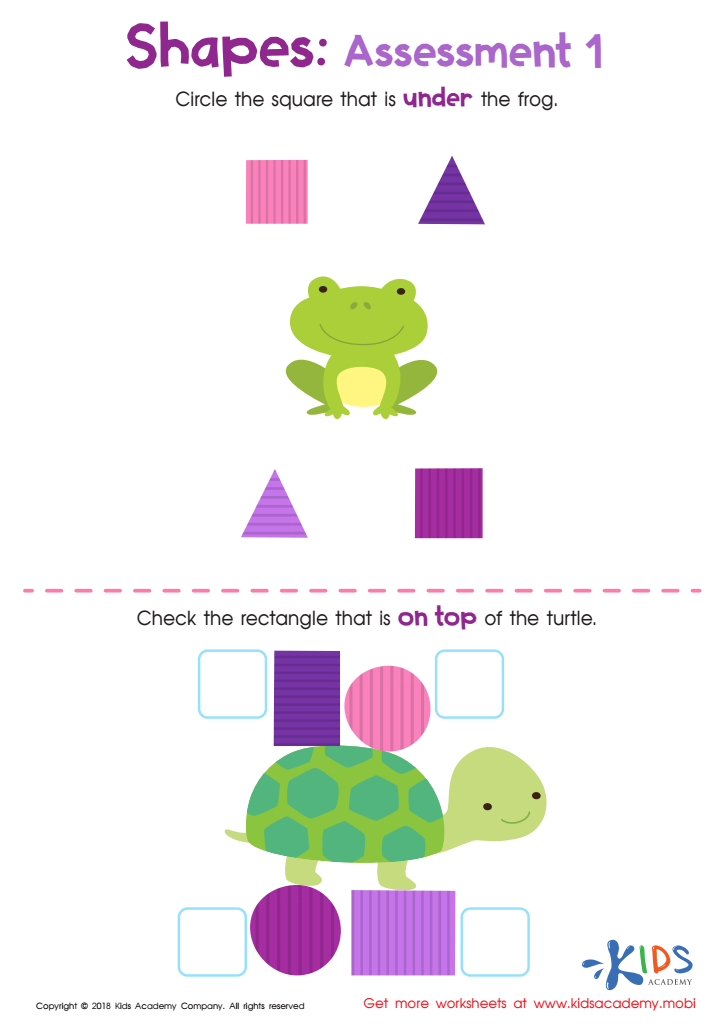
Geometry – Assessment 1 Worksheet
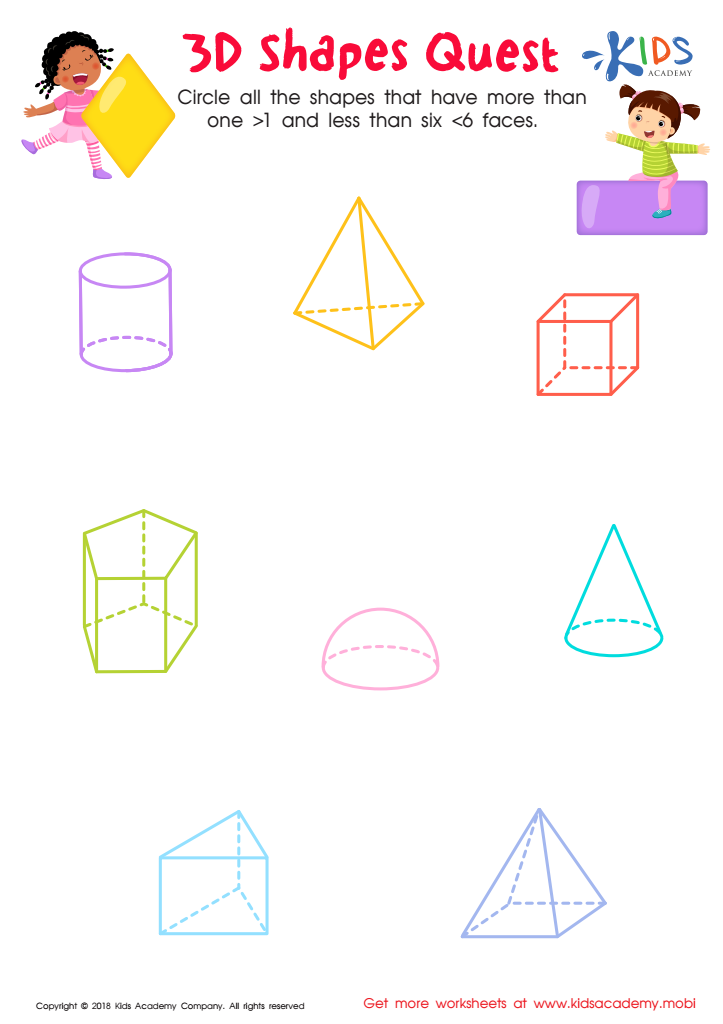
3D Shapes Quest Worksheet



.jpg)




Understanding shape comparison is crucial for children aged 6-8 as it lays the foundation for essential cognitive and academic skills. At this young age, kids are developing their spatial awareness – the ability to recognize how shapes fit together and relate to one another in space. This skill is pivotal in everyday activities, such as navigating their environment, and more complex tasks later in life, like driving or understanding architecture.
Moreover, shape comparison exercises enhance problem-solving skills. When children determine similarities and differences between shapes, they practice critical thinking and reasoning which is crucial for solving mathematical problems and logical puzzles.
For parents and teachers, fostering this skill can significantly aid in the child's ability to grasp more advanced geometric concepts, basic operations, and, eventually, algebra. It also supports skills in subjects such as science and arts, where visualization and spatial reasoning are essential.
In addition, recognizing and categorizing shapes boosts children’s vocabulary and language skills as they use descriptive words to elucidate differences and similarities. Engaging in playful, diverse activities that involve shape comparison can make learning enjoyable, turning math into a subject they look forward to rather than dread.
Therefore, emphasizing shape comparison for ages 6-8 isn't just about teaching geometry; it's about equipping kids with tools essential for broader cognitive development and fostering a positive attitude toward learning.








