Spatial awareness Math Worksheets for Ages 6-8 - Page 2
27 filtered results
-
From - To
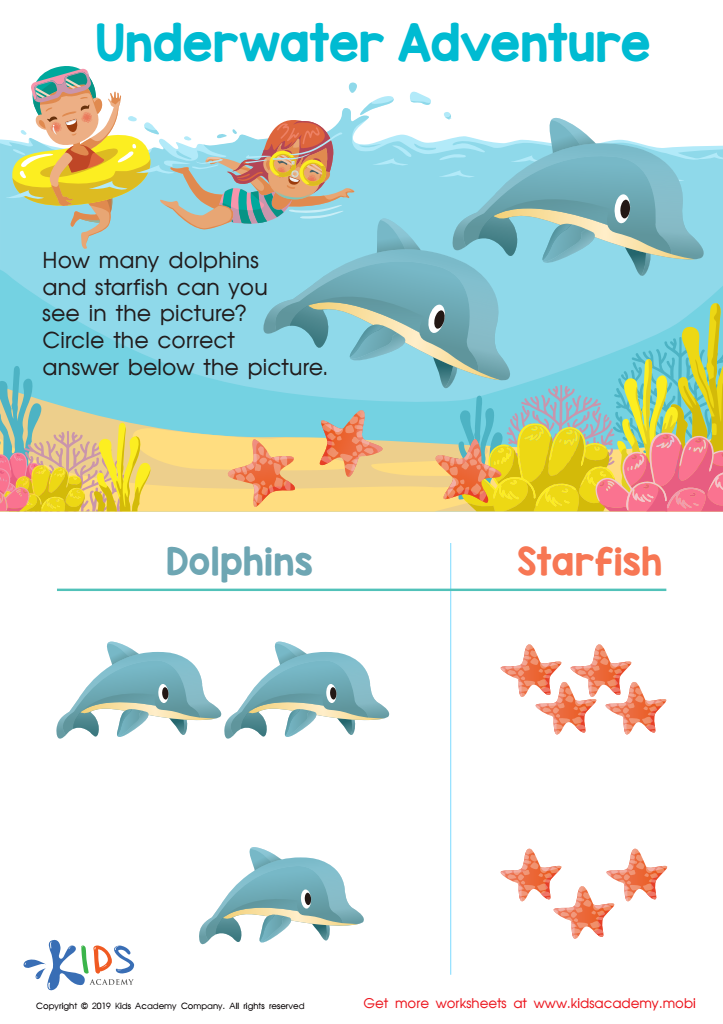
Underwater Adventure Worksheet
 Assign to My Students
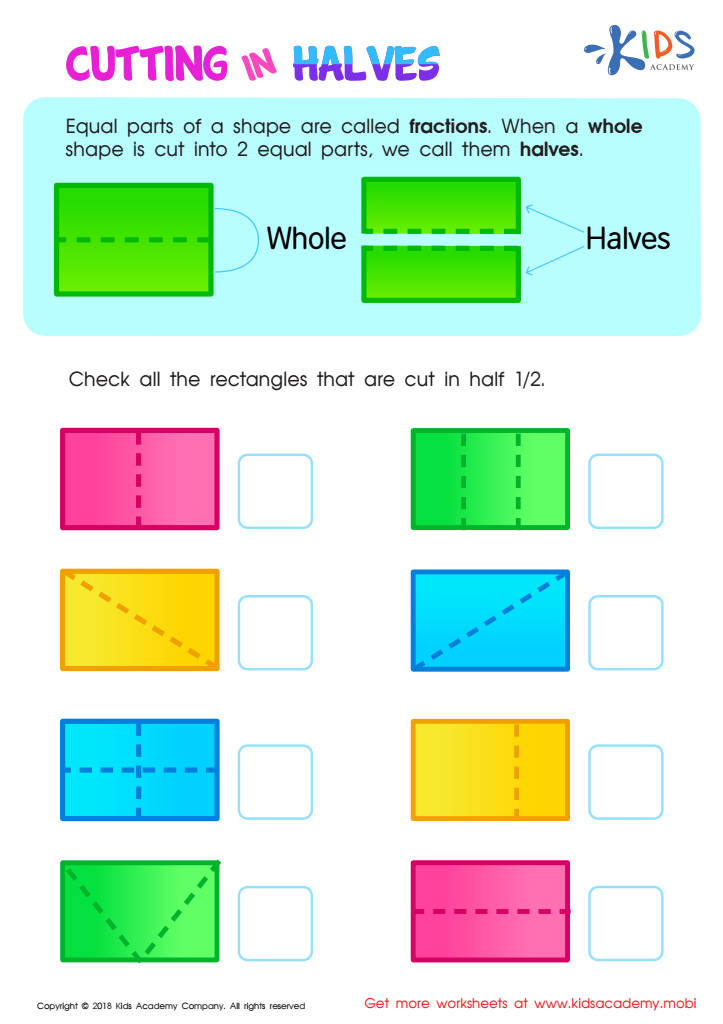
Cutting in Halves Worksheet







Spatial awareness math is crucial for children aged 6-8 as it lays the groundwork for more advanced mathematical concepts. At this age, children begin to understand shapes, sizes, distance, and the relationships between objects. Developing spatial awareness helps them to think critically and solve problems related to geometry, measurement, and even algebra in later years.
Parents and teachers should pay close attention to spatial awareness because it plays a vital role in children’s overall cognitive development. Engaging in activities that enhance spatial reasoning—such as puzzles, building blocks, or mapping exercises—can significantly bolster their ability to visualize and manipulate objects in their minds.
Moreover, spatial awareness is linked to success in STEM (Science, Technology, Engineering, and Mathematics) fields. Children who develop these skills early on are more likely to excel in math and science later in life, opening doors to various career opportunities.
Additionally, tools and strategies that support spatial learning promote cooperation and communication among peers, essential skills for teamwork in any setting. In essence, fostering spatial awareness during these formative years equips children with lasting skills that will contribute to their academic and personal success.








