
Story sequencing Math Worksheets for Ages 6-8
5 filtered results
Difficulty Level
Grade
Age
-
From - To
Subject
Activity
Standards
Discover our engaging Story Sequencing Math Worksheets designed for children ages 6-8! These worksheets seamlessly blend storytelling with foundational math skills, making learning both fun and educational. Each activity encourages critical thinking as students arrange story events in the correct order while solving related math problems. Ideal for classrooms or home practice, our worksheets promote literacy and numeracy skills, fostering a deeper understanding of sequences, patterns, and logical reasoning. Enhance your child's learning experience with these interactive resources and watch their confidence grow as they master essential concepts in math through storytelling. Perfect for early grade teachers and parents alike!
Favorites
With answer key
Interactive
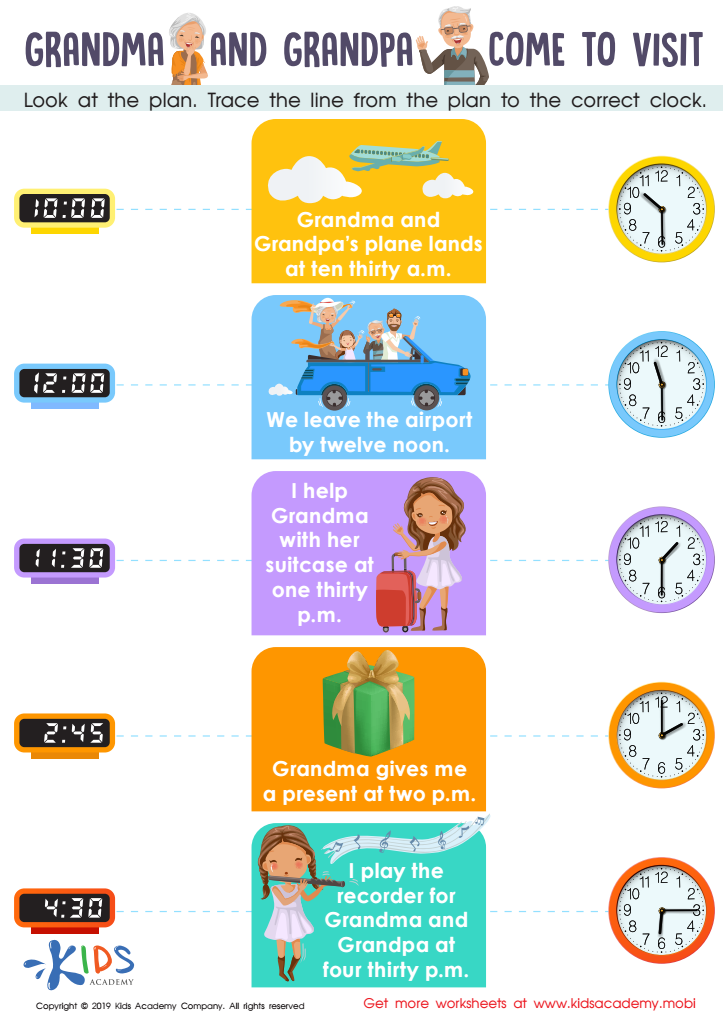
Grandpa and Grandma Come to Visit Worksheet
Have your kids learn about time using this worksheet. It contains pictures, accompanying texts and a clock, which you can use to help them trace the plan. Grandparents' visits and trips to their house are the perfect opportunity to practice this skill. Talk to your kids about the plan and watch them trace it to the correct clock.
 Assign to My Students
Grandpa and Grandma Come to Visit Worksheet
Worksheet
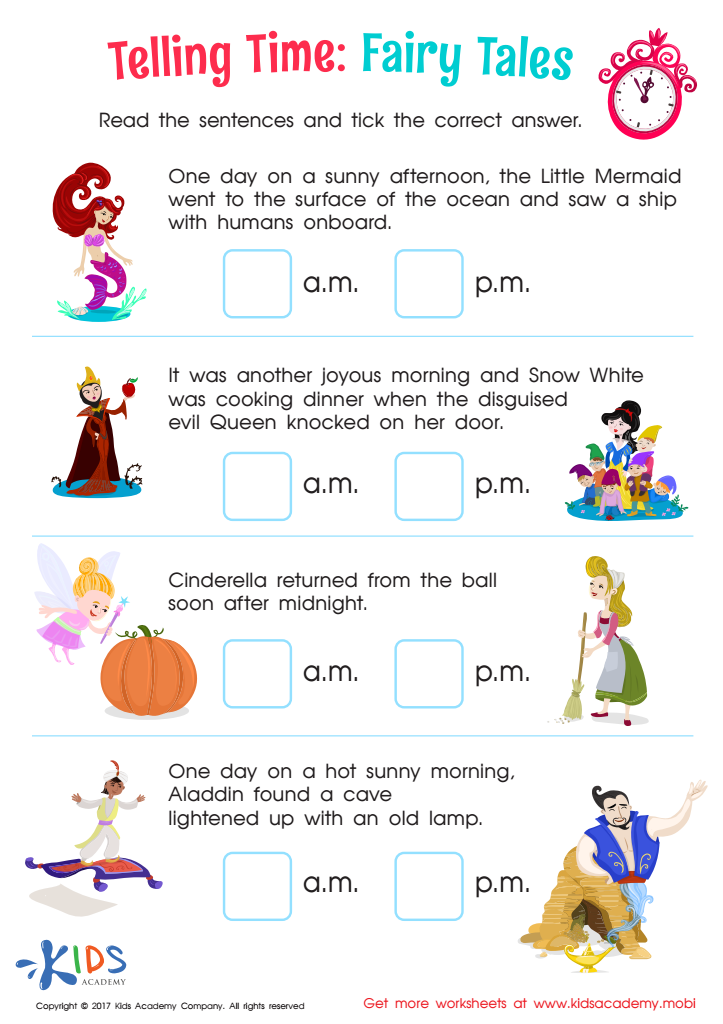
Telling Time: Fairy Tales Worksheet
Bring your child's imagination to life with classic fairy tales! This colorful telling time worksheet has it all: The Little Mermaid, Cinderella, and more! Plus, your child will have fun learning to distinguish a.m. from p.m. with this charming worksheet.
Telling Time: Fairy Tales Worksheet
Worksheet
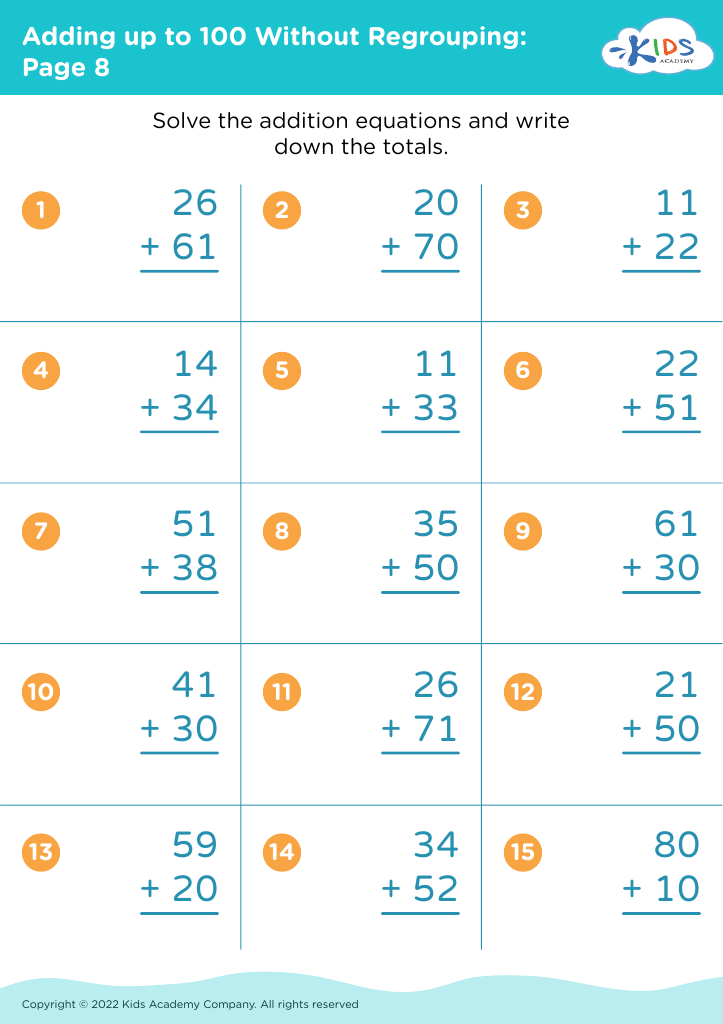
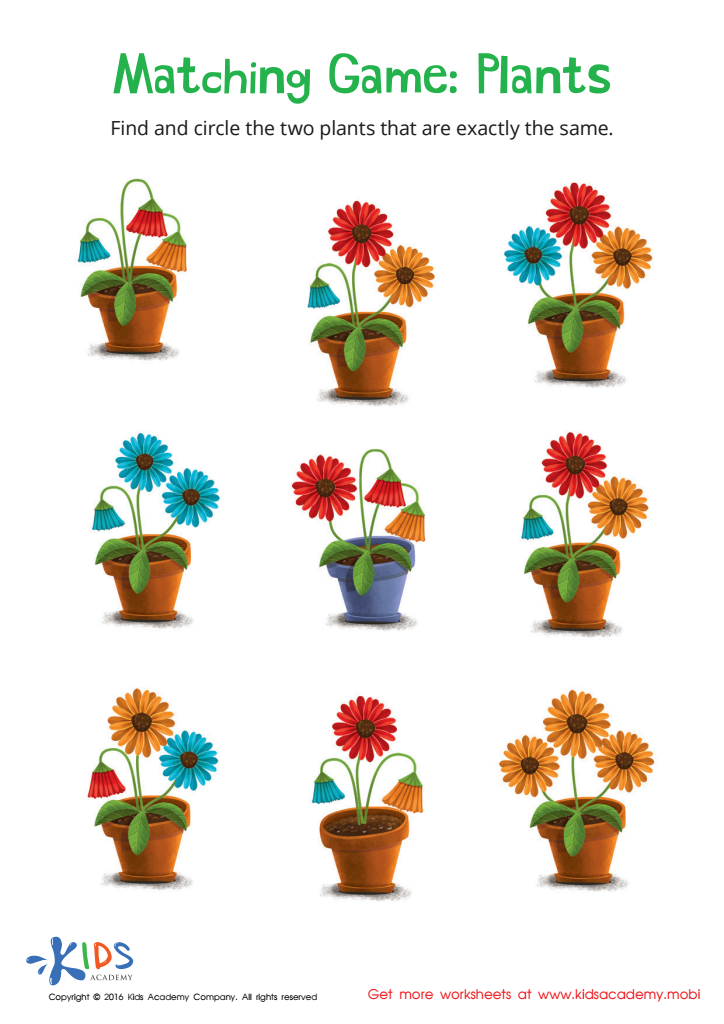
Matching: Plants Worksheet
This worksheet helps your child focus on details to build pattern recognition, problem solving and sorting/matching skills. Your child will enjoy the challenge of searching for similar images that match. Point out how small differences can exist in similar things and excite them with bright pictures and a fun challenge.
Matching: Plants Worksheet
Worksheet
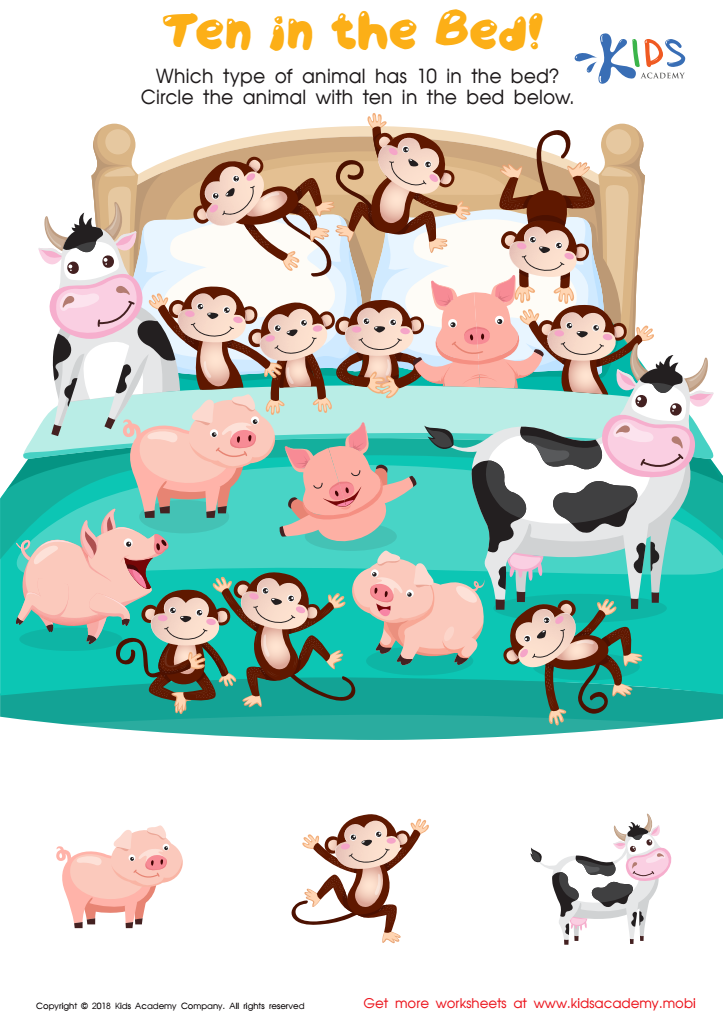
Ten in the Bed Worksheet
This fun worksheet has your kids counting and sorting friendly animal faces in a bed of ten! It's a great way for them to practice their mental math skills, like adding and multiplying more efficiently. Plus, it brings a new meaning to the classic song "Monkeys Jumping on the Bed"!
Ten in the Bed Worksheet
Worksheet
Join Kids Academy for Free
Who is primarily going to use this learning content?





.jpg)

Story sequencing in math for children aged 6-8 is crucial as it bridges the gap between literacy and numeracy, fostering a holistic learning experience. At this age, children develop their ability to understand and organize events in a logical sequence, which enriches their cognitive skills. When math problems are presented in the context of a story, they become more relatable and engaging, helping children see the relevance of math in everyday life.
Parents and teachers should care about story sequencing as it encourages critical thinking and problem-solving skills. By involving narratives, students are more likely to immerse themselves in the problem, making them more enthusiastic about finding solutions. Additionally, story sequencing helps to enhance comprehension skills—children learn to read for understanding, identifying key information and relationships within the text.
Moreover, this approach offers opportunities for collaborative learning and discussions among peers, enriching social skills and teamwork. Cultivating a love for math through stories can demystify mathematical concepts, reducing anxiety and fostering a lifelong positive relationship with learning. Thus, focusing on story sequencing in math is vital for developing not only mathematical proficiency but also a well-rounded and engaged learner.








