
Understanding grouping Math Worksheets for Ages 6-8
3 filtered results
Difficulty Level
Grade
Age
-
From - To
Subject
Activity
Standards
Unleash your child's mathematical potential with our "Understanding Grouping" math worksheets, designed for ages 6-8 by Kids Academy. These engaging, printable resources transform complex grouping concepts into easily graspable lessons, ensuring a solid foundation in early math skills. From sorting objects into categories to recognizing number patterns, each activity fosters critical thinking and problem-solving abilities. Perfect for classroom or home use, our worksheets not only enhance learning but also make math fun and interactive. Guide your child towards confidence and academic success—explore "Understanding Grouping" worksheets today!
Favorites
With answer key
Interactive
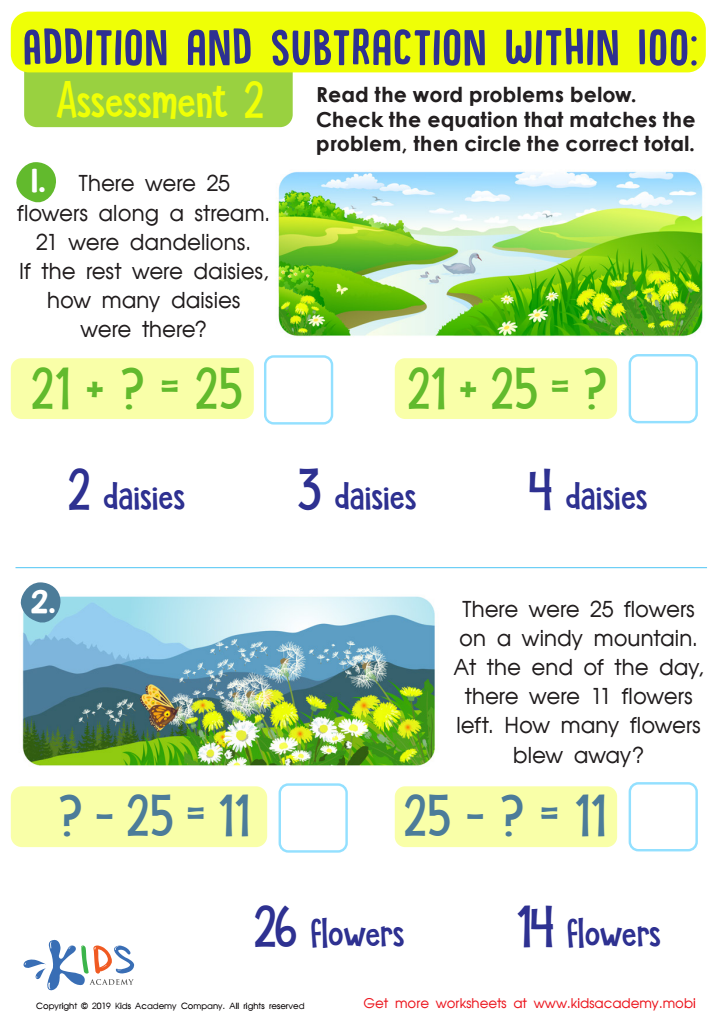
Assessment 2 Math Worksheet
Using fun exercises and pictures, you can get kids excited about math. With practice and reminders of what they've learnt, they'll be solving simple addition and subtraction equations with ease. Read the word problems in the picture to them, then help them check the equation and choose the correct answer.
 Assign to My Students
Assessment 2 Math Worksheet
Worksheet
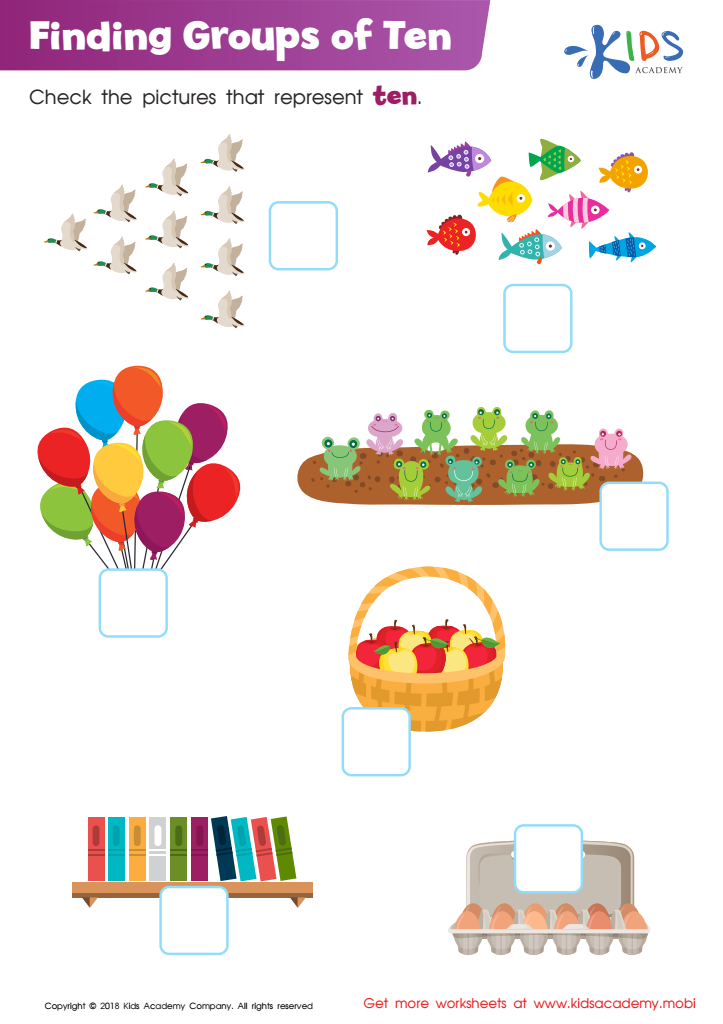
Finding Groups of Ten Worksheet
Can your kids count? If they can't go higher than tens, introduce them to this worksheet. Counting can be fun and easy with this exercise. Ask if they can identify the pictures, then help them count each group. Help them check the pictures that represent ten.
Finding Groups of Ten Worksheet
Worksheet
Join Kids Academy for Free
Who is primarily going to use this learning content?






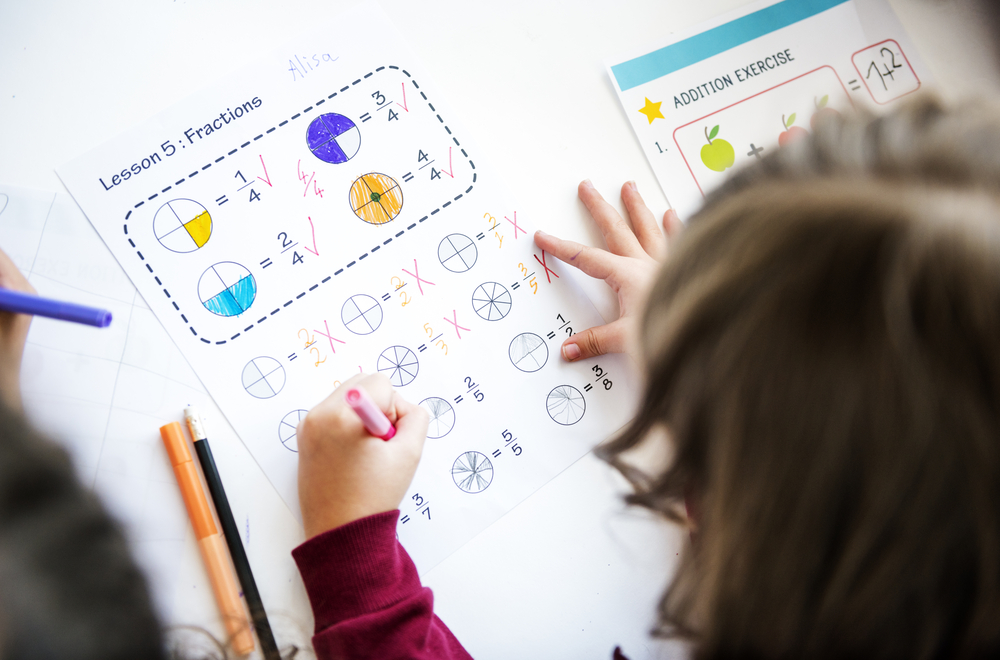
Understanding grouping in math, often introduced as part of early arithmetic concepts like place value and basic addition and subtraction, is crucial for children ages 6-8. This foundational skill paves the way for advanced mathematical concepts and everyday problem-solving.
Grouping helps children grasp the concept of place value, which is fundamental in understanding how numbers work. Recognizing that numbers can be broken down into units, tens, hundreds, and so forth allows children to see the value of each digit in a number. For instance, in the number 42, knowing that this is 4 tens and 2 ones makes it easier to manage and manipulate numbers in various computational scenarios.
Moreover, grouping fosters critical thinking and aids in developing mental math strategies. These skills are not only beneficial for more complex mathematical operations, such as multiplication and division, but they're also practical in real-life situations such as counting money, measuring ingredients, or organizing objects.
Teachers and parents play a vital role in nurturing this understanding. By engaging children with hands-on activities, visual aids, and interactive lessons, they make abstract ideas more tangible. Cultivating an early interest and comprehension in grouping ensures children build confidence in their math abilities, setting a positive tone for future learning.








