Understanding length Math Worksheets for Ages 6-8
3 filtered results
-
From - To
Discover "Understanding Length" math worksheets, designed for ages 6-8! These engaging activities help young learners grasp the concepts of measuring length using familiar objects and scenarios. With colorful visuals and easy-to-follow instructions, children will enhance their math skills while having fun. Our expertly crafted worksheets cover essential topics including units of measurement, comparison, and estimation. Each worksheet encourages critical thinking and problem-solving, building a strong foundation for future math success. Perfect for classroom learning or extra practice at home, these worksheets make learning about length enjoyable and effective. Start your child's mathematical journey confidently with our "Understanding Length" worksheets!
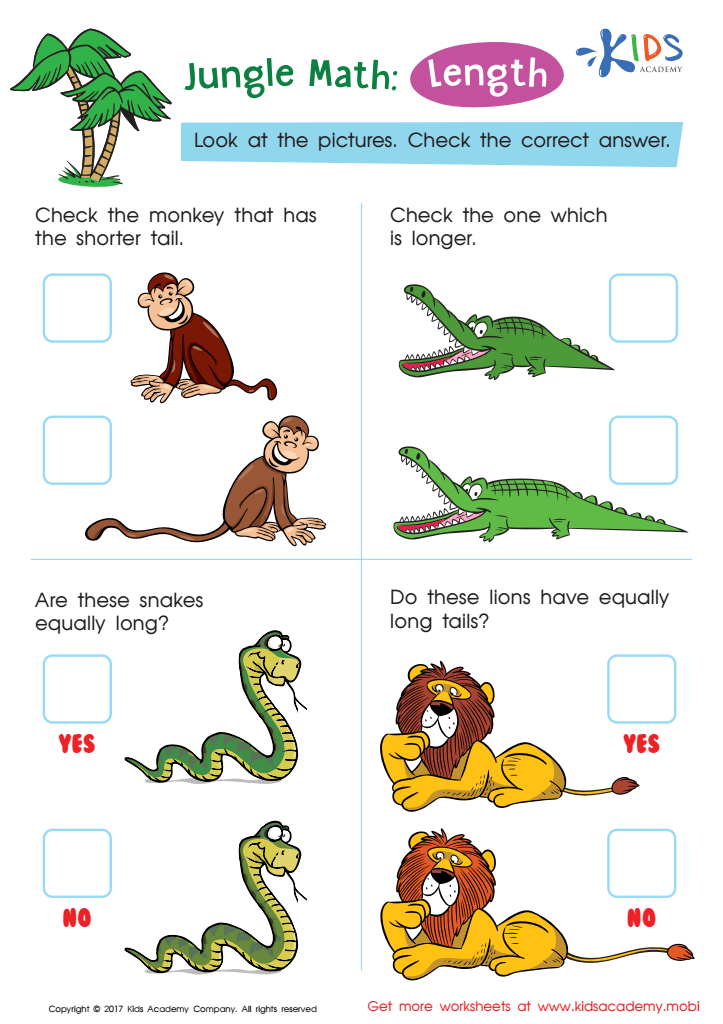
Which One Is Longer - Length Worksheet
 Assign to My Students
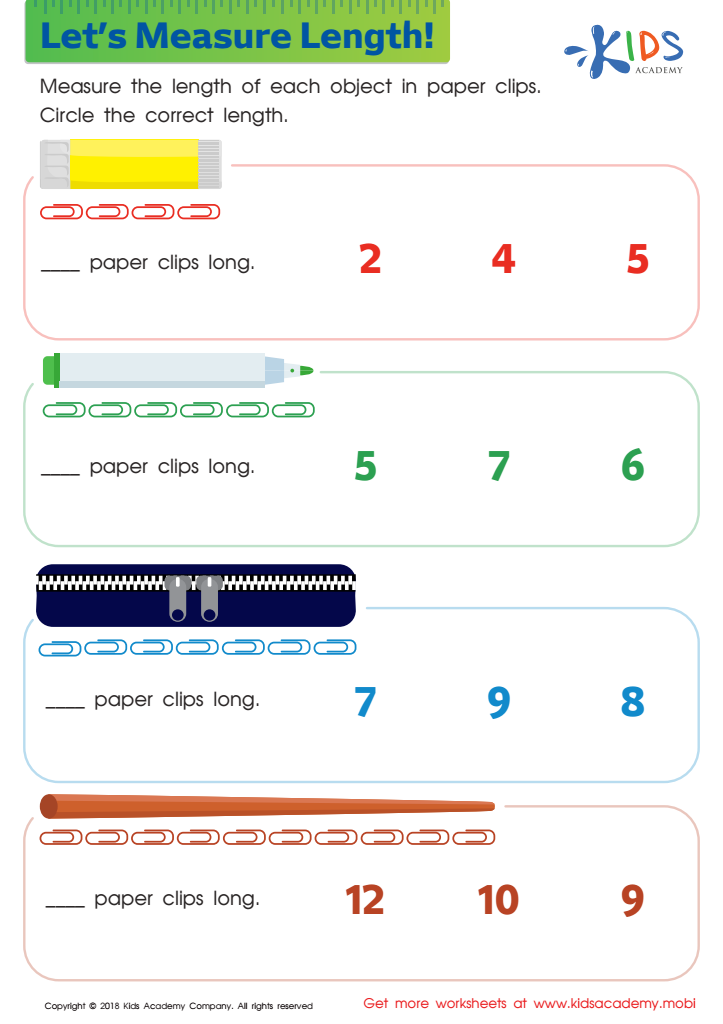
Lets Measure Length Worksheet
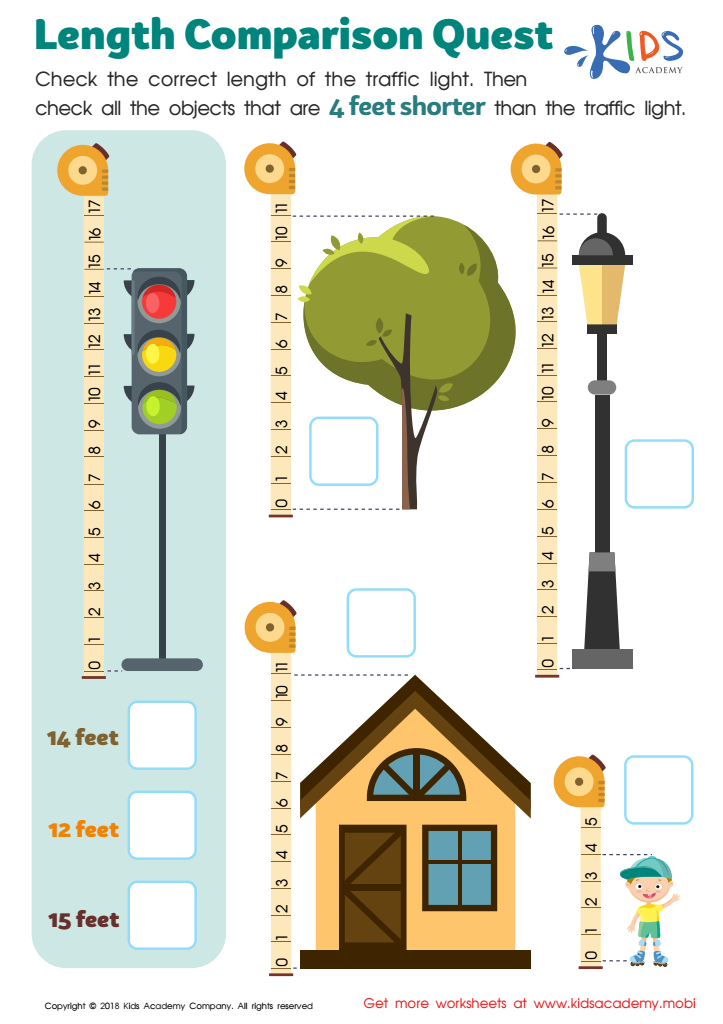
Length Comparison Quest Worksheet







Understanding length is a cornerstone of early math education for children aged 6-8, and it's crucial for both parents and teachers to emphasize and nurture this skill. At this developmental stage, comprehending length not only prepares children for higher-level math concepts but also integrates practical life skills and cognitive growth.
First, learning about length helps children grasp fundamental math concepts such as measurement, estimation, and comparison. These basics are foundational for more complicated math topics like geometry and algebra they'll encounter in later grades. Accurate measurement skills also tie into units of measure like inches, feet, centimeters, and meters, making math relevant to their everyday world.
Moreover, understanding length enhances problem-solving abilities. By using tools like rulers or measuring tapes, children can translate abstract numbers into concrete, visualizable forms. This hands-on experience promotes active learning and improves cognitive development.
From a practical standpoint, knowing how to measure and compare lengths helps children engage in everyday tasks such as cooking, building, and crafting. These activities lay the groundwork for STEM learning and careers, fostering curiosity and innovation.
For teachers and parents, supporting a child’s grasp of length involves encouraging exploratory play, using everyday objects for measurement activities, and promoting an environment where questions about 'how long?' and 'how far?' are discussed. Overall, investing time in teaching length can spark mathematical curiosity and a lifelong love for learning.








