Understanding mass Math Worksheets for Ages 6-8
3 filtered results
-
From - To
Explore our "Understanding Mass Math Worksheets" designed for children aged 6 to 8! These engaging worksheets introduce young learners to the concept of mass, supporting their early math skills through fun activities and hands-on exercises. Perfect for classrooms or home learning, our resources help children understand measurement and comparisons using real-life examples. Each worksheet emphasizes visual learning, allowing kids to easily grasp the idea of mass while enhancing their problem-solving abilities. Encourage your child's love for math with activities that make learning enjoyable and interactive. Visit us today and watch your little ones master the concept of mass with confidence!
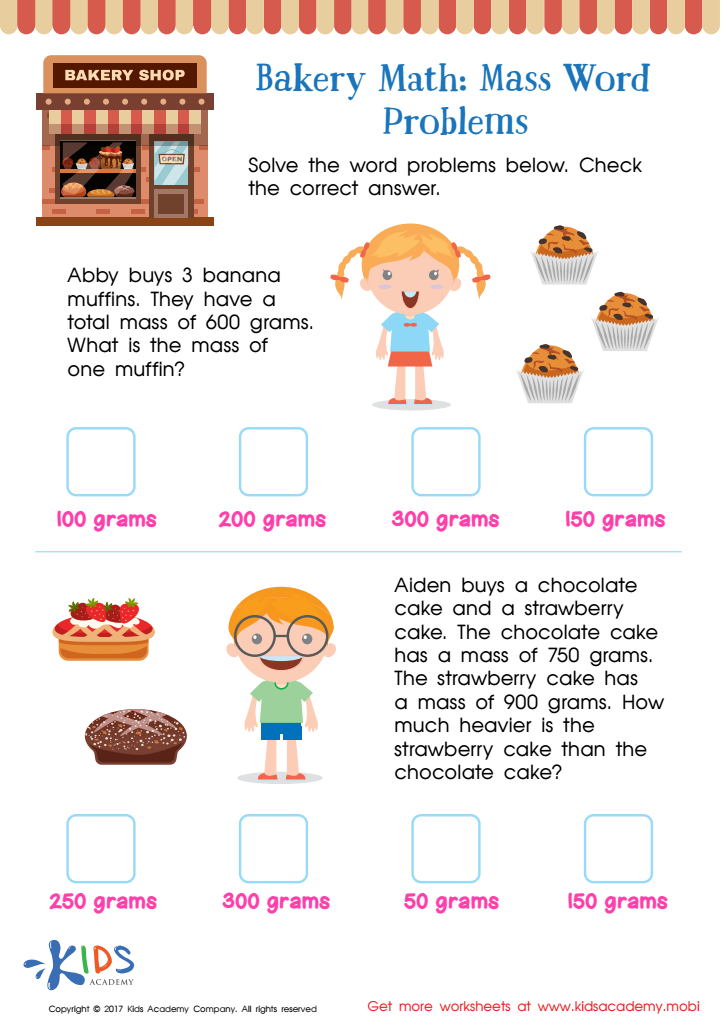
Mass Word Problems Worksheet
 Assign to My Students
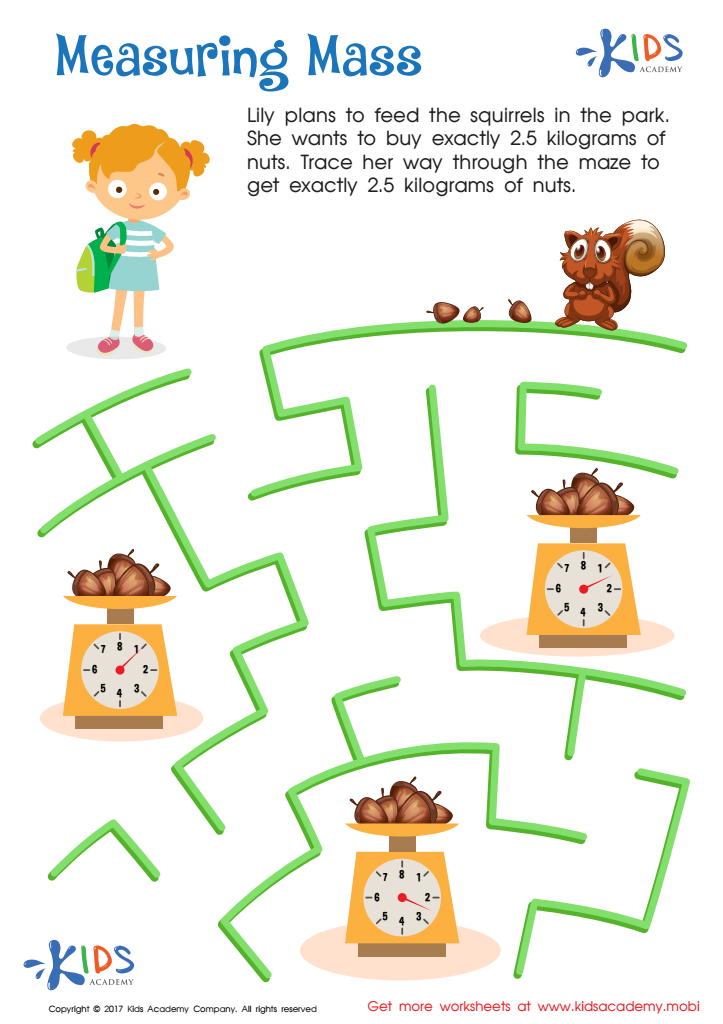
Measuring Mass Worksheet
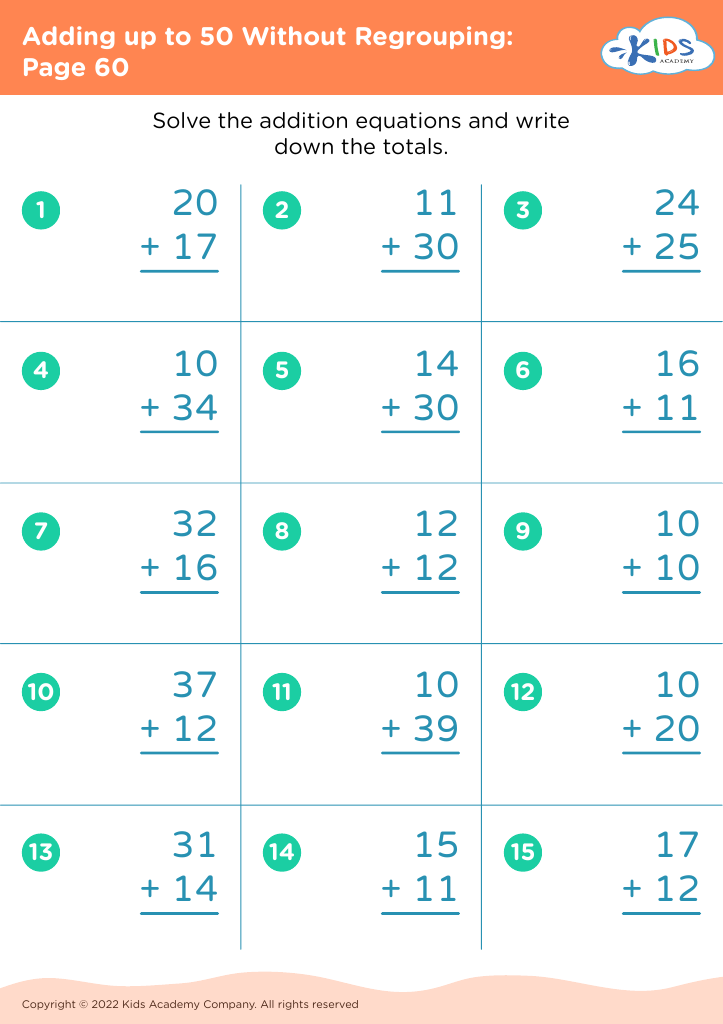



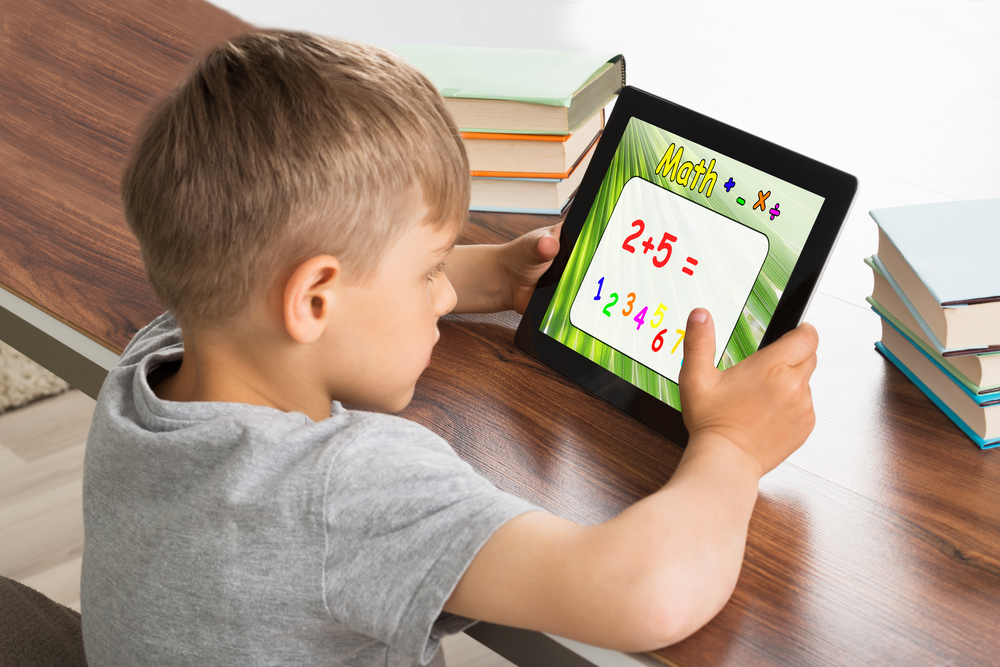



Understanding mass is crucial for children aged 6-8, as it lays the foundation for mathematical concepts and real-world applications. At this stage, children develop critical thinking skills, a sense of measurement, and an awareness of physical properties. Introducing mass helps them grasp essential math skills such as comparison, addition, subtraction, and problem-solving in a tangible way.
Mass is a relatable concept; children often encounter it through daily activities like cooking, shopping, or weighing objects. By integrating mass into lessons, teachers and parents can show children how math is not just abstract, but actively relevant in everyday life. This connection enhances engagement and motivation in learning.
Moreover, understanding mass fosters spatial awareness and teaches kids how to categorize and quantify objects, deepening their conceptual knowledge. It also encourages scientific curiosity, as children explore weight and balance, expanding their inquiry skills.
Finally, instilling a strong foundational knowledge of mass paves the way for future academic success in both math and science. By caring about this essential area of early learning, parents and teachers equip children with the necessary tools to navigate a world where an understanding of measurement is both vital and empowering.








