Understanding measurements Math Worksheets for Ages 6-8 - Page 2
26 filtered results
-
From - To
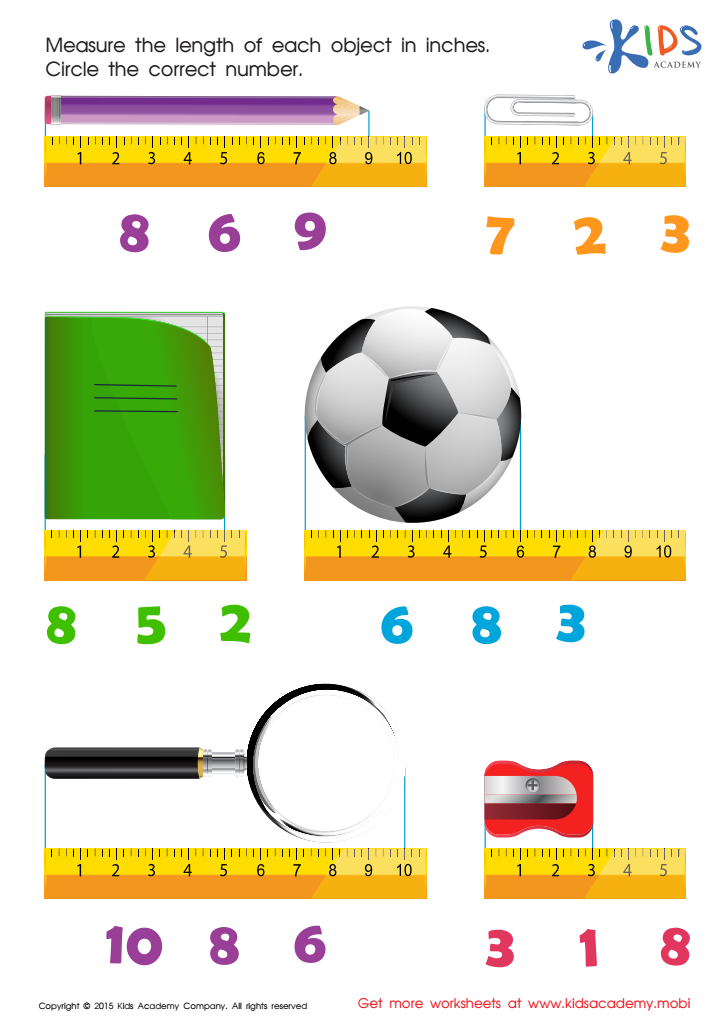
Learning measuring objects in inches Worksheet
 Assign to My Students
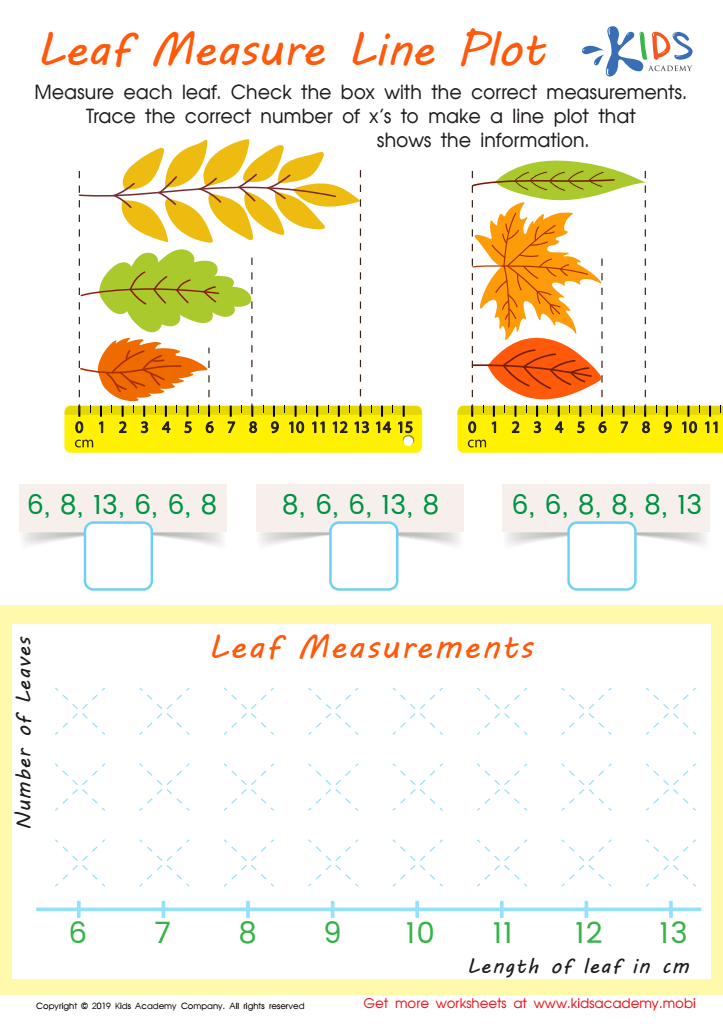
Leaf Measure Line Plot Worksheet








Understanding measurements is a crucial aspect of mathematics for children aged 6-8, and it holds significant importance for both parents and teachers. At this developmental stage, children are naturally curious and eager to explore the world around them. By learning measurements, they can connect mathematical concepts to everyday life, enhancing their ability to comprehend dimensions, weights, and volumes.
For parents, fostering an understanding of measurements can lead to enriched home experiences. Engaging children in activities such as cooking or gardening provides practical scenarios where measurements are essential. This not only makes learning fun but also equips them with life skills, promoting independence and confidence.
Teachers play a key role in developing foundational math skills. Clearly understanding measurements aids in laying the groundwork for more complex mathematical concepts later on, such as geometry and data analysis. It helps students classify, compare, and quantify objects, which is essential for critical thinking and problem-solving. Additionally, developing measurement skills supports learning across subjects, including science and art.
Ultimately, nurturing children's understanding of measurements establishes a solid foundation for their future academic journey, enables practical application of math in daily life, and fosters a lifelong appreciation for the subject.








