Understanding more/less concept Math Worksheets for Ages 6-8
3 filtered results
-
From - To
Welcome to our "Understanding More/Less Concept Math Worksheets" page for ages 6-8! Here, young learners can explore the foundational concept of comparison through engaging and interactive worksheets. Designed to make math fun, these activities help children identify objects in groups, compare quantities, and develop critical reasoning skills. With colorful illustrations and age-appropriate exercises, students will enhance their understanding of ‘more’ and ‘less’ while building confidence in their math abilities. Perfect for parents and educators seeking to reinforce essential mathematical concepts, our worksheets offer a supportive learning environment that encourages exploration and mastery. Start your child's math journey today!
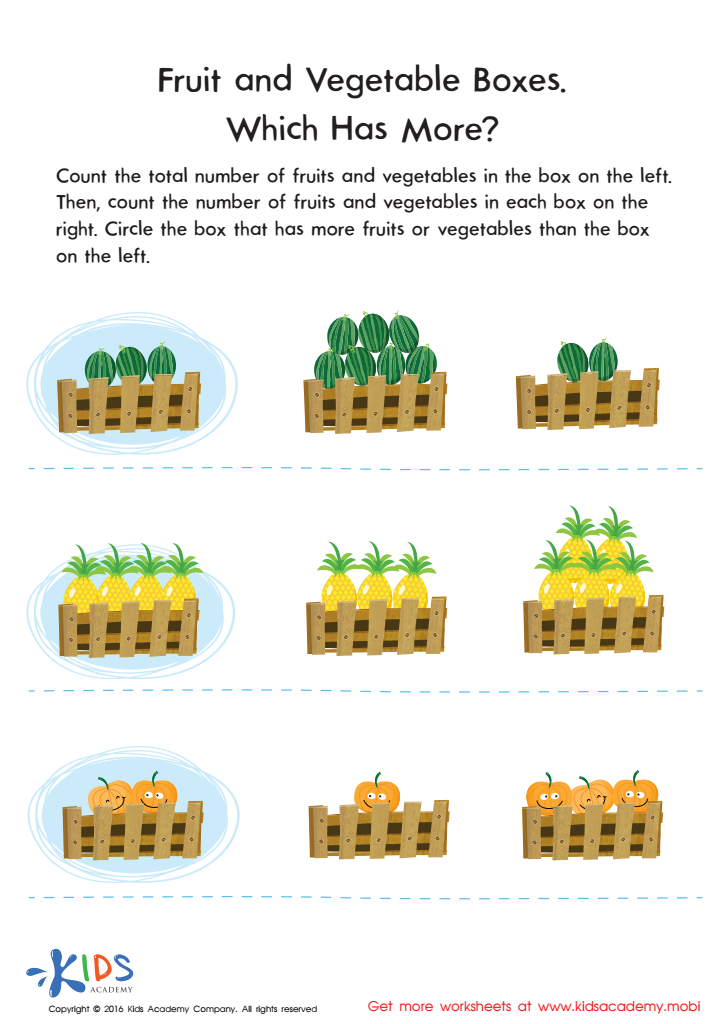
Which Has More? Size Worksheet
 Assign to My Students
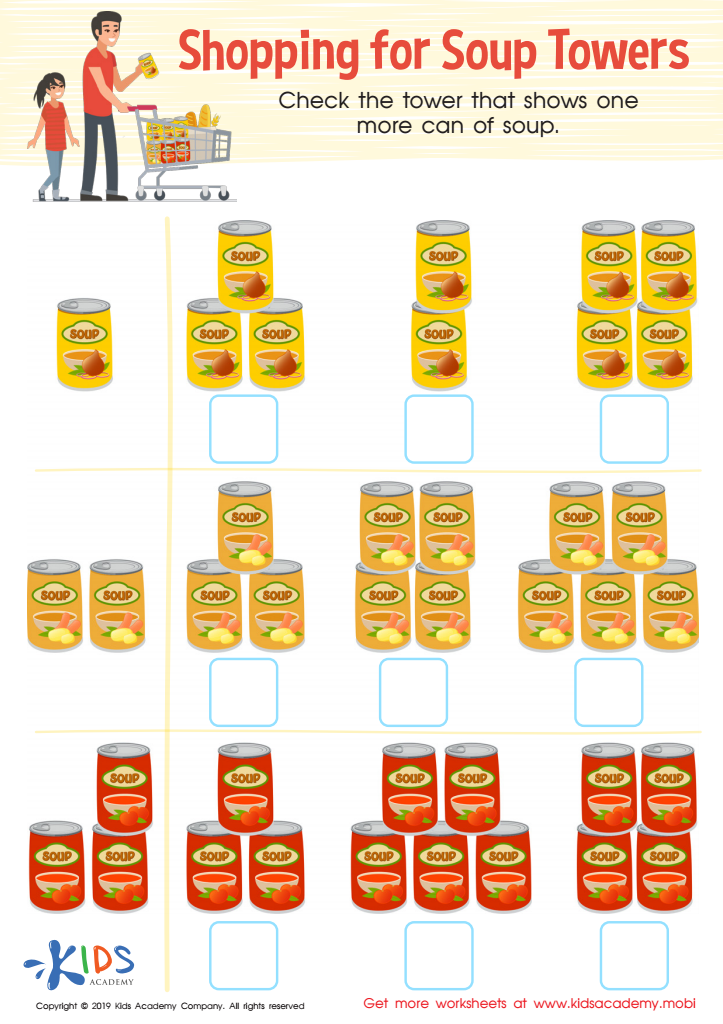
Soup Towers Worksheet
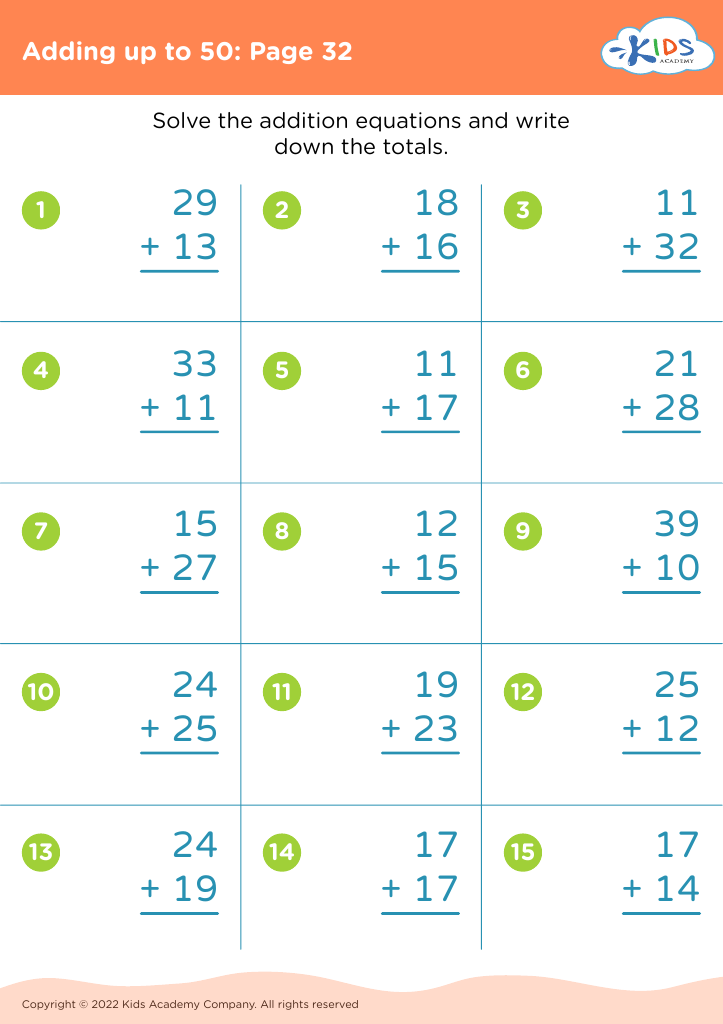








Understanding the concept of more and less in mathematics is crucial for children aged 6-8 as it forms the foundation for their quantitative reasoning and problem-solving skills. At this developmental stage, children are naturally curious and eager to explore numerical relationships, making it an ideal time to introduce these concepts.
By grasping more and less, children learn to compare quantities, which enhances their ability to think analytically. This understanding lays the groundwork for higher-level math concepts such as addition, subtraction, and comparisons in word problems. Parents and teachers should care about this because early math skills are closely linked to later academic success in mathematics.
Furthermore, mastering these fundamental concepts fosters confidence. When children can easily identify which group has more or less, they feel more capable in math, which encourages a positive attitude toward learning. This builds a strong mathematical foundation essential for lifelong learning and critical thinking.
Investing time in teaching more and less can promote not only mathematical understanding but also comprehensive cognitive skills. Ultimately, nurturing these early concepts will empower children, equipping them with the tools necessary for future educational challenges and everyday decision-making.








