Understanding number sequence Math Worksheets for Ages 6-8
7 filtered results
-
From - To
Unlock your child's mathematical potential with our "Understanding Number Sequence" math worksheets for ages 6-8. These engaging and interactive resources are expertly designed to help young learners grasp the importance of number sequences through fun activities and exercises. Your child will explore patterns, fill in missing numbers, and develop essential counting skills, laying a solid foundation for future math success. Each worksheet features colorful visuals and age-appropriate challenges to keep children motivated and excited about learning. Discover the joy of mathematics together while enhancing your child's critical thinking and problem-solving abilities. Start your journey into number sequences today!
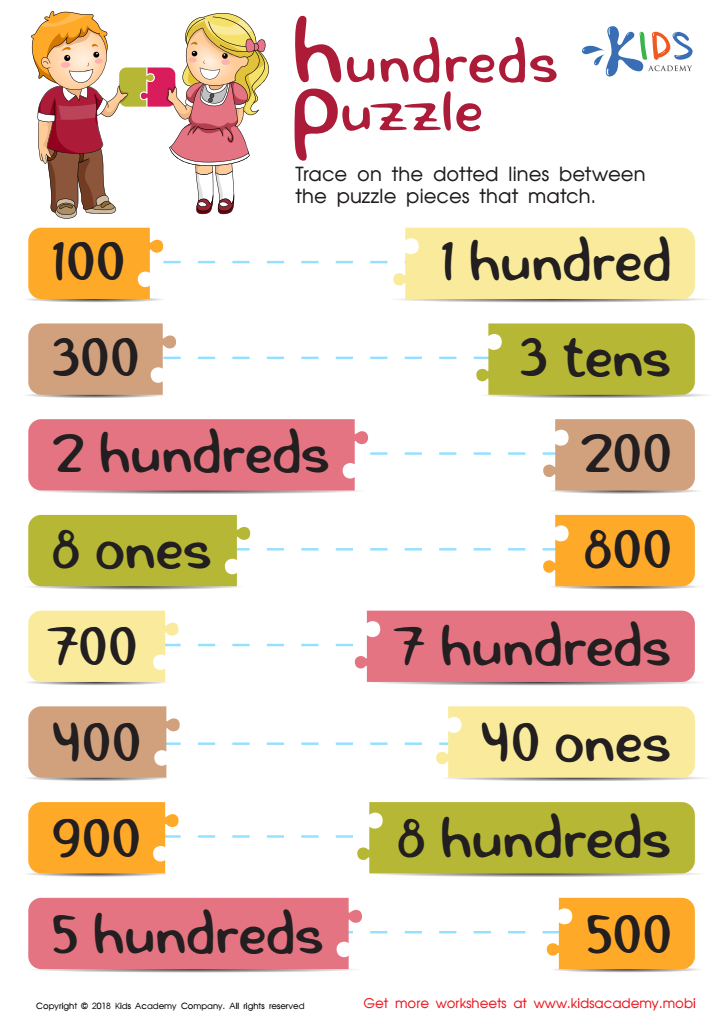
Hundreds Puzzle Worksheet
 Assign to My Students
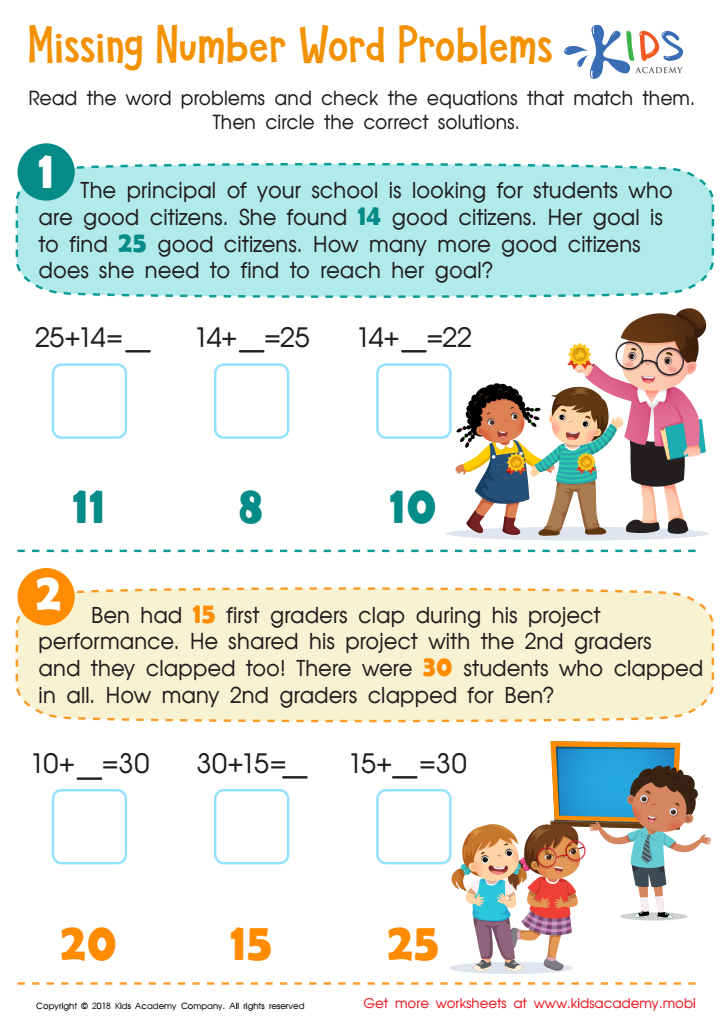
Missing Number Word Problems Worksheet
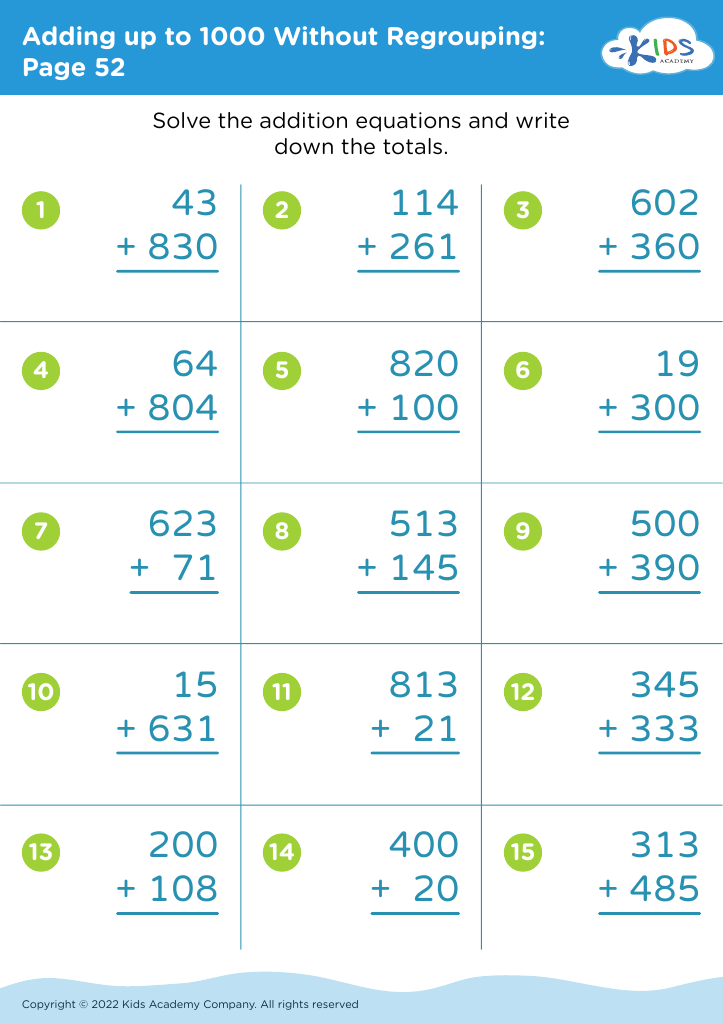
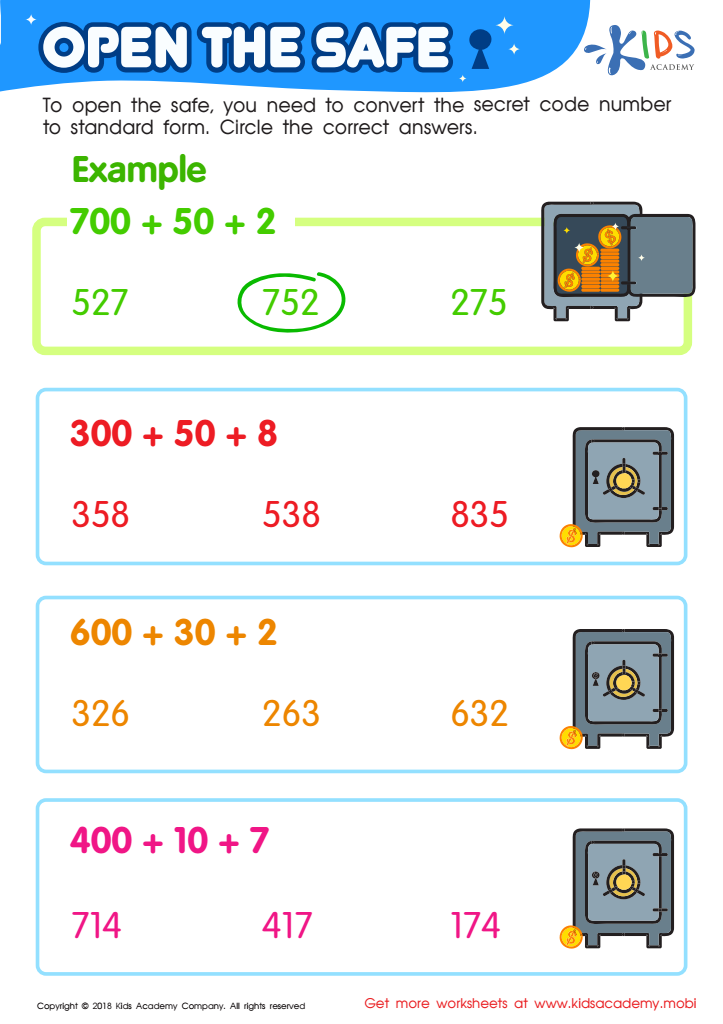
Open the Safe Worksheet
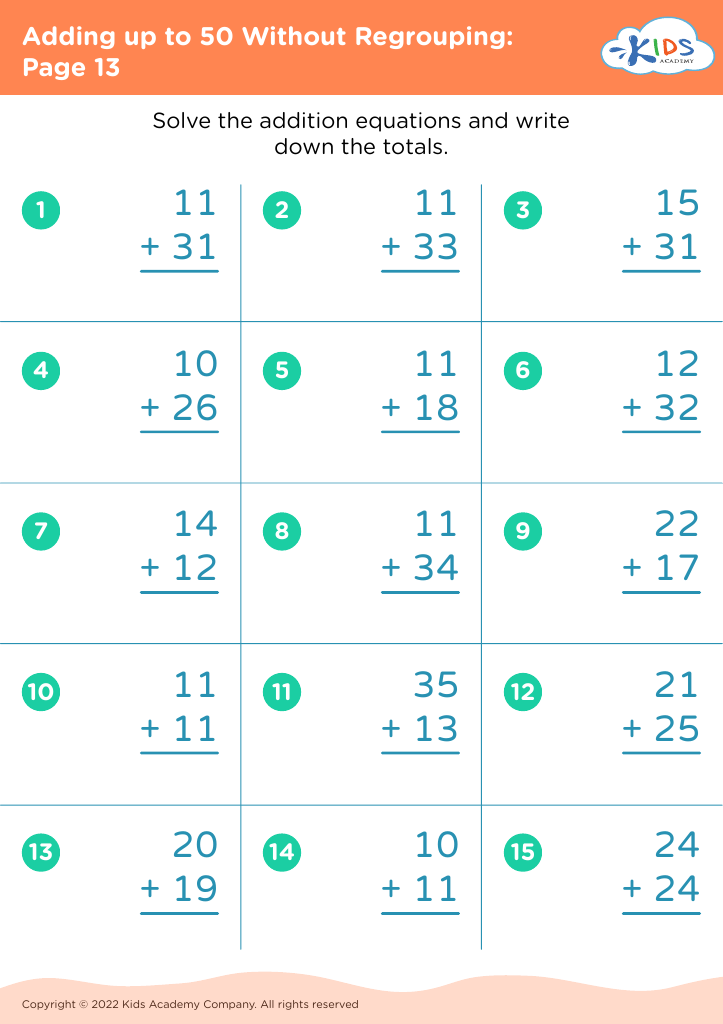
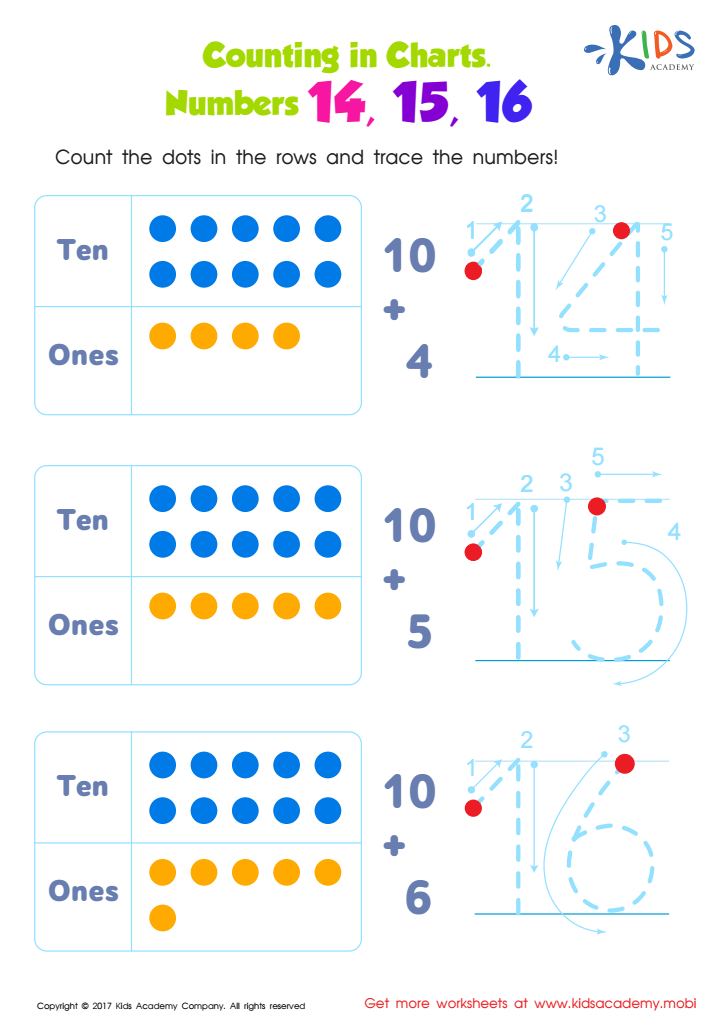
Number Tracing Worksheet







Understanding number sequences is crucial for children aged 6-8, offering a foundation for their mathematical development and critical thinking skills. During these formative years, children are increasingly exposed to more complex mathematical concepts. Comprehending number sequences, such as counting upward, downward, or recognizing patterns, facilitates skills that are fundamental for addition, subtraction, and even more advanced operations later on.
For parents and teachers, fostering a strong grasp of number sequences paves the way for improved problem-solving abilities, helping children identify relationships between numbers and recognize patterns in everyday life. This knowledge cultivates confidence, making math less intimidating and allowing children to view it as an engaging challenge rather than a chore.
Moreover, as children learn to identify sequences, they also develop their logical reasoning and analytical skills. These capabilities extend beyond mathematics, impacting reading comprehension, science applications, and life skills. Investing in children’s understanding of number sequences equips them with essential tools for their academic journey and future endeavors. By focusing on this foundational core, parents and teachers can better prepare young learners for the increasingly complex challenges they will encounter in both their educational trajectories and everyday situations.








