
Visual perception development Math Worksheets for Ages 6-8
4 filtered results
Difficulty Level
Grade
Age
-
From - To
Subject
Activity
Standards
Enhance your child's mathematical skills with our Visual Perception Development Math Worksheets tailored for ages 6-8. These worksheets are designed to boost critical thinking and problem-solving abilities through engaging and interactive activities. Children will improve their visual perception skills by identifying patterns, recognizing shapes, and connecting numbers. Each worksheet not only reinforces foundational math concepts but also encourages focus and attention to detail. Perfect for at-home practice or classroom reinforcement, our printable worksheets make learning fun and effective. Foster your child's cognitive growth and mathematical confidence with our expertly crafted resources.
Favorites
With answer key
Interactive
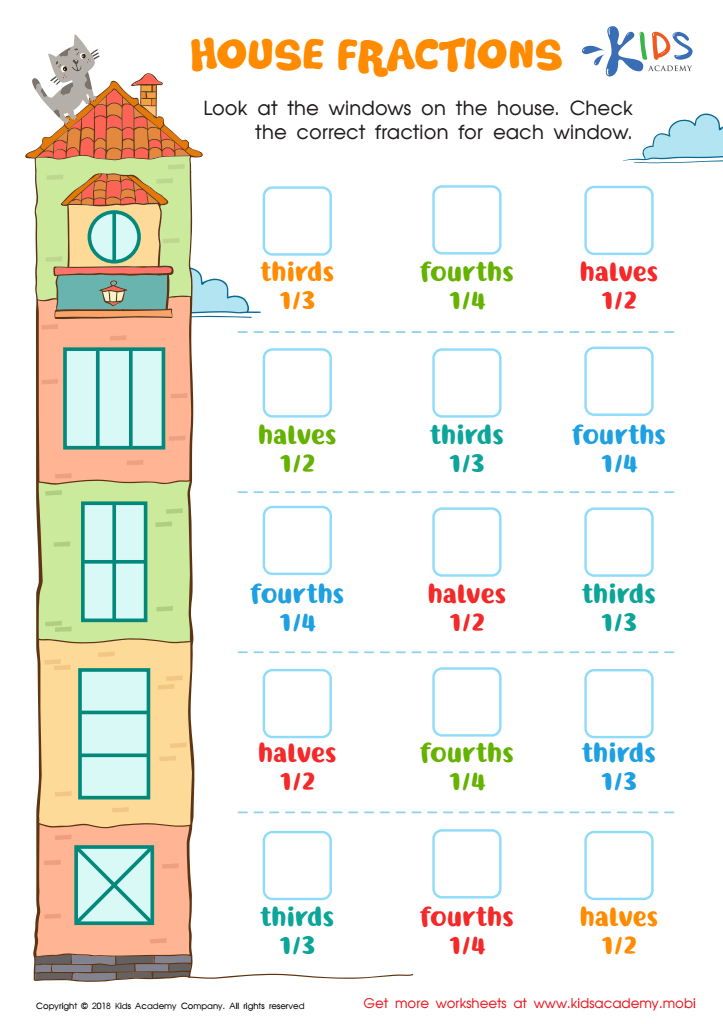
House Fractions Worksheet
Test your child's knowledge of fractions with this worksheet! Have them examine the windows of a house and select the correct fraction from the options given. This is a great way to see how much they understand about wholes, fractions, halves, one thirds, and one fourths.
 Assign to My Students
House Fractions Worksheet
Worksheet
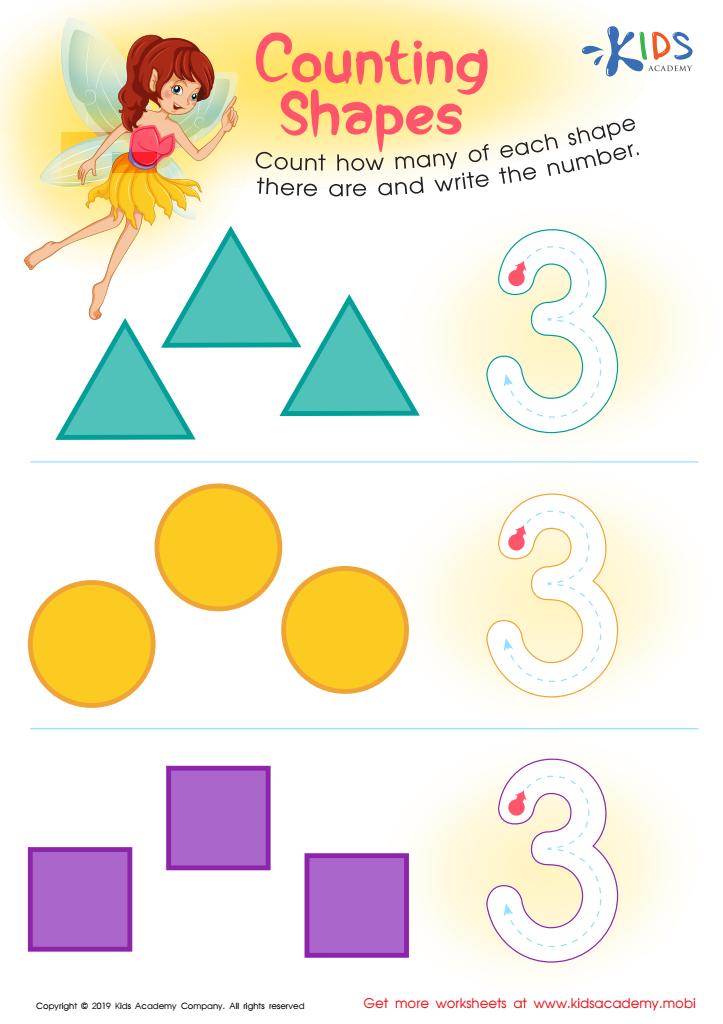
Counting Shapes Worksheet
Counting and number sense are essential skills. Picture representation helps kids understand and remember concepts. This free worksheet is perfect for introducing numbers and counting in groups of three. It also helps kids to practice writing numbers with traceable lines and guiding dots. It's an easy and fun way to give little mathematicians a successful start.
Counting Shapes Worksheet
Worksheet
Join Kids Academy for Free
Who is primarily going to use this learning content?






.jpg)

Visual perception development in math for children ages 6-8 is crucial, and both parents and teachers should prioritize it. At this stage, children's brains are rapidly growing, and they are laying down foundational skills that will impact their overall academic success.
Firstly, visual perception skills—such as the ability to recognize patterns, shapes, and numbers—are essential for understanding and performing basic math operations. For example, when children learn to distinguish shapes or identify patterns, they are not only learning geometry but also enhancing their problem-solving abilities and logical reasoning.
Secondly, strong visual perception skills improve children’s ability to read and understand math-related symbols and numbers, which helps in the accurate execution of arithmetic tasks like addition and subtraction. This will lead to better performance in math tasks, fostering a positive association with the subject and reducing math anxiety.
Furthermore, these skills are transferable; improving visual perception in math can enhance skills in reading and writing as well. Kids who practice these abilities tend to have better hand-eye coordination and spatial understanding, facilitating smoother progression in other subject areas and daily activities.
Lastly, a keen focus on these skills early on helps identify and mitigate potential learning difficulties. Early detection enables timely intervention, ensuring children receive the support they need to thrive academically. Therefore, nurturing visual perception development provides a robust foundation not only for math proficiency but for continued academic success and everyday life skills.








