Weather identification Math Worksheets for Ages 6-8
3 filtered results
-
From - To
Explore our engaging Weather Identification Math Worksheets, designed specifically for children aged 6-8. These worksheets offer a fun way for young learners to connect mathematics with real-world weather concepts. Kids will practice essential math skills while identifying various weather types, enhancing their critical thinking and observation abilities. With colorful illustrations and interactive exercises, your child will not only improve their math competencies but also learn to recognize weather patterns and conditions. Ideal for classroom settings or home learning, our worksheets encourage curiosity about the natural world and foster a love for learning through play. Download now and inspire your child's education!
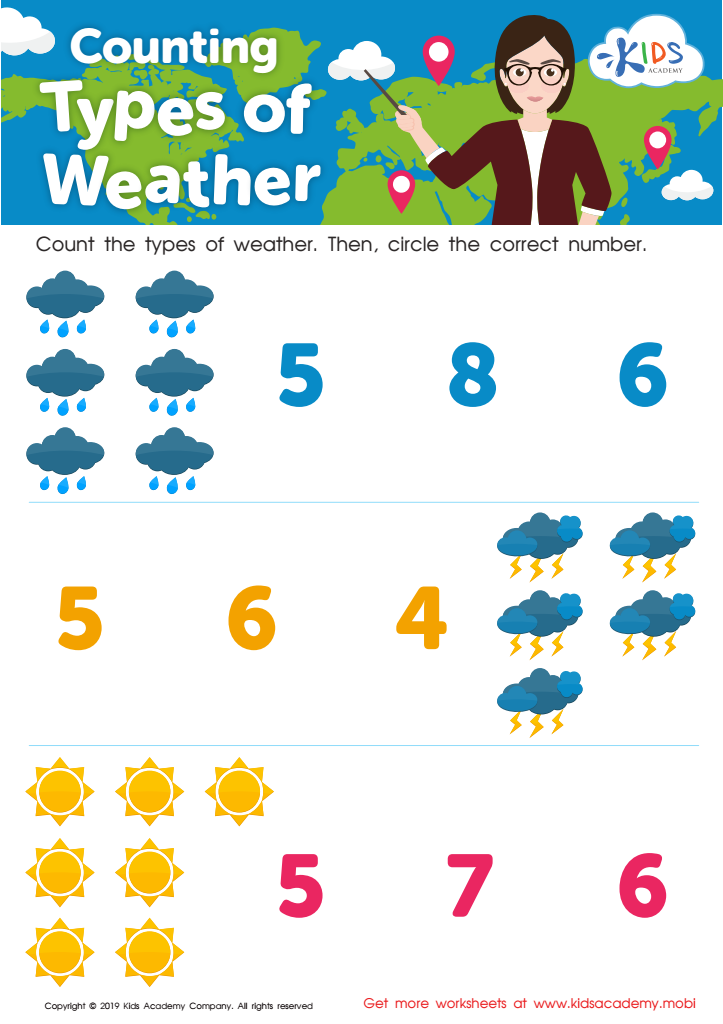
Counting Types of Weather Worksheet
 Assign to My Students






Weather identification math is an important educational focus for children aged 6-8, offering a unique intersection between nature, mathematics, and critical thinking skills. At this age, children are naturally curious about their environment, and incorporating weather into math encourages that curiosity.
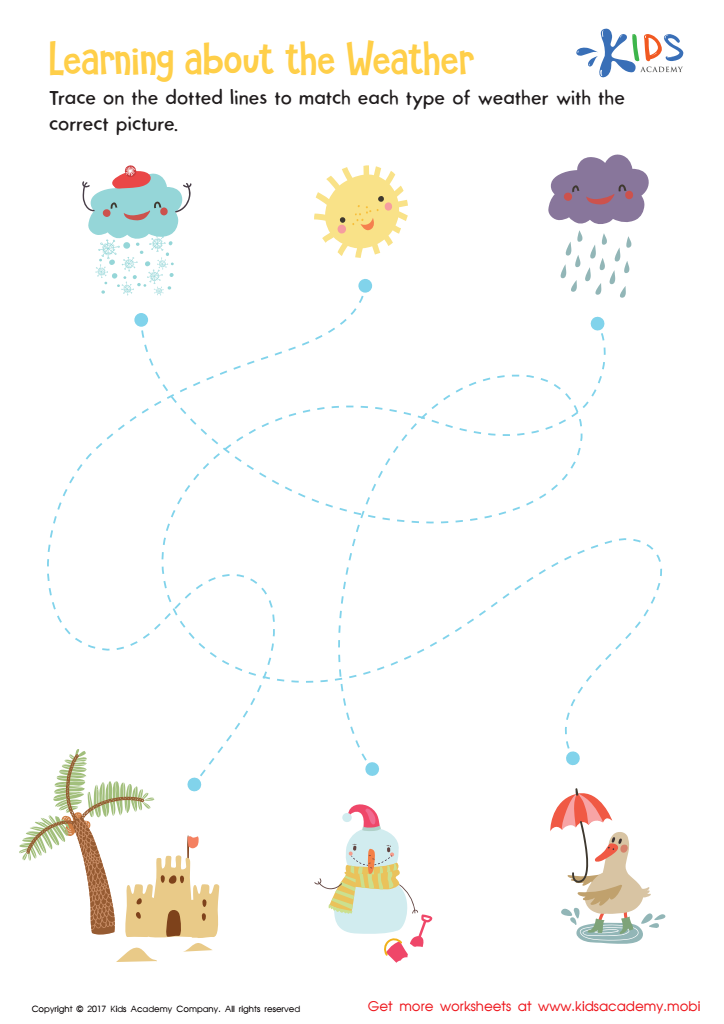
Firstly, understanding weather patterns improves observational skills. When children learn to identify different types of weather – sunny, rainy, snowy – and quantify them using simple math (like counting sunny days or measuring rainfall), they develop the ability to analyze and interpret data. This lays the foundation for future STEM learning.
Secondly, weather identification math fosters practical math skills in real-world scenarios. For instance, graphing temperature changes or using simple surveys to gather data on their friends’ favorite kinds of weather helps them cultivate a more intuitive grasp of mathematical concepts.
Lastly, teaching children about weather promotes discussions about climate and ecology, fostering environmental awareness at a young age. Encouraging students to notice how different conditions affect their daily lives can help cultivate responsibility and become stewards of the planet.
In summary, weather identification math not only enhances math literacy but also encourages inquisitiveness about the world, making it a valuable learning tool for parents and teachers alike.








