Comparing numbers Measurement Worksheets for Ages 6-8
3 filtered results
-
From - To
Our "Comparing Numbers Measurement Worksheets for Ages 6-8" are expertly crafted to help young learners grasp essential math concepts with engaging activities. Each worksheet focuses on comparing numbers within various measurement contexts, fostering a solid understanding of units, quantities, and numerical relationships. Developed by Kids Academy, this collection aids children in developing critical thinking and problem-solving skills through fun and interactive exercises. Perfect for both classroom and home learning, these printable resources provide a hands-on approach to mastering number comparisons, laying a strong foundation for future math success. Start exploring and watch your child's confidence and competence grow!
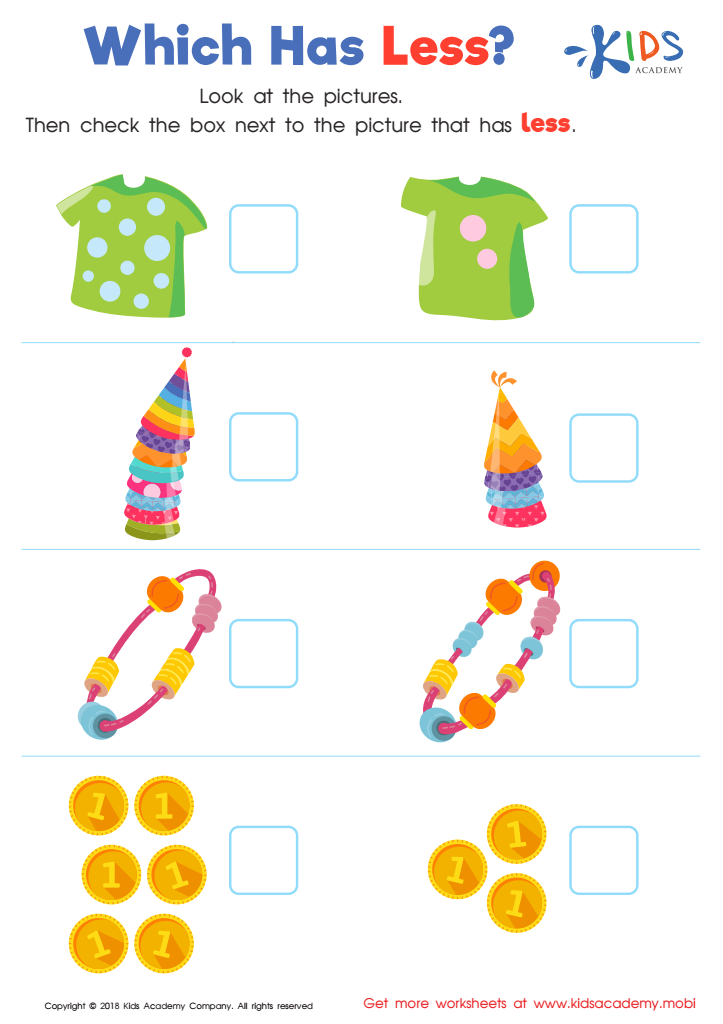
Which Has Less? Worksheet
 Assign to My Students
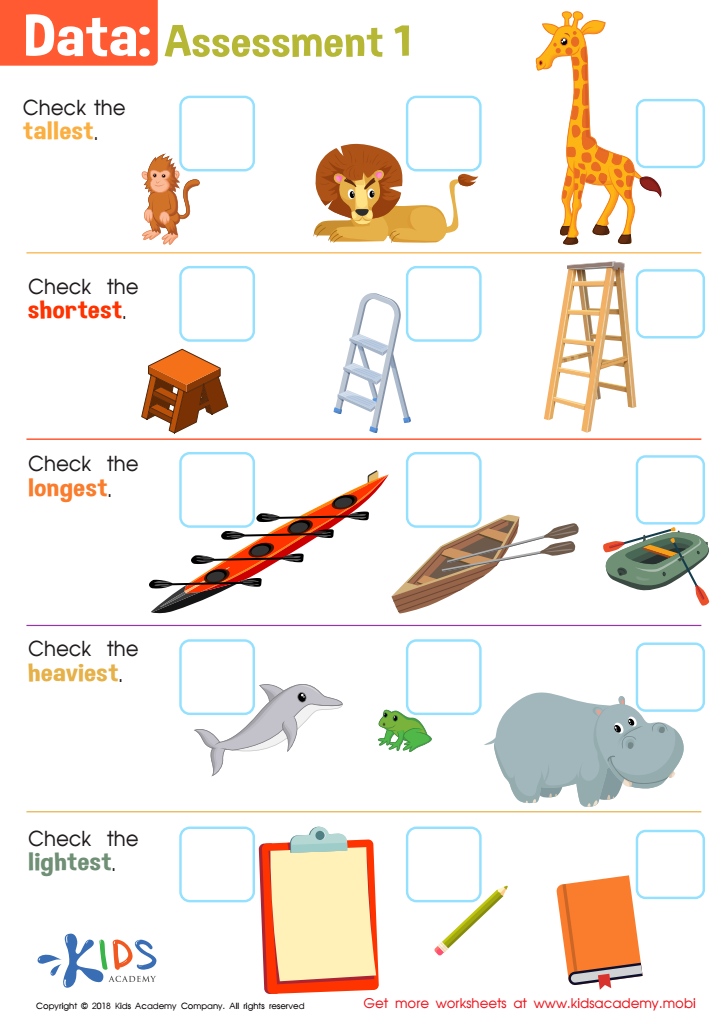
Data: Assessment 1 Worksheet
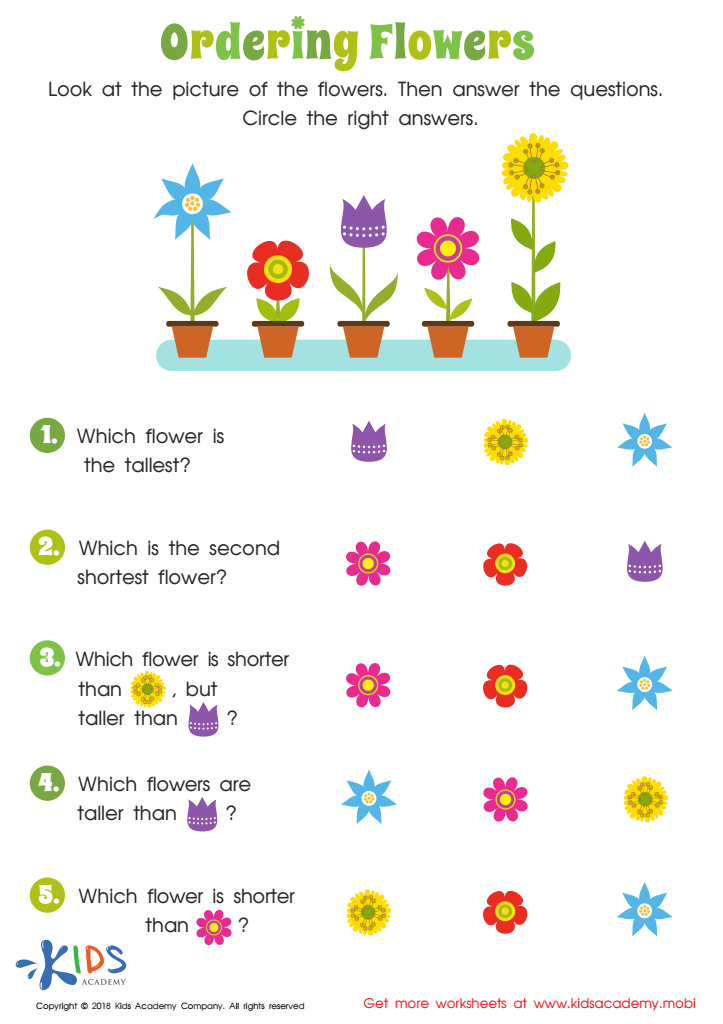
Ordering Flowers Worksheet






Comparing numbers and understanding measurement are essential foundational skills for children ages 6-8. At this age, kids are developing their mathematical reasoning and critical thinking abilities, which will be crucial for their academic success in the later stages. Introducing these concepts early helps them understand the world around them in quantitative terms.
When children compare numbers, they learn to recognize relationships and differences in quantities, developing their numerical fluency and problem-solving skills. They begin to understand concepts like greater than, less than, and equal to, which facilitate their ability to perform basic arithmetic operations, such as addition and subtraction. This prepares them for more complex mathematical problems they'll encounter as they grow older.
Measurement, on the other hand, introduces children to the practical aspects of mathematics. By learning to measure length, weight, and volume, they gain a tangible understanding of how math applies to real-life situations. They develop spatial awareness and an understanding of units and tools used in measurement, such as rulers, scales, and measuring cups.
Caring about these skills means setting children up for success in STEM subjects, fostering an appreciation for precision and accuracy, and enhancing their ability to follow instructions and complete tasks independently. Ultimately, proficiency in comparing numbers and measurement equips children with the confidence and competence required for future learning – in math and beyond.








