Interpreting data Measurement Worksheets for Ages 6-8
5 filtered results
-
From - To
Unlock a world of understanding with our "Interpreting Data Measurement Worksheets for Ages 6-8". Designed specifically for young learners, these engaging and interactive worksheets help children grasp essential measurement and data interpretation skills. Featuring fun, age-appropriate activities, kids will learn to analyze graphs, charts, and simple data sets, laying the groundwork for strong math literacy. Guided exercises encourage critical thinking and logical reasoning, making data analysis accessible and exciting. Perfect for classroom use or home practice, these worksheets ensure children build a solid foundation in interpreting data, setting them up for success in future math challenges.
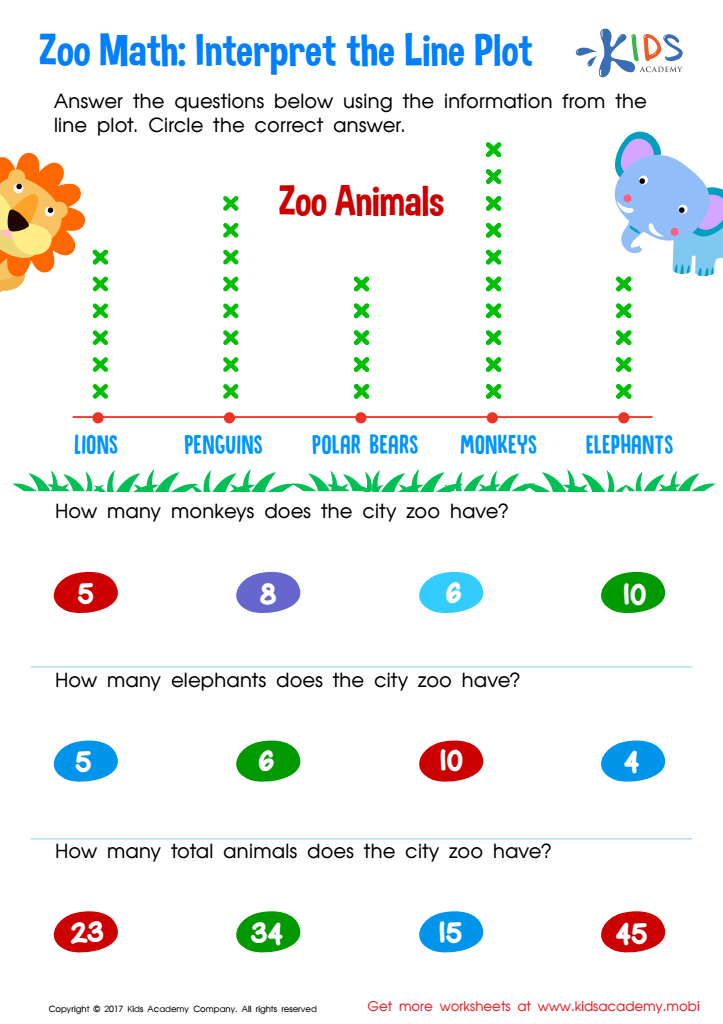
Interpret Line Plot Worksheet
 Assign to My Students
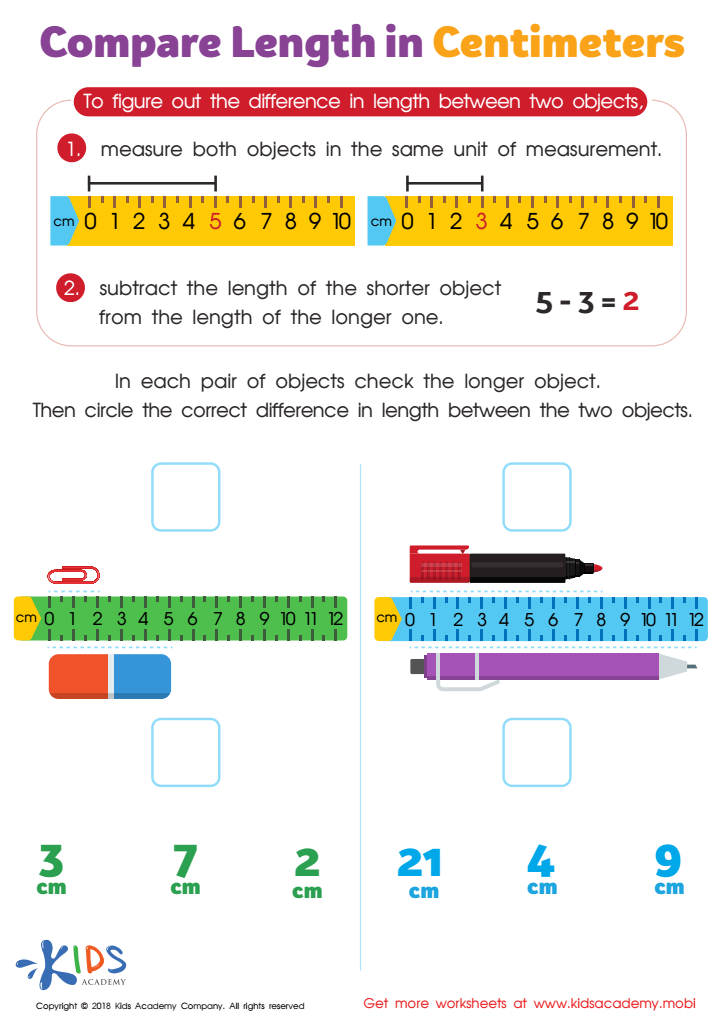
Compare Length in Centimeters Worksheet
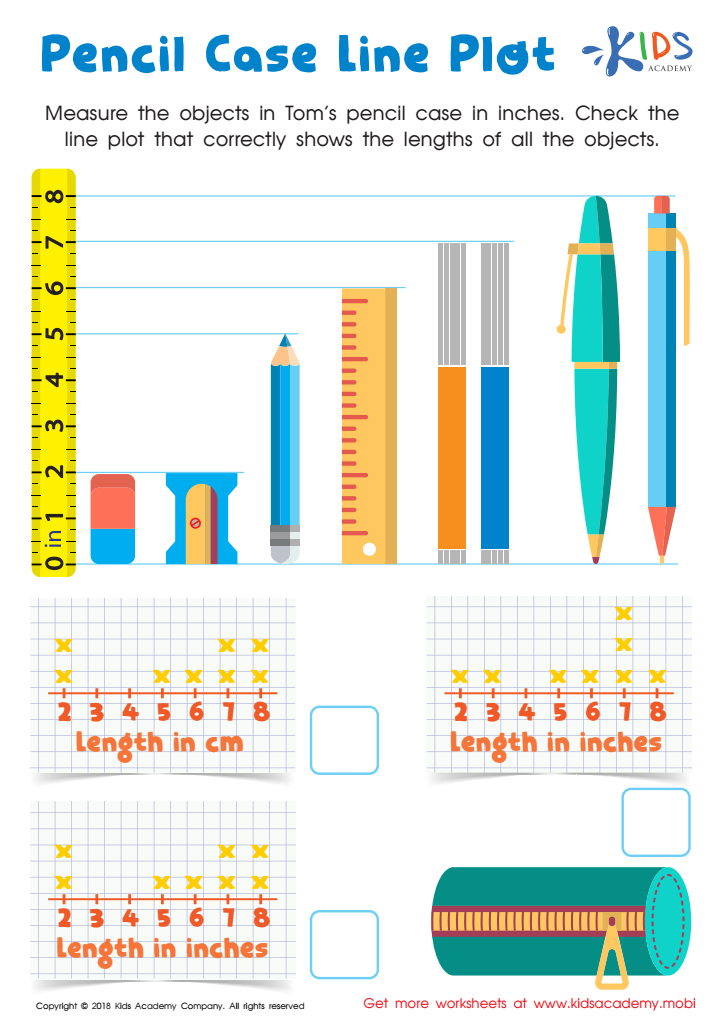
Pencil Case Line Plot Worksheet
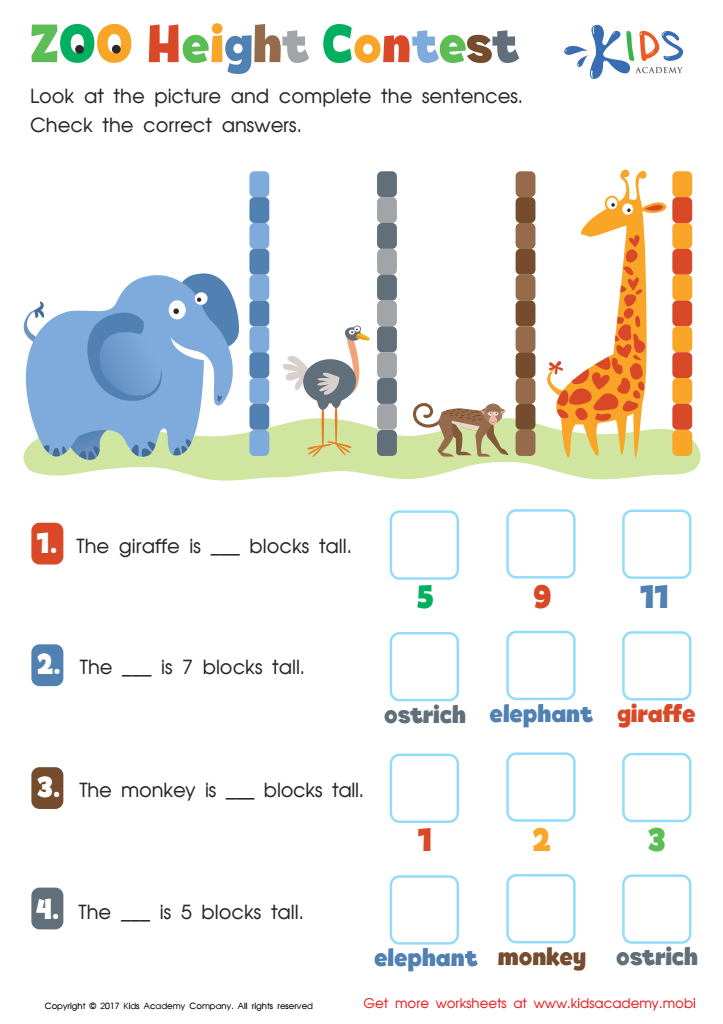
Zoo Height Contest Worksheet
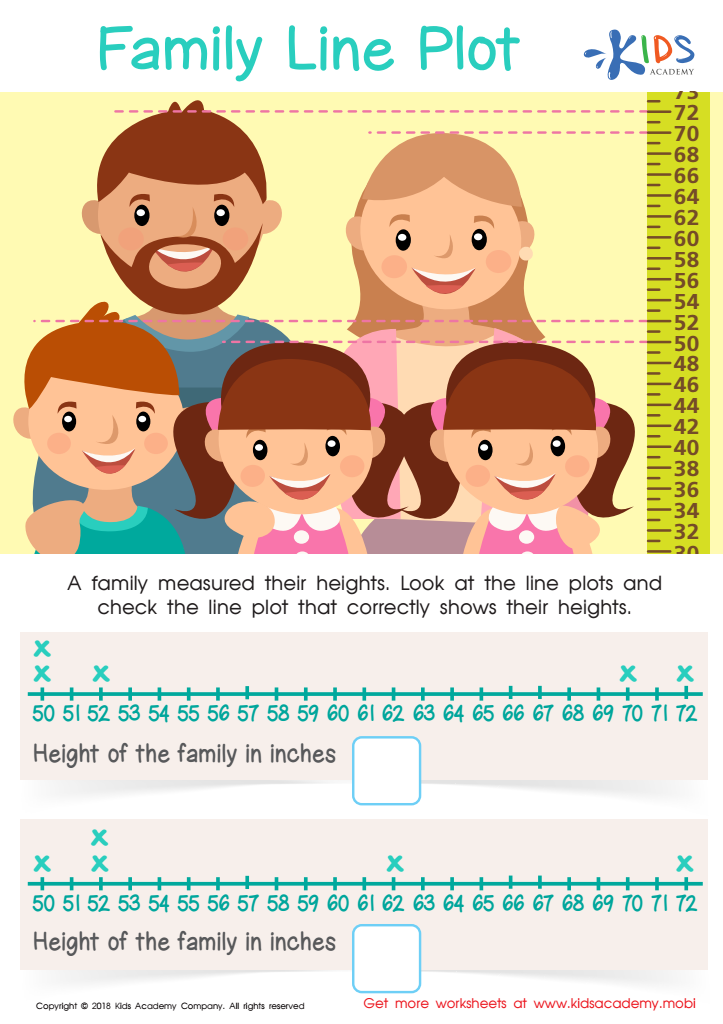
Family Line Plot Worksheet








Interpreting data measurement for children aged 6-8 is crucial as it lays the foundation for essential life skills and academic competence. At this developmental stage, children begin understanding basic mathematical concepts and critical thinking skills, key for their future learning. Parents and teachers should care about this because it teaches children how to collect, organize, and interpret information meaningfully, helping them make sense of the world around them.
Exposure to data measurement helps enhance children's analytical skills. They learn to compare quantities, recognize patterns, and make informed predictions. These activities develop problem-solving capabilities, boosting their confidence in handling everyday tasks. Additionally, early exposure nurtures their ability to manage time, follow instructions, and pay attention to detail, important for their academic success.
Moreover, integrating data measurement into activities can make learning engaging and relatable. For instance, measuring ingredients for a recipe or tracking weather forecasts turns abstract concepts into tangible experiences.
Fostering an understanding of data at an early age also equips children with skills valuable in today's data-driven society. By developing a solid foundation in data interpretation, children are better prepared for more complex subjects in higher grades and future careers. Thus, prioritizing data measurement understanding is an investment in their long-term educational and personal growth.








