Multiplication practice Mixed Times Tables Worksheets for Ages 6-8
9 filtered results
-
From - To
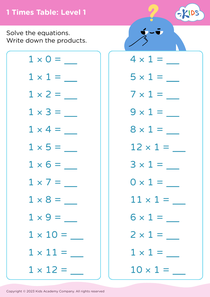
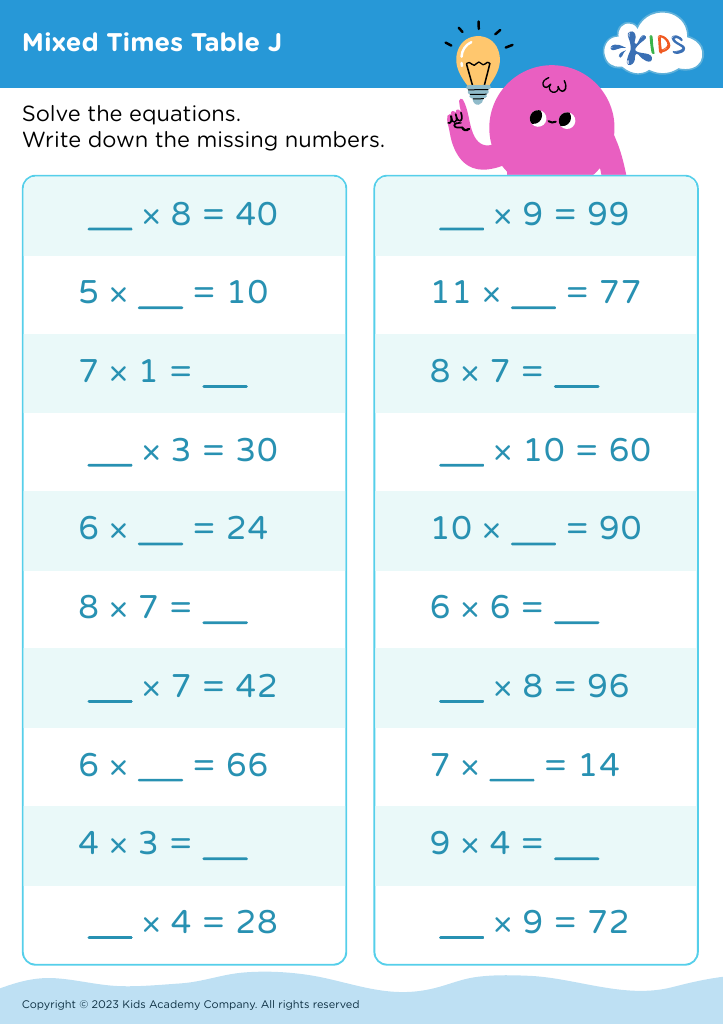
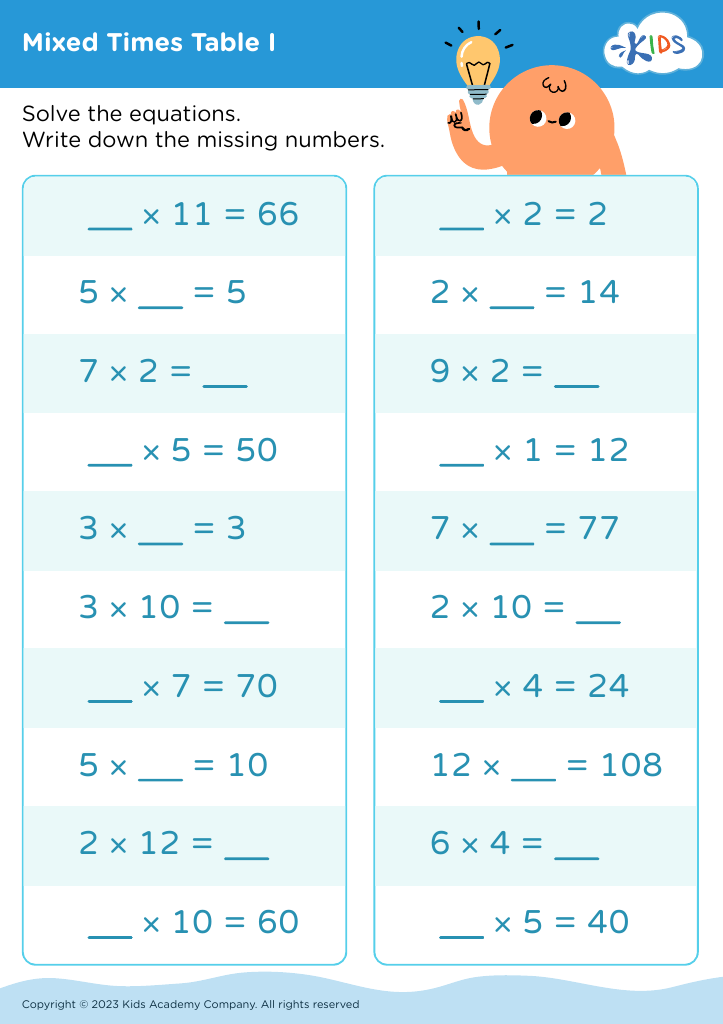
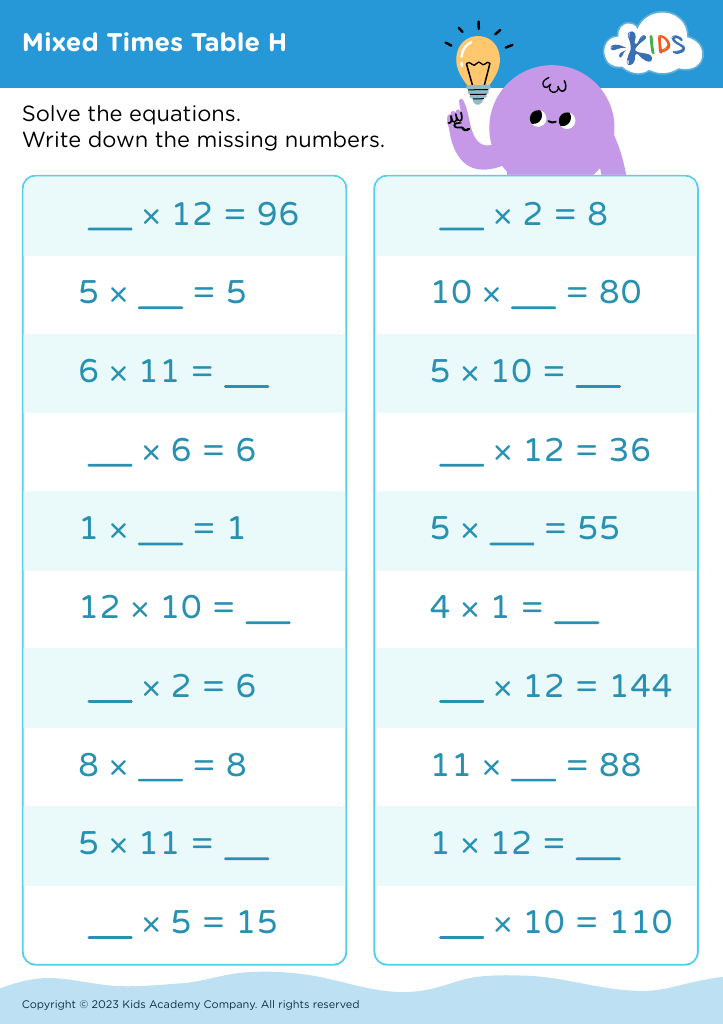
Boost your child's math skills with our engaging "Multiplication Practice: Mixed Times Tables Worksheets" designed for ages 6-8! These fun and educational worksheets help young learners strengthen their multiplication abilities across various times tables. Perfect for developing confidence and proficiency, our printables offer a range of exercises to practice, from simpler calculations to more challenging problems. Ideal for both classroom use and at-home learning, these worksheets provide an interactive way for children to enjoy math, ensuring a strong foundation in multiplication as they progress through their academic journey. Start practicing today and watch your child's math skills soar!
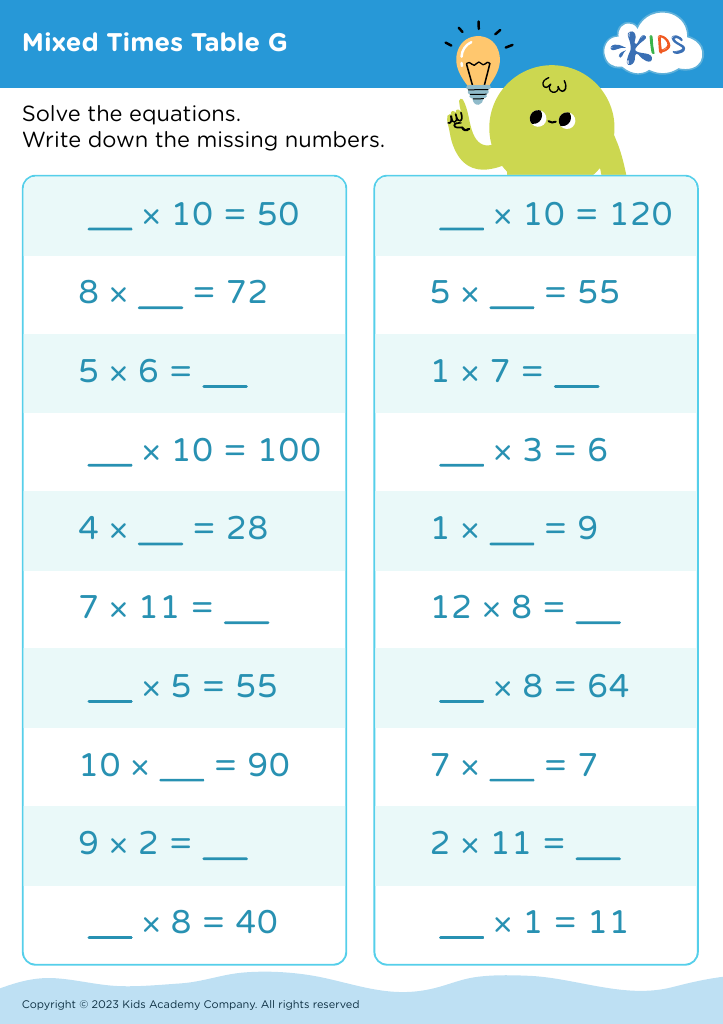
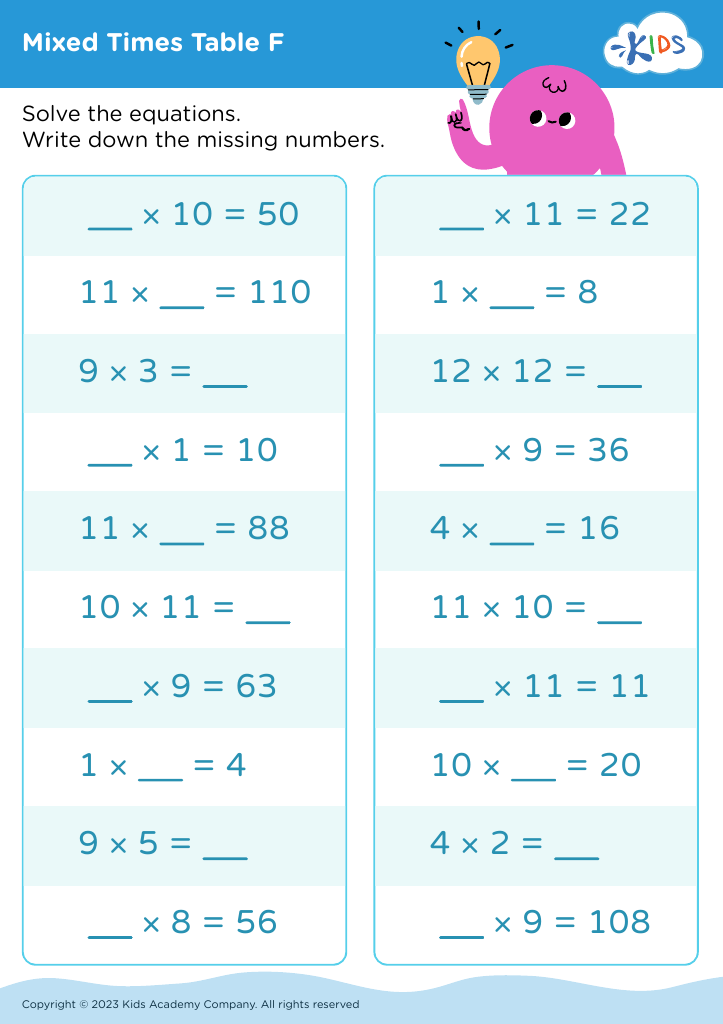
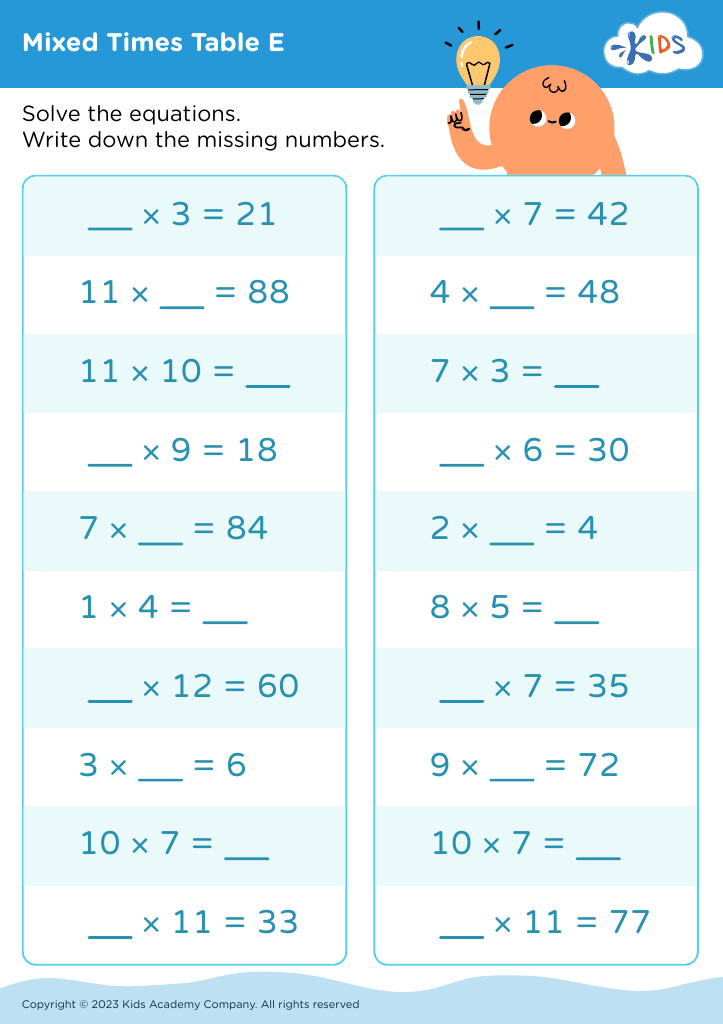
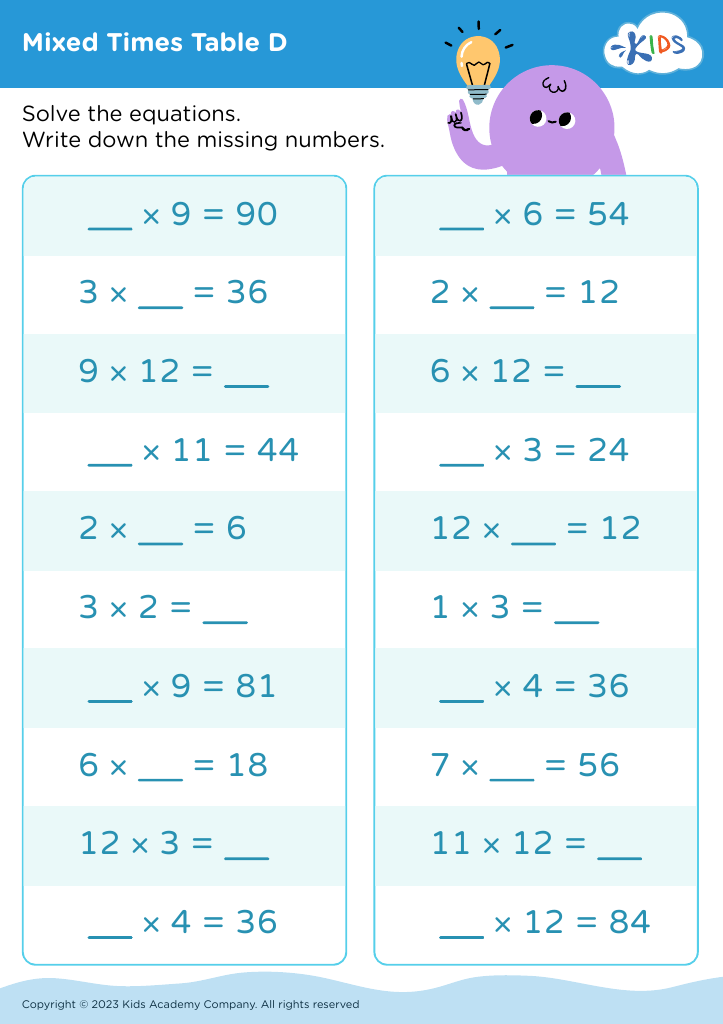
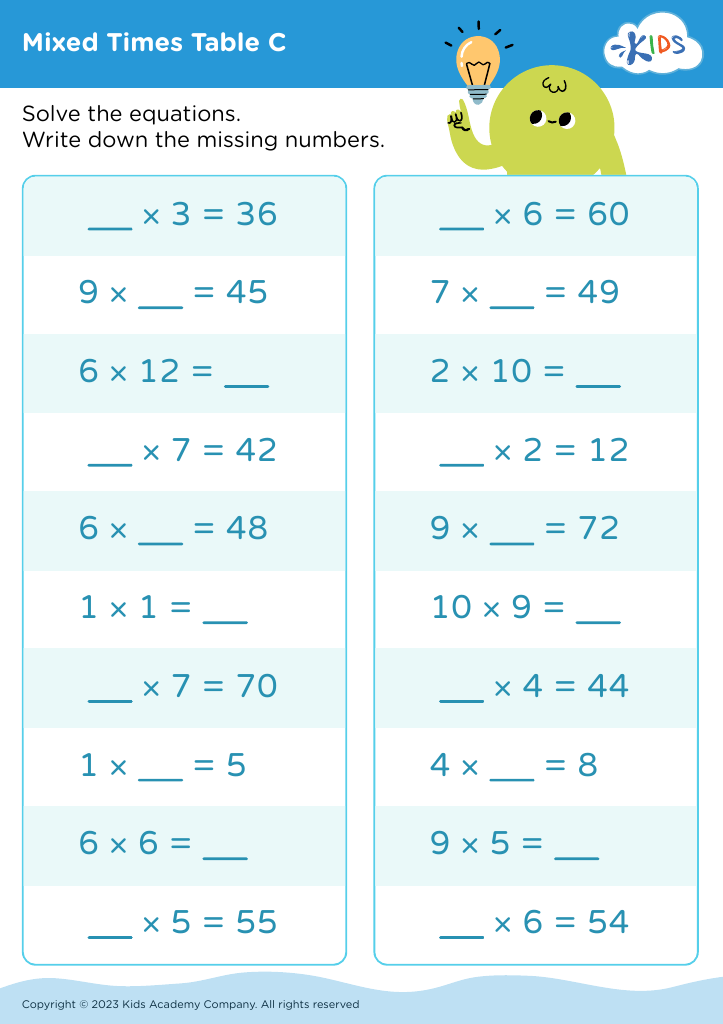
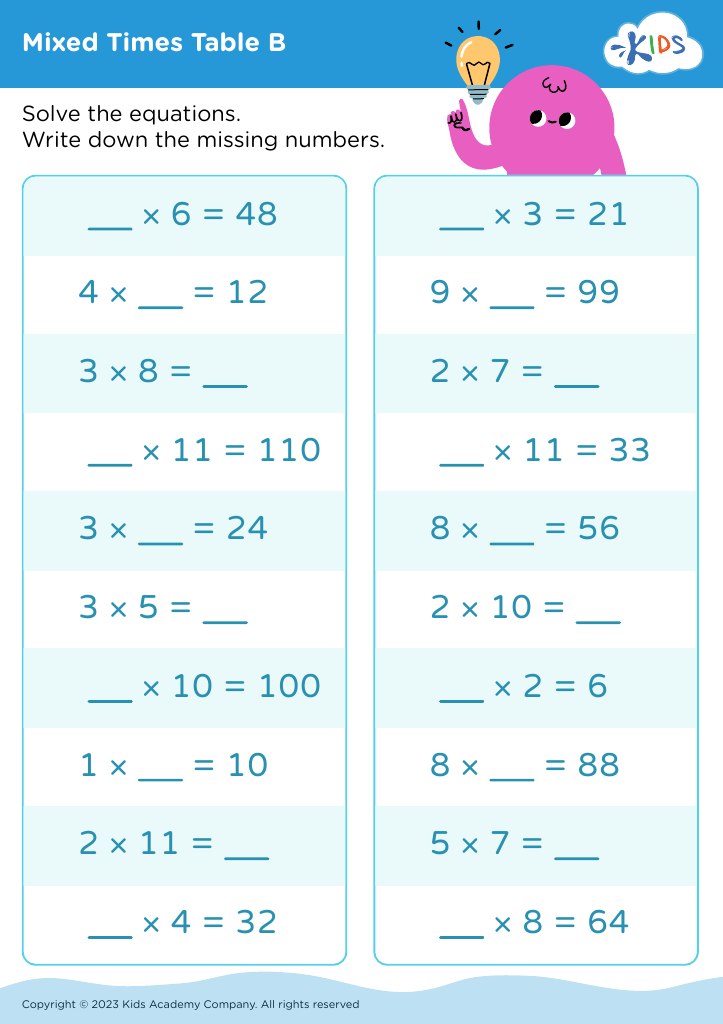


Multiplication practice involving mixed times tables for ages 6-8 is essential for several key reasons. Firstly, mastering multiplication at an early age lays a solid foundation for future math concepts such as division, fractions, and algebra. It also helps improve number sense and mental calculation skills, making mathematics less intimidating and more accessible to students as they progress in school.
Secondly, early multiplication practice supports cognitive development. It aids in enhancing memory, problem-solving skills, and logical thinking. Recalling multiplication facts quickly can boost a child’s confidence, not just in math but in their overall academic abilities.
Moreover, incorporating mixed times tables in practice sessions adds a layer of complexity that promotes greater understanding. Unlike repetitive drilling, mixed tables engage students in recognizing patterns and relationships between numbers, which are crucial for higher-order mathematical thinking.
Lastly, consistent practice with multiplication fosters academic discipline and a positive learning ethic. It encourages students to commit to learning tasks daily, understand the importance of practice, and take charge of their learning process. Thus, parents and teachers play a pivotal role in ensuring that children have the opportunity and guidance to engage meaningfully with multiplication practice, setting the stage for long-term academic success.