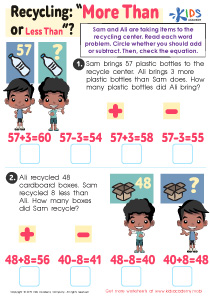
Hand-eye Coordination Numbers 11–20 Worksheets for Ages 6-8
3 filtered results
-
From - To
Our "Hand-eye Coordination Numbers 11–20 Worksheets" are designed specifically for children aged 6-8 to enhance their motor skills while learning numbers. These engaging printables offer a variety of fun activities, such as tracing, matching, and counting, to help young learners boost their hand-eye coordination and numerical understanding. Each worksheet promotes focus and precision, aiding in the development of critical fine motor skills necessary for writing and other daily tasks. Perfect for classroom use or home practice, these worksheets ensure kids build a strong foundation in math while refining essential life skills. Download now to support your child’s growth!
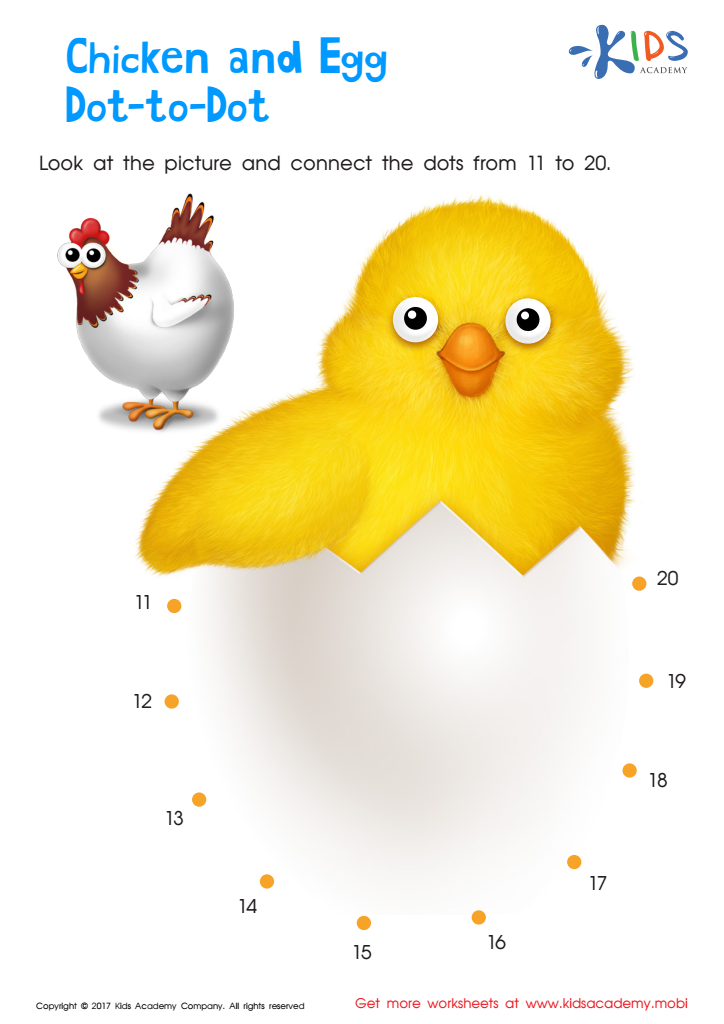
Ordering 11–20: Chicken & Egg Dot–to–dot Worksheet
 Assign to My Students
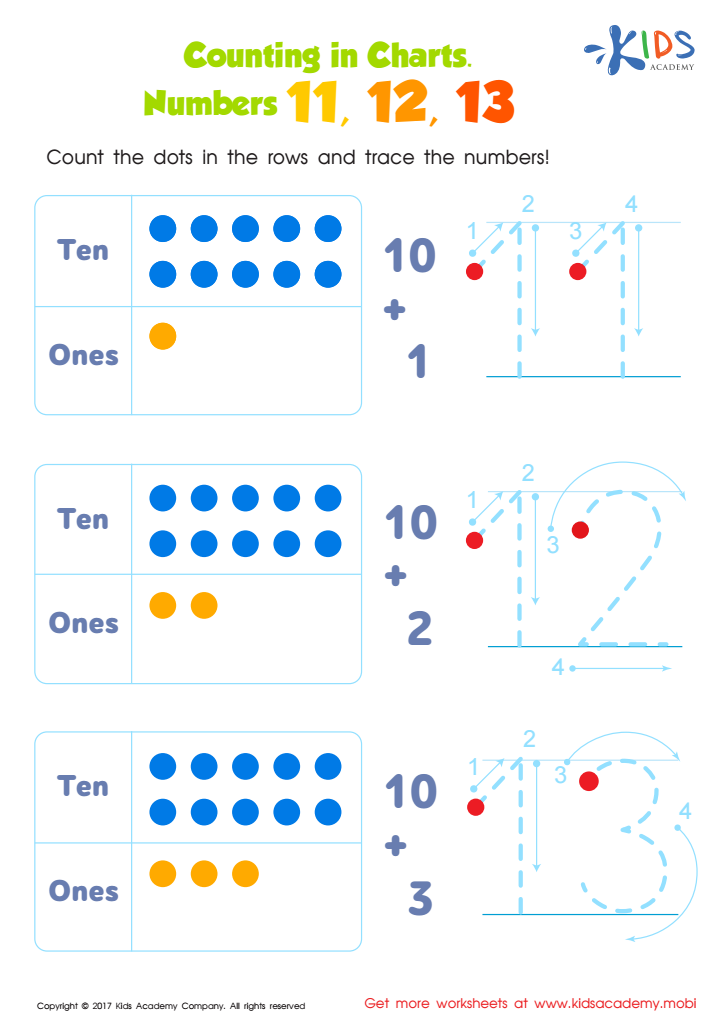
Number Tracing Worksheet For Kindergarten
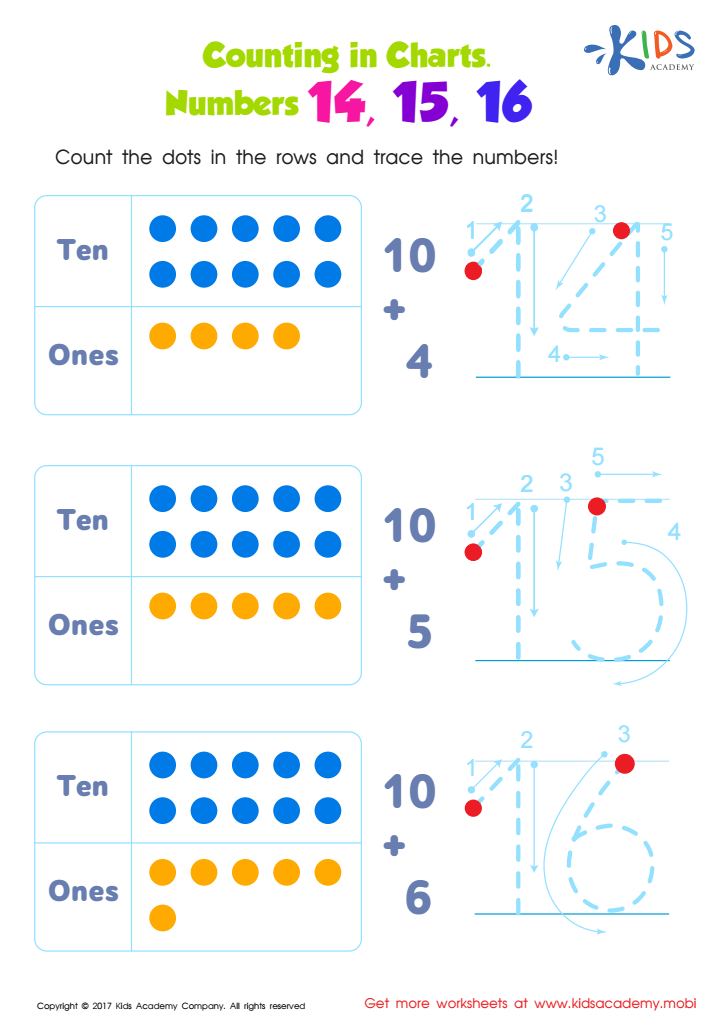
Number Tracing Worksheet



Hand-eye coordination is crucial for children, specifically those aged 6-8, as it underpins many essential daily and academic activities. Mastering Hand-eye Coordination Numbers 11-20 during this formative stage significantly impacts their cognitive and physical development.
Firstly, hand-eye coordination involves the ability to sync vision with hand movements, an essential skill for fine motor tasks such as writing numbers which are foundational in early math learning. When children practice writing numbers 11-20, they enhance their ability to control hand movements precisely and develop better handwriting, which anywhere reverberates in improved academic performance.
Secondly, fine-tuning hand-eye coordination boosts numerical competence. Understanding and manipulating numbers 11-20 involves visualizing and physically interacting with numerical concepts, like grouping (two-digit comprehension) and sequencing. These early math skills are crucial for more complex problem-solving in higher grades.
Additionally, this developmental focus is critical for self-efficacy and confidence. As children successfully write, draw, or interact with numbers 11-20, they experience a sense of accomplishment, spurring further learning enthusiasm.
Thus, dedicating attention to hand-eye coordination activities targeting numbers 11-20 safeguards not only immediate academic competence but also lays down a vast spectrum of lifelong learning and motor skills, buttressing overall growth and well-being.