Problem-Solving Skills Place Value Worksheets for Ages 6-8
5 filtered results
-
From - To
Our Problem-Solving Skills Place Value Worksheets for Ages 6-8 offer a fun and engaging way for young learners to master essential math skills. These expertly designed worksheets help children understand and work with place values, enhancing their problem-solving abilities. Colorful and interactive exercises make learning an enjoyable adventure, while promoting critical thinking and analytical skills. Ideal for classroom use or home practice, these worksheets support Common Core Standards and ensure students build a solid math foundation. Give your child the tools they need to succeed in math with our comprehensive, easy-to-follow place value activities.
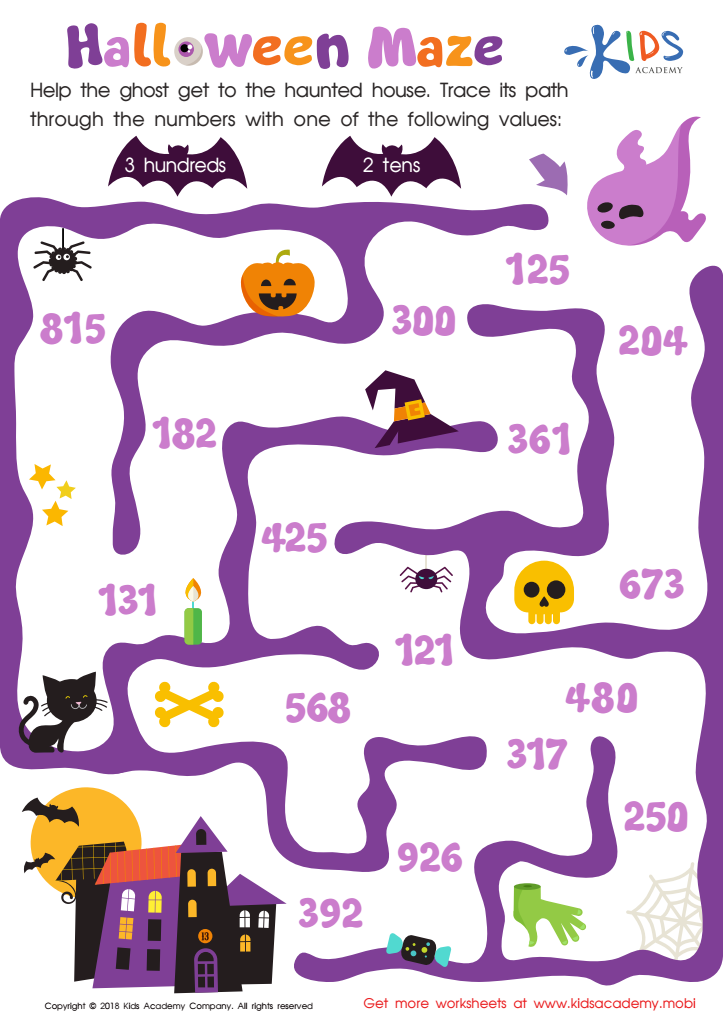
Place Value: Halloween Maze Worksheet
 Assign to My Students
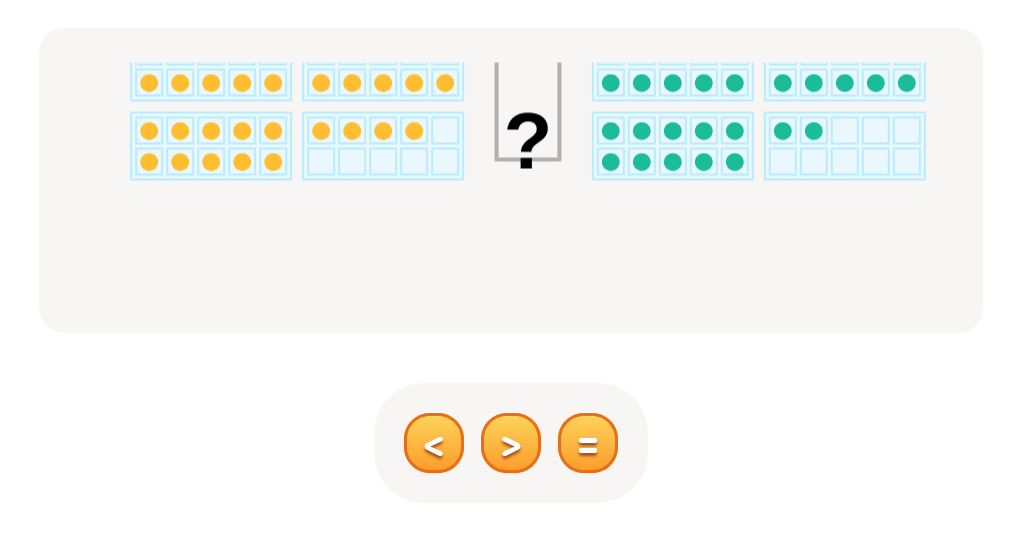

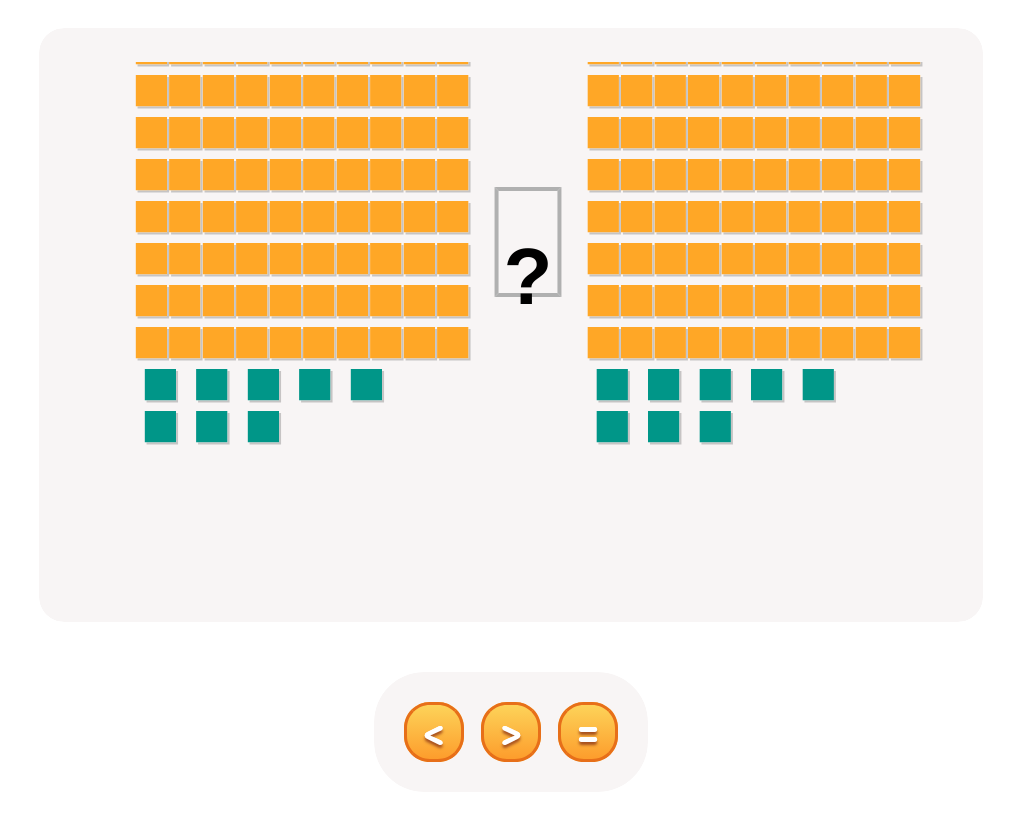
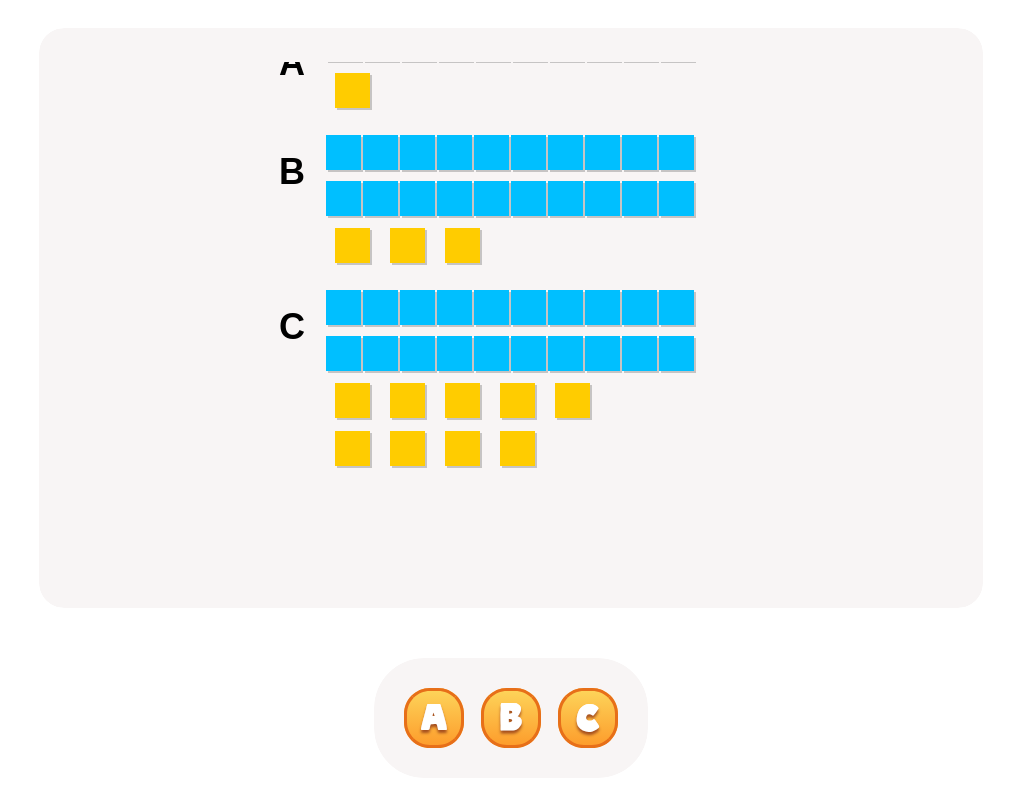


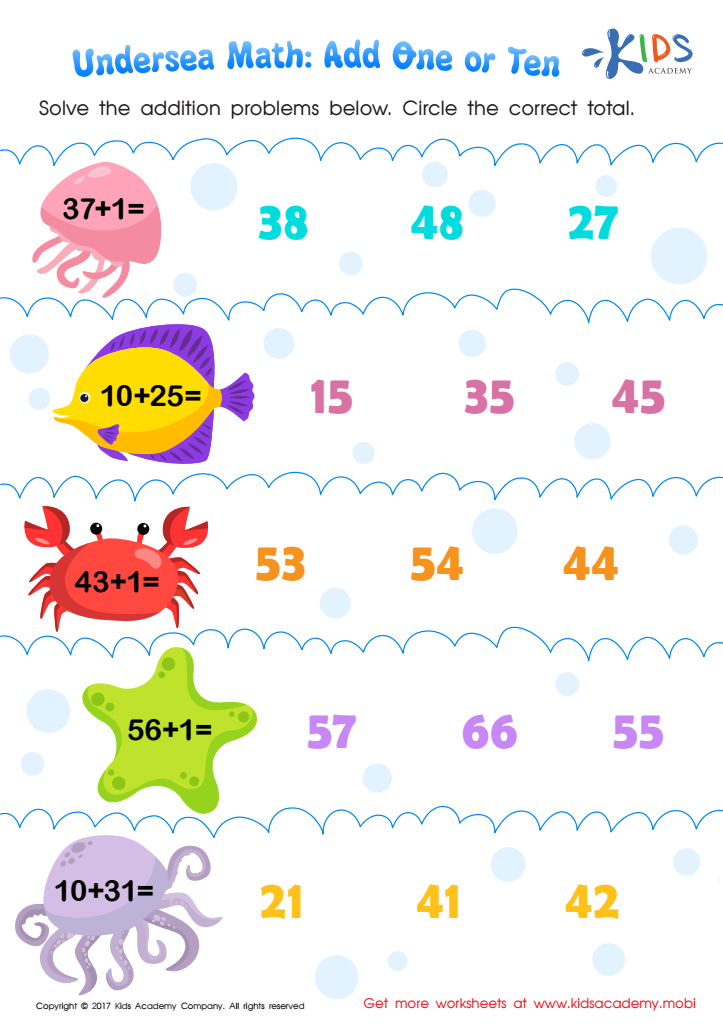
Undersea Math Worksheet
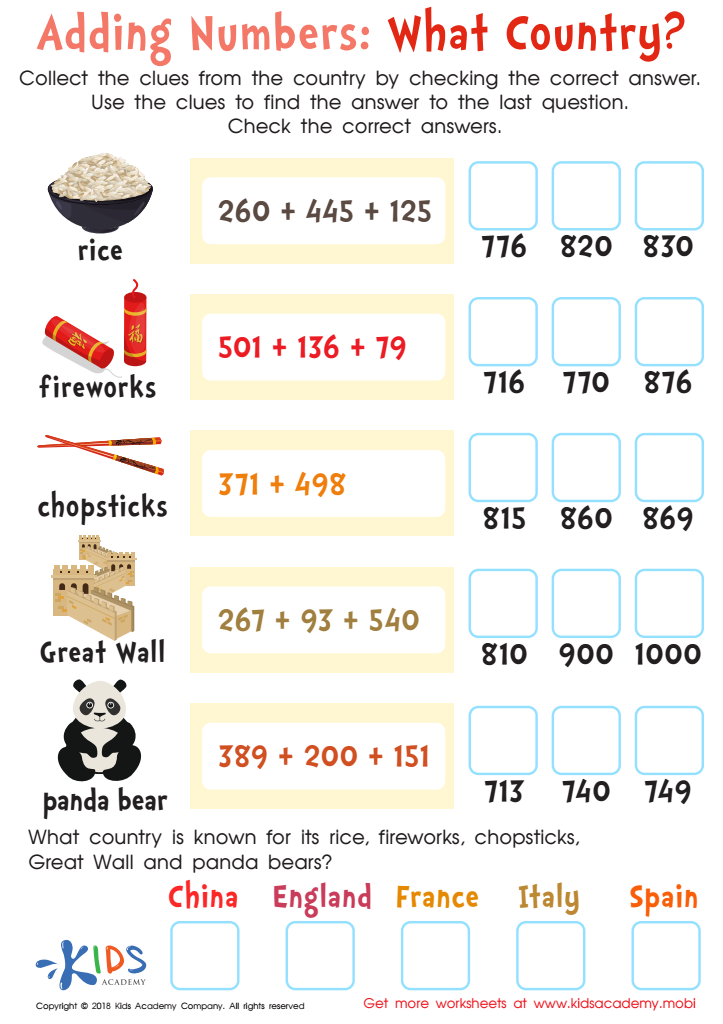
Adding Numbers: What Country Worksheet
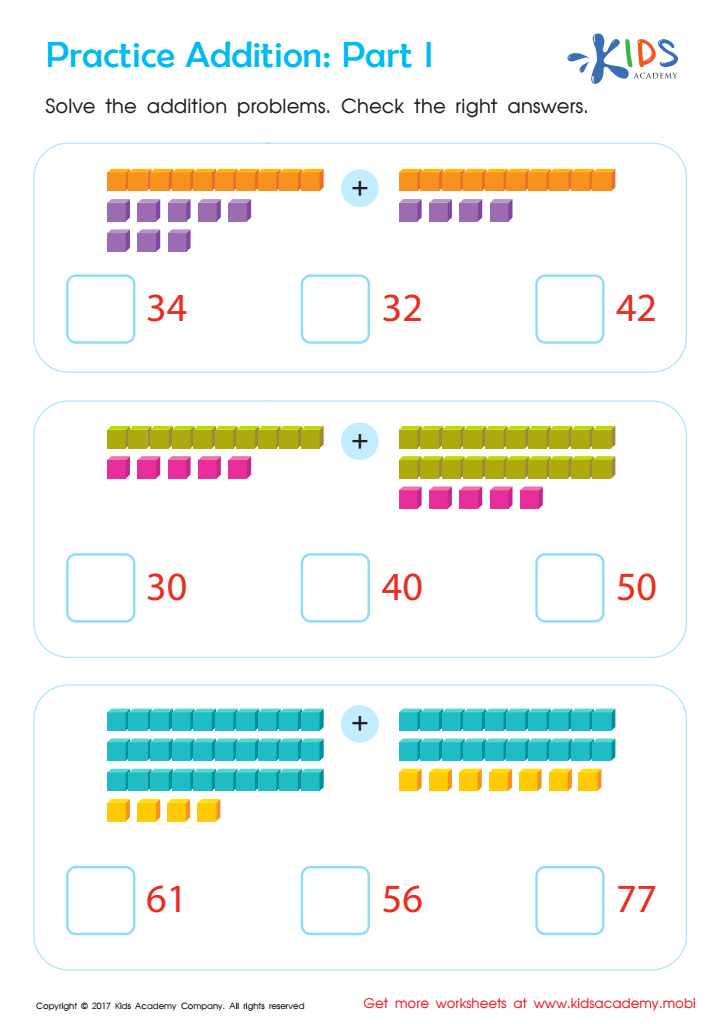
Practice Addition: Part 1 Worksheet
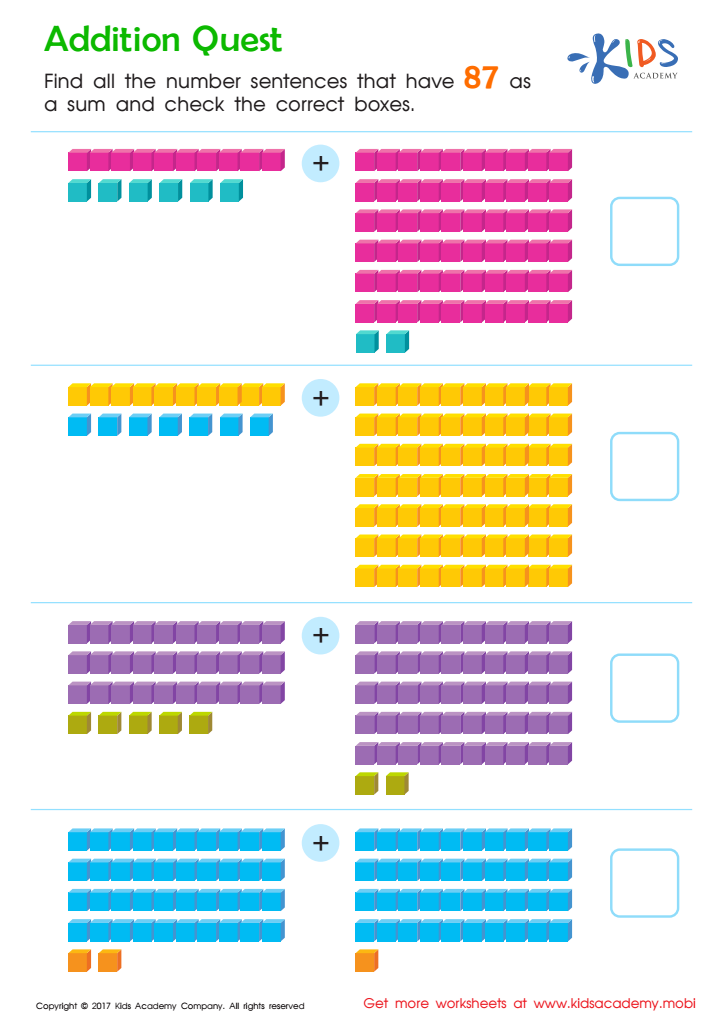
Addition Quest Worksheet: Part 1








Problem-solving skills and understanding place value are foundational for children aged 6-8 as they set the stage for all future mathematical understanding. Place value is more than just learning to count; it is about understanding the value of each digit in a number, which is crucial for performing operations like addition, subtraction, and eventually more complicated tasks such as multiplication and division. Mastery of place value enhances a child’s ability to think abstractly about numbers and their relationships.
Problem-solving skills, on the other hand, enable children to apply mathematical concepts to real-world situations. When children engage in solving problems, they learn to think critically, reason logically, and develop persistence. This not only aids them in tackling mathematical challenges but also equips them with essential life skills like decision-making and resourcefulness.
Both sets of skills promote cognitive development and confidence. When children understand place value and are proficient problem solvers, they are more likely to enjoy math and feel capable, diminishing math anxiety and fostering a positive learning environment. By caring about developing these skills early on, parents and teachers lay a firm groundwork for academic success and lifelong learning, empowering children to excel in various fields and everyday tasks.








