
Basic Math Skills Sorting Worksheets for Ages 6-8
3 filtered results
Difficulty Level
Grade
Age
-
From - To
Subject
Activity
Standards
Enhance your child's mathematical abilities with our Basic Math Skills Sorting Worksheets designed specifically for ages 6-8! These engaging worksheets focus on essential sorting concepts, introducing young learners to key math skills through fun and interactive activities. Your child will improve their understanding of numbers, shapes, and patterns while developing critical thinking and problem-solving skills. With vibrant graphics and enjoyable exercises, these worksheets make learning math enjoyable. Perfect for both classroom and at-home use, these resources promote independent learning and reinforce foundational math knowledge. Start your child's math journey today with our targeted sorting worksheets to set them up for future success!
Favorites
With answer key
Interactive
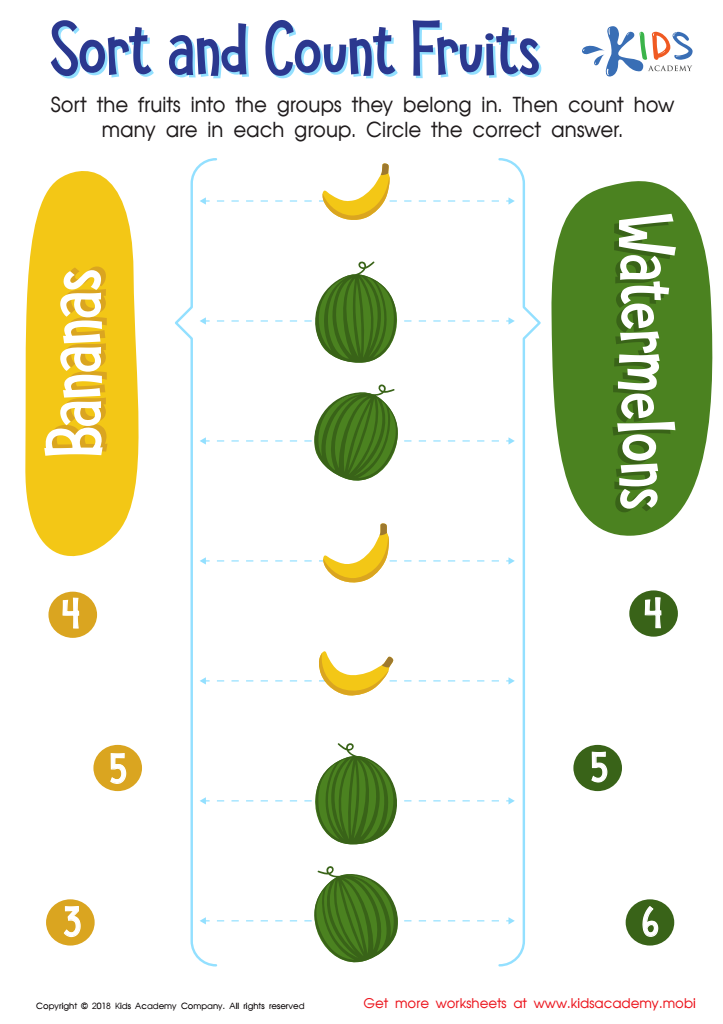
Sort and Count Fruits Worksheet
Allow your children to hone their critical thinking and number reasoning skills with this free worksheet. They'll sort, count, and trace fruits while learning basic number sense. A fun, delicious learning experience with familiar pictures they'll love.
 Assign to My Students
Sort and Count Fruits Worksheet
Worksheet
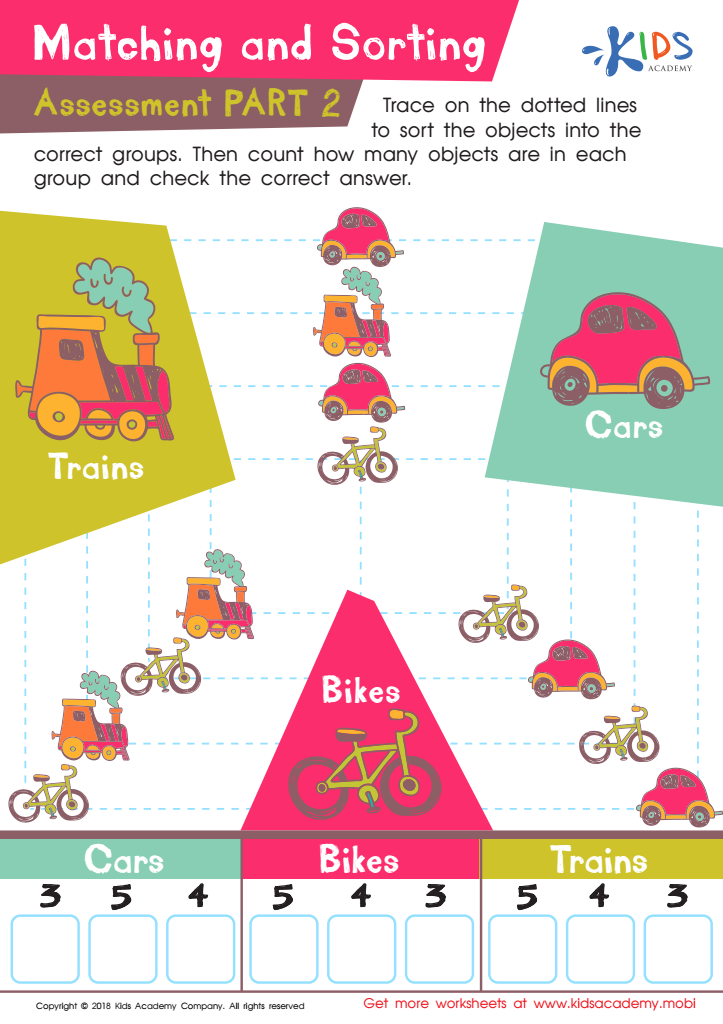
Matching and Sorting for Kindergarten: Assessment 2 Worksheet
This assessment tests matching, sorting and fine motor skills. It challenges kids to identify properties and attributes of pictures, trace guidelines and count the types of vehicles. It's a great way to practice basic number sense and hone in on important foundational skills.
Matching and Sorting for Kindergarten: Assessment 2 Worksheet
Worksheet
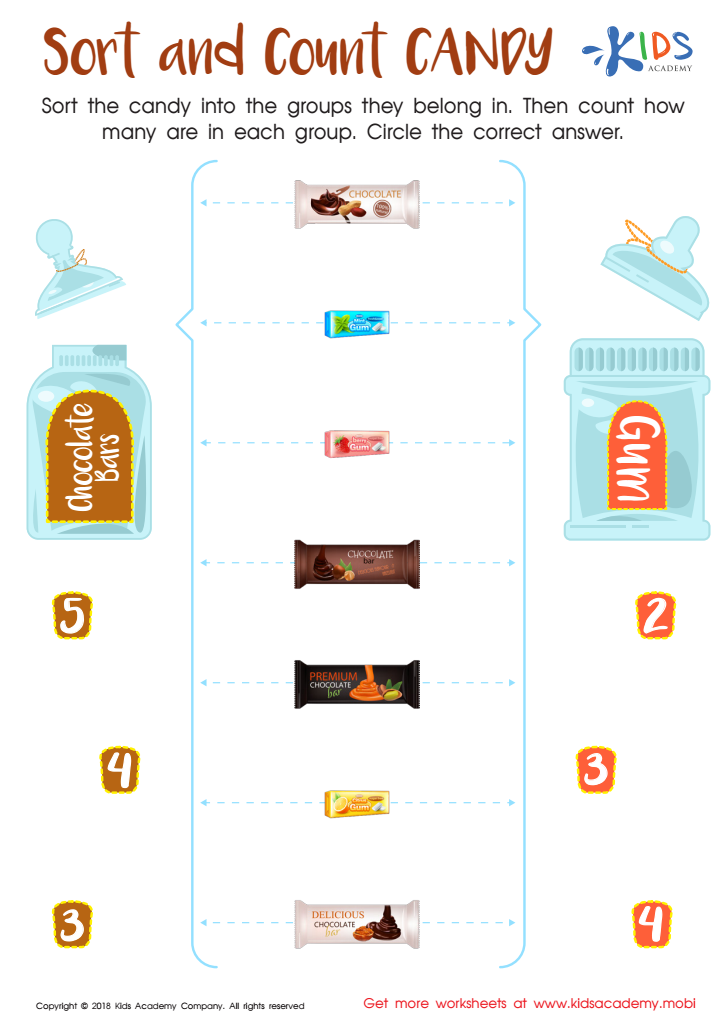
Sort and Count Candy Worksheet
Sort chocolate and candy with your kids! Help them use recognizable items and pictures to sort, practice counting with one-to-one representation, and develop their fine motor skills with the traceable lines. Download this free worksheet to get started. Yum!
Sort and Count Candy Worksheet
Worksheet
Join Kids Academy for Free
Who is primarily going to use this learning content?




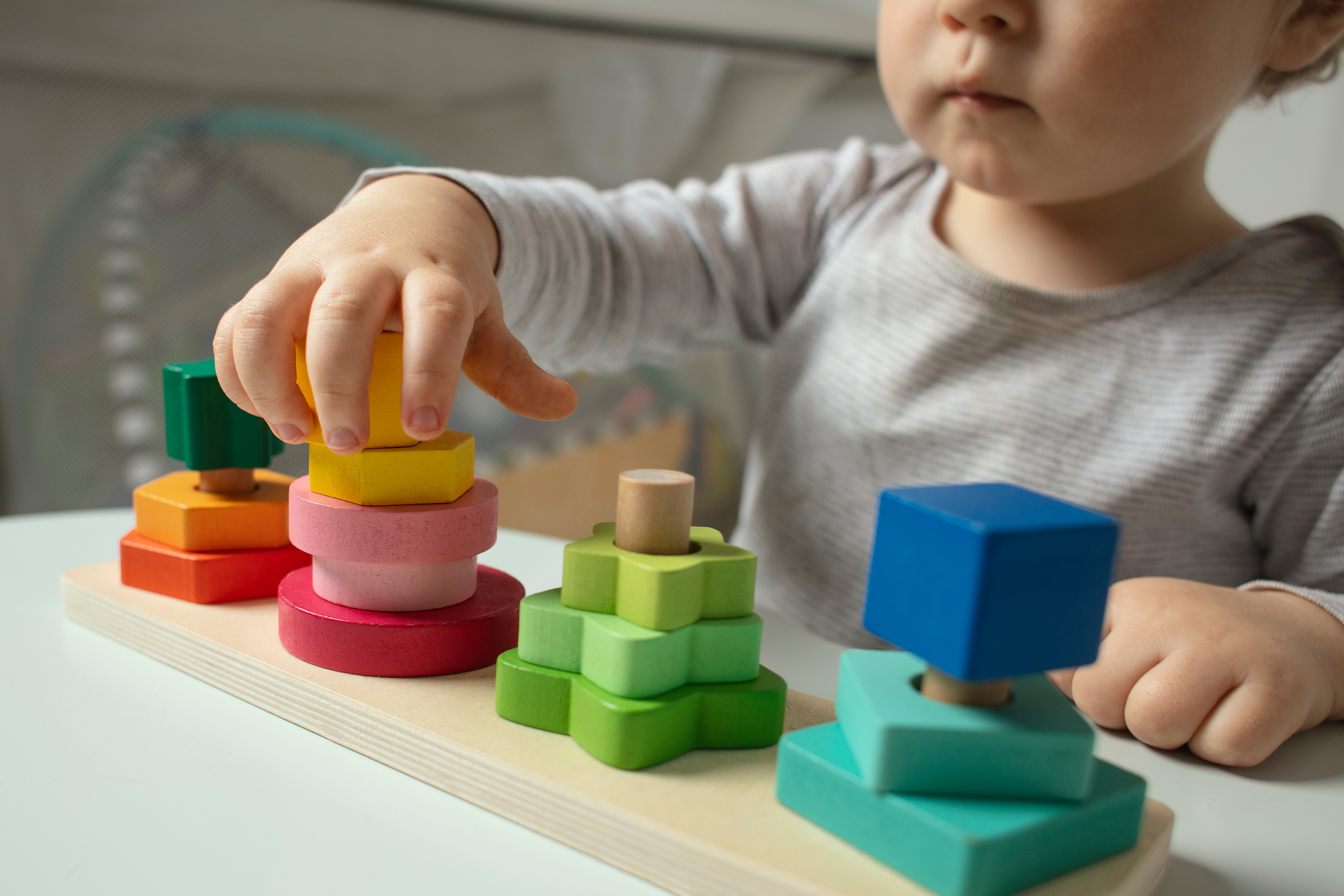



Basic math skills, particularly sorting, are foundational for children ages 6-8. At this stage, young learners are developing cognitive abilities that lay the groundwork for more complex mathematical concepts. Sorting skills enhance critical thinking, problem-solving, and organizational abilities, helping children make sense of their environment.
Parents and teachers should care about sorting because it introduces children to the concept of categorization, which is essential in mathematics. By engaging in activities that involve sorting objects by color, shape, size, or other attributes, children learn to recognize patterns and relationships, setting the stage for future skills like addition, subtraction, and classification.
Moreover, sorting activities can support language development, as children use vocabulary to describe their sorting criteria and explain their reasoning. This interactive practice not only develops math skills but also boosts communication abilities.
Implementing sorting tasks in everyday activities, such as organizing toys or clothing, makes learning fun and practical. Ultimately, attention to basic math skills like sorting fosters a positive attitude towards learning, ensuring children develop confidence and competence in their mathematical journey. Building these skills early can lead to greater success in STEM areas later in life.








