Basic Math Skills Subtraction Worksheets for Ages 6-8
10 filtered results
-
From - To
Our "Basic Math Skills Subtraction Worksheets for Ages 6-8" are specially designed to help young learners build a strong foundation in subtraction. These engaging worksheets provide fun, interactive practice that reinforces essential math skills. Perfect for classroom use or extra practice at home, our worksheets cover basic subtraction concepts through diverse exercises like word problems, number lines, and visual aids. By regularly working on these materials, children can boost their confidence and master subtraction with ease. Suitable for ages 6-8, our worksheets support parents and teachers in making math a delightful and educational experience for kids.
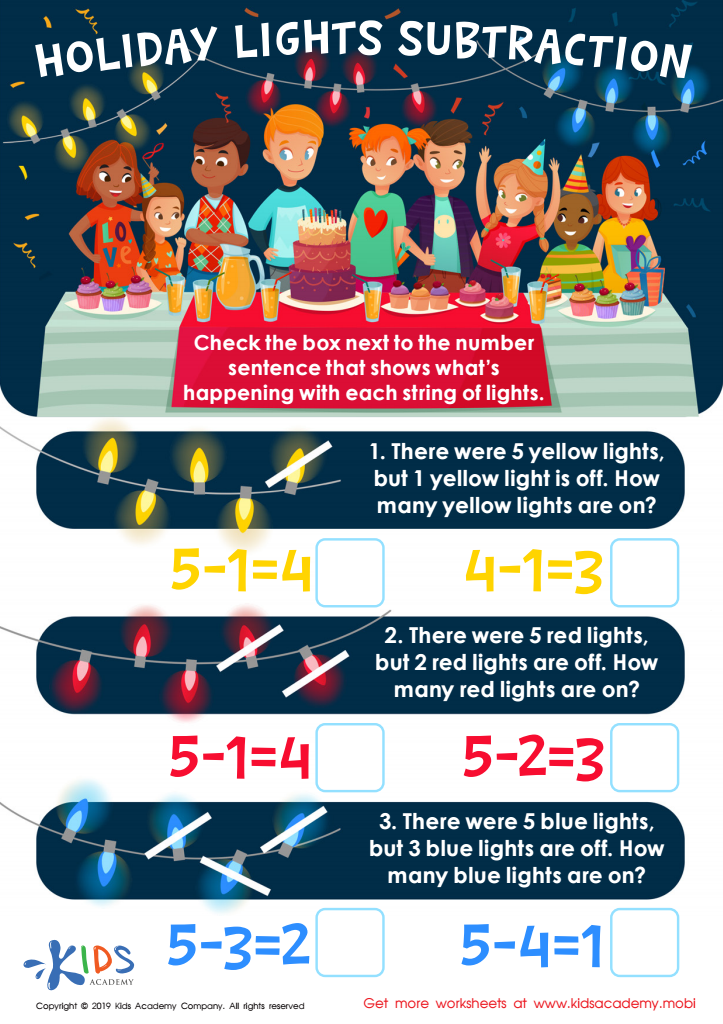
Holiday Lights Subtraction Worksheet
 Assign to My Students
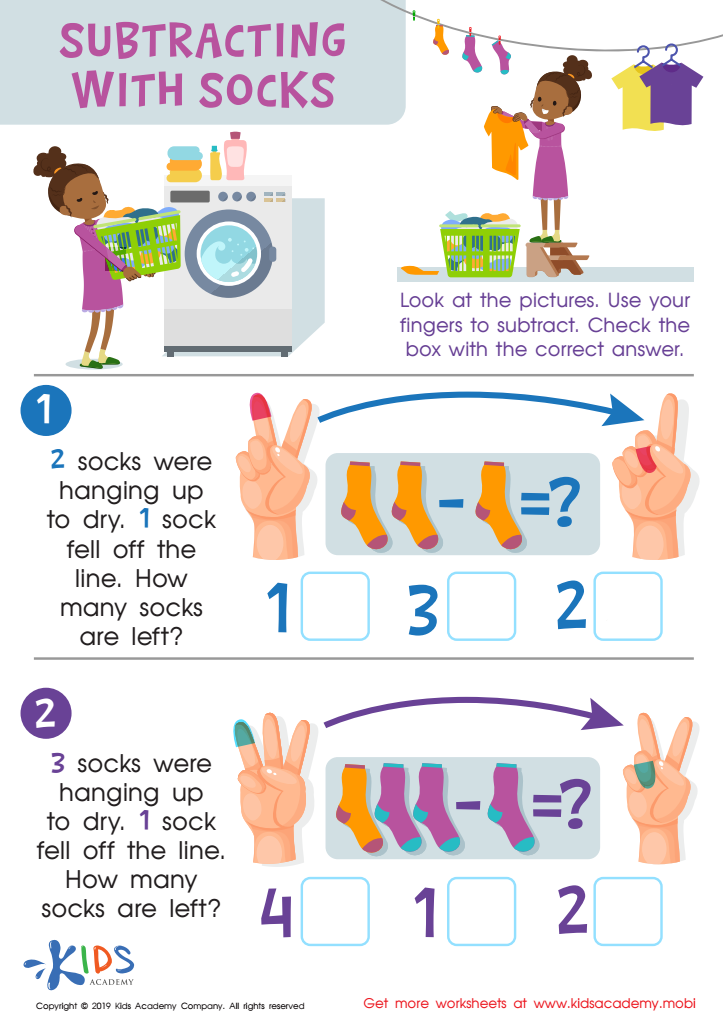
Subtracting Socks Worksheet
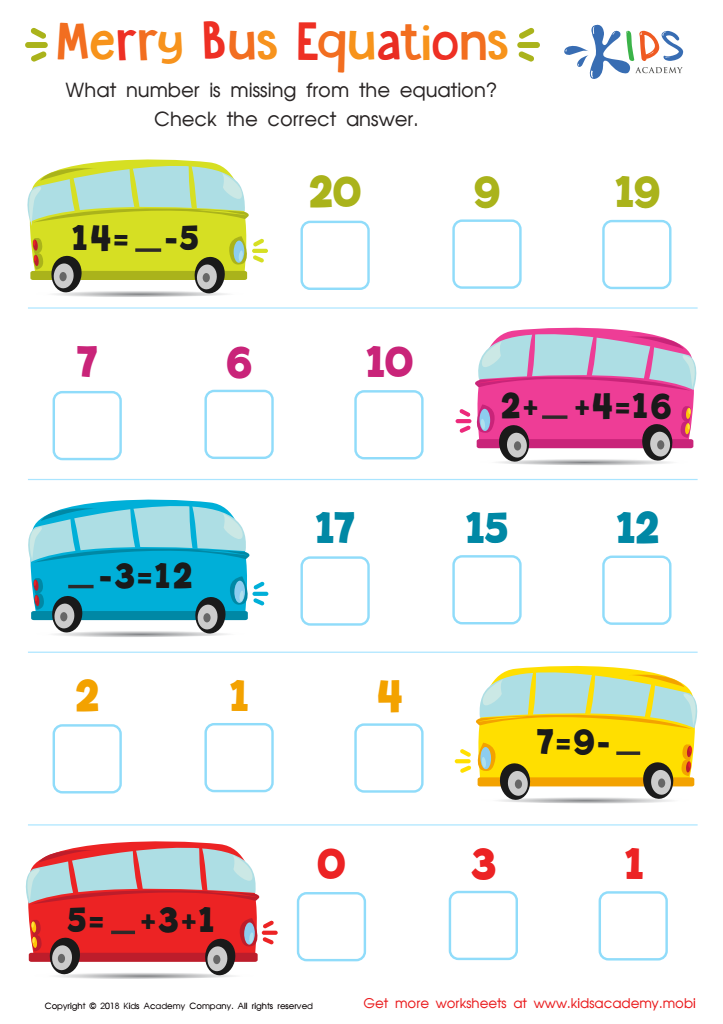
Merry Bus Equations Worksheet
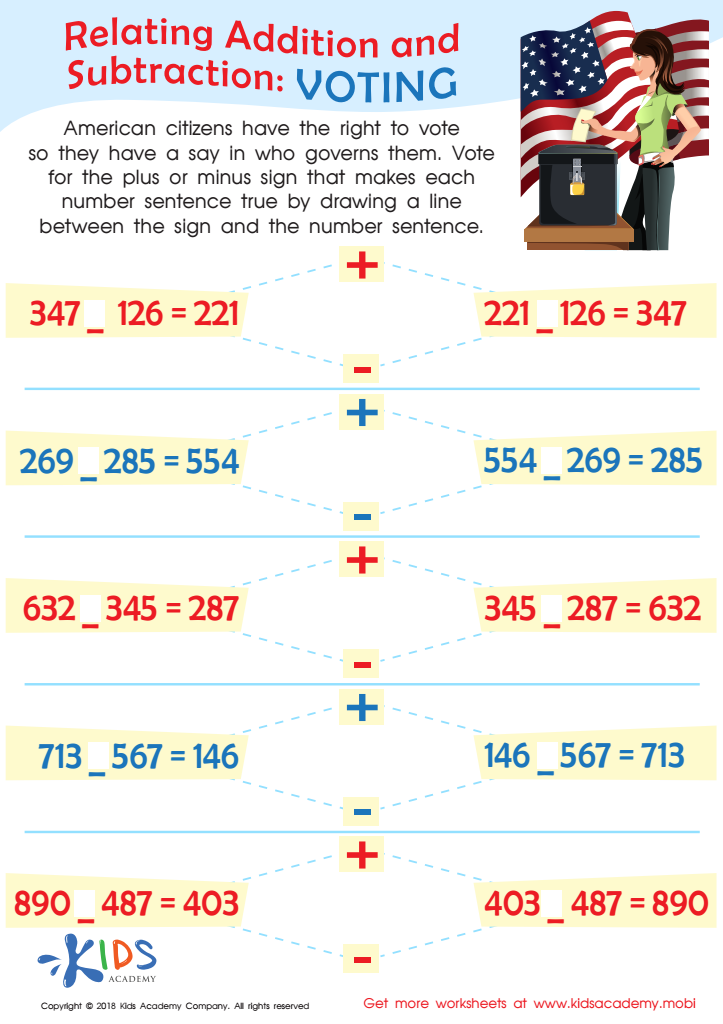
Voting Worksheet
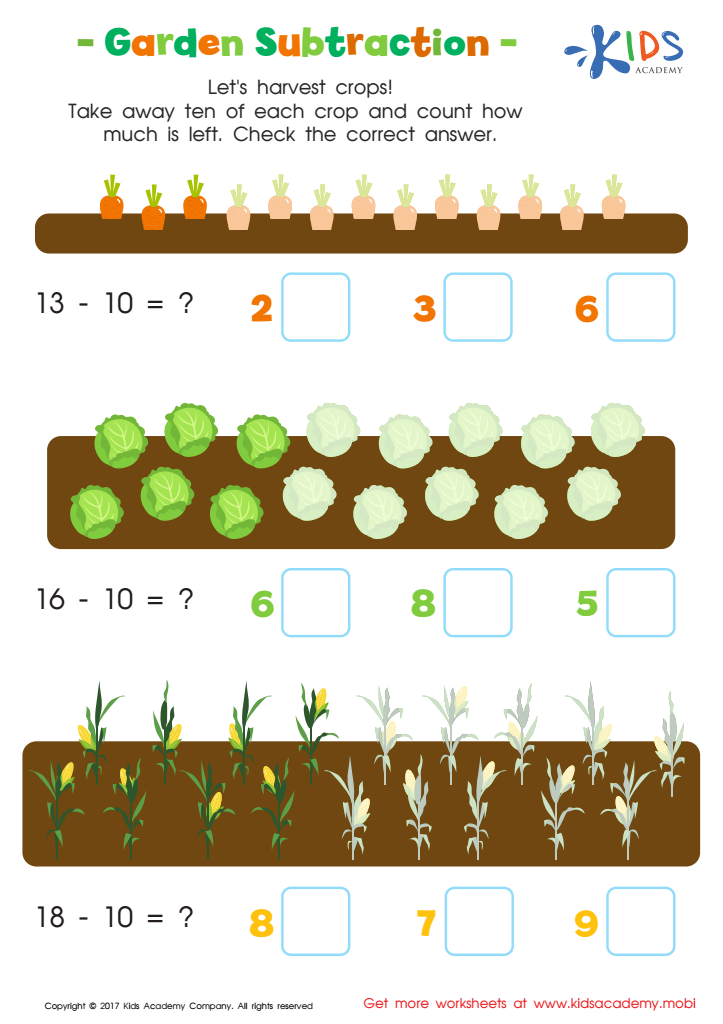
Garden Subtraction Worksheet
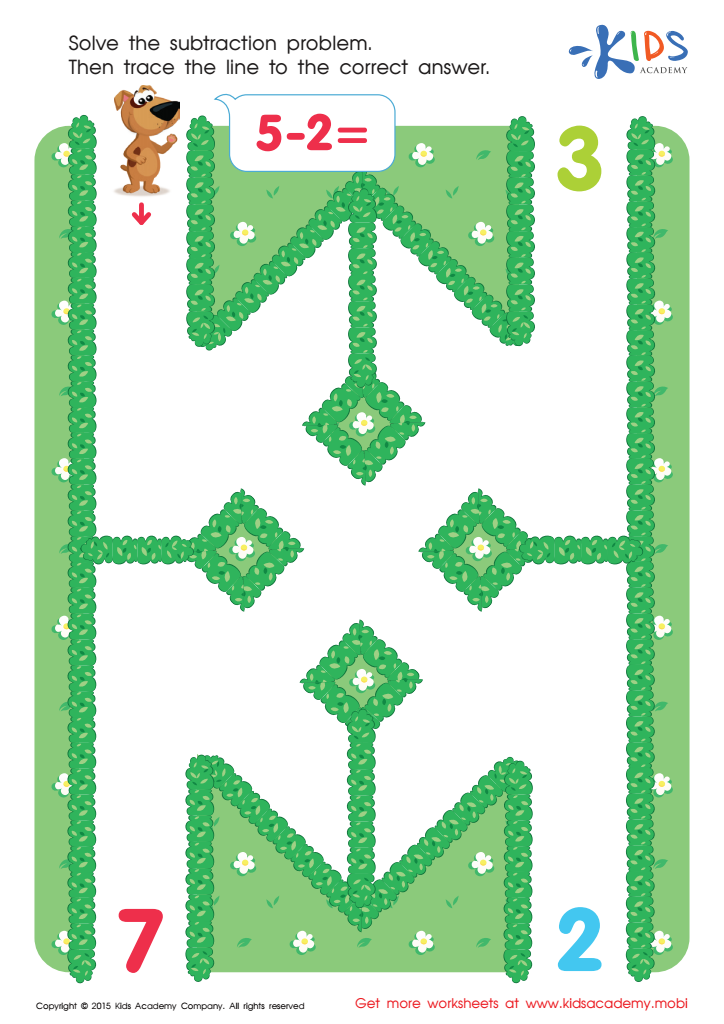
Five Minus Two Worksheet
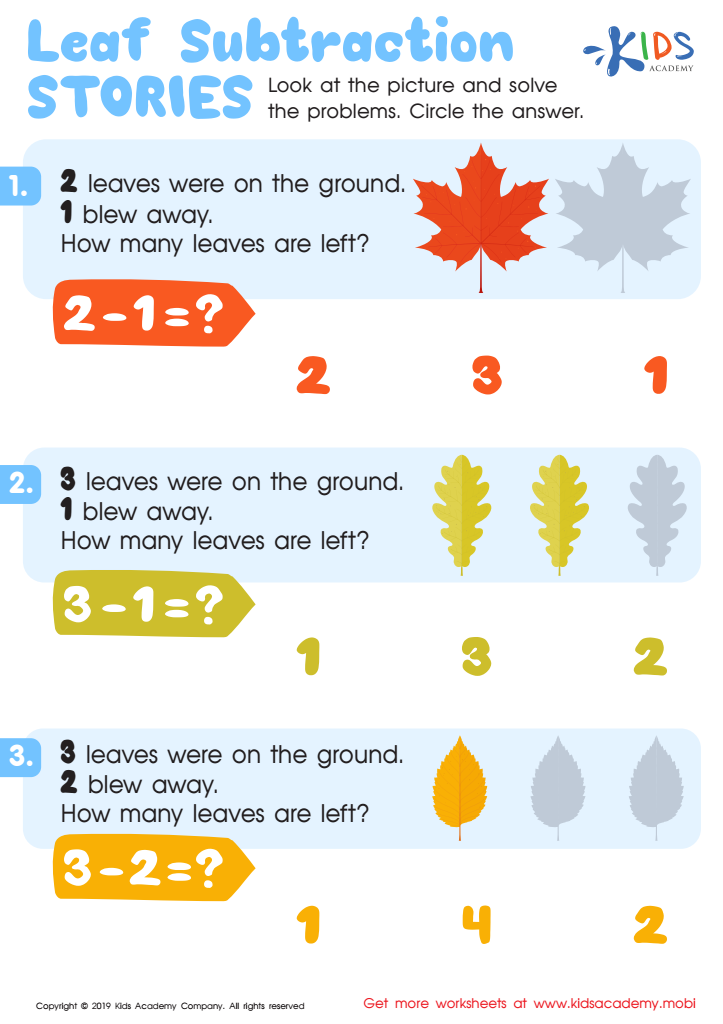
Leaf Subtraction Stories Worksheet
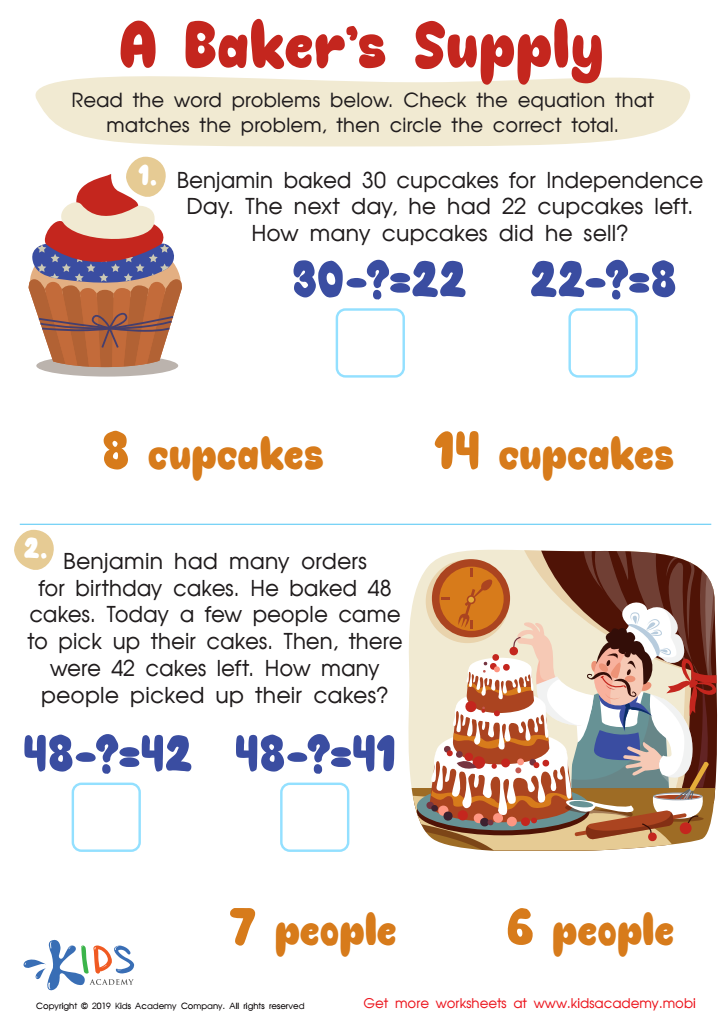
A Baker's Supply Worksheet
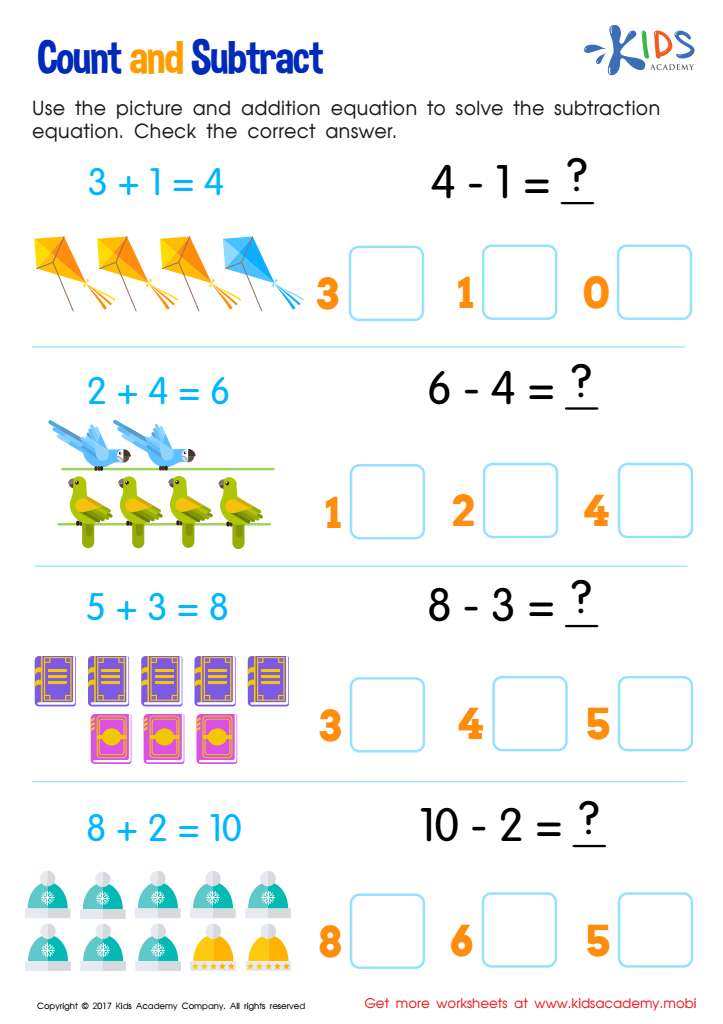
Count and Subtract Worksheet
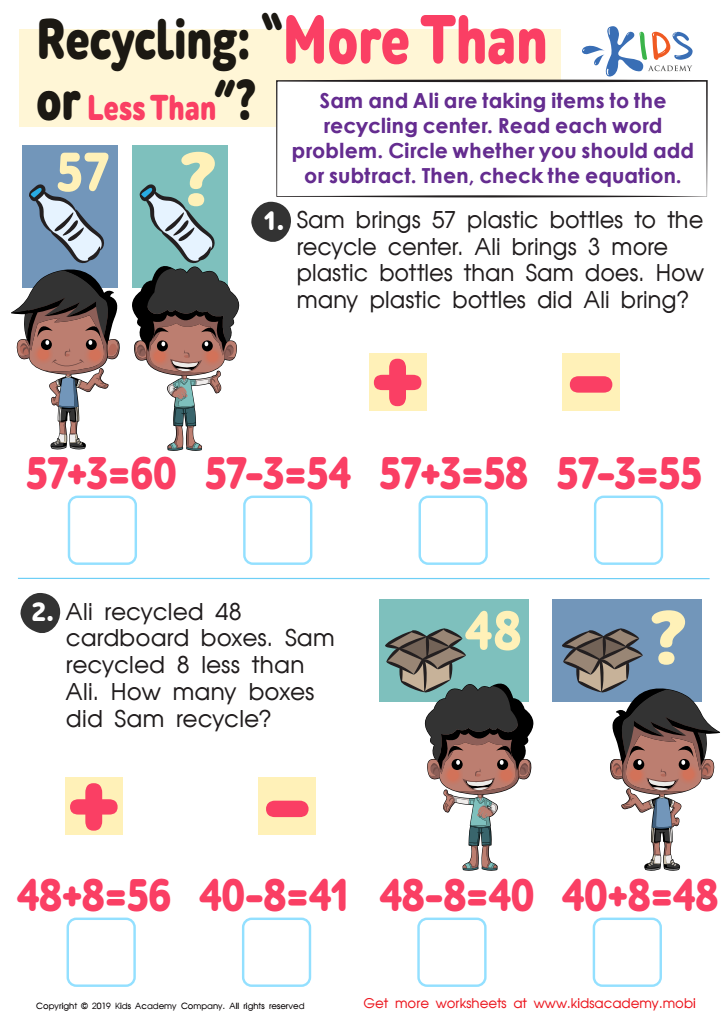
Recycling - More or Less Worksheet








Parents and teachers should deeply care about basic math skills, particularly subtraction, for children ages 6-8 because these formative years lay the groundwork for future mathematical understanding and overall cognitive development. Subtraction is not just about learning to take away numbers; it builds critical thinking, problem-solving abilities, and logical reasoning.
First, mastery of subtraction is a fundamental component of basic arithmetic and is often used in everyday life, from following a recipe to budgeting allowances. Ensuring that children are proficient sets them up for success in more complex areas of math. Second, subtraction helps children understand concepts of quantity and difference, which are crucial for real-world decision-making.
During these early years, children's brains are exceptionally receptive to learning patterns, processes, and problem-solving strategies. By supporting their grasp of subtraction, educators and parents help children develop a robust number sense, laying a solid foundation for more advanced studies in mathematics, such as multiplication, division, and beyond.
Moreover, success in basic math can build confidence and foster a positive attitude towards learning in general. A strong immediate grasp of subtraction becomes a building block for academic success and intellectual curiosity, making it essential for educators and parents to prioritize mastery of this skill during these critical developmental stages.








