
Counting practice Subtraction Worksheets for Ages 6-8
5 filtered results
Difficulty Level
Grade
Age
-
From - To
Subject
Activity
Standards
Boost your child's math skills with our engaging Counting Practice Subtraction Worksheets designed for ages 6-8! These worksheets offer a fun and interactive way for young learners to master fundamental subtraction concepts. With colorful illustrations and age-appropriate problems, children will practice counting backwards and integrating subtraction seamlessly into their learning routine. Our easy-to-follow worksheets cater to various learning styles, ensuring every child develops confidence in their math abilities. Download, print, and watch your child enjoy learning subtraction while enhancing their counting skills. Perfect for home or classroom use, these resources empower kids to tackle math with enthusiasm and curiosity!
Favorites
With answer key
Interactive
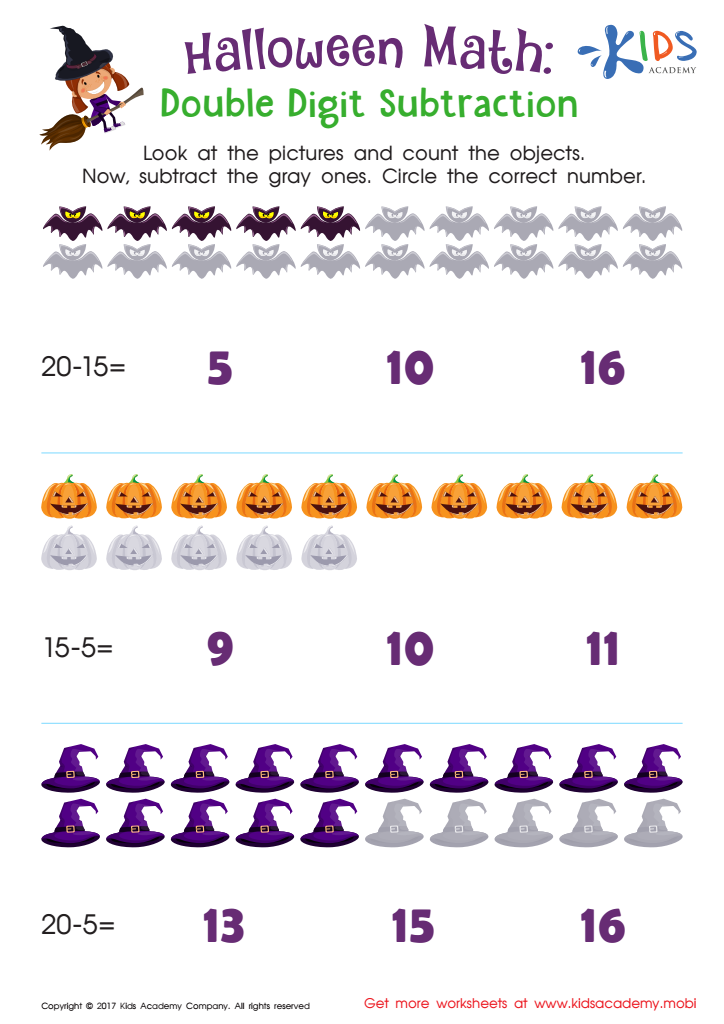
Halloween Math Subtraction Worksheet
Kids can easily understand subtraction by using the visuals provided in this worksheet. Get ready for some fun math!
This Halloween math worksheet uses spooky images to help kids understand subtraction. With it, they can count and solve double digit problems more easily. Get ready for some fun and engaging math practice!
 Assign to My Students
Halloween Math Subtraction Worksheet
Worksheet
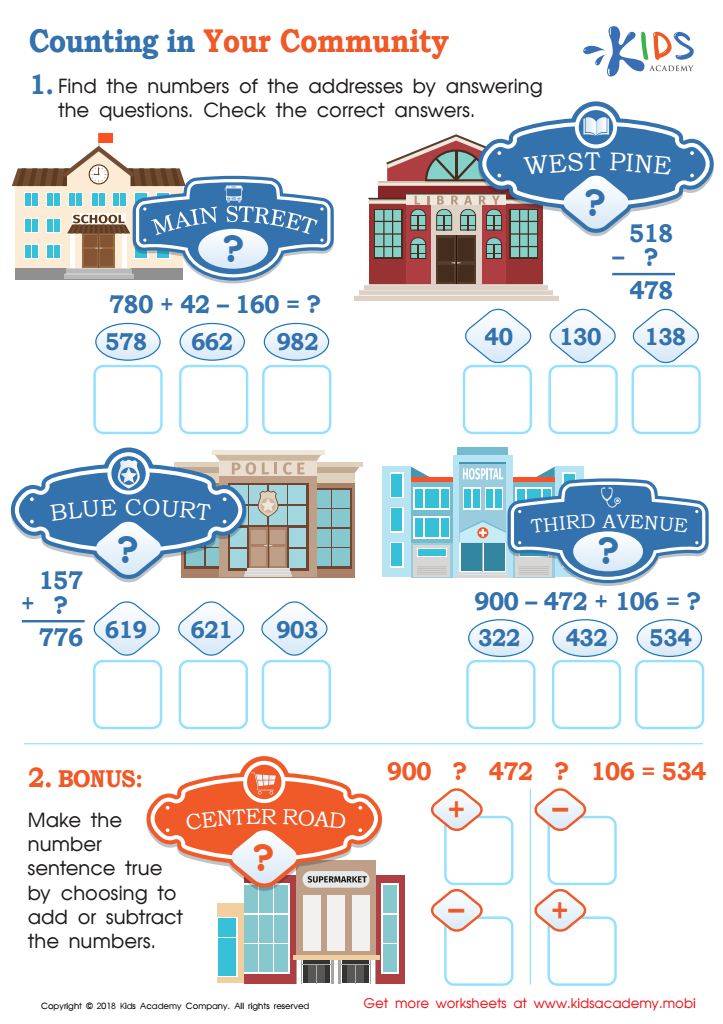
Counting in Your Community Worksheet
Introduce your kids to the idea of a community, where different people and buildings co-exist, each playing their part for the community's progress. Ask them to name the buildings they see in their community. Then work through this worksheet to find the numbers of the addresses by answering the questions. Check the answers once they've solved the equations.
Counting in Your Community Worksheet
Worksheet
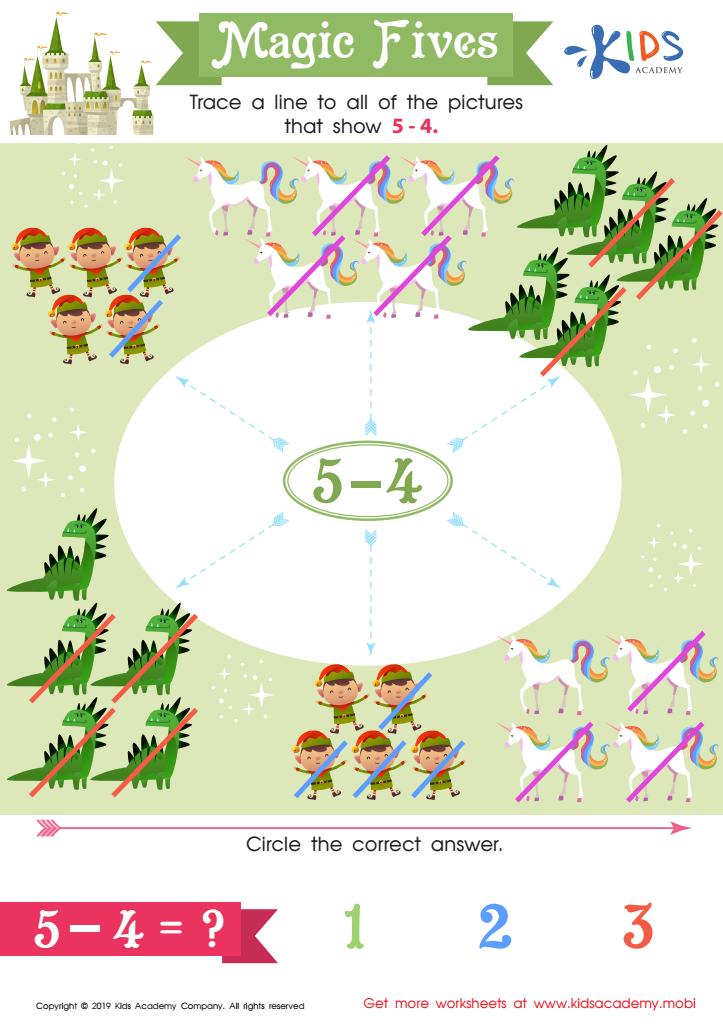
Magic Fives Worksheet
Help your students identify the objects & people in the worksheet. Point to the equation 5 -4 in the center, then get them to count the items and trace a line connecting those that add up to 5 - 4.
Magic Fives Worksheet
Worksheet
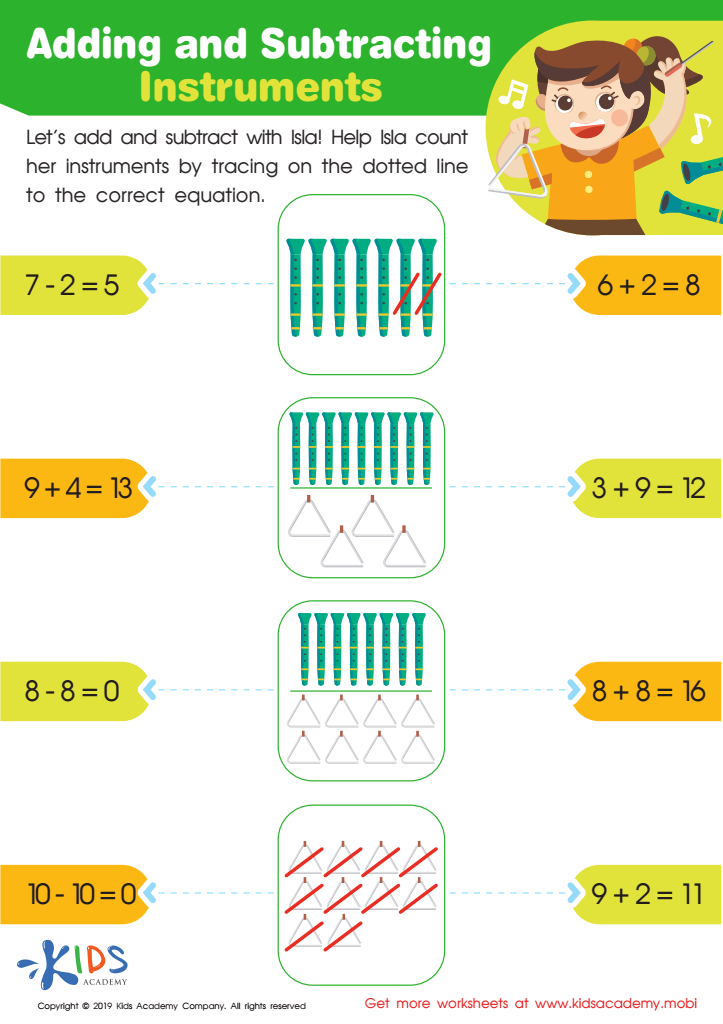
Adding and Subtracting: Instruments Worksheet
Children can help Isla count her musical instruments with this fun worksheet. The downloadable PDF gives them a chance to practice addition and subtraction by connecting pictures to equations. It's also a great way to learn the order of operations.
Adding and Subtracting: Instruments Worksheet
Worksheet
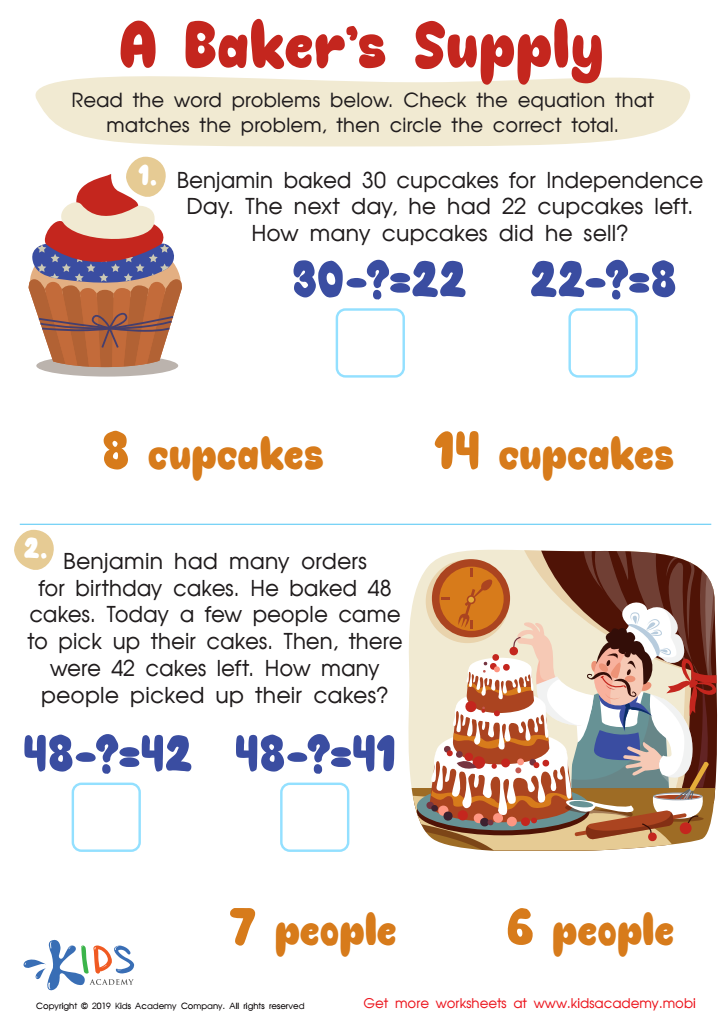
A Baker's Supply Worksheet
A visit to the baker's shop is thrilling! Your kids will love it! From scrumptious goodies to the mouthwatering aroma, it's a magical experience. Ask your kids what they're most eager to see and do. Now, read the word problems in this worksheet to them. Help them choose the correct answer for each problem and circle the correct total.
A Baker's Supply Worksheet
Worksheet
Join Kids Academy for Free
Who is primarily going to use this learning content?








Counting practice and subtraction are foundational skills for children ages 6-8, crucial for their overall academic development. At this stage, children are transitioning from basic numbers to more complex mathematical concepts. Engaging in counting and subtraction activities helps solidify their understanding of number relationships, which is essential for later subjects like addition, multiplication, and even division.
For parents and teachers, fostering these skills is vital for several reasons. First, counting practice enhances a child's ability to recognize number patterns and sequences, promoting number fluency. This fluency builds confidence, enabling students to tackle more challenging mathematics without fear.
Subtracting helps children grasp the concept of taking away or finding the difference, essential for problem-solving in everyday situations. When children can effectively subtract, they develop critical thinking skills that extend beyond math into science and social studies by analyzing information and making accurate predictions.
Moreover, reinforcing these skills at home or in the classroom encourages a love for learning and highlights the practical applications of math in daily life. Therefore, consistent counting practice and subtraction activities serve as building blocks for academic success, shaping future learners and problem solvers.








