Reading clocks Time Worksheets for Ages 6-8
3 filtered results
-
From - To
Discover our engaging "Reading Clocks Time Worksheets" designed specifically for children aged 6-8! These interactive worksheets provide a fun way for young learners to master the essential skills of telling time on analog and digital clocks. With a variety of exercises, including matching times, drawing hands on clocks, and answering time-related questions, kids will build their confidence and enhance their understanding of time. Ideal for home or classroom reinforcement, our worksheets encourage independent problem-solving and boost cognitive development. Help your child enjoy learning about time in an enjoyable and accessible format! Explore the collection today and watch their skills soar!
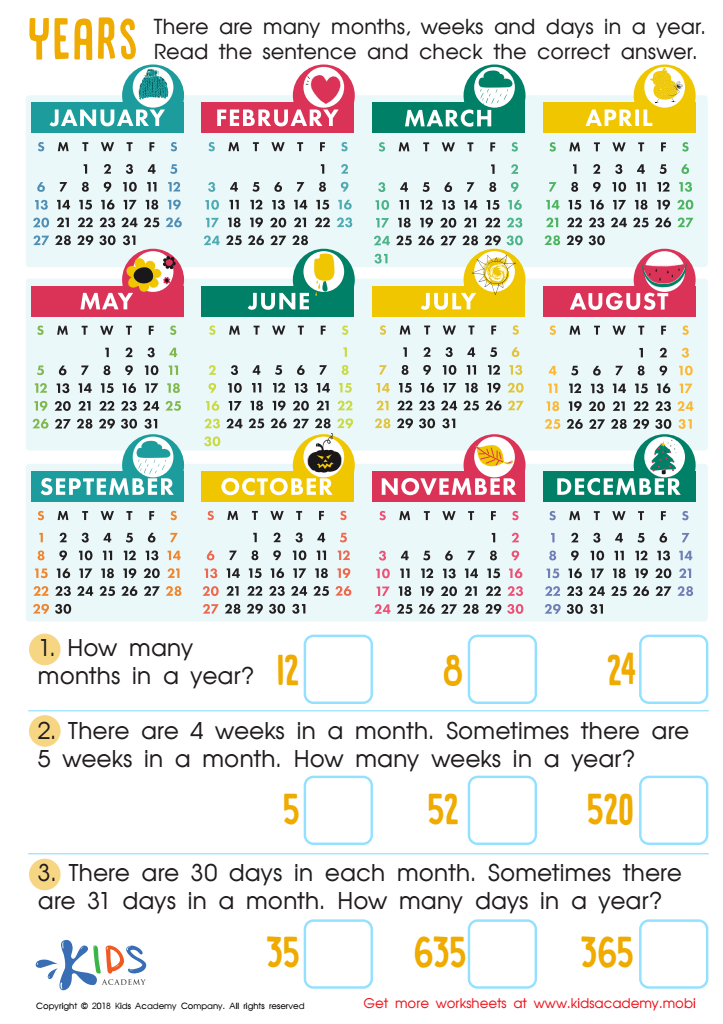
Years Worksheet
 Assign to My Students
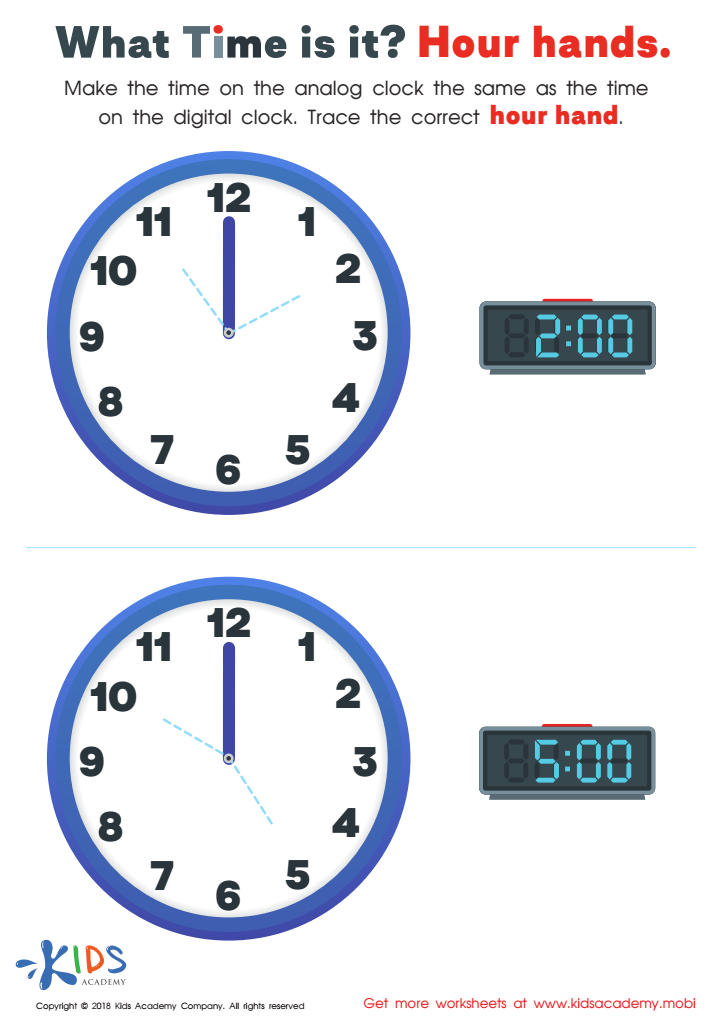
What Time Is it? Hour Hands Worksheet
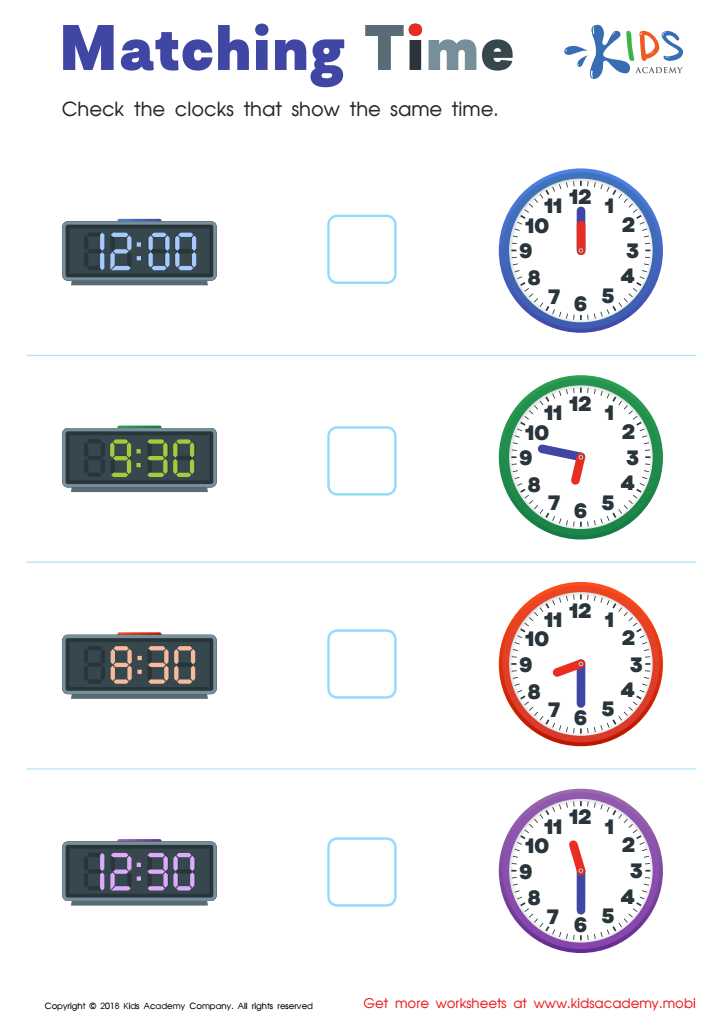
Matching Time Worksheet








Reading clocks and understanding time are essential skills for children aged 6-8, as they serve fundamental roles in daily life and cognitive development. Firstly, mastering time helps children develop a sense of routine, aiding in managing their activities and responsibilities. This skill promotes independence and self-discipline, which are critical attributes as they grow.
Moreover, time-telling reinforces numerous mathematical concepts such as sequencing, fractions (e.g., understanding half-hour, quarter-hour), and spatial awareness. These foundational math skills are vital for future academic success. Parents and teachers who prioritize the teaching of time can also enhance a child’s problem-solving abilities and critical thinking.
Additionally, discussing time provides opportunities for social learning. Children can engage in conversations about daily schedules, planned events, and time-based activities, fostering communication skills. Understanding time also equips kids to be punctual, a quality vital in school and later in professional life.
Overall, teaching children how to read clocks instills confidence and helps them navigate the world more effectively. For parents and teachers, investing time in these lessons ensures children can anchor their day-to-day lives in a systematic way, paving the path for lifelong learning and development.








