Multiplication practice Times Tables Worksheets for Ages 6-8 - Page 2
33 filtered results
-
From - To
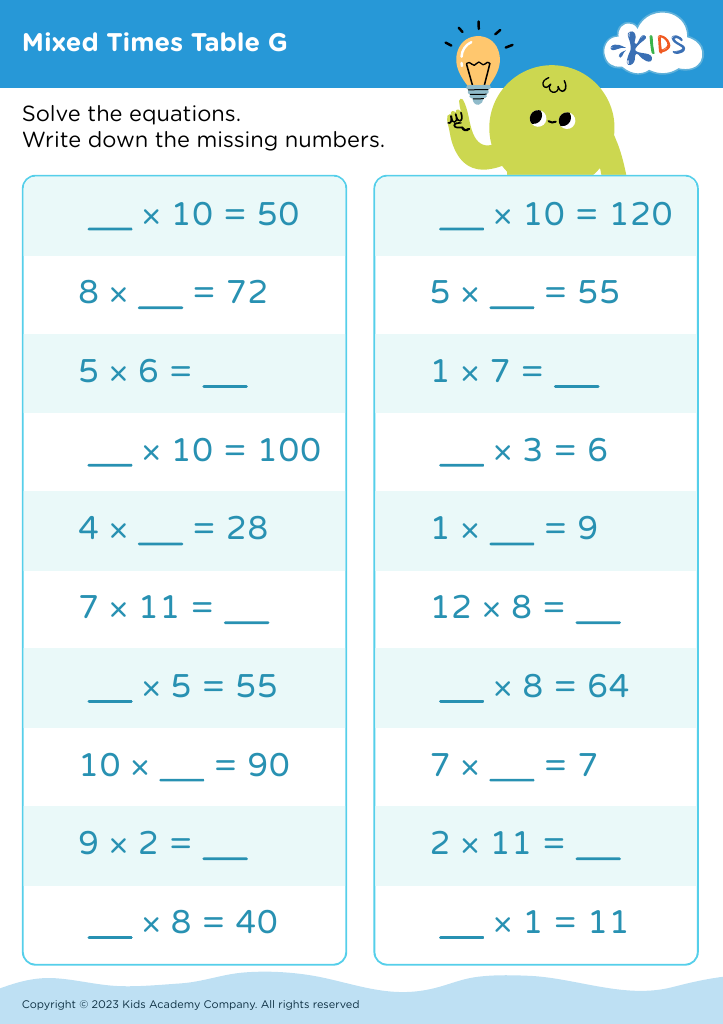
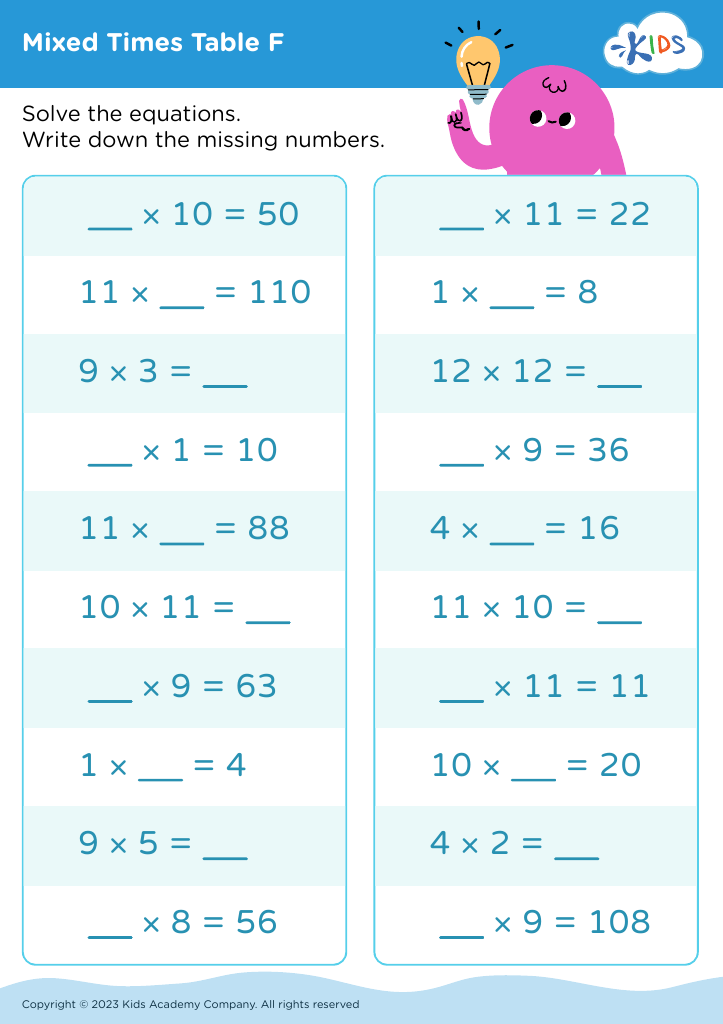
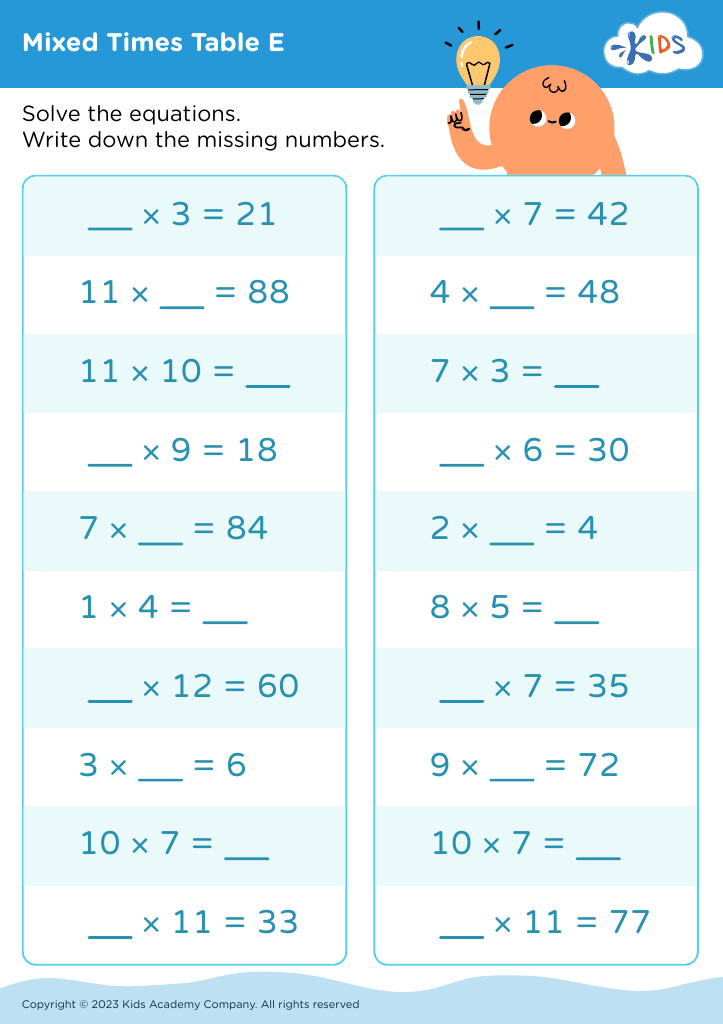
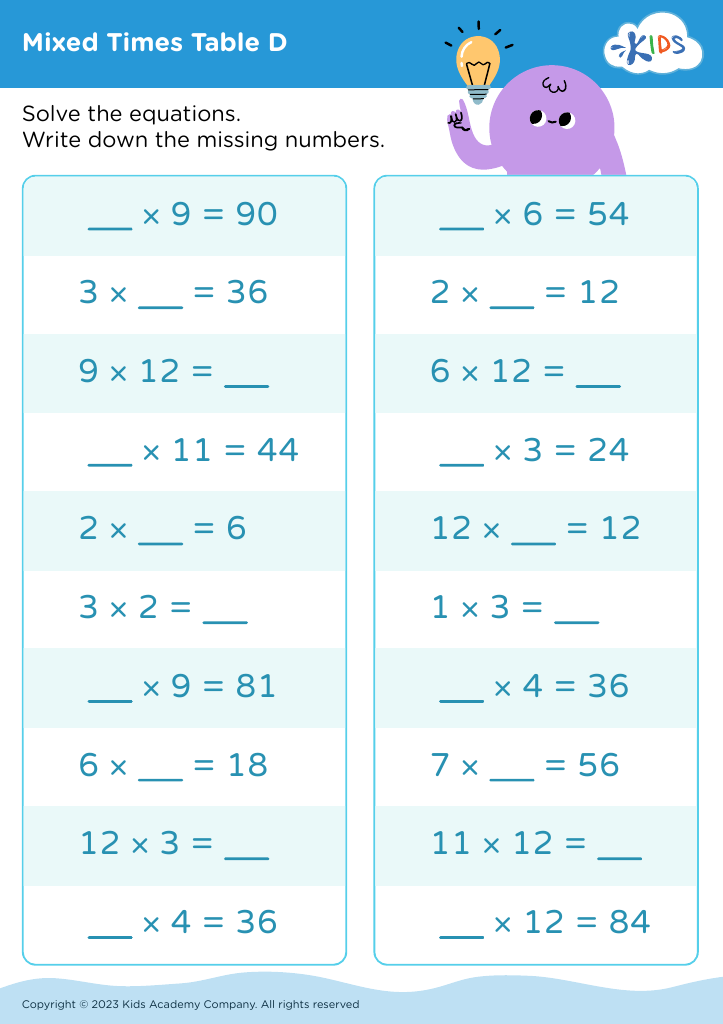
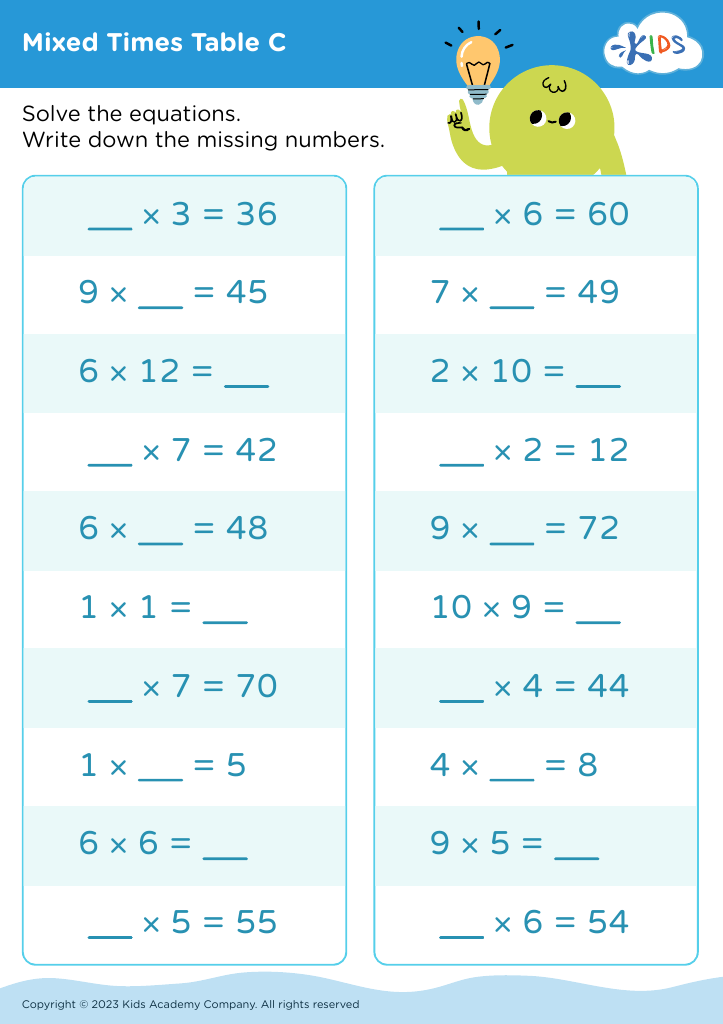
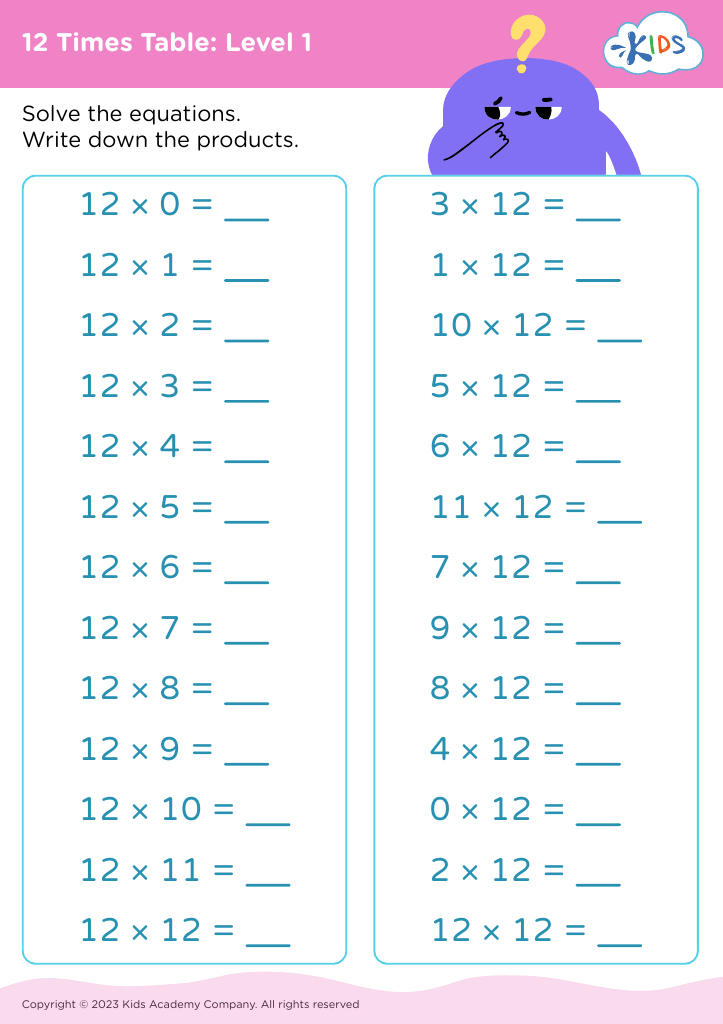
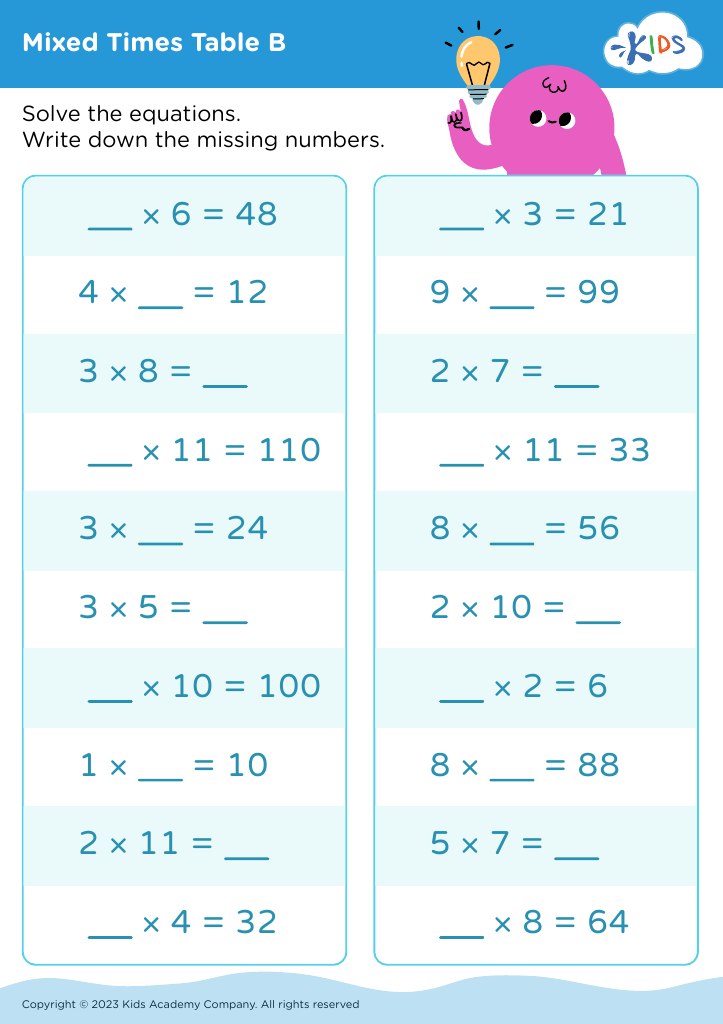
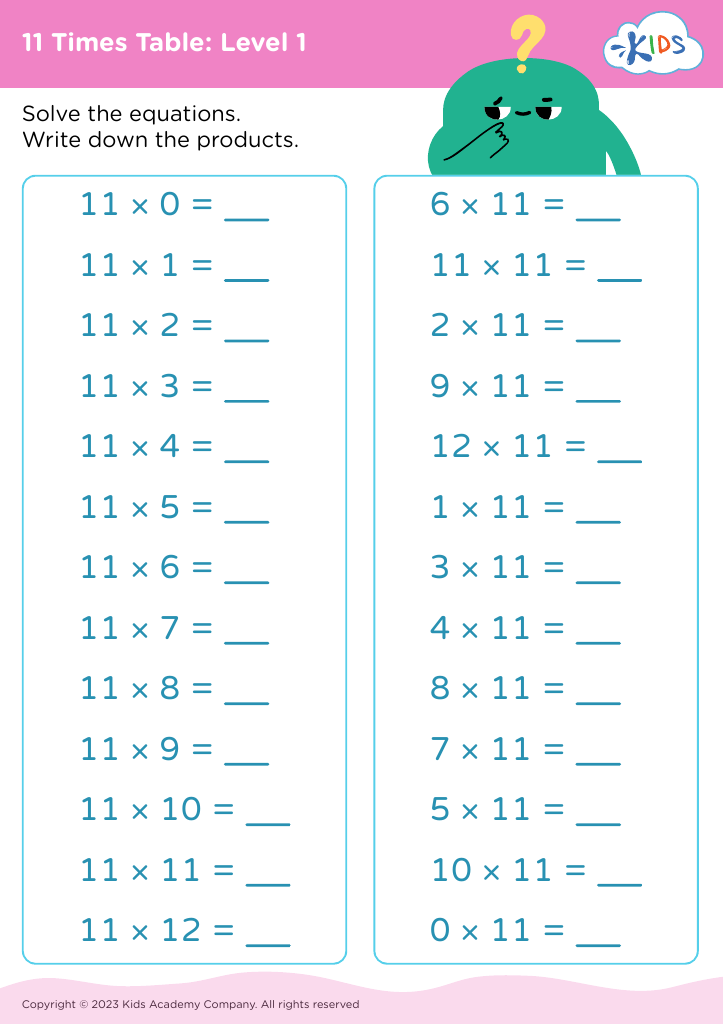
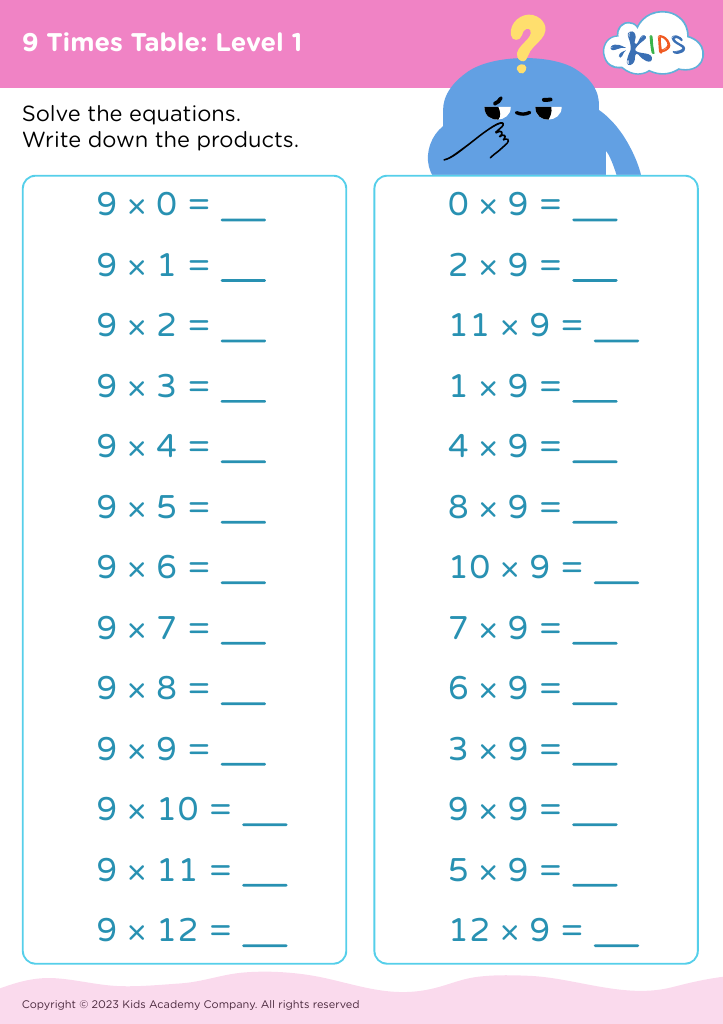





Faculty and parents play a pivotal role in a child's education, especially when it comes to foundational skills like multiplication tables for ages 6-8. Solid knowledge of multiplication tables forms the backbone of not just arithmetic, but future math-related subjects such as fractions, division, algebra, and even geometry. When children master their multiplication tables at an early age, they develop fluency in calculations, which fosters confidence and improves problem-solving skills.
Moreover, understanding multiplication allows children to excel in real-world situations involving measurements, budgeting, and even cooking, among many other everyday tasks. The consistent practice of multiplication tables strengthens memory and helps in developing core cognitive abilities like critical thinking and pattern recognition.
Early mastery of multiplication minimizes math anxiety later, as students are well-prepared for more complicated math concepts introduced in higher grades. Given our technology-driven era, coding and other STEM-related activities often require strong numeracy skills, which start with basics like multiplication.
Parents and teachers should, therefore, prioritize multiplication practice to lay a robust educational foundation, ensuring students are well-equipped for academic success and a wide range of real-life applications, making learning an enjoyable and rewarding experience.








