Math problem-solving Building Vocabulary Worksheets for Ages 6-8
6 filtered results
-
From - To
Enhance your child's math skills with our engaging Math Problem-Solving Building Vocabulary Worksheets, designed for ages 6-8. These interactive worksheets help young learners develop essential problem-solving techniques while expanding their mathematical vocabulary. With a variety of fun and challenging exercises, children will enhance their comprehension and critical thinking skills in a supportive environment. Perfect for home or classroom use, these worksheets foster curiosity and confidence in math. Let your child explore real-world scenarios through relatable problems, all while enjoying the process of learning. Unlock their potential today with our thoughtfully crafted resources tailored for early learners!
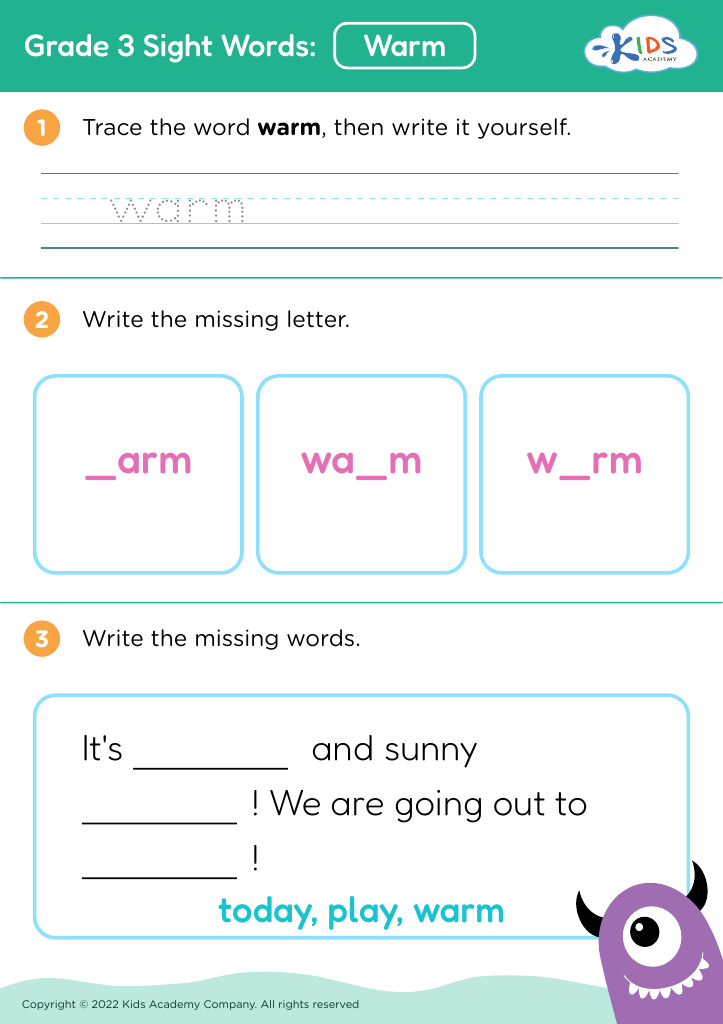











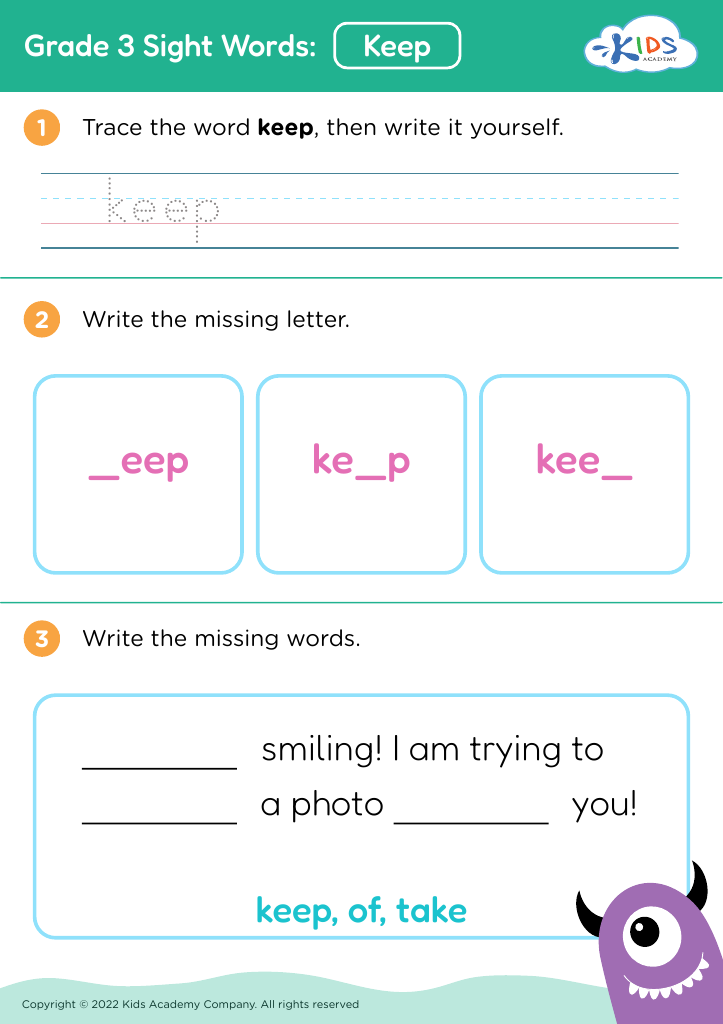
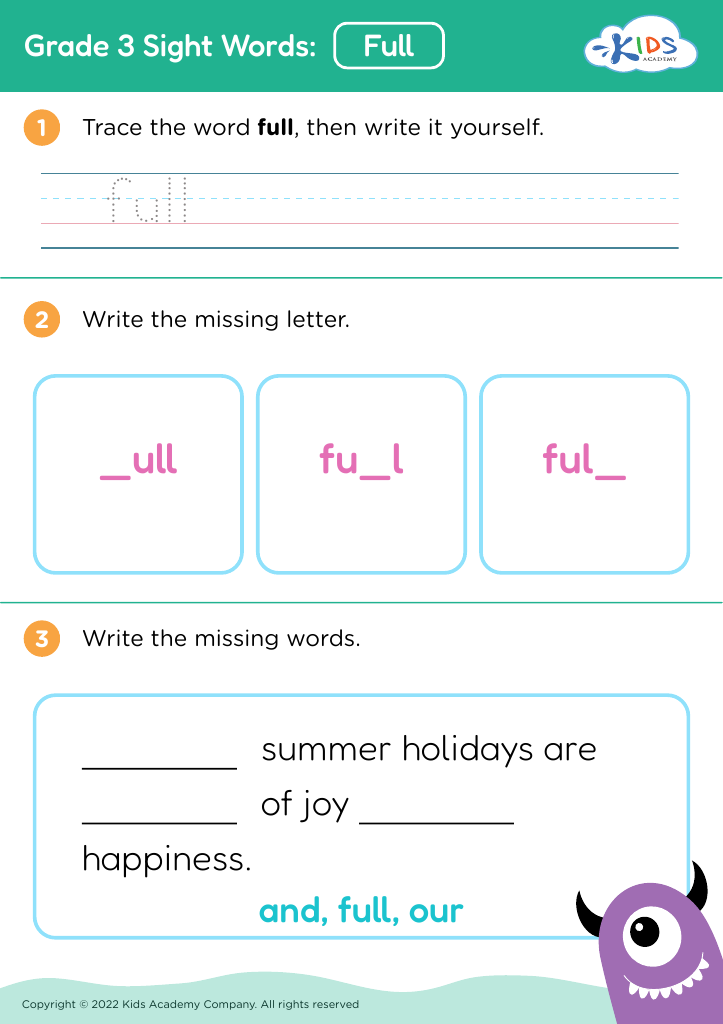
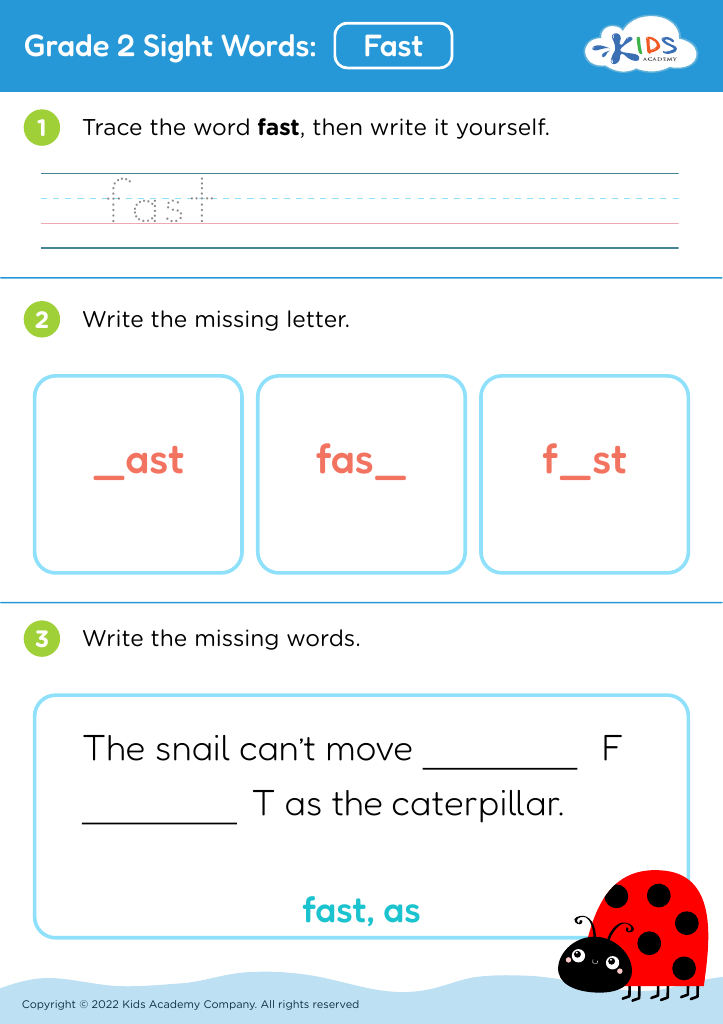








Parents and teachers play a crucial role in the developmental journey of children, particularly in building essential skills like math problem-solving and vocabulary. For children aged 6 to 8, mastering math problem-solving connects abstract concepts to real-world applications, fostering critical thinking and resilience. When kids face challenges in solving problems, they're encouraged to think creatively and develop strategies. An understanding of mathematical vocabulary—terms like addition, subtraction, sum, and difference—enhances their ability to comprehend instructions, communicate their thought processes, and collaborate with peers.
Furthermore, strong math vocabulary helps to bridge gaps between language arts and mathematics, promoting overall literacy and comprehension. As these young learners encounter diverse mathematical scenarios, their vocabulary growth facilitates richer discussions and deeper understanding. Parents and teachers can support this by modeling language use, providing opportunities for rich dialogue during math-related activities, and encouraging students to express their thoughts verbally and in writing.
Ultimately, fostering math problem-solving skills and vocabulary not only equips children for academic success but also instills a love for learning and an appreciation for mathematics, empowering them to navigate challenges effectively throughout their educational journey and beyond.








